
A new study explores how EOS transmits ultrashort laser pulses through crystals that change in response to an applied electric field. This technique allows researchers to accurately capture the shape and timing of electric fields across a broad range of frequencies.
A new study explores how EOS transmits ultrashort laser pulses through crystals that change in response to an applied electric field. This technique allows researchers to accurately capture the shape and timing of electric fields across a broad range of frequencies.
Konstantin Vodopyanov, a professor at the College of Sciences and CREOL, the College of Optics and Photonics, recently co-authored a study published in the journal. This research examines electro-optic sampling , a technique that advances fields such as quantum physics, molecular spectroscopy and biomedical sensing. As a professor at the two colleges, Vodopyanov shows how working across different fields can lead to new ideas. The Optica Fellow's research, which combines interdisciplinary work, is shaping the future of quantum physics and other areas of science. His new study explores how EOS transmits ultrashort laser pulses through crystals that change in response to an applied electric field. This technique allows researchers to accurately capture the shape and timing of electric fields across a broad range of frequencies. This technique allows researchers to see molecules clearer than ever before, says Vodopyanov, who is UCF's 21st Century Scholar Endowed Chair. "By using an optical pulse shorter than half a light wave's cycle to probe it, the amplitude and phase of the wave can be fully characterized," he says."This technique unlocks the ability to study ultrafast phenomena and capture molecular spectra with unprecedented resolution." When compared to other methods, Vodopyanov explains how EOS offers higher sensitivity, allowing it to detect faint signals more effectively. "Moreover, thanks to its exceptional sensitivity, it can even detect vacuum fluctuations -- the elusive 'zero-point motion' of the electromagnetic field -- providing profound insights into the foundations of quantum physics," he says. The study explains new techniques to enhance EOS effectiveness, and Vodopyanov says there's significant potential for advancements. With continuous developments, he highlights several promising directions for further research. "Looking ahead, future developments include extending EOS to the deep and extreme ultraviolet ranges, detecting squeezed vacuum states and enabling quantum field tomography in space-time," Vodopyanov says. He adds that research can reveal more with the progression of technology and insights on how light behaves. "Innovations such as on-chip terahertz-wave detectors and investigations into quantum statistics and relativistic effects promise to further expand the capabilities of this powerful technique," says Vodopyanov, who leads the Mid-Infrared Frequency Combs Lab at CREOL. Vodopyanov's work is not only a breakthrough -- it strengthens UCF's position as a leader in innovation and research. By advancing techniques like EOS, Vodopyanov and his collaborators are creating opportunities for new discoveries that could transform industries ranging from quantum physics to medical diagnostics. In the latter case, using frequency comb spectroscopy combined with EOS makes it possible to perform real-time spectroscopic analysis of multiple volatile biomarkers in exhaled human breath. This is a helpful tool in early diagnosis of multiple health conditions. Ileana-Cristina Benea-Chelmus, Jérôme Faist, Alfred Leitenstorfer, Andrey S. Moskalenko, Ioachim Pupeza, Denis V. Seletskiy, Konstantin L. Vodopyanov.Existing sensor probes for microelectrical devices can measure only their average electric properties, providing no information on their spatial distribution. Liquid crystal droplets -- ... Color centers are lattice defects in crystals that can capture one or more additional electrons. The spin of these electrons is very sensitive to external electric and magnetic fields -- and to ... Physicists have developed a simple concept that could improve significantly magnetic-based data processing. Using ultrashort electric pulses in the terahertz range, data can be written, read and ...Study Shows Vision-Language Models Can't Handle Queries With Negation Words
Quantum Physics Optics Quantum Computing Quantum Computers Computers And Internet Encryption Hacking
United States Latest News, United States Headlines
Similar News:You can also read news stories similar to this one that we have collected from other news sources.
 Everything revealed in the Mario Kart World Direct: A Rewind feature and moreMario Kart World adds new tricks, new course, new items, and more alongside plenty of familiarity.
Read more »
 New way to prevent duodenal cancer | ScienceDailyPeople with the hereditary disease familial adenomatous polyposis (FAP) have a greatly increased risk of developing a malignant tumor of the duodenum. Researchers have now discovered a mechanism in the local immune system that can drive the development of cancer.
Read more »
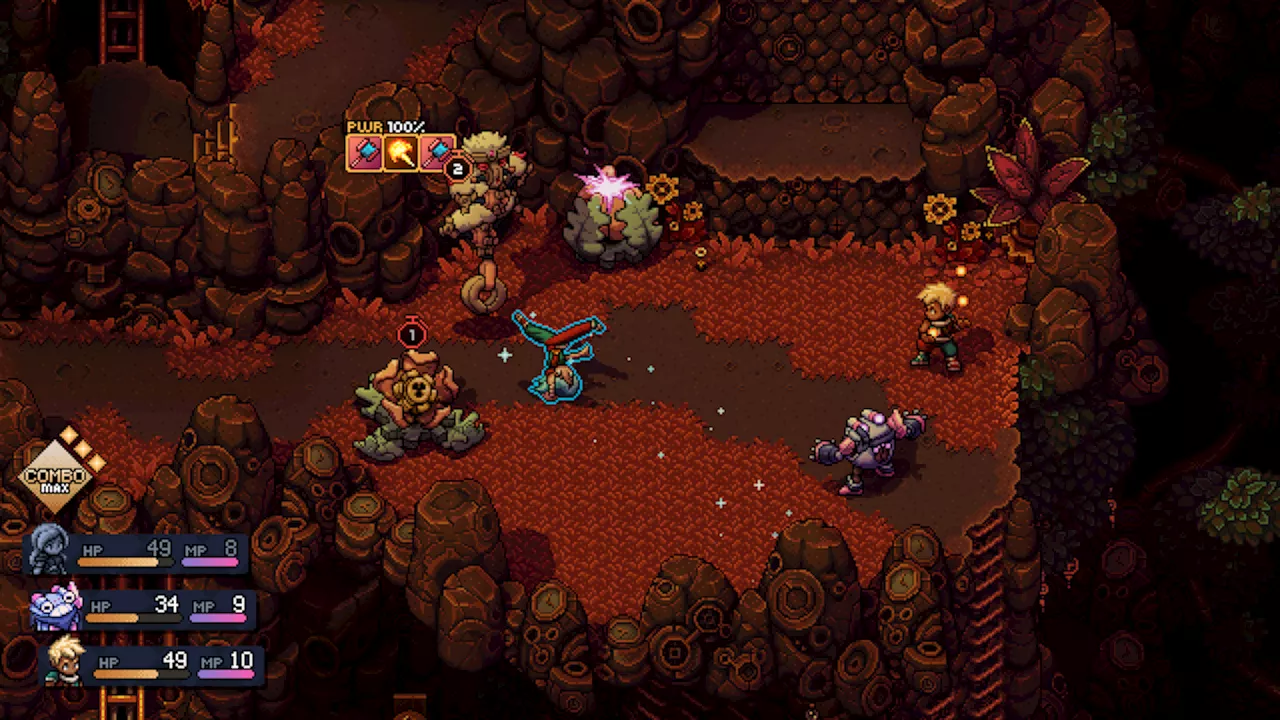 The upcoming Sea of Stars expansion Throes of the Watchmaker arrives on May 20The eight-hour add on features a new area, new classes and a new playable character.
Read more »
 Enzymes from scratch | ScienceDailyResearchers have developed a new workflow for designing enzymes from scratch, paving the way toward more efficient, powerful and environmentally benign chemistry. The new method allows designers to combine a variety of desirable properties into new-to-nature catalysts for an array of applications, from drug development to materials design.
Read more »
 New Brunswick's new cancer hospital opens a new era in care NJThe Jack & Sheryl Morris Cancer Center is one of only 13 freestanding cancer hospitals in the United States.
Read more »
 How we think about protecting data | ScienceDailyA new game-based experiment sheds light on the tradeoffs people are willing to make about data privacy.
Read more »