
Researchers have developed an encapsulated cobalt-nickel alloy that significantly improves the efficiency and durability of high-temperature CO2 conversion, a promising technology for carbon recycling and sustainable fuel production.
Researchers have developed an encapsulated cobalt-nickel alloy that significantly improves the efficiency and durability of high-temperature CO2 conversion, a promising technology for carbon recycling and sustainable fuel production.
) emissions need urgent solutions, but what if we could turn this greenhouse gas into useful chemicals or fuels? Electrochemical COconversion -- the process of transforming carbon dioxide into valuable products -- is a promising path toward greener energy and reducing emissions. The catch? Existing methods either don't last long or consume too much energy, limiting their real-world use.conversion, for instance, typically lasts less than 100 hours and reaches efficiencies below 35%. The process can be more practical at higher temperatures -- between 600 and 1,000 degrees Celsius -- but current catalysts often wear out quickly or require costly precious metals. The technology needs an efficient, stable, and cost-effective solution that can turn CONow, a team led by Professor Xile Hu at EPFL has crafted a new type of catalyst that promises to make this high-temperature conversion more practical and cost-effective. The catalyst could accelerate the transition towards cleaner industries by converting CO. The encapsulation prevents the metal from agglomerating , a common problem that reduces catalyst effectiveness. Impressively, their catalystoperates at 90% energy efficiency, 100% product selectivity,and sustains its performance over an unprecedented 2,000 hours, far surpassing existing technologies. To create the catalyst, first-author and EPFL postdoc Wenchao Ma, used a sol-gel method, a process that mixes metal salts with organic molecules to form tiny metal clusters encased by ceramic shells. They tested different combinations of metals, discovering that a balanced mix of cobalt and nickel delivered the best performance. Unlike traditional catalysts, which quickly degrade under intense heat, the encapsulated alloy remained stable, maintaining its efficiency even after thousands of hours of continuous operation. The results were remarkable. The new catalyst maintained an energy efficiency of 90% at 800 degrees Celsius while converting COinto carbon monoxide -- a valuable chemical used in industrial processes -- with 100% selectivity. In simpler terms, nearly all the electricity used in the reaction directly contributed to producing the desired chemical, without wasteful side reactions.into the atmosphere, industries could reuse it, transforming waste gas into valuable products. This technology could help industries reduce their environmental footprint, saving both energy and money in the process. The EPFL team's catalyst remained stable at industrially relevant conditions for more than 2,000 hours, a milestone that dramatically reduces operating costs. Compared to existing technologies, their approach could cut overall costs by 60% to 80%, according to the researchers' preliminary estimate.into valuable products efficiently, we can envision a future where industries recycle carbon emissions as routinely as we recycle paper and plastic today. The EPFL team has filed an international patent application for the catalyst.Wenchao Ma, Jordi Morales-Vidal, Jiaming Tian, Meng-Ting Liu, Seongmin Jin, Wenhao Ren, Julian Taubmann, Christodoulos Chatzichristodoulou, Jeremy Luterbacher, Hao Ming Chen, Núria López, Xile Hu.Unlocking the Potential of Nickel: New Study Reveals How to Use Single Atoms to Turn CO2 Into Valuable Chemical Resources A study has unveiled new insights into the electrocatalytic reduction of CO2 using nickel-based catalysts. The research marks a significant advancement in the quest for sustainable and efficient CO2 ... Carbon capture is a promising approach for mitigating carbon dioxide emissions. Different materials have been used to capture CO2 from industrial exhaust gases. Scientists developed hybrid CO2 ... High-entropy alloys are promising materials for catalysis and energy storage, and at the same time they are extremely hard, heat resistant and demonstrate great variability in their magnetic ... Recycling carbon dioxide, especially through conversion to methane, is compelling while anthropogenic CO2 emissions are still rising. A useful process for this transformation is photothermal ...FOSSILS & RUINS
Petroleum Organic Chemistry Chemistry Energy And The Environment Air Quality Environmental Science Global Warming
United States Latest News, United States Headlines
Similar News:You can also read news stories similar to this one that we have collected from other news sources.
 Researchers introduce a brand-new method to detect gunshot residue at the crime sceneCrime scene investigation may soon become significantly more accurate and efficient thanks to a new method for detecting gunshot residues. Researchers have developed the technique that converts lead particles found in gunshot residue into a light-emitting semiconductor.
Read more »
 Researchers Discover New Color That’s Impossible to See without Lasering Your RetinasResearchers discover a new color outside the range of human color vision, but you have to laser your retinas to see it
Read more »
 Researchers demonstrate new class of quantum materials that are both metallic and one-dimensionalA study has found a rare form of one-dimensional quantum magnetism in a metallic compound, offering evidence into a phase space that has remained, until now, largely theoretical. The study comes at a time of growing global interest in quantum materials that redefine the boundaries between magnetism, conductivity, and quantum coherence.
Read more »
 Researchers developed an ultra-hard new alloy that can survive at 1,400 degreesResearchers have created a new ultra-hard alloy that can survive insane temperatures. Here's what we know about it so far.
Read more »
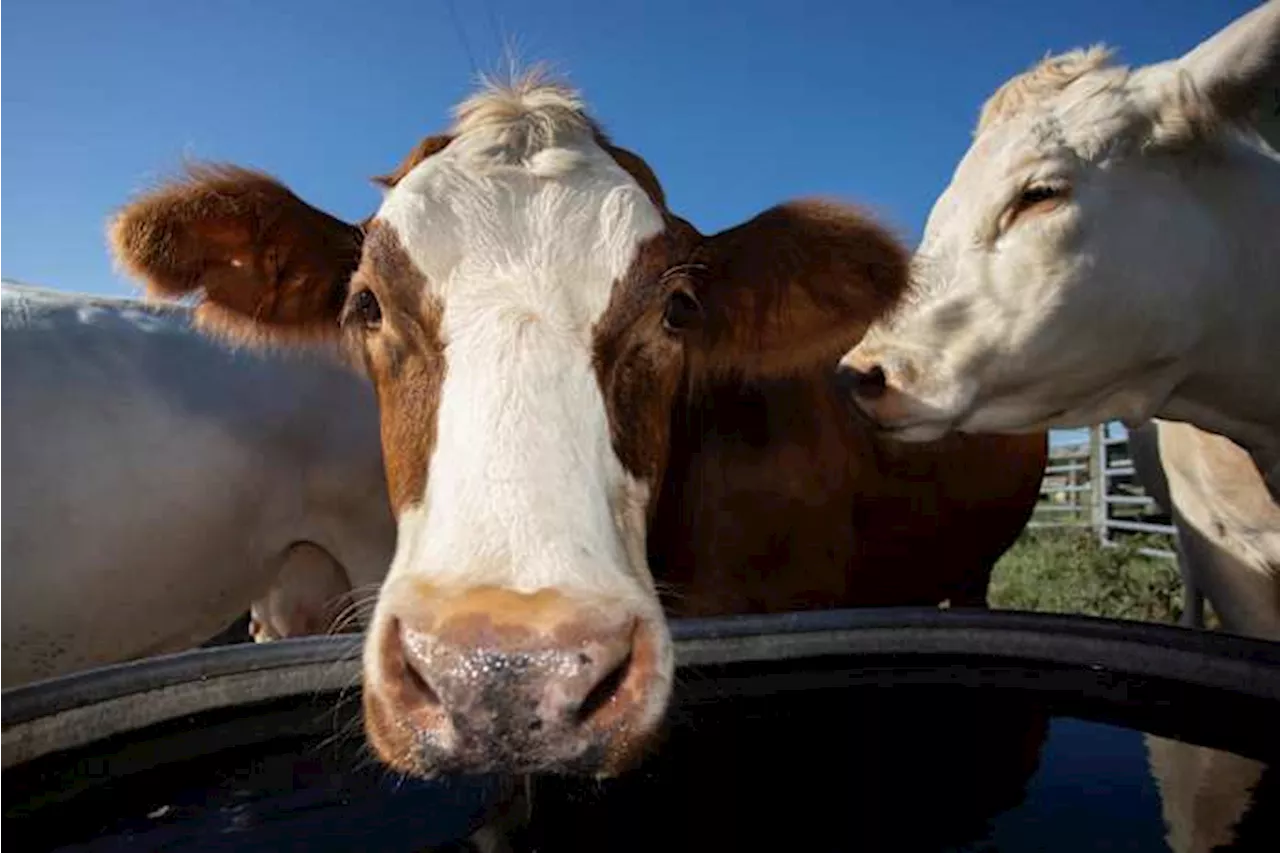 Moo-ve over methane: UF researchers test new feed to cut cow emissions from burps, fartsResearchers at the University of Florida are steak-ing their reputations on a solution to cows contributing to greenhouse gases: A way to make their burps and farts cause less damage to the climate.
Read more »
 Researchers invented new tiles that keep buildings cool without electricityResearchers have created a new type of sustainable cooling tile made from mushrooms. It can cool buildings passively without electricity.
Read more »