
Virtual meetings feeling a little stale? NASA has just unveiled a suite of new Artemis backgrounds to elevate your digital workspace.
Virtual meetings feeling a little stale? NASA has just unveiled a suite of new Artemis backgrounds to elevate your digital workspace.lighting up the night sky to the iconic image of the Orion spacecraft with the Moon and Earth in view, these virtual backgrounds allow viewers to relive the awe-inspiring moments of Artemis I and glimpse the bright future that lies ahead as theScroll through to download your next virtual background for work, school, or just for fun, and learn about all things Artemis as the agency and its partnersNASA’s SLS rocket carrying the Orion spacecraft launches on the Artemis I flight test on Nov.
16, 2022, from Launch Complex 39B at NASA’s Kennedy Space Center in Florida. NASA’s Artemis I mission was the first integrated flight test of the agency’s deep space exploration systems: the Orion spacecraft, SLS rocket, and ground systems. SLS and Orion launched at 1:47 a.m. EST from Launch Pad 39B at Kennedy.Meet the astronauts who will fly around the Moon during the Artemis II mission. From left are Commander Reid Wiseman, Pilot Victor Glover, and Mission Specialist Christina Koch from NASA, and Mission Specialist Jeremy Hansen from the Canadian Space Agency.An artist’s concept of two suited Artemis crew members working on the lunar surface. The samples collected during future Artemis missions will continue to advance our knowledge of the solar system and help us understand the history and formation of Earth and the Moon, uncovering some of the mysteries that have long eluded scientists.NASA’s mobile launcher, atop Crawler Transporter-2, is at the entrance to High Bay 3 at the Vehicle Assembly Building on Sept. 8, 2018, at NASA’s Kennedy Space Center in Florida. This is the first time that the modified mobile launcher made the trip to the pad and the VAB. The mobile launcher is the structure that is used to assemble, process, and launch the SLS rocket.NASA’s SLS rocket with the Orion spacecraft aboard is seen atop a mobile launcher at Launch Pad 39B on Nov. 4, 2022, as Crawler Transporter-2 departs the pad following rollout at NASA’s Kennedy Space Center in Florida.After Orion splashed down in the Pacific Ocean, west of Baja California, the spacecraft was recovered by personnel on the USS Portland from the U.S. Department of Defense, including Navy amphibious specialists, Space Force weather specialists, and Air Force specialists, as well as engineers and technicians from NASA’s Kennedy Space Center in Florida, the agency’s Johnson Space Center in Houston, and Lockheed Martin Space Operations. Personnel from NASA’s Exploration Ground Systems led the recovery efforts.NASA’s SLS rocket with the Orion spacecraft aboard is seen atop a mobile launcher as it rolls out to Launch Complex 39B for the first time on March 17, 2022, at NASA’s Kennedy Space Center in Florida. At left is the Vehicle Assembly Building.“First Woman” graphic novel virtual background featuring an illustration of the inside of a lunar space station outfitted with research racks and computer displays. To learn more about the graphic novel and interactive experiences, visit: “First Woman” graphic novel virtual background featuring the illustration of the inside of a lunar space station outfitted with research racks and computer displays, along with zero-g indicator suited rubber duckies floating throughout. To learn more about the graphic novel and interactive experiences, visit: This “First Woman” graphic novel virtual background features an illustrated scene from a lunar mission. At a lunar camp, one suited astronaut flashes the peace sign while RT, the robot sidekick, waves in the foreground. To learn more about the graphic novel and interactive experiences, visit:The Gateway space station hosts the Orion spacecraft and SpaceX’s deep space logistics spacecraft in a polar orbit around the Moon, supporting scientific discovery on the lunar surface during the Artemis IV mission.The Gateway space station’s HALO module, one of two of Gateway’s habitation elements where astronauts will live, conduct science, and prepare for lunar surface missions, successfully completed welding in Turin, Italy. Following a series of tests to ensure its safety, the future home for astronauts will travel to Gilbert, Arizona, for final outfitting ahead of launch to lunar orbit. Gateway will be humanity’s first space station in lunar orbit and is an essential component of the Artemis campaign to return humans to the Moon for scientific discovery and chart a path for human missions to Mars.Artist’s concept of SpaceX Starship Human Landing System, or HLS, which is slated to transport astronauts to and from the lunar surface during Artemis III and IV.Artist’s concept of Blue Origin’s Blue Moon MK-2 human lunar lander, which is slated to land astronauts on the Moon during Artemis V.The “Moon buggy” for NASA’s Artemis missions, the Lunar Terrain Vehicle , is seen here enabling a pair of astronauts to explore more of the Moon’s surface and conduct science research farther away from the landing site. NASA has selected Intuitive Machines, Lunar Outpost, and Venturi Astrolab to advance capabilities for an LTV.An artist’s concept of the pressurized rover — which is being designed, developed, and operated by JAXA — is seen driving across the lunar terrain. The pressurized rover will serve as a mobile habitat and laboratory for the astronauts to live and work for extended periods of time on the Moon.The NASA “meatball” logo. The round red, white, and blue insignia was designed by employee James Modarelli in 1959, NASA’s second year. The design incorporates references to different aspects of NASA’s missions.On flight day 5 during Artemis I, the Orion spacecraft took a selfie while approaching the Moon ahead of the outbound powered flyby — a burn of Orion’s main engine that placed the spacecraft into lunar orbit. During this maneuver, Orion came within 81 miles of the lunar surface.On flight day 13 during Artemis I, Orion reached its maximum distance from Earth at 268,563 miles away from our home planet, traveling farther than any other spacecraft built for humans.This first high-resolution image, taken on the first day of the Artemis I mission, was captured by a camera on the tip of one of Orion’s solar arrays. The spacecraft was 57,000 miles from home and distancing itself from planet Earth as it approached the Moon and distant retrograde orbit.In this virtual background, various scenes from Earth, Moon, and Mars are depicted within the silhouette outlines of three suited astronauts, artistically representing the interconnected nature of human space exploration from low Earth orbit to the Moon and, one day, human missions to Mars.In this sunrise photo at NASA’s Kennedy Space Center in Florida, NASA’s SLS rocket with the Orion spacecraft aboard is seen atop the mobile launcher at Launch Pad 39B as preparations continued for the Artemis I launch.In this close-up image, NASA’s SLS rocket with the Orion spacecraft aboard is seen atop the mobile launcher at Launch Pad 39B on Nov. 12, 2022, at NASA’s Kennedy Space Center in Florida.NASA’s SLS rocket with the Orion spacecraft aboard is seen at sunrise atop the mobile launcher at Launch Pad 39B on Nov. 7, 2022, at NASA’s Kennedy Space Center in Florida.From left, an artist’s concept of the Moon, Earth, and Mars sharing space. NASA’s long-term goal is to send humans to Mars, and we will use what we learn at the Moon to help us get there. This is the agency’s Moon to Mars exploration approach. An artist’s concept showing, from left, the Earth, Moon, and Mars in sequence. Mars remains our horizon goal for human exploration because it is a rich destination for scientific discovery and a driver of technologies that will enable humans to travel and explore far from Earth.
Artemis 1 Artemis 2 Artemis 3 Artemis 4 Artemis 5 Exploration Systems Development Mission Directora Humans In Space
United States Latest News, United States Headlines
Similar News:You can also read news stories similar to this one that we have collected from other news sources.
 Gov. Gavin Newsom held virtual meeting, discusses incoming Trump administrationGov. Gavin Newsom held a call with his political action committee on Friday to discuss the election and its potential implications for Californians.
Read more »
 Mission: Impossible has a new title, new release date, and new, crazy stuntsTom Cruise takes on even bigger stunts in Mission: Impossible—The Final Reckoning, which premieres May 23, 2025.
Read more »
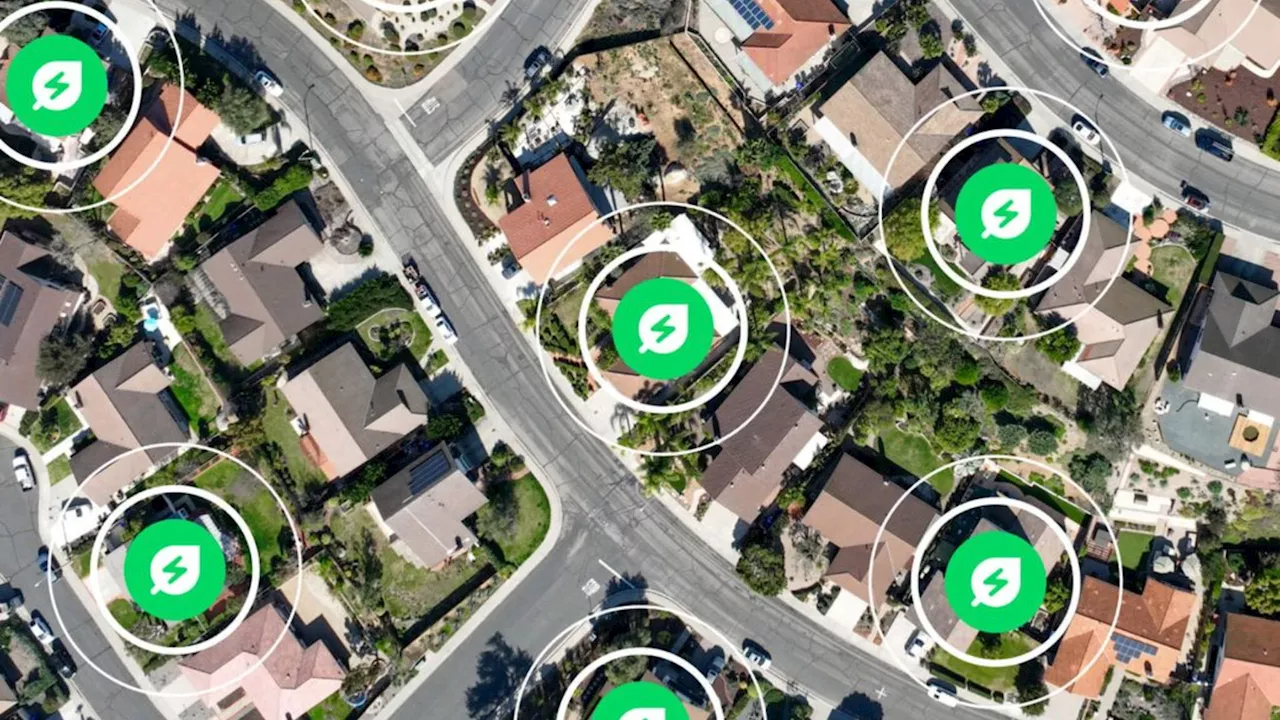 200,000 homes in Texas to get power boost with new AI-driven virtual plantNRG Energy and Renew Home's virtual power plant (VPP) will deliver up to 1 GW of capacity to power 200,000 Texas homes.
Read more »
 Mobile PD officers use new virtual reality to train for mental health crises responseAltaPointe Health was able to purchase the VR technology using federal funding through NAMI of Alabama. The Apex Officer system simulates de-escalation and cris
Read more »
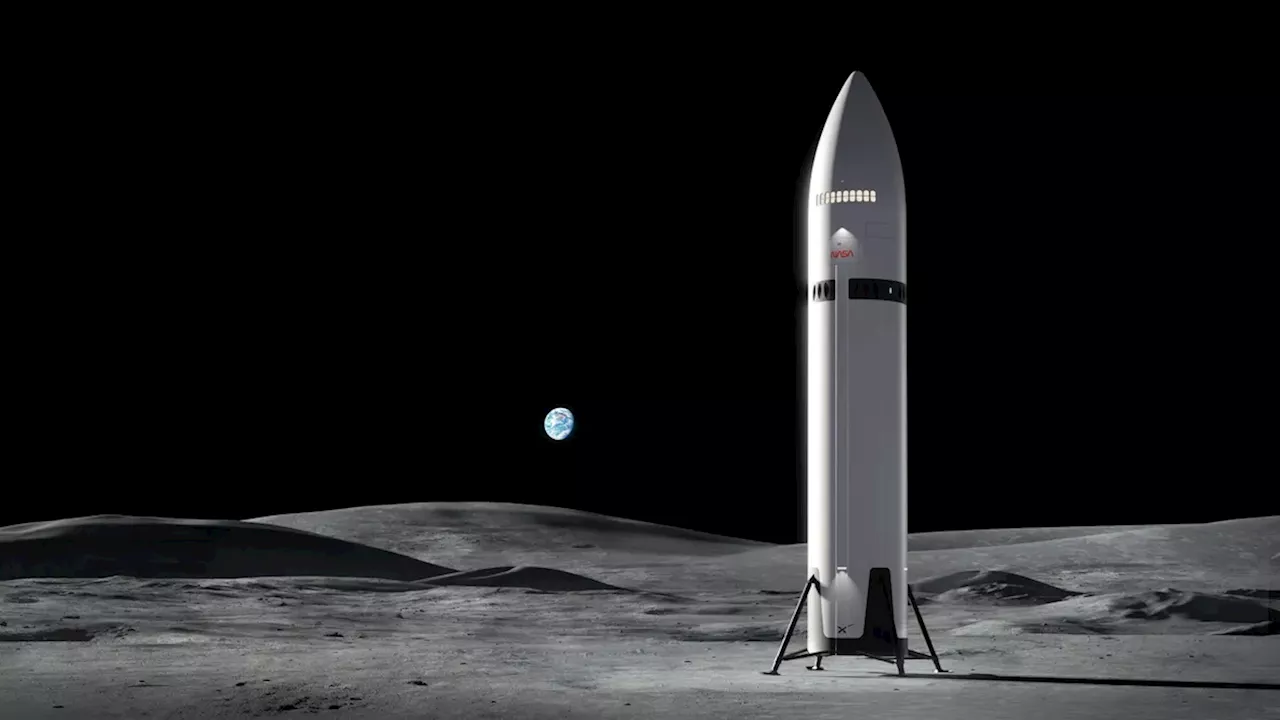 New concept art shows how SpaceX’s Starship will transport Artemis III astronauts to the moonAndrew Paul is Popular Science's staff writer primarily focused on tech news. Previously, he was a regular contributor to The A.V. Club and Input, and has had recent work featured by Rolling Stone, Fangoria, GQ, Slate, NBC, as well as McSweeney's Internet Tendency. He lives outside Indianapolis.
Read more »
 New Dodge Charger Six-Pack Shows Off Tuning Potential In The Virtual WorldThe six-cylinder Charger's retro styling looks prime and ready for some tasteful modifications
Read more »