
The move just before Biden left office also prompted criticism from those who say Peltier is guilty.
FILE - Marchers carry a large painting of jailed American Indian Leonard Peltier during a march for the National Day of Mourning in Plymouth, Mass., on Nov. 22, 2001. Native American activist Leonard Peltier was released from a Florida prison on Tuesday, weeks after then-President Joe Biden angered law enforcement officials by commuting his life sentence in the 1975 killings of two FBI agents.
For nearly half a century, Peltier's imprisonment has symbolized systemic injustice for Native Americans across the country who believe in his innocence. The decision to release the 80-year-old to home confinement was celebrated by supporters. "He represents every person who's been roughed up by a cop, profiled, had their children harassed at school," said Nick Estes, a professor of American Indian Studies at the University of Minnesota and a member of the Lower Brule Sioux Tribe who advocated for Peltier's release. But the move just before Biden left office also prompted criticism from those who say Peltier is guilty, including former FBI Director Christopher Wray, who called him "a remorseless killer" in a private letter to Biden obtained by The Associated Press. "Granting Peltier any relief from his conviction or sentence is wholly unjustified and would be an affront to the rule of law," Wray wrote. The commutation was not a pardon for crimes committed, something Peltier's advocates have hoped for since he has always maintained his innocence. Peltier left the prison Tuesday morning in an SUV, according to a prison official. He didn't stop to speak with reporters or his supporters outside the gates."We're so excited for this moment," Jones said. "He is in good spirits. He has the soul of a warrior." After being released from USP Coleman, a high-security prison, Peltier planned to return to North Dakota, where he is expected to celebrate with friends and family on Wednesday. Biden commuted Peltier's sentence Jan. 20, noting he had spent most of his life in prison and was now in poor health. "We never thought he would get out," Ray St. Clair, a member of the White Earth Band of the Minnesota Chippewa Tribe, said shortly before Peltier's release. "It shows you should never give up hope. We can take this repairing the damage that was done. This is a start." Peltier, an enrolled member of the Turtle Mountain Band of Chippewa Indians in North Dakota, was active in the American Indian Movement, which beginning in the 1960s fought for Native American treaty rights and tribal self-determination. The group grabbed headlines in 1969 when activists occupied the former prison island of Alcatraz in the San Francisco Bay, and again in 1972, when they presented presidential candidates with a list of demands including the restoration of tribal land. After they were ignored, they seized the headquarters of the Bureau of Indian Affairs. From then on, the group was subject to FBI surveillance and harassment under a covert program that sought to disrupt activism and was exposed in 1975. Peltier's conviction stemmed from a confrontation that year on the Oglala Sioux Indian Reservation in Pine Ridge, South Dakota, in which FBI agents Jack Coler and Ronald Williams were killed. According to the FBI, the agents were there to serve arrest warrants for robbery and assault with a dangerous weapon. Prosecutors maintained at trial that Peltier shot both agents in the head at point-blank range. Peltier acknowledged being present and firing a gun at a distance, but he said he fired in self-defense. A woman who claimed to have seen Peltier shoot the agents later recanted her testimony, saying it had been coerced.Two other movement members, co-defendants Robert Robideau and Dino Butler, were acquitted on the grounds of self-defense. Peltier was denied parole as recently as July and was not eligible to be considered for it again until 2026. "Leonard Peltier's release is the right thing to do given the serious and ongoing human rights concerns about the fairness of his trial, his nearly 50 years behind bars, his health and his age," Paul O'Brien, executive director with Amnesty International USA, said in a statement before Peltier's release. "While we welcome his release from prison, he should not be restricted to home confinement." Prominent Native American groups like the National Congress of the American Indian have called for Peltier's release for decades, and Amnesty International considered him a political prisoner. Prominent supporters over the years included South African Archbishop Desmond Tutu, civil rights icon Coretta Scott King, actor and director Robert Redford and musicians Pete Seeger, Harry Belafonte and Jackson Browne. Generations of Indigenous activists and leaders lobbied multiple presidents to pardon Peltier. Former Interior Secretary Deb Haaland, a member of the Pueblo of Laguna and the first Native American to hold the secretary's position, praised Biden's decision. "I am grateful that Leonard can now go home to his family," she said Jan. 20 in a post on X. "I applaud President Biden for this action and understanding what this means to Indian Country." As a young child, Peltier was taken from his family and sent to a boarding school. Thousands of Indigenous children over decades faced the same fate, and were in many cases subjected to systemic physical, psychological and sexual abuse. "He hasn't really had a home since he was taken away to boarding school," said Nick Tilsen, who has been advocating for Peltier's release since he was a teen and is CEO of NDN Collective, an Indigenous-led advocacy group based in South Dakota. "So he is excited to be at home and paint and have grandkids running around."
United States Latest News, United States Headlines
Similar News:You can also read news stories similar to this one that we have collected from other news sources.
 Biden commutes life sentence of Leonard Peltier, Native American activist imprisoned for almost 50 yearsIn a TODAY show from October 25, 1987, Maria Shriver looks at the case of Native American activist Leonard Peltier, serving a life sentence for the murder of two FBI agents, and the calls for his release from prison.
Read more »
 Biden Commutes Leonard Peltier's Sentence Despite FBI OppositionPresident Joe Biden commuted the life sentence of Indigenous activist Leonard Peltier, over the objections of outgoing FBI Director Christopher Wray. Wray warned that commuting Peltier's sentence would be 'shattering to the victims' loved ones' and 'undermine the principles of justice and accountability'. Peltier, in his 80s, will now serve the remainder of his sentence under home confinement. Activists have long called for Peltier's release, citing his poor health and arguing that the government has not proven its case. The FBI maintains that Peltier is a 'remorseless killer' who brutally murdered two agents.
Read more »
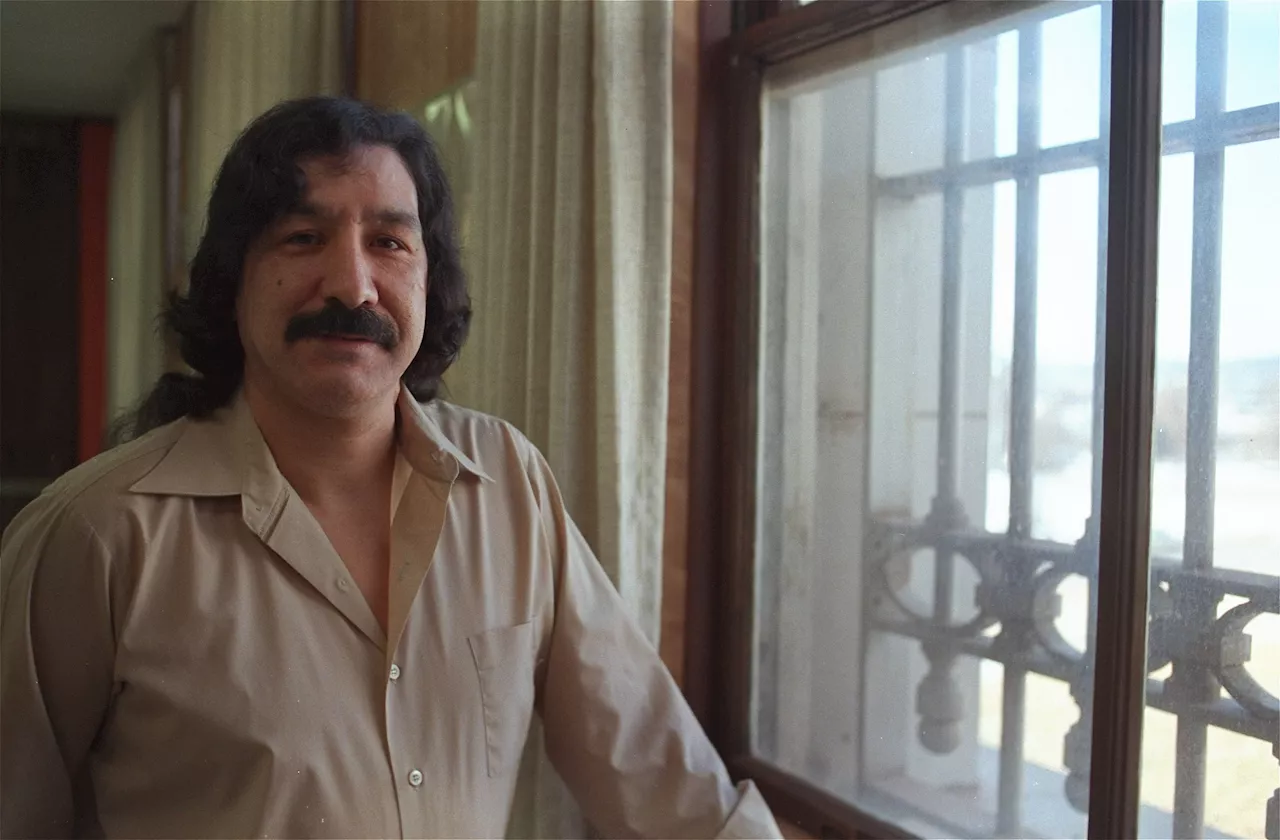 Biden Commuted Sentence of Leonard Peltier, a Symbol of Native American Rights MovementAfter nearly half a century in prison for the 1975 killings of two FBI agents on the Pine Ridge Indian Reservation, Leonard Peltier's sentence has been commuted by President Biden. Peltier's case has long been intertwined with the Indigenous rights movement, with many arguing his conviction was unjust and part of a broader history of government oppression against Native Americans.
Read more »
 Leonard Peltier's Clemency: A Step Towards Justice and Healing for Indigenous PeoplesThis article discusses the recent commutation granted to Leonard Peltier, a Native American serving two life sentences for the 1975 murder of two FBI agents. The author, a California Native American legislator, connects Peltier's case to the broader struggle for fairness and healing faced by Indigenous peoples for centuries. The article highlights the historical injustices endured by Native Americans, including forced assimilation through boarding schools, and emphasizes the ongoing need for justice and accountability.
Read more »
 Leonard Peltier to be released from prison following sentence commutation in FBI killingsProminent Native American groups have called for Peltier’s release for decades.
Read more »
 Leonard Peltier, Native American Activist, Released After Nearly 50 Years in PrisonAfter nearly half a century behind bars, Leonard Peltier, a Native American activist convicted of killing two FBI agents in 1975, was released from prison to home confinement. The decision, made by then-President Joe Biden, has sparked both celebrations and criticisms.
Read more »