
NASA’s Perseverance rover, a robotic explorer on Mars, has captured a rare spectacle of two dust devils battling for domination.
NASA’s Perseverance rover, a robotic explorer on Mars, has captured a rare spectacle of two dust devils battling for domination, as one consumes the other. These swirling columns of air, known as dust devils, are a common but chaotic feature on the Red Planet.
Much like Earth’s desert whirlwinds, they form when surface-heated air rises rapidly through cooler air above, beginning to rotate and gather speed As they spin, these vortices lift dust from the surface. On January 25, Perseverance was roughly about 0.6 miles from the dust-up in a Martian location known as “Witch Hazel Hill”. The rover’s navigation camera recorded a larger dust devil — approximately 210 feet wide — overtaking a smaller one trailing just behind. Also in the shot are two more dust devils lingering in the background. “Convective vortices — aka dust devils — can be rather fiendish,” says Mark Lemmon, a Perseverance scientist at the Space Science Institute in Boulder, Colorado. “These mini-twisters wander the surface of Mars, picking up dust as they go and lowering the visibility in their immediate area. If two dust devils happen upon each other, they can either obliterate one another or merge, with the stronger one consuming the weaker.” The encounter was part of an ongoing imaging experiment by the rover’s science team, who are trying to better understand Martian atmospheric dynamics. While dust devils may seem like minor curiosities, they play an outsized role in shaping the Red Planet’s weather. “Dust devils play a significant role in Martian weather patterns,” says Katie Stack Morgan, project scientist for the Perseverance rover at NASA’s Jet Propulsion Laboratory in Southern California. “Dust devil study is important because these phenomena indicate atmospheric conditions, such as prevailing wind directions and speed, and are responsible for about half the dust in the Martian atmosphere.” Perseverance, which has been trundling across Jezero Crater since its 2021 landing, has seen its share of these ghostly whirlwinds. In 2023, it But dust devils have been under NASA’s watchful eye for decades. The Viking orbiters were the first to photograph them from space in the 1970s . Pathfinder later became the first to image one from the surface and recorded one passing directly over the lander. Rovers Spirit and Opportunity spotted them frequently, and even Curiosity, currently roving Gale Crater on the opposite side of the planet, has watched these dusty cyclones spin past. Despite their frequency, catching one on camera is no simple task. They appear with little warning and vanish just as fast—most don’t last longer than 10 minutes. “Capturing a dust devil image or video with a spacecraft takes some luck,” the team explains. Because they’re so unpredictable, Perseverance often scans the environment in all directions. Over time, scientists begin to notice patterns — when and where dust devils are most likely to appear — and use that data to fine-tune their search. “If you feel bad for the little devil in our latest video, it may give you some solace to know the larger perpetrator most likely met its own end a few minutes later,” adds Lemmon. Beyond these atmospheric studies, Perseverance’s mission has grander ambitions. As part of NASA’s Mars 2020 mission, the rover is focused on astrobiology — searching for signs of ancient microbial life and collecting rock and soil samples. These sealed samples are being prepared for a future return to Earth through the joint NASA-ESA Mars Sample Return Program. The data Perseverance gathers is not only advancing scientific understanding of Mars’ history and climate but also laying the groundwork for future human missions. Operated by NASA’s Jet Propulsion Laboratory and managed by Caltech, Perseverance is the vanguard of the agency’s Moon to Mars initiative — a strategy that includes the Artemis missions to the Moon, intended as a proving ground for humanity’s eventual journey to the Red Planet.
United States Latest News, United States Headlines
Similar News:You can also read news stories similar to this one that we have collected from other news sources.
 NASA Mars Rover Spots ‘Shocking Spherules’ In Strange RockNASA's Perseverance Mars rover photographed a weird, bubbly-looking rock. Scientists are investigating its formation and trying to figure out where it came from.
Read more »
 Curiosity Mars rover discovers largest organic molecules ever seen on Red PlanetKeith Cooper is a freelance science journalist and editor in the United Kingdom, and has a degree in physics and astrophysics from the University of Manchester.
Read more »
 Strange sphere-studded rock on Mars found by NASA's Perseverance roverSharmila Kuthunur is a Seattle-based science journalist focusing on astronomy and space exploration. Her work has also appeared in Scientific American, Astronomy and Live Science, among other publications. She has earned a master's degree in journalism from Northeastern University in Boston. Follow her on BlueSky skuthunur.bsky.
Read more »
 Curiosity rover makes ‘arguably the most exciting organic detection to date on Mars’The Curiosity rover detected the largest organic molecules to date on Mars, which may be fragments of fatty acids, or some of the chemical building blocks of life.
Read more »
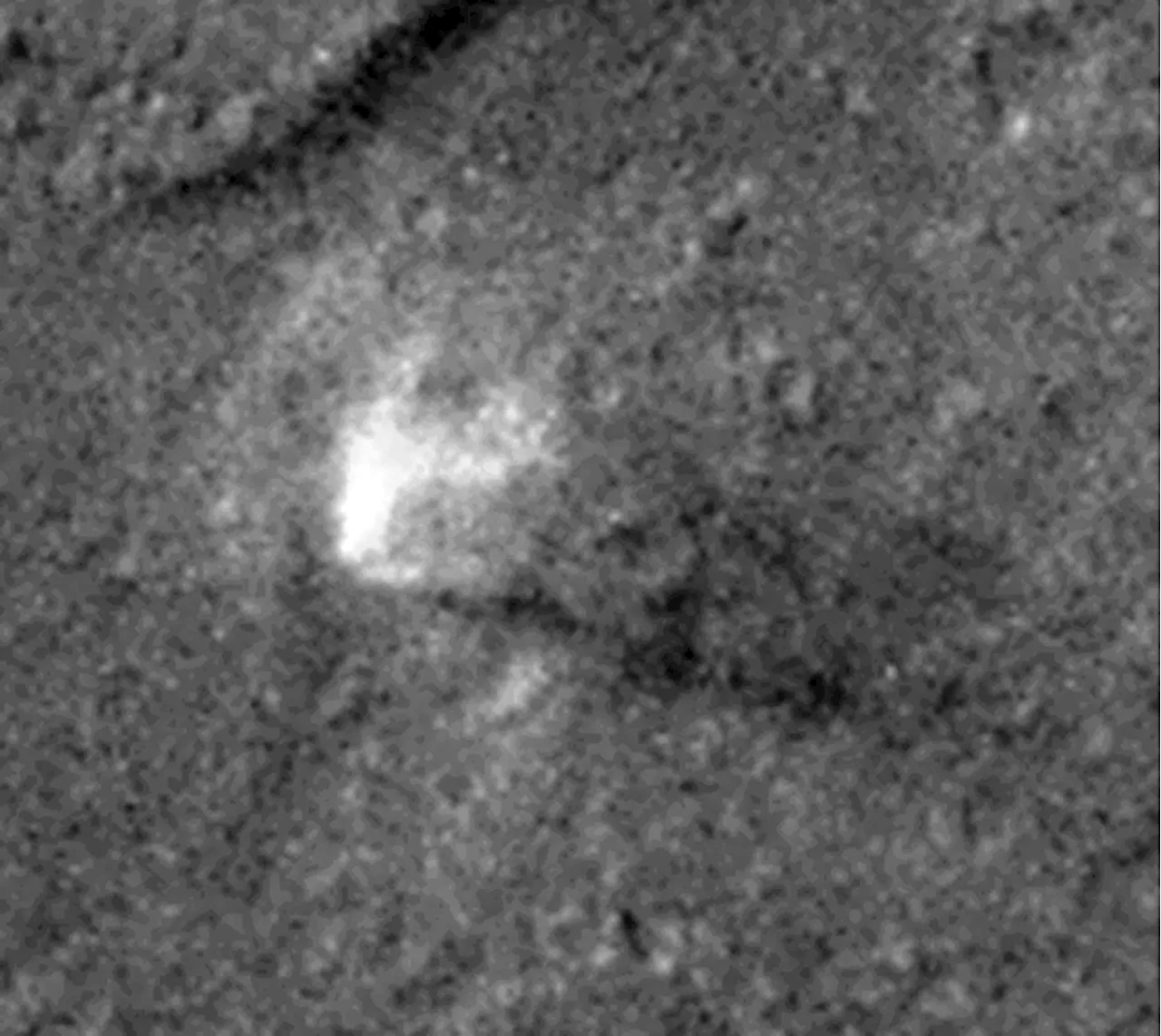 Perseverance Rover Witnesses One Martian Dust Devil Eating AnotherThe six-wheeled explorer recently captured several Red Planet mini-twisters spinning on the rim of Jezero Crater.
Read more »
 NASA rover captures giant dust devil devouring smaller one on MarsThe dust devil was about 210 feet wide, NASA said, but likely didn't last long after consuming the smaller whirlwind.
Read more »