
NASA is partnering with commercial industry to expand our knowledge of Earth, our solar system, and beyond. Recently, NASA collaborated with Kongsberg
A sectional rendering of NASA's SPHEREx .NASA is partnering with commercial industry to expand our knowledge of Earth, our solar system, and beyond. Recently, NASA collaborated with Kongsberg Satellite Services to support data transfer for the agency’s SPHEREx mission to explore the origins of the universe.
“Not only is NASA moving toward commercialization, the agency is making technological advancements to existing systems and saving millions of dollars in the process — all while expanding human knowledge through science and exploration missions,” said Kevin Coggins, associate administrator for NASA’s To receive data from missions in space, NASA relies on the Near Space Network and Deep Space Network, a collection of antennas around the globe.Transmitted via NASA’s Near Space Network, this video shows SPHEREx scanning a region of the Large Magellanic Cloud. The shifting colors represent different infrared wavelengths detected by the telescope’s two arrays. Credit: NASA/JPL-Caltech NASA’s SCaN program took a novel approach by leveraging its established commercial partnership with KSAT. While upgraded KSAT antennas were added to the Near Space Network in 2023, SPHEREx required an additional Antarctic antenna that could link to online data storage. To support SPHEREx’s polar orbit, KSAT upgraded its Troll, Antarctica antenna and incorporated their own cloud storage system. NASA then connected KSAT’s cloud to the NASA cloud, DAPHNE+ . As the Near Space Network’s operational cloud services system, DAPHNE+ enables science missions to transmit their data to the network for virtual file storage, processing, and management. “By connecting the Troll antenna to DAPHNE+, we eliminated the need for large, undersea fiberoptic cables by virtually connecting private and government-owned cloud systems, reducing the project’s cost and complexity,” said Matt Vincent, the SPHEREx mission manager for the Near Space Network at NASA’s Goddard Space Flight Center in Greenbelt, Maryland. Each day, SPHEREx downlinks a portion of its 20 gigabits of science data through the Troll antenna, which transfers the files across KSAT’s network of relay satellites to the DAPHNE+ cloud. The cloud system combines and centralizes the data from each antenna, allowing access to all of SPHEREx’s health and science data in one convenient place. The SPHEREx mission data is transmitted from space to the Troll Satellite Station, relayed through a network of satellites, and stored in the Near Space Network’s cloud system for easily-accessible analysis by scientists around the world.With coverage throughout its orbit, SPHEREx transmits its 3D maps of the celestial sky, offering new insight into what happened a fraction of a second after the big bang. “Missions like SPHEREx use the Near Space Network’s combination of commercial and government antennas,” explained Michael Skube, DAPHNE+ manager at NASA Goddard. “And that is the benefit of DAPHNE+ — it enables the network to pull different sources of information into one central location. The DAPHNE+ system treats government and commercial antennas as part of the same network.” The partnership is mutually beneficial. NASA’s Near Space Network maintains a data connection with SPHEREx as it traverses both poles and KSAT benefits from its antennas’ integration into a robust global network – no new cables required. “We were able to find a networking solution with KSAT that did not require us to put additional hardware in Antarctica,” said Vincent. “Now we are operating with the highest data rate we have ever downlinked from that location.” The upgraded ground station antenna at Troll Satellite Station supports cloud-based space communications, enabling NASA’s Near Space Network to support scientific missions via a wireless cloud network.For NASA, its commercial partners, and other global space agencies, this expansion means more reliable space communications with fewer expenses. Troll’s successful integration into the Near Space Network is a case study for future private and government partnerships. As SPHEREx measures the collective glow of over 450 million galaxies as far as 10 billion light-years away, SCaN continues to innovate how its discoveries safely return to Earth. . Funding and oversight for DAPHNE+ and the Near Space Network come from the SCaN program office at NASA Headquarters and operate out of NASA’sKorine Powers, Ph.D. is a writer for NASA's Space Communications and Navigation program office and covers emerging technologies, commercialization efforts, exploration activities, and more.
Communicating And Navigating With Missions Space Communications & Navigation Program Spherex (Spectro-Photometer For The History Of Th
United States Latest News, United States Headlines
Similar News:You can also read news stories similar to this one that we have collected from other news sources.
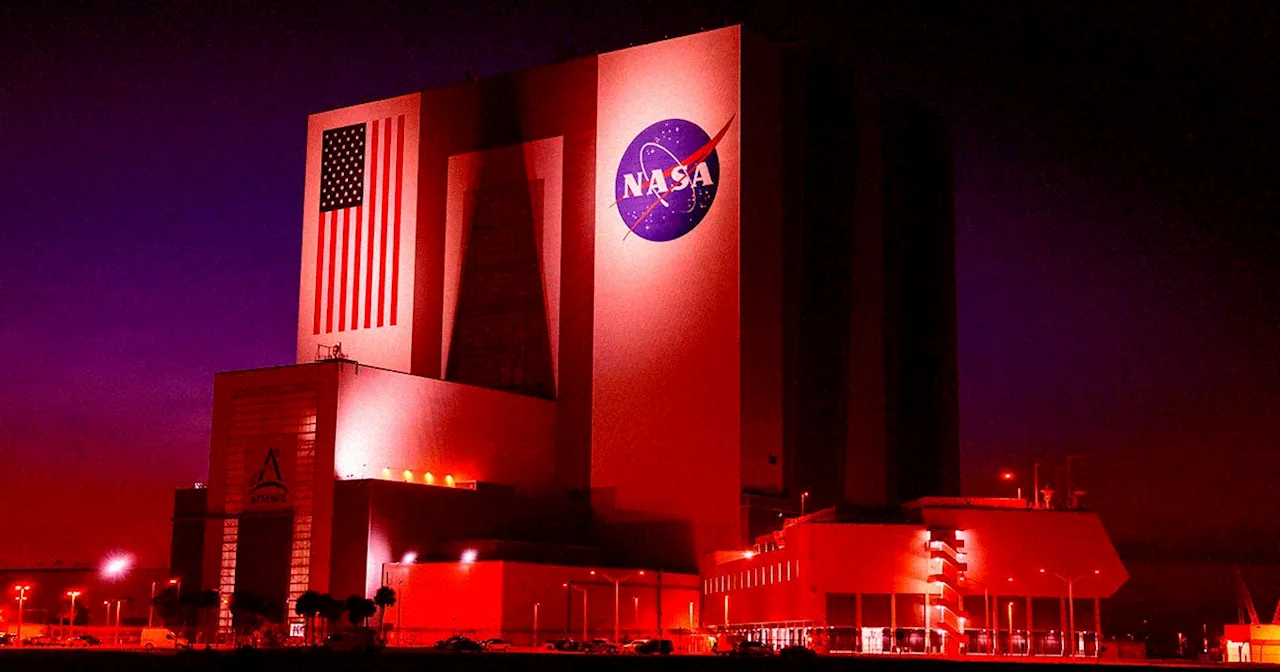 Trump Planning Brutal Cuts to NASA: 'Extinction-Level Event for NASA Science'Science and Technology News and Videos
Read more »
 Science Meets Art: NASA Astronaut Don Pettit Turns the Camera on ScienceNASA astronaut Don Pettit is scheduled to return home in mid-April after a seven-month mission aboard the International Space Station as part of Expedition
Read more »
 CSU expands fermentation program to include stronger focus on food scienceMaggy Wolanske is a multimedia journalist with Denver7.
Read more »
 COSI Science Festival Brings Science Alive with Interactive Exhibits and Live DemonstrationsThe COSI Science Festival is a free, family-friendly event in Columbus, Ohio, featuring live experiments, interactive exhibits, and activities for all ages.
Read more »
 NASA’s SPHEREx Space Telescope Begins Capturing Entire SkyAfter weeks of preparation, the space observatory has begun its science mission, taking about 3,600 unique images per day to create a map of the cosmos like
Read more »
 NASA’s SPHEREx space telescope has begun its mission to map the entire sky in 3DCheyenne is Engadget’s weekend editor and covers a little bit of everything. She’s particularly interested in emerging technology and niche gadgets, climate change, space, privacy, and internet culture. She’ll talk your ear off about Tamagotchis if you get her started.
Read more »