NASA recently evaluated initial flight data and imagery from Pathfinder Technology Demonstrator-4 (PTD-4), confirming proper checkout of the spacecraft’s
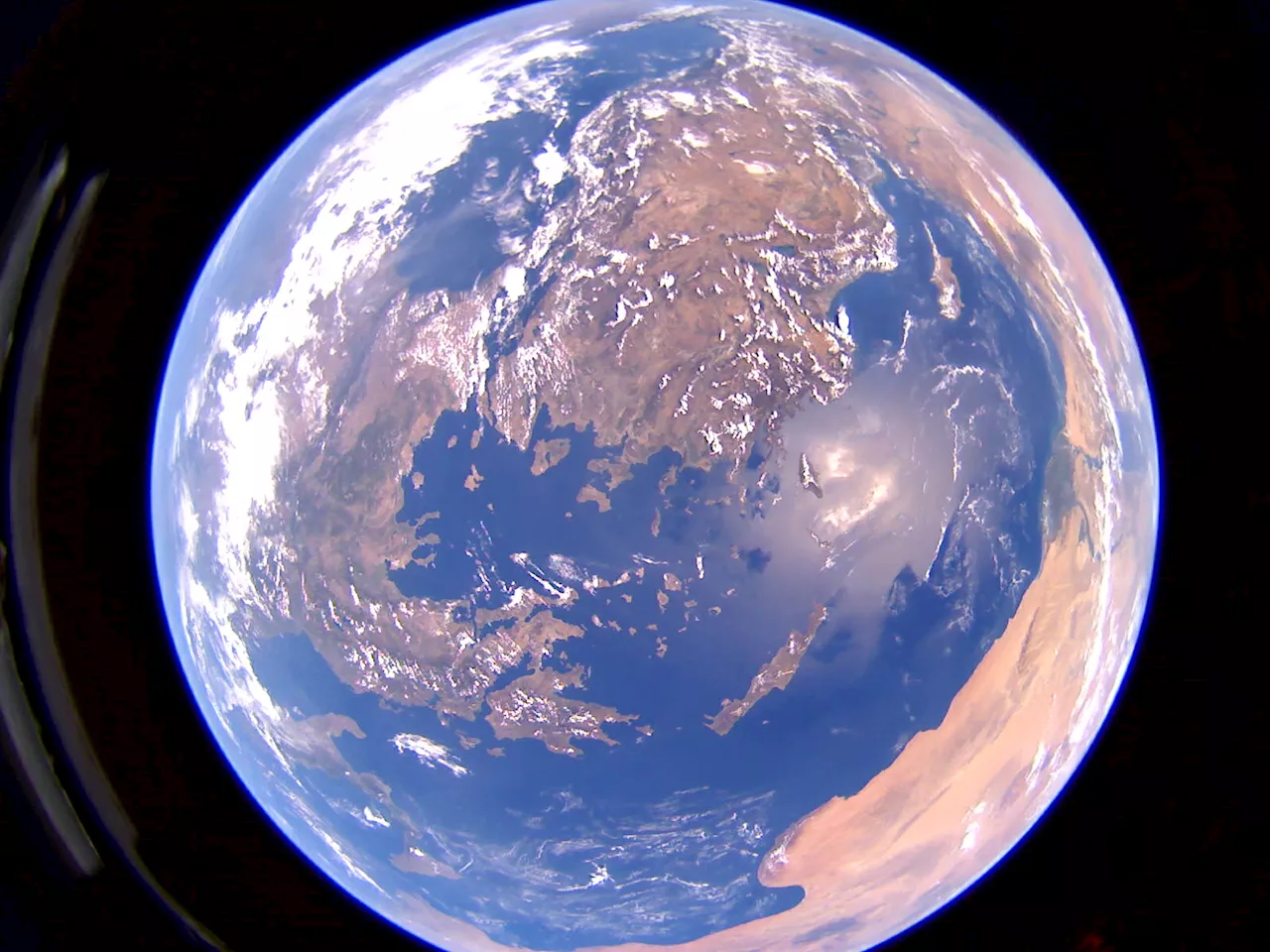
Oct 23, 2024A test image of Earth taken by NASA’s Pathfinder Technology Demonstrator-4’s onboard camera. The camera will capture images of the Lightweight Integrated Solar Array and anTenna upon deployment.
NASA recently evaluated initial flight data and imagery from Pathfinder Technology Demonstrator-4 , confirming proper checkout of the spacecraft’s systems including its on-board electronics as well as the payload’s support systems such as the small onboard camera. Shown above is a test image of Earth taken by the payload camera, shortly after PTD-4 reached orbit. This camera will continue photographing the technology demonstration during the mission. Payload operations are now underway for the primary objective of the PTD-4 mission – the demonstration of a new power and communications technology for future spacecraft. The payload, a deployable solar array with an integrated antenna called the Lightweight Integrated Solar Array and anTenna, or LISA-T, has initiated deployment of its central boom structure. The boom supports four solar power and communication arrays, also called petals. Releasing the central boom pushes the still-stowed petals nearly three feet away from the spacecraft bus. The mission team currently is working through an initial challenge to get LISA-T’s central boom to fully extend before unfolding the petals and beginning its power generation and communication operations. Small spacecraft on deep space missions require more electrical power than what is currently offered by existing technology. The four-petal solar array of LISA-T is a thin-film solar array that offers lower mass, lower stowed volume, and three times more power per mass and volume allocation than current solar arrays. The in-orbit technology demonstration includes deployment, operation, and environmental survivability of the thin-film solar array. “The LISA-T experiment is an opportunity for NASA and the small spacecraft community to advance the packaging, deployment, and operation of thin-film, fully flexible solar and antenna arrays in space. The thin-film arrays will vastly improve power generation and communication capabilities throughout many different mission applications,” said Dr. John Carr, deputy center chief technologist at NASA’s Marshall Space Flight Center in Huntsville, Alabama. “These capabilities are critical for achieving higher value science alongside the exploration of deep space with small spacecraft.” The Pathfinder Technology Demonstration series of missions leverages a commercial platform which serves to test innovative technologies to increase the capability of small spacecraft. Deploying LISA-T’s thin solar array in the harsh environment of space presents inherent challenges such as deploying large highly flexible non-metallic structures with high area to mass ratios. Performing experiments such as LISA-T on a smaller, lower-cost spacecraft allows NASA the opportunity to take manageable risk with high probability of great return. The LISA-T experiment aims to enable future deep space missions with the ability to acquire and communicate data through improved power generation and communication capabilities on the same integrated array. The PTD-4 small spacecraft is hosting the in-orbit technology demonstration called LISA-T. The PTD-4 spacecraft deployed into low Earth orbit from SpaceX’s Transporter-11 rocket which launched from Space Launch Complex 4E at Vandenberg Space Force Base in California on Aug. 16. NASA’s Marshall Space Flight Center in Huntsville, Alabama designed and built the LISA-T technology as well as LISA-T’s supporting avionics system. NASA’s Small Spacecraft Technology program, based at NASA’s Ames Research Center in California’s Silicon Valley and led by the agency’s Space Technology Mission Directorate, funds and manages the PTD-4 mission as well as the overall Pathfinder Technology Demonstration mission series. Terran Orbital Corporation of Irvine, California, developed and built the PTD-4 spacecraft bus, named Triumph.NASA teams are testing a key technology demonstration known as LISA-T, short for the Lightweight Integrated Solar Array and anTenna. It’s a super compact, stowable, thin-film solar array that when fully deployed in space, offers both a power generation and communication capability for small spacecraft. LISA-T’s orbital flight test is part of the Pathfinder Technology Demonstrator series of missions. To travel farther into deep space, small spacecraft require more electrical power than what is currently available through existing technology. LISA-T aims to answer that demand and would offer small spacecraft access to power without compromising mass or volume. Watch this video to learn more about the spacecraft, its deployment, and the possibilities from John Carr, deputy center chief technologist at NASA’s Marshall Space Flight Center in Huntsville, Alabama.
Cubesats General Marshall Space Flight Center Small Satellite Missions Small Spacecraft Technology Program Space Technology Mission Directorate
United States Latest News, United States Headlines
Similar News:You can also read news stories similar to this one that we have collected from other news sources.
 Should Phoenix Suns Trade or Keep Top Assets?The Phoenix Suns will have some tough choices once the new season begins.
Read more »
 Trump or Harris: Who are bettors putting their money on in presidential race?There's a clear favorite as the election enters the final weeks and early voting begins
Read more »
 LA Clippers share Kawhi Leonard's status ahead of training campThe Clippers' preseason begins on Oct. 5.
Read more »
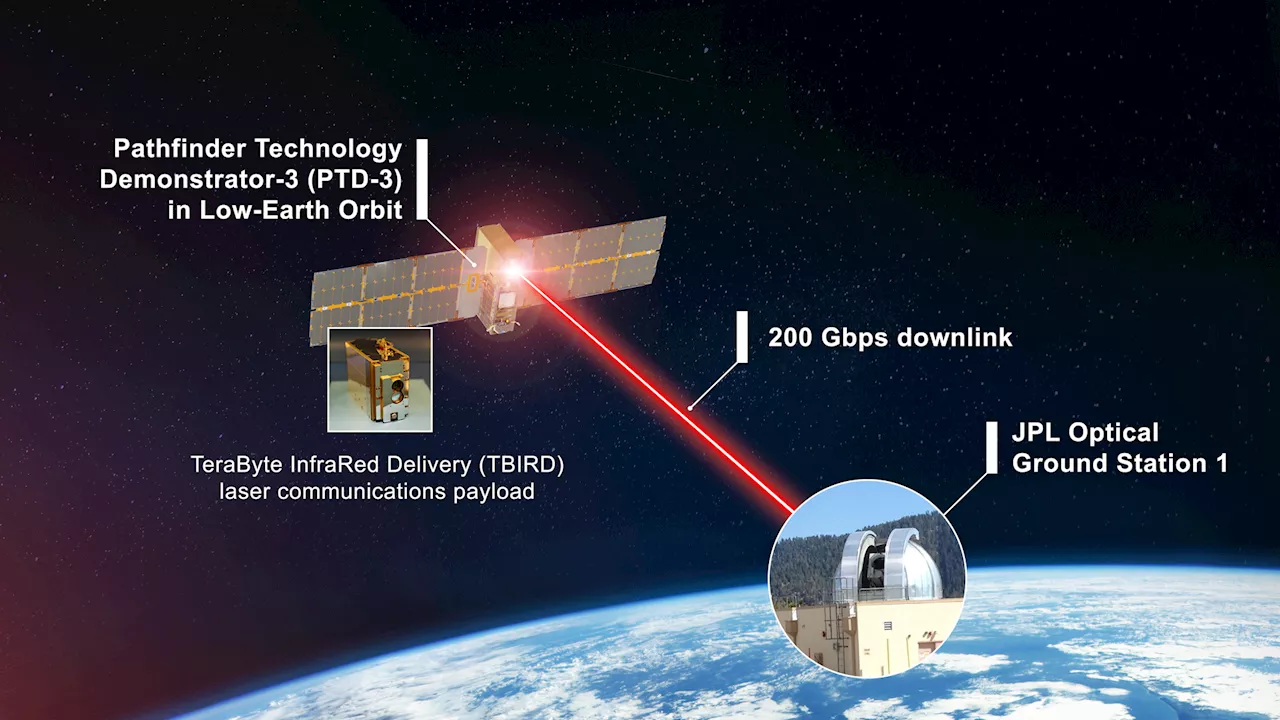 NASA’s Record-Breaking Laser Demo Completes MissionNASA’s TBIRD (TeraByte InfraRed Delivery) demonstration and its host spacecraft — the PTD-3 (Pathfinder Technology Demonstrator-3) — have completed their
Read more »
 Bruce Pearl reflects on offseason, previews 2024-2025 Auburn men's basketball seasonHow Pearl described his team as it begins preparation for the 2024-2025 season
Read more »
 Nissan Charges More For 2025 Pathfinder But Only Adds Power Liftgate, Free Oil ChangesPricing for the 2025MY Pathfinder starts at $37,070 for the S 2WD version and tops out at $51,810 for the Platinum AWD
Read more »