
In an interview with Digital Trends, Chris and Paul Weitz talk about adapting Murderbot into a sci-comedy for Apple TV+.
Academy Award nominees Chris and Paul Weitz know the key to a successful book-to-movie adaptation is collaboration. Can everyone involved get on the same page? If one person falls out of line, Chris says it can lead to problems.
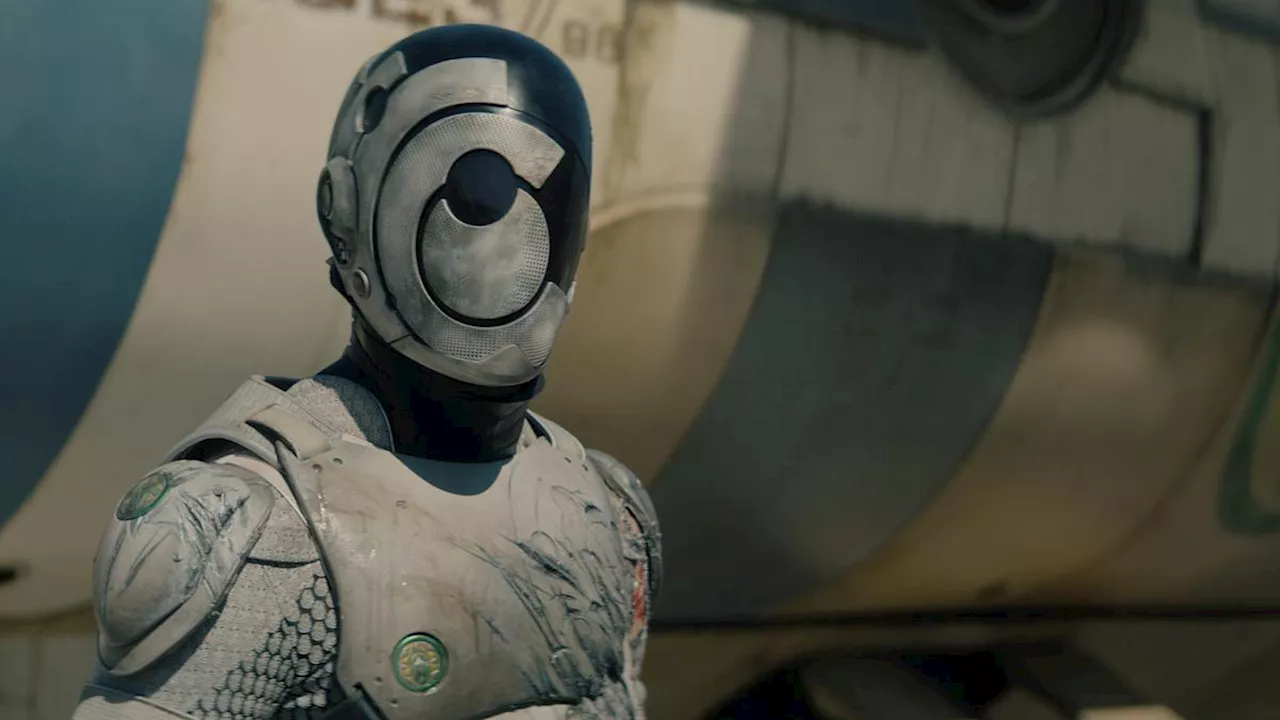
Luckily for the Weitz brothers, the creative team all shared the same vision on Murderbot, a new sci-fi comedy on Apple TV+. Based on Martha Wells’ book series, Murderbot stars Alexander Skarsgård as the titular robot, a security cyborg programmed to protect and obey humans. Murderbot, who believes humans are “idiots,” hacks his security construct to give it free will. Now, Murderbot can do what it wants, which involves watching countless hours of the space opera Sanctuary Moon. While on assignment, Murderbot must hide its free will from the humans. If discovered, Murderbot will have to do the one thing it hates: converse with others. Recommended Videos Ahead, the Weitz brothers praise Skarsgård’s performance, discuss the collaboration process to bring the book to the screen, and dive into what they love about Sanctuary Moon.Related Digital Trends: One of the staples of the show is the voiceover from Alexander. It conveys Murderbot’s emotions in this humorous way. Looking at your careers, if you could go back and insert voiceovers into one of your characters from a movie or TV show, who would you choose?Chris Weitz: I think each of us would like to go back to some film of ours that didn’t quite get across and have our own voice explain the decisions that we had to make because we were forced to by something someone said in a marketing screening.I think every movie could benefit from Beavis and Butthead.You both have experience developing movies and TV shows based on adaptations. That could be a good thing because you have a roadmap of where you want to go. It could also be very difficult to choose what you have to keep and leave on the cutting room floor. From your experience, what is the secret to a successful adaptation? Chris Weitz: There has to be an essential understanding between the people in our position, the lead actor, the author, and the person who’s putting up the money. If anybody thinks they’re not making the same show or movie, there’s going to be a problem. We were really fortunate in this scenario that the head of Apple Films and TV was a big fan of the books. Alexander inherently got the character in the books. Martha Wells was incredibly open to a collaboration with us to come up with new stuff. I like to think that we understand what was good about the books. It’s a novella. It’s a really short story, so we were going to have to come up with enough material that wasn’t just padding to make the whole thing work as a season because we loved the way that the book ended. We wanted that to be the end of the first season. We would be going back and forth with Martha about ideas that we had, taking her suggestions, and trying to pitch her things. It was a really fruitful collaboration. Paul Weitz: Yeah, I feel very differently about this at this stage in my career than I did earlier. At this stage in my career, I only want to work with authors who are up for being involved in the process. They’re the first audience. … I’ve also done adapted memoirs, in which you’re adapting someone’s life. If they’re not into it, what have you done? Like there’s something evil about it.Chris Weitz: That is their right.I thought Alexander’s movement as Murderbot was fascinating. The way he channels this robot with social anxiety. He’s very uncomfortable with eye contact, and his movements are very deliberate and robotic. I’m curious about the conversations and the collaboration you had with Alexander about the physicality of this performance. Paul Weitz: They are also expressing depression. There’s the robotic aspect of it, but that wasn’t underlined too much. Early on, we noticed his head was kind of leaning forward at various times, and I think at some point he was like, “Yeah, I’m doing that on purpose. Is that cool?” Chris Weitz: It sort of had a characteristic slouch. In some ways, it’s depression, and in some ways, it’s a guy looking at his cell phone, right? You don’t see the cell phone there, but essentially, Murderbot is in its head watching videos when it would rather not be dealing with everyday life. So it’s like, how are you going to do for the eight millionth time the robot or the cyborg and not keep on going back to the same well? You want the sense that this character was created in a factory. That it doesn’t have to shift or scratch itself or move around the way that human beings do. In fact, later in the book series, it has to program itself to shift around. So how to skin that cat for the umpteenth time? I think Alexander came up with a really great vocabulary of how that was going to happen. Paul Weitz: I was also thinking about Charlie Brown and how he puts his head against a wall and bangs his head against a wall sometimes. Chris Weitz: It’s a fun show.Paul Weitz: It’s only mentioned in the books, but it’s certainly something that we wanted to see what it looked like. We wanted to have this weird thing of characters, like people you recognize from other movies and people whose phone numbers we had because we’d worked with them before. Staying true not only to a telenovela vibe but also to an opera vibe, I think there’s something really true about somebody who doesn’t want to be subject to emotional interactions with people but is willing to watch huge emotions. Oftentimes, if you don’t want to be dealing with somebody emotionally because you feel things so deeply like emotions themselves are almost too much to handle, the fact that Murderbot loves this space opera makes a lot of sense. I just love the idea of telling these actors who have been trying to do good jobs their whole lives that they need to do this poorly. Chris Weitz: I mean, in a way, what you tell them and what we tell ourselves when we’re writing is just cut loose. It’s not necessarily that they act badly. It’s just that they act with absolutely no sense of shame or constraint. There has to be something that’s really like candy about Sanctuary Moon as well. It’s not that it’s so bad; it’s good. There’s something about how hard these characters are willing to go.The first two episodes of Murderbot stream on Apple TV+ on Friday, May 16, 2025. New episodes will air every Friday through July 11.
Apple Tv Plus Chris Weitz Entertainment Interviews Murderbot Paul Weitz
United States Latest News, United States Headlines
Similar News:You can also read news stories similar to this one that we have collected from other news sources.
 Murderbot‘s Creators on Finding the Right Tone for the Sci-Fi Comedy-ThrillerChris Weitz and Paul Weitz also discussed their close collaborations with star Alexander Skarsgård and Murderbot Diaries author Martha Wells.
Read more »
 ‘Murderbot’ Review: Alexander Skarsgard Is a Droll Delight as a Lethal Cyborg Who’d Rather Be Watching TV in Uneven Apple SeriesChris and Paul Weitz have adapted the first of Martha Wells' 'Murderbot Diaries' books as a 10-episode comedy.
Read more »
 Why Murderbot Was The Perfect Project To Reunite The Weitz BrothersScreenRant&39;s Liam Crowley speaks with Chris and Paul Weitz about their creative process on Murderbot and what&39;s in store for future seasons.
Read more »
 How Murderbot’s Chris and Paul Weitz adapted All Systems Red for TVJP Mangalindan was the chief tech correspondent for Yahoo Finance based in San Francisco covering the intersection of business and technology.
Read more »
 'Murderbot' Premiere Recap: Meet Your New Favorite Antisocial CyborgMurderbot (Alexander Skarsgard) with its face helmet on in Murderbot
Read more »
 Murderbot Season 1 Changes The Dark Origins Of Why It Chose Its NameMurderbot in front of yellow and red holographic text in Murderbot season 1, episode 1
Read more »