
The article explores the intricacies of training to fly military helicopters, highlighting the demanding nature of the task and the rigorous procedures in place. It emphasizes the need for pilots to multitask effectively, utilizing both hands and feet while monitoring various instruments and the surrounding environment.
Feds to review parole status of immigrants released into the country“I got that close to getting them… But I just couldn’t”: Brothers lose home, 6 dogs in devastating fire Read full article: “I got that close to getting them… But I just couldn’t”: Brothers lose home, 6 dogs in devastating fire‘There was no empathy:’ Bathroom incident at Houston-area middle school prompts mom to pull daughter out of school Read full article: ‘There was no empathy:’ Bathroom incident at Houston-area middle school prompts mom to pull daughter out of schoolHow I'm preparing for my Spain trip in 2025—with BabbelFILE - A U.
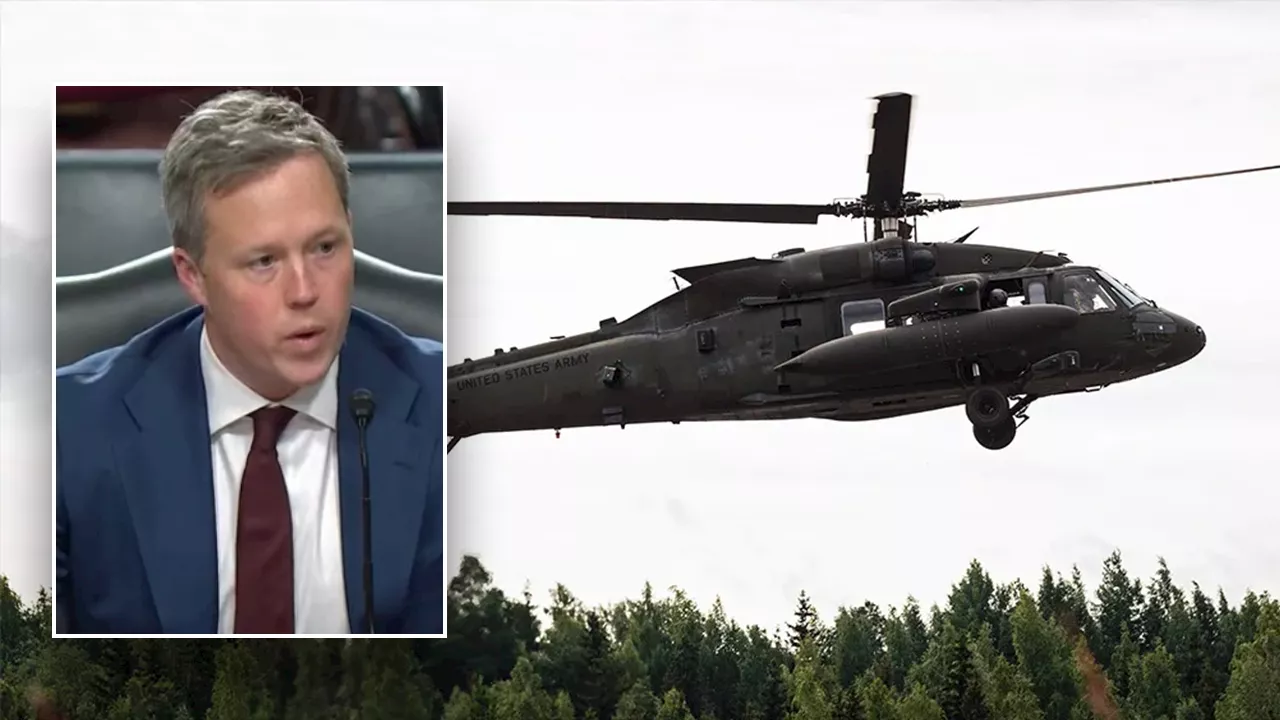
S. Army Black Hawk helicopter flies during Super Garuda Shield 2022 joint military exercises in Baturaja, South Sumatra, Indonesia, Aug. 12, 2022. To learn to fly a military helicopter is to take a master class in multitasking. You need both hands and both feet to control the aircraft while keeping a close eye on the horizon and your altitude. If it's nighttime and you're flying low, you may be scanning the ground for familiar landmarks using night-vision goggles while also checking GPS instruments.helicopters for 22 years. “You're using everything. And by the way, you’re also supposed to fly the aircraft, which is why most military aircraft are crewed by a minimum of two pilots.”But former military helicopter pilots and experts stood by the nation's rigorous military training Thursday, insisting that it's the world's best. “Once you get it down and get proficient at it, it’s amazing what you can do in it,” said Mark Miller, an associate professor at the College of Aviation at Embry-Riddle Aeronautical University on its Honolulu campus, and a former Marine helicopter pilot. “But it’s all about training where you really become one with the helicopter.”The education includes intense classroom training about aerodynamics, aircraft systems and the many things that can go wrong, Miller said. “There are real idiosyncrasies on just landing the helicopter," he said. “You can actually flip over a helicopter really easily if you don’t know what you’re doing. But you become very well-versed in that stuff. And then you learn as you go. And you can actually see these things happen and know what to do.” Pilots are trained to fly visually by looking out of the windows and to fly using their instruments in bad weather and at night. The instruments can include an attitude indicator that informs the pilot of the helicopter's orientation in relation to the horizon as well GPS instruments and night vision goggles. “You get that instrument scan down right away, sometimes painfully so,” Miller said of the training. “It’s not that easy. And then you get it to the point where you're proficient at it. And at night, you use those instruments all the time.” Challenges remain, Miller said. Artificial light on the ground potentially can be blinding when viewed through night vision goggles. Bodies of water can present visual illusions, depending on the lighting and other factors. Nickolas Macchiarella, an aeronautical science professor at Embry-Riddle in Daytona, Florida, said helicopter pilots at night also rely on “pilotage,” which is using identifiable locations on the ground, such as the side of a building or a piece of shoreline jutting into a river. This is particularly important when flying low and near restricted airspace, Macchiarella said. GPS can tell you where you are, but pilotage can tell you where you’ll be in five seconds. “If the helicopter is 100 feet above the ground and traveling at 120 knots, the pilot has to project forward in time where they’ll be in like 10 seconds,” he said. “A few seconds can make the difference in being in the proper airspace and being wrong.”Pilots operating around Reagan National Airport face unique challenges and must have a “heightened level of awareness” when navigating the area, said Clint Balog, an associate professor at Embry-Riddle. The Washington-area airport, known to pilots by its abbreviation DCA, is relatively small and doused in light pollution from the surrounding metropolitan area, said Balog, who has flown dozens of corporate flights in and out of the airport. “In DCA, whenever I’ve flown in there, I found that the light pollution there is among the worst I’ve flown into," he said. It’s always pretty bad, especially early at night.” Balog said pilots have to be precise, especially when landing, because that light can distort the surroundings. He said other cities also have light pollution but the compactness of Reagan Airport intensifies the potential confusion.Gaub, the retired Black Hawk pilot, said there have been thousands of military helicopter flights over many years in that particularly dense airspace. “And this is one that didn’t go right out of all those thousands,” he said. “So it’s a testimony to the great procedures that are there, to the pilots that train there and how they operate on a daily basis. It’s basically a highly choreographed dance with very little room for maneuver.”In a briefing with Pentagon reporters after the crash on Thursday, Army aviation chief of staff Jonathan Koziol said there was “a spike in incidents” last year that prompted the Army to do a safety stand-down, in which units pause flight operations to evaluate safety procedures “to not allow these types of incidents to happen,” Koziol said. At the time of the stand-down, there were about a dozen Army helicopter accidents that caused 14 deaths in a six-month period, about twice the rate of the previous 10 years, according to Army officials. The Black Hawk helicopter involved in Wednesday’s crash is one of many helicopter types used by the military. Maj. Gen. Walter Rugen, director of Army aviation, told reporters last year that “spatial disorientation” was a trend in the spike in accidents. Rugen said training must reinforce that pilots know “where you are and where your aircraft is with respect to the ground.” Twelve crashes of the Army Black Hawk helicopter since 2014 have killed 47 service members, according to data provided by the military.near Fort Campbell, Kentucky, in 2023 that killed nine service members. The pilots were wearing night vision goggles during the training exercise, army officials said. The most recent crash was on Nov. 10, 2023, when five Army soldiers were killed during aerial refueling training in the Mediterranean Sea.Copyright 2025 The Associated Press. All rights reserved. This material may not be published, broadcast, rewritten or redistributed without permission.How I'm preparing for my Spain trip in 2025—with Babbel
MILITARY TRAINING HELICOPTER PILOTS MULTITASKING NIGHT VISION INSTRUMENT SCANNING
United States Latest News, United States Headlines
Similar News:You can also read news stories similar to this one that we have collected from other news sources.
 Army helicopter that collided with American Airlines jet was on training flightThe Army helicopter that collided with an American Airlines jet was on a training flight.
Read more »
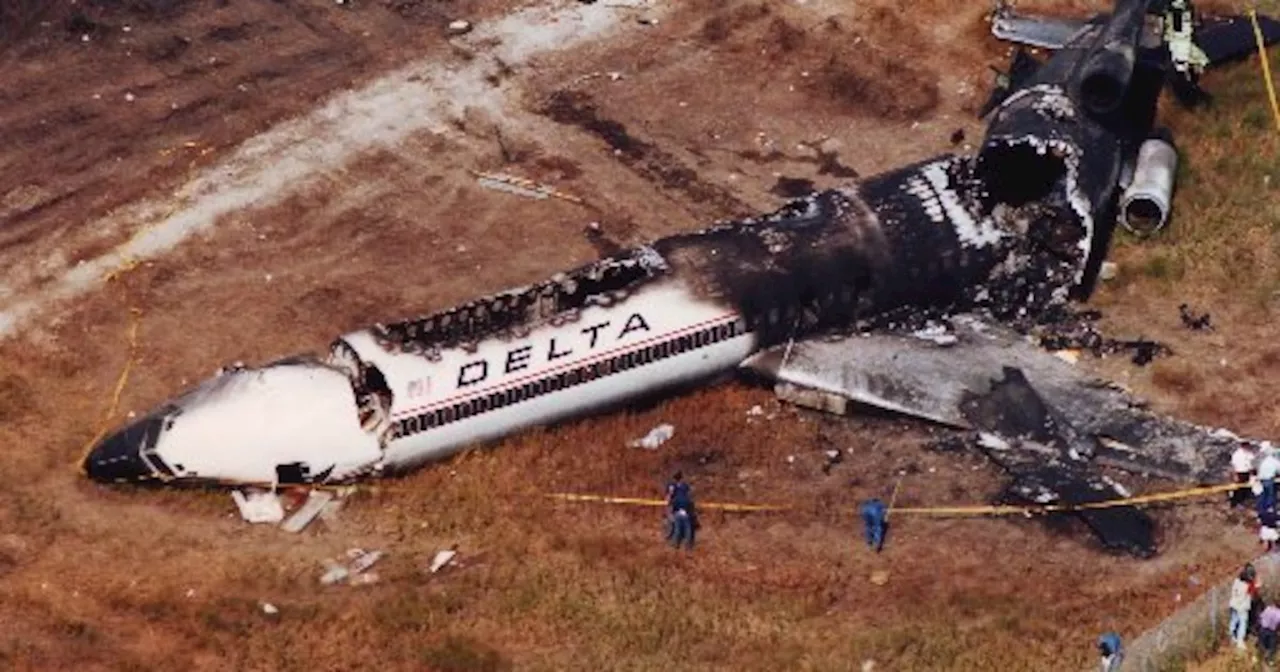 Deadly Collision: Regional Jet and Military Helicopter Crash in Washington D.C.A regional jet and a military helicopter collided in Washington D.C. late Wednesday, resulting in the tragic loss of over 60 lives. American Eagle Flight 5342, en route from Wichita, Kansas, collided with the helicopter during its approach to Ronald Reagan Washington National Airport. All passengers and crew on the jet and the soldiers onboard the helicopter are presumed to have perished.
Read more »
 Maps: Where American Airlines jet collided with military helicopterThe American Airlines Bombardier CRJ-700 collided in midair as it approached the D.C. airport around 9 p.m. local time, according to the Federal Aviation...
Read more »
 Army Helicopter Crash Spurs Questions About Training Flights Near Busy AirportA tragic collision in the Washington, D.C., area involving an Army helicopter and an American Airlines flight has prompted investigations and calls for a review of military training procedures near busy airports. The crash, which resulted in no survivors, has raised concerns about the safety of training flights conducted in congested airspace.
Read more »
 American Airlines CEO Appears to Blame Military Helicopter for Deadly D.C.-Area CrashSource of breaking news and analysis, insightful commentary and original reporting, curated and written specifically for the new generation of independent and conservative thinkers.
Read more »
 American Airlines Flight, Military Helicopter Collide, Killing 64A horrific mid-air collision between an American Airlines flight and a military helicopter near Washington, D.C., has resulted in the tragic loss of all 64 people on board. The crash has sent shockwaves through the figure skating community, as 14 members, including six from the Skating Club Boston, were confirmed to be among the victims.
Read more »