
New and improved buttermilk pancakes with the same classic buttery flavor and golden brown, crisp tops, and bottoms, but with an extra light and fluffy texture.
Kenji is the former culinary director for Serious Eats and a current culinary consultant for the site. He is also a New York Times food columnist and the author of The Food Lab: Better Home Cooking Through Science.
A balance of just the right amount of baking powder and baking soda gives the pancakes light texture and golden brown color.is 100% new, or whether it's just a collection of content from my existing articles. The answer is that it's a mix. Roughly 75% of it is brand new material. Of the remaining 25%, at least another half is material that has been upgraded and tweaked since first being published on the site.I am a firm believer that any job in which you stop learning is not a job worth keeping. It's what's driven me through every career choice I've made, and what has kept me at Serious Eats. Not a day goes by here in which I don't learn something new about cooking, whether it's debunking a long-held belief, coming up with a new technique, or developing my skills in the classics. Of course, there's a corollary to this: The more you learn, the more you realize that your old work can do with some fine-tuning or upgrades. Longtime readers ofmay remember a pancake recipe I developed about five years ago. That recipe was good , but it wasn'tIn fact, it's never gonna be perfect, but the more I learn, the better it'll get, and in the process of revisiting that recipe for my book, I ended up making a few changes: modifying the ratio of ingredients a touch; adding a step to get even lighter, fluffier results; and landing on an altogether better recipe that leads to better pancakes. Here now, is the fully updated version as it appears in my book, along with plenty of science and an updated recipe.They may be golden brown, crisp on the edges, and light and fluffy in the center, but when you get right down to it, classic American pancakes are not all that different from any leavened bread. Apart from its starch content, bread is basically just a ball of protein filled with gas. Very much like liquid, two proteins naturally present in wheat, glutenin and gliadin, link together to form the resilient, stretchy protein matrix known as gluten. In leavened breads, air bubbles are formed in this matrix and expand, creating the familiar hole structure inside a loaf of bread . With traditional or "slow" breads, that leavening agent is a living fungus called yeast. As the yeast consumes sugars present in the flour, it releases carbon dioxide gas, forming thousands of teeny-tiny air pockets inside the dough and causing it to rise. Once you pop that dough into the oven, those air pockets heat up and further expand, and a phenomenon known as oven spring takes place. Finally, as the gluten and starches get hot enough, they set into a semisolid form, giving structure to the bread and turning it from wet and stretchy to dry and spongy. The only problem with yeast? It takes a long, long time to work. Enter baking soda. Unrestricted by the protracted time frames of biological organisms, it relies instead on the quick chemical reaction between an acid and a base.Baking soda is pure sodium bicarbonate—an alkaline powder. When dissolved in liquid and combined with an acid, it rapidly reacts, breaking down into sodium, water, and carbon dioxide. Just as with yeasted breads, this carbon dioxide expands upon baking, leavening the gluten protein matrix. This type of chemically leavened bread is referred to as a quick bread, a broad category that includes everything from scones and biscuits to banana or zucchini bread and even pancakes. Of course, for baking soda to work, a recipe needs to include a significant acidic ingredient. That's why you see so many classic recipes for buttermilk pancakes and buttermilk biscuits or cake recipes that contain vinegar. The buttermilk is not just a flavoring agent—it provides the necessary acid to react with the baking soda and leaven the bread. Around the middle of the 19th century, someone realized that rather than relying on the home cook to add an acidic ingredient to react with the baking soda, it'd be much simpler to add a powdered acid directly to the baking soda itself, and baking powder was born. Composed of baking soda, a powdered acid, and a starch , baking powder was marketed as the all-in-one solution for busy housewives. In its dry state, it's totally inert. But once you add a liquid, the powdered acid and base dissolve and react with each other, creating bubbles of carbon dioxide, without the need for an external acid source.The most interesting side effect of using baking soda in a recipe is that it affects browning in a major way., named after Louise Camille Maillard, who first described its processes in the early 20th century, is the set of reactions responsible for that beautiful brown crust on your steak and the deep color of a good loaf of bread. Aside from cosmetics, the reaction also produces hundreds of aromatic compounds that add an inimitable savoriness and complexity to foods. As it turns out, the reaction occurs better in alkaline environments, which means that once you've added enough baking soda to neutralize the acid in a batter or dough, any extra you add will work to increase browning. So I made five batches of pancakes using identical batters consisting of flour, baking powder, egg, buttermilk, melted butter, salt, and sugar and varying amounts of baking soda, starting with none and increasing it by one-eighth-teaspoon increments, up to a full half teaspoon per batch. Each pancake wasfor exactly one and a half minutes per side. The results very clearly demonstrate the browning effect of baking soda.The pancake all the way on the left is inordinately acidic, due to the unneutralized buttermilk. It cooked up pale and bland. It was also underrisen, with a flat, dense texture. The one all the way around on the bottom, with a full half teaspoon of baking soda in the batter, had the opposite problem. It browned far too quickly, lending it an acrid burnt flavor tinged with the soapy chemical aftertaste of unneutralized baking soda. Interestingly enough, this pancake was also flat and dense—the large amount of baking soda reacted too violently when mixed into the batter. The carbon dioxide bubbles inflated too rapidly and, like an overfilled balloon, the pancake "popped," becoming dense and flaccid as it cooked. This browning phenomenon isn't just limited to pancakes, of course. For example, cookie recipes routinely include baking soda to aid browning, even when there isn't an acid for it to react with.If there's one major drawback with chemically leavened breads, it's that they need to be cooked pretty much immediately after the batter is mixed. Unlike a yeasted bread dough, which is low in moisture and kneaded until a tough, elastic gluten network forms to trap the massive amounts of carbon dioxide produced, a quick bread must be made with an extremely moist batter—baking powder simply doesn't produce enough gas to effectively leaven a thicker dough. Batters have relatively little gluten formation, meaning that they aren't all that great at trapping and holding bubbles. Once you mix a batter, your baking soda or baking powder immediately begins producing gas, and that gas almost immediately begins trying to escape into the air. When working with quick breads, those who aren't into the whole brevity thing may run into difficulties. Cook your pancakes immediately after mixing, and you get a light, tall, fluffy interior. Let the batter sit for half an hour, and you get a dense, gummy interior with few bubbles. But wait a minute, there are still some bubbles in there, right? Where did those come from?Well, pretty much all baking powders are referred to as "double-acting." Just as the name indicates, it produces gas in two distinct phases. The first occurs as soon as you mix it with water; the second occurs only when it is heated. This second rise in the skillet makes for extra-light and fluffy pancakes.So what if baking soda just isn't doing enough for you? How do you get your pancakes to stand even taller and lighter? I like to use a meringue—egg whites that have been whipped vigorously until they form a semisolid foam. Here's how it works: Foam: In the early phases of beating, the proteins in the egg whites—mostly globulin and ovotransferrin—begin to unfold. Like nerds at a Star Wars convention, they tend to gather together and bond in small groups. The whites start to incorporate a few bubbles and resemble sea foam. Soft peaks: As the whites are beaten, the groups of bonded egg proteins become more and more interconnected, eventually creating a continuous network of proteins that reinforce the walls of the bubbles you're creating. The whites begin to form soft peaks. Stiff peaks: As you continue to beat, the reinforced bubbles are broken into smaller and smaller bubbles, becoming so small that they are nearly invisible to the naked eye and thus the whites appear smooth and white, like shaving cream. When pulled into peaks, they remain stiff and solid. Breaking down and weeping: Keep going past the stiff-peak stage, and the proteins begin to bond so tightly with each other that they squeeze the moisture right out of the bubbles, resulting in a meringue that weeps and breaks. Acidic ingredients like cream of tartar or a touch of lemon juice can prevent egg white proteins from bonding too tightly, allowing you to form a foam that stays stable no matter how hard you beat it. Now microwave that liquid for about 15 seconds to bring it up to 180°F . A second, vigorous batch of bubbling should occur. You may also notice the liquid thicken slightly.When the baking powder first gets wet, a reaction occurs between the sodium bicarbonate and one of the powdered acids, typically potassium bitartrate , producing the first batch of bubbles. The second phase of the double act occurs only at higher temperatures , when a second powdered acid reacts with the remaining sodium bicarbonate, producing another round of bubbles. The thickening action is a side effect of the starch used to keep the baking powder dry—it absorbs water and gelatinizes, thickening your liquid as it heats. Now isn't that way cooler than that baking soda volcano you built for your fourth-grade science fair?True buttermilk is the liquid whey left after cream has been churned to create butter. Traditionally this whey was allowed to ferment into a slightly thickened, sour liquid that would keep longer than fresh milk. These days, though,by dosing it with Streptococcus lactis, a bacterium that consumes lactose, the main sugar in milk, and produces lactic acid, which adds tartness to the buttermilk, as well as causes casein, the primary protein in milk, to curdle, thickening, or clabbering, the milk. Baking powder is sodium bicarbonate mixed with one or more of the powdered acids and a starch. It does not require another acid to activate it. As mentioned earlier, most baking powders are "double-acting," meaning they produce carbon dioxide once upon coming in contact with moisture and then again when heated. Because of this, baking powder-leavened goods are generally lighter and fluffier than those made with baking soda alone. This doesn't mean, however, that you can let a baking powder batter just sit around, expecting the second batch of bubbles to do all the leavening—the initial reaction is vitally important to the texture of your baked goods, and so these batters should be baked right away too. Don't have baking powder on hand? It's quite simple to substitute with your own homemade mixture of baking soda, cornstarch, and cream of tartar. For every teaspoon of baking powder, use a quarter teaspoon of baking soda, half a teaspoon of cream of tartar, and a quarter teaspoon of cornstarch. But do bear in mind that your homemade mixture will not be double-acting, requiring you to be extra quick about getting your pancakes onto the griddle or your zucchini bread in the oven after mixing the batter.Combine flour, baking powder, baking soda, salt, and sugar in a medium bowl and whisk until homogenous. Transfer to an airtight container. The mix will stay good for 3 months. Place one batch of dry mix in a large bowl. In a medium clean bowl, whisk the egg whites until stiff peaks form. In a large bowl, whisk the egg yolks, buttermilk, and sour cream until homogenous. Slowly drizzle in the melted butter while whisking. Carefully fold in the egg whites with a rubber spatula until just combined. Pour the mixture over the dry mix and fold until just combined .Heat a large heavy-bottomed nonstick skillet over medium heat for 5 minutes . Add a small amount of butter or oil to the griddle and spread with a paper towel until no visible butter or oil remains. Use a 1⁄4-cup dry measure to place 4 pancakes in the skillet and cook until bubbles start to appear on top and the bottoms are golden brown, about 2 minutes. Carefully flip the pancakes and cook on the second side until golden brown and completely set, about 2 minutes longer. Serve the pancakes immediately, or keep warm on a wire rack set on a rimmed baking sheet in a warm oven while you cook the remaining 3 batches. Serve with warm maple syrup and butter.Pancake dry mix can be scaled up as many times as you'd like. Each batch of pancakes takes 11 ounces of dry mix to make . The sour cream can be replaced with more buttermilk.*The % Daily Value tells you how much a nutrient in a food serving contributes to a daily diet. 2,000 calories a day is used for general nutrition advice.
United States Latest News, United States Headlines
Similar News:You can also read news stories similar to this one that we have collected from other news sources.
 How Can Saving This Fluffy Monkey Help Africa’s Forests?I'm an Australian science journalist based in Cali, Colombia covering STEM in The Global South. I'm the current Vice-President of the Colombian Association of Science Journalism (ACPC) and helped organize the 12th World Conference of Science Journalists, with 600+ attendees in Medellin, Colombia.
Read more »
 At Dior Cruise 2025, Fluffy Brows Are the Star of the ShowPeter Philips, creative and image director for Dior Makeup, was the genius behind the natural runway look.
Read more »
 Shining a light on molecules: L-shaped metamaterials can control light directionPolarized light waves spin clockwise or counterclockwise as they travel, with one direction behaving differently than the other as it interacts with molecules.
Read more »
 Ricotta Pancakes With Blueberry CompoteThese fluffy ricotta pancakes are remarkably light and delicious on their own, but the lemony blueberry sauce really takes them over the top.
Read more »
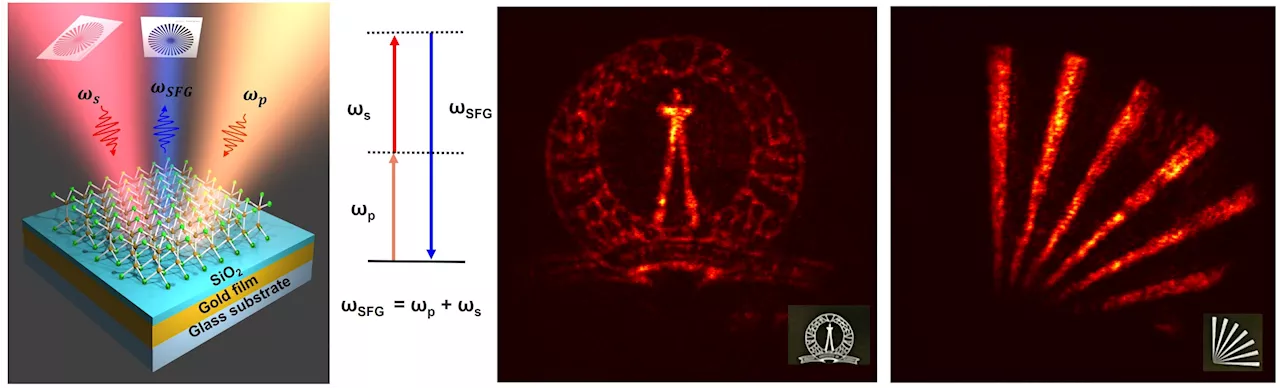 Turning infrared light visible: New device uses 2D material to up-convert infrared lightThe human eye can only see light at certain frequencies (called the visible spectrum), the lowest of which constitutes red light. Infrared light, which we can't see, has an even lower frequency than red light.
Read more »
 Wolverine's Most Impossible Feat Proves He Basically Has an Extra SuperpowerWolverine, drenched in multicolored light, creaming as he brandishes his claws, which are reflecting gold light.
Read more »