
Intel Arrow Lake, or Core Ultra 200, is Team Blue’s next generation of processors.
Intel Arrow Lake , or Core Ultra 200, is Team Blue’s next generation of processors. The successors to the Meteor Lake/Raptor Lake refresh 14th-generation, Arrow Lake is expected to debut towards the end of 2024, but it’s not quite as straightforward as previous generations.
It may launch alongside another low-power version to maximize Intel’s fabrication capacity and ditch one of Intel CPUs’ most long-standing features: Hyperthreading. Contents There’s still some time to launch, so we don’t know all the details yet, nor if they will end up being some of Intel’s best processors. Here’s everything you need to know about Intel Arrow Lake. Arrow Lake specs As with recent generations of Intel processors, Arrow Lake is slated to use a tile-based design, with performance and efficiency cores running alongside an onboard GPU and other accelerators for AI and video transcoding. Recommended Videos We don’t have the specifications broken down by model number just yet, but Videocardz gathered some alleged leaks in July that show the breakdown by different series of Arrow Lake CPUs. Core Ultra 9 models — the 285K and 275 — will have eight performance cores, 16 efficiency cores, and four Xe graphics cores. Clock speeds will vary among them, but they should all have the same 24 CPU core configuration. The clock speeds may well be lower than last generation, though, with rumors suggesting they’ll be scaled back by several hundred MHz. Potentially, the top chip will have a maximum boost clock of 5.7GHz, although recent speculation points to 5.5GHz. E core clocks could be on the rise, though, which may compensate. It’s not clear if this is purely from a design perspective or if it’s somewhat of a response to the recent controversy surrounding 13900K and 14900K instability at higher clock speeds. Intel is also said to be dialing back the TDP to about 80% of Raptor Lake, which could help. Lower clock speeds aren’t great. It’s worth remembering, though, that clock speed is only a component in how fast a chip is. AMD’s processors have had lower clock speeds than Intel’s for many years, and yet it’s been hotly competitive just about everywhere. Core Ultra 7 models will have eight performance cores and 12 efficiency cores, a rise of four E cores over the last generation. They’ll come with and without four Xe graphics cores. Core Ultra 5 models will have the most configuration options, though all should have six performance cores and eight efficiency cores across the range. There will be options with and without graphics, higher-end options with greater clock speeds, and some with reduced GPU core counts. The new chips will have new core architectures. The Arrow Lake P cores will reportedly be based on the Lion Cove architecture, while the efficiency cores will use the Skymont architecture. There have been rumors of a new core layout, placing the E cores clustered together between performance cores. Arrow Lake will be built on a new LGA 1851 socket design, with more pins than 12th- and 13th-generation designs on the LGA 1700 socket. That means you’ll need a new motherboard for Arrow Lake processors and won’t be able to upgrade from 12th-, 13th-, or 14th-generation PCs directly. However, it will be the same physical size as LGA 1700, so coolers should be compatible. That new socket brings a new generation of motherboard chipsets, too, as well as mandated DDR5 — no more DDR4 on Intel boards with this generation. High-end Z890 boards are also said to support the CAMM2 memory standard, a possible replacement for SO-DIMM. Memory speed support will rise again, and there are rumors of support for Thunderbolt 5, though those haven’t been confirmed. The flagship PCIe technology will remain PCIe 5, too. One big change that could be coming with Arrow Lake is that Intel will ditch its long-time simultaneous multithreading technology: hyperthreading. It did this with sub-top-tier models in the 9th generation, but this will reportedly be a complete top-to-bottom removal of the feature. The idea is to allow the performance cores to stretch their legs on demanding tasks, while the multithreading capabilities hyperthreading typically enables would be handled by the new E and LP-E cores. We initially thought that Intel would use its own 20A node for Arrow Lake. However, it revealed during IFA 2024 that it’s shifting gears toward developing a smaller node: 18A. Arrow Lake is therefore said to be manufactured by “external partners,” which most likely means Intel’s rival fab TSMC. Bartlett Lake There have also been rumors that Intel will debut a new Bartlett Lake design for low-end processors alongside Arrow Lake in 2024, utilizing the older Intel 4 3nm design. These may be designed to offer competition for AMD’s aging, but certainly not unpopular, Ryzen 5000 generation, which continues to see support with new designs like the 5700X3D, and new 5000 GT series. Barlett Lake will reportedly based on updated Raptor Lake silicon designs, so it should be compatible with existing LGA 1700 platforms. It should have DDR4 memory, too, potentially making it a cheaper upgrade path for Intel fans. While it might seem odd for Intel to utilize an older process node and split its next-gen lineup in two, this is to take the pressure off the fabrication of Intel’s 20A silicon, which will be cutting edge at the time of release and in limited supply. Using an older design for more affordable chips should improve availability and pricing come launch time. The latest rumors as of September 2024 are that Bartlett Lake will come in a few unique configurations, including a performance-core-only design, with up to 12 P cores, and a now more-typical P + E core design with the usual Intel configurations.Hybrid targeting early Jan’25, P-core only targeting Q3’25 pic.twitter.com/ueqTJZBOdi While these are unlikely to offer comparable performance to Arrow Lake, the extension of the LGA 1700 socket is great for anyone on an existing Intel platform. Especially if your high-end CPU is having trouble from the latest Intel fallout.Arrow Lake availability and price Just when will Arrow Lake be released to the public? Intel debuted its 14th generation Meteor Lake designs to a lukewarm reception, so to stay within its plan for five nodes in four years, Intel is expected to launch Arrow Lake in the last few months of 2024 — likely, with Barlett-Lake alongside it, or shortly after in early 2025. The latest rumors as of September are that Arrow Lake will launch much closer to the end of the year, possibly even as late as December. That will reportedly follow a finalized quality assurance sample stage in September. In any case, the processors should have availability in the final quarter of 2024, with some signs pointing to October 10. Normally, we’d expect Intel to unveil Arrow Lake during its yearly Innovation Event, but it was canceled for this year. Intel launched Lunar Lake processors during IFA 2024, but Arrow Lake still didn’t get a release date, so it’s hard to say when it might hit the shelves. Although the release date remains a mystery, we got our first glimpse at some of the possible prices for Intel Core Ultra 200K — also known as Arrow Lake. As spotted by Charlie on X , a retailer from the U.K. listed the Core Ultra 9 285K, the Core 5 265K, and a bunch of other upcoming CPUs ahead of time. According to these leaked prices, the CPUs are more expensive across the board, with the uplift ranging from 5% to around 8%. The Core Ultra 9 285K is said to cost 471 British pounds, which converts to around $660. This is unlikely to be the top chip in the lineup. Arrow Lake performance We don’t know how fast Arrow Lake will be just yet, but with a new performance core architecture, new process node, and higher temperature ceiling, they should be very fast indeed. The clock speed rumors don’t mean too much at these sorts of speeds, but overclocking should be there to help bring that raw speed advantage back. Claims of IPC gains are said to be around 5% for single-threaded and 15% for multi-threaded. A new process node and other enhancements could lead to some notable performance improvements with Arrow Lake. On the other hand, a recent leak from Moore’s Law Is Dead tells us that Intel’s performance uplift might not be that visible in gaming, and AMD’s upcoming Ryzen 7 9800X3D should become the leader of the pack once more. The YouTuber cited an anonymous source who stated: “Arrow Lake is turning out a bit better than I expected, but I maintain that it is unlikely to beat the R7 9800X3D in gaming by any notable margin, or at all.” The source agreed with the 15% IPC increase, but they also stated that this won’t translate to a 15% gaming uplift. So, it looks like we should keep our expectations low. Arrow Lake will reportedly add support for faster memory up to DDR5-6400, which should help further bolster performance. Arrow Lake onboard graphics are said to use Xe-LPG Plus, an upgraded version of the architecture we’ve seen in its latest Arc GPUs and Meteor Lake onboard GPUs, so they should be some of the fastest integrated graphics yet. Impressive, but wait and see Arrow Lake is shaping up to be an exciting Intel architecture and generation of processors, but it’s still firmly speculative for now. If you want a new Intel processor before Arrow Lake launches though, check out our guide to the best Intel CPUs to find out how to maximize your budget.
Arrow Lake CPU Intel Processor
United States Latest News, United States Headlines
Similar News:You can also read news stories similar to this one that we have collected from other news sources.
 Lake Powell's and Lake Mead's New Water Level Projections ReleasedProjections show Lake Mead's water levels 1,062.32 feet above sea level on January 1, 2025, and Lake Powell's at 3,574.08 feet.
Read more »
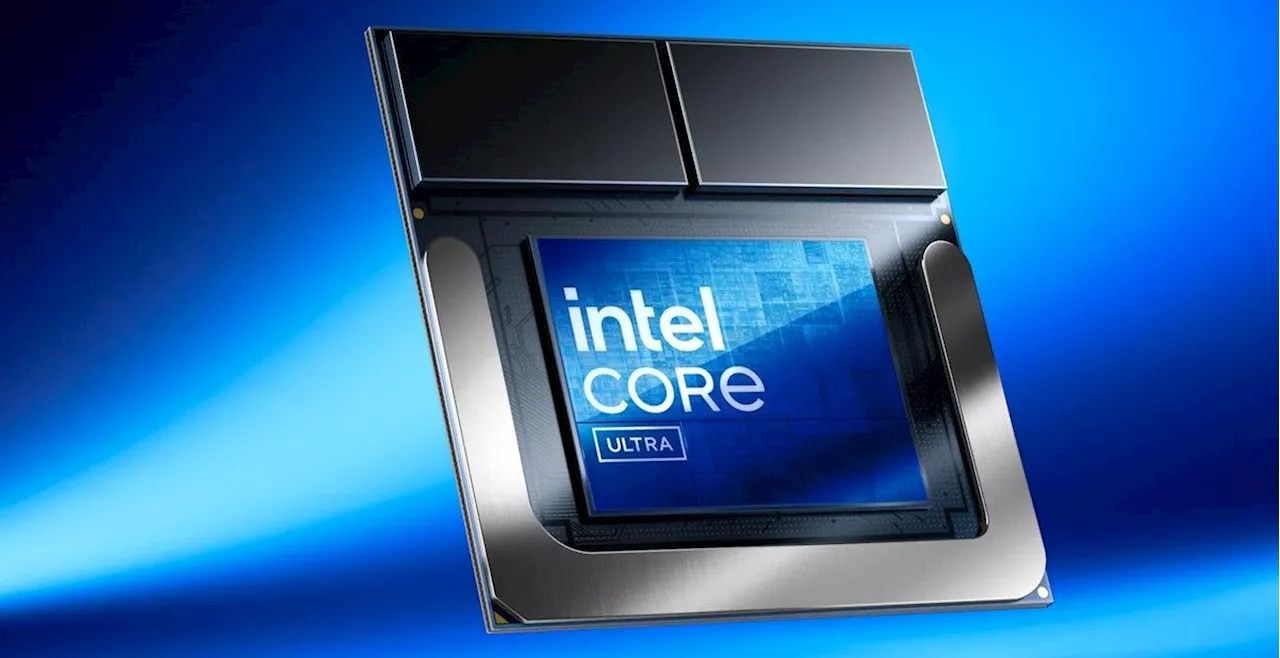 Intel Core Ultra 200V Luna Lake Lands: Huge Gaming, Battery Life BoostAntony is a PC hardware enthusiast and full time reviewer and technology journalist and has written for Forbes for over 10 years, most of this a as a senior contributor. He’s also written for prominent PC hardware websites and magazines and also runs the CrazyTechLab YouTube channel, which features guides, reviews and interviews.
Read more »
 Intel is flipping the script on laptops with ‘historic’ Lunar Lake CPUsIntel has finally shared final details of its new Lunar Lake-based Core Ultra Series 2 mobile chips.
Read more »
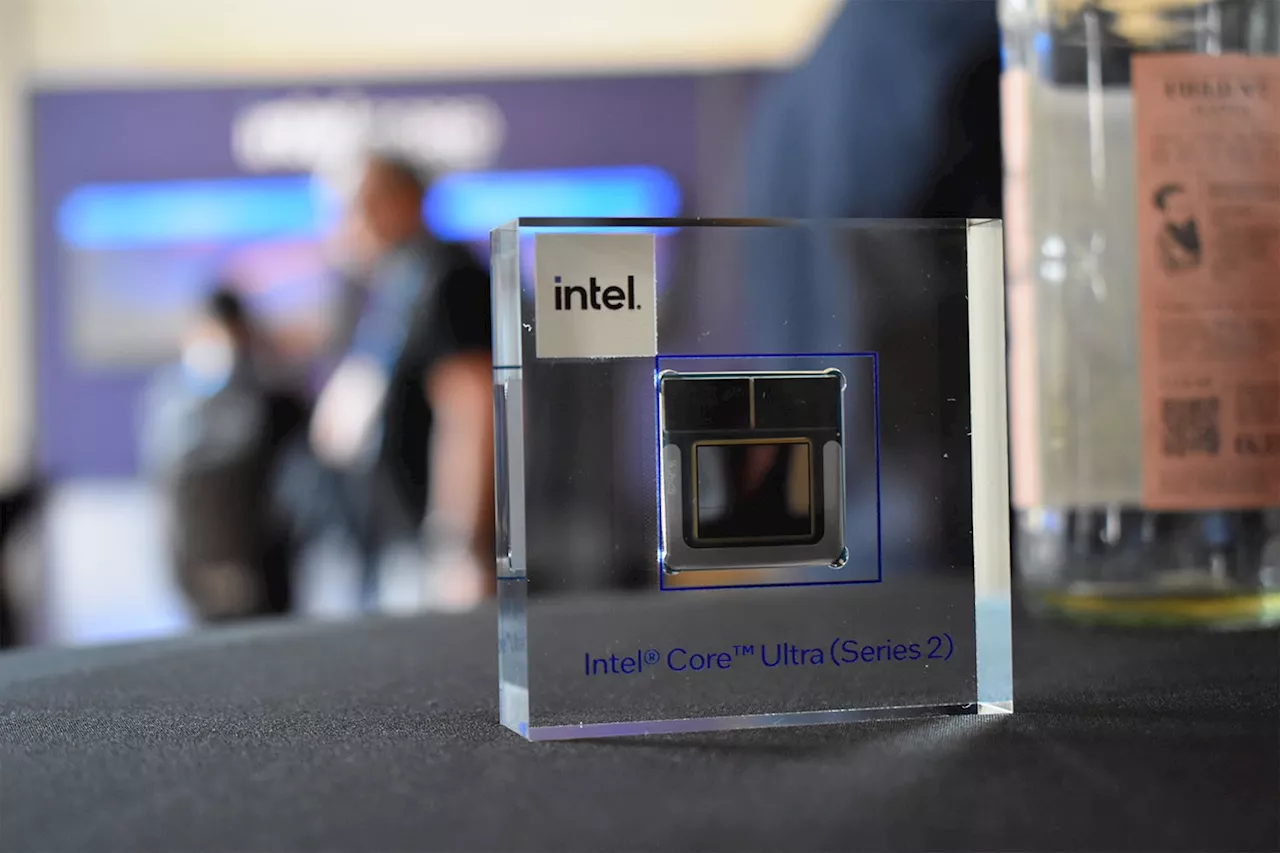 Intel’s Next ‘AI PCs’ With Lunar Lake Chips Dial Back on Promising the AI RevolutionLunar Lake’s big plan to take on Qualcomm is a far more efficient Intel Core Ultra 200V chip. Intel promises that x86 is here to stay.
Read more »
 Intel reveals first Lunar Lake laptop CPUs: everything you need to knowToday, Intel is revealing its first nine Core Ultra 200V chips, codenamed Lunar Lake, and its answer to Qualcomm’s Snapdragon X Elite and AMD’s Strix Point laptop chips.
Read more »
 Asus just launched the best-looking Intel Lunar Lake laptopAsus has introduced its slimmest notebook powered by Intel's new Core Ultra Series 2 mobile processors.
Read more »