
A new study reveals that India has successfully doubled its tiger population in just over a decade through focused conservation efforts. The study highlights the importance of protecting tigers from poaching and habitat loss, ensuring sufficient prey, minimizing human-wildlife conflict, and improving living standards in communities near tiger habitats.
Bexar County Sheriff’s Office reports first jail inmate death of 2025Read full article: Woman arrested after her pit bull severely injured man, BCSO says SAPD were responding to a shooting that happened just after 5:30 p.
m. on Jan. 29 in the 200 block of Torreon St.Save big on self-care and jewelry with these Insider DealsLearning a new language: Is 2025 the year to take on this goal?FILE - Tigers are visible at the Ranthambore National Park in Sawai Madhopur, India on April 12, 2015. FILE - A Royal Bengal tiger drags a wild boar after killing it at the Ranthambhore national park in Sawai Madhopur, Rajasthan, India, on June 10, 2015. FILE - Tigers are visible at the Ranthambore National Park in Sawai Madhopur, India on April 12, 2015. – India doubled its tiger population in a little over a decade by protecting the big cats from poaching and habitat loss, ensuring they have enough prey, reducing human-wildlife conflict, and increasing communities’ living standards near tiger areas, a study published Thursday found. The number of tigers grew from an estimated 1,706 tigers in 2010 to around 3,682 in 2022, according to estimates by the National Tiger Conservation Authority, making India home to roughly 75% of the global tiger population. The study found that some local communities near tiger habitats have also benefited from the increase in tigers because of the foot traffic and revenues brought in by ecotourism.The study in the journal Science says India's success “offers important lessons for tiger-range countries" that conservation efforts can benefit both biodiversity and nearby communities. “The common belief is that human densities preclude an increase in tiger populations," said Yadvendradev Jhala, a senior scientist at Bengaluru-based Indian National Academy of Sciences and the study’s lead author. “What the research shows is that it's not the human density, but the attitude of people, which matters more.” Wildlife conservationists and ecologists welcomed the study but said that tigers and other wildlife in India would benefit if source data were made available to a larger group of scientists. The study was based on data collected by Indian government-supported institutions. Arjun Gopalaswamy, an ecologist with expertise in wildlife population estimation, said estimates from India’s official tiger monitoring program have been “chaotic” and “contradictory.” He said some of the figures in the study are significantly higher than previous estimates of tiger distribution from the same datasets. But he added that the paper’s findings seem to have corrected an anomaly flagged repeatedly by scientists since 2011 related to tiger population size and their geographic spread. Tigers disappeared in some areas that were not near national parks, wildlife sanctuaries or other protected areas, and in areas that witnessed increased urbanization, increased human use of forest resources and higher frequency of armed conflicts, the study said. “Without community support and participation and community benefits, conservation is not possible in our country,” said Jhala. Tigers are spread across around 138,200 square kilometers in India, about the size of the state of New York. But just 25% of the area is prey-rich and protected, and another 45% of tiger habitats are shared with roughly 60 million people, the study said. Strong wildlife protection legislation is the “backbone” of tiger conservation in India, said Jhala. “Habitat is not a constraint, it's the quality of the habitat which is a constraint,” he said. Wildlife biologist Ravi Chellam, who wasn't part of the study, said that while tiger conservation efforts are promising, they need to be extended to other species to better maintain the entire ecosystem. “There are several species, including the great Indian bustard and caracal which are all on the edge," Chellam said. “And there is really not enough focus on that.” The Associated Press’ climate and environmental coverage receives financial support from multiple private foundations. AP is solely responsible for all content. Find AP’sCopyright 2025 The Associated Press. All rights reserved. This material may not be published, broadcast, rewritten or redistributed without permission.How I'm preparing for my Spain trip in 2025—with Babbel
TIGER CONSERVATION INDIA WILDLIFE PROTECTION ECOTURISM NATIONAL PARKS
United States Latest News, United States Headlines
Similar News:You can also read news stories similar to this one that we have collected from other news sources.
 Puma Opposes Tiger Woods' Sun Day Red Over Tiger LogoPuma has filed a notice of opposition against Tiger Woods' apparel and sneaker company Sun Day Red over its tiger logo. Puma claims the logo is too similar to its own leaping cat logo used since 1969 and could cause consumer confusion.
Read more »
 Puma Opposes Tiger Woods' Sun Day Red Trademark Over Tiger LogoPuma has filed a notice of opposition against Tiger Woods' apparel and sneaker company Sun Day Red, claiming the tiger logo is too similar to Puma's leaping cat logo. This marks the second legal challenge against Sun Day Red's trademark application.
Read more »
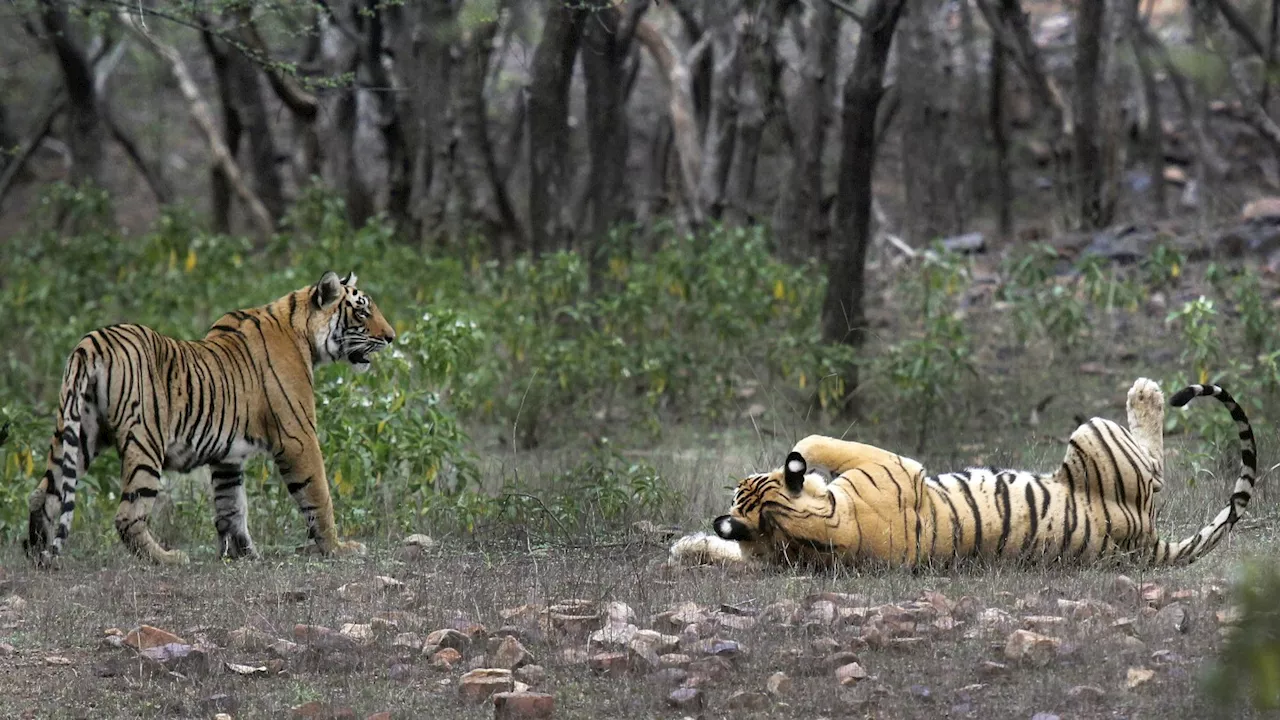 Study finds India doubled its tiger population in a decade and credits conservation effortsIndia doubled its tiger population in a little over a decade by protecting the big cats from poaching and habitat loss, ensuring they have enough prey, reducing human-wildlife conflict, and increasing communities’ living standards near tiger areas. That's according to a study published Thursday.
Read more »
 India Doubles Tiger Population in Over a DecadeA new study reveals that India has successfully doubled its tiger population in just over a decade, reaching an estimated 3,682 tigers in 2022. This remarkable feat is attributed to various conservation efforts, including combating poaching, protecting habitats, managing human-wildlife conflict, and improving the livelihoods of communities near tiger areas.
Read more »
 Study finds India doubled its tiger population in a decade and credits conservation effortsThe number of tigers grew from an estimated 1,706 tigers in 2010 to around 3,682 in 2022, according to estimates by the National Tiger Conservation Authority.
Read more »
 India’s tiger population surges—study reveals key factors behind the successIndia has doubled its tiger population in just over a decade, thanks to conservation efforts that protect habitats, curb poaching, and boost local communities.
Read more »