
Richard Brody reviews Sam Fleischner’s documentary film “Jetty,” about a shoreline-protection project in Rockaway Beach, which was badly damaged by Hurricane Sandy.
The credits are telling, and they’re near the start: Fleischner both recorded the sound and edited the film; Oliver Lanzenberg shot it, and Robert Carnevale was the camera assistant; nobody else is mentioned, there or at the end, as involved with the shoot.
The compactness of the crew is reflected in the film’s run time—a mere fifty-three minutes. Still, the size of the crew is less significant than the fact that their work embodies a practice—even an artistic repertory of gestures—that is visually evident even without reference to the credits. “Jetty” begins just before construction starts, with encompassing views of the vestiges of earlier wooden jetties, which line the beach like broken teeth; remarks from two residents describe the damage done by Sandy, including the total destruction of its boardwalk. The action moves from the scarred beach to a quarry where a rock wall is detonated, to liberate mighty boulders of granite that will eventually be placed perpendicular to the shoreline, reaching out into the ocean. An enormous drill sends a thick metal bit whirring deep into the quarry ground and back up to the surface. Claw-handed cranes load rocks into dump trucks, which the operators unload on the beach with maneuvers both abrupt and careful; one of the delights of “Jetty” is the choreographic delicacy of enormous machinery, the quasi-balletic refinement with which tons of granite are maneuvered into place. The Atlantic Shore Front Groins Project, as its officially known—plans are seen briefly on screen and discussed in voice-over by a technician—involves much more than merely plopping rocks into place. There are to be seventeen jetties over a span of seven miles, each one a three-layer construction whose shape is carefully designed. The workers on the job take care with the small particulars and the filmmakers highlight the beauty of extreme proximity to surface details—such as encrusted and eroded metal panels—with an Abstract Expressionist vibe. Most of the images are static, their frames seemingly painterly and their textures tactile even at a distance. But there is nothing over-aestheticized in this approach. The camera’s observations, while poised and pensive, are ardently curious about the work at hand and the settings where it takes place. “Jetty” was shot on film, on the relatively small-scale and portable format of 16-mm., and that choice appears to have inflected both the shoot and the editing. The choice of film over video, of photochemical images over digital ones, imparts a mechanical mood in keeping with the physicality of the work depicted. More than this, though, the pressure of precision that the relatively short and expensive rolls of film impose on low-budget shoots means that the film embodies an awareness of scarcity and a corresponding discipline regarding resources. The images here give the impression of being thought out before being filmed, the discoveries taking place in sight and in mind before being caught on camera. As if confirming this idea, the process of observation when the camera rolls proves so absorbing that most of the movie’s images are allowed to stay onscreen for engrossingly long stretches. It’s in those interactions—of pedestrians and workers, of the jetties and the surfers and bathers, of the construction project and the city behind it—that “Jetty” unfolds, with minimal emphasis and maximal effect, its mighty implications. As hypnotically fascinating as the maneuvers of claw cranes and the abstract forms of sand and water may be, the essence of the movie, as of the groins project itself, is the interconnection of technology and private life, the dependence of daily pleasures and comforts on large-scale infrastructure, the responsibility of government agencies and other public institutions for public safety, and the ideal of achieving this by the careful marshalling and deployment of power and reason, of scientific knowledge and artisanal competence, and the dedication of labor and management alike to the common good. Watching “Jetty” is a reminder of the centrality of the multiple overlapping systems of thought and action, of management and execution, on which modern life depends, and the extreme fragility of the physical and intellectual threads that connect them. As I watched a worker tightening a bolt, I wondered what would happen if it went untightened. Seeing workers run tubes and lay pipes, hearing the sand technician talk of minimizing the potential risks of reshaping the seabed, offers a crucial reminder of why competence and a sense of professional duty matter—why, for instance, the U.S. Army Corps of Engineers should be headed by an engineer, not by a TV bloviator. The obvious dangers faced by workers in such heavy industry are a reminder that contractors should be specialists held to account, not campaign donors expecting favor. The underpinning of the jetty project is trust—the confidence, on the part of the residents of Rockaway, that the institutions involved in remodelling their shoreline and protecting their community are disinterested stewards, not callous profiteers. No one in the film gives the impression of watching the invasive construction at their doorsteps with skepticism or fear. That basic confidence has an aesthetic: it’s the one that Fleischner brings to light in the way he blends practical curiosity with detached abstraction, evoking both an earnest rational connection to the process and a dreamy disconnection of sheer sensory pleasure that echoes the leisure of the beach’s swimmers and surfers and pedestrians. In the absence of such confidence, the aesthetic would be frivolous and decadent, or bitterly ironic. Instead, “Jetty” comes off as a nostalgic time capsule—and a vision of rebuilding and reinforcement that’s not physical but political and social. ♦
Rockaway Beach Hurricane Sandy U.S. Army Corps Of Engineers
United States Latest News, United States Headlines
Similar News:You can also read news stories similar to this one that we have collected from other news sources.
 Judge orders federal agencies to release billions of dollars from two Biden-era initiativesThe 2021 Infrastructure Investment and Jobs Act provided $550 billion in new infrastructure investments.
Read more »
 Texas' Bois d'Arc Lake project called 'infrastructure ingenuity'The Engineering and Public Works Roadshow recognized Bois d'Arc Lake water supply program in Fannin County as an example of great American infrastructure.
Read more »
 Boil water notice issued in Devine due to infrastructure improvement project, city saysDevine residents are under a citywide boil water notice, officials said Tuesday.
Read more »
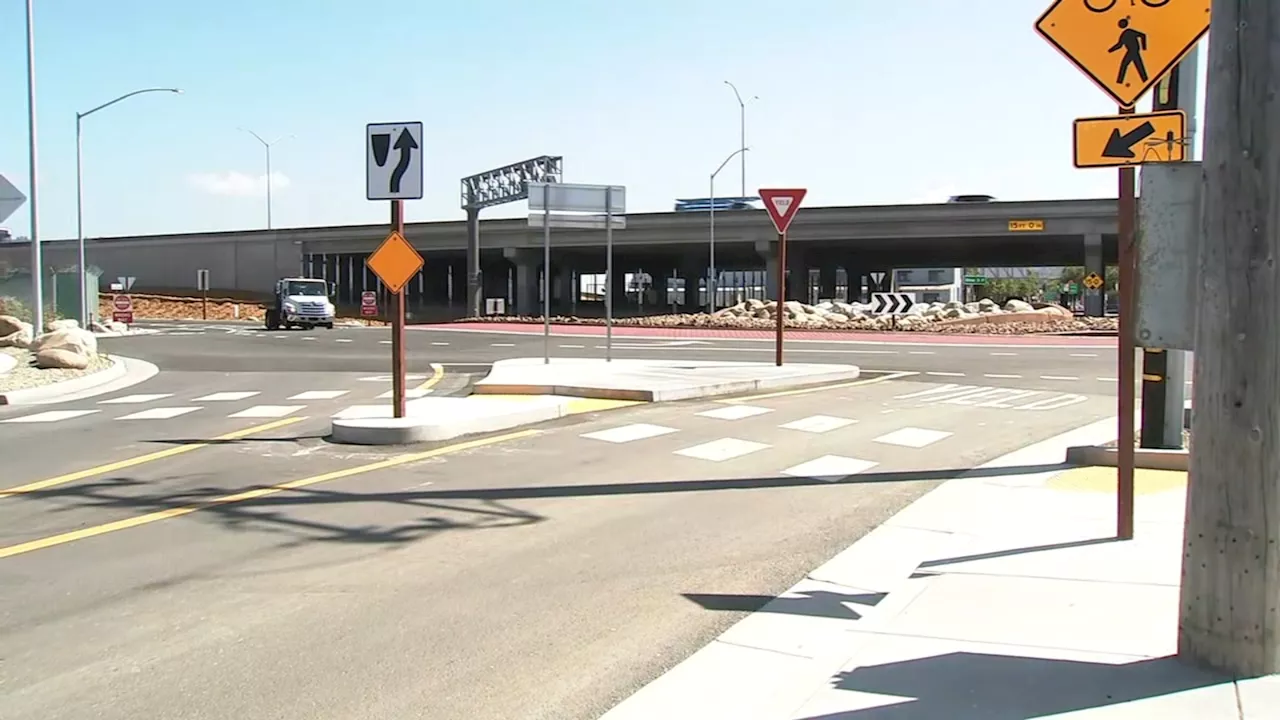 Major I-80, Gilman Street infrastructure project in Berkeley is completeA big part of the project is two roundabouts at I-80 and Gilman Street -- the first off-exit roundabout in Alameda County.
Read more »
 Large electric vehicle charging station opens in Dauphin County with 22 chargersThe project was supported by a $300,000 Alternative Fuel Refueling Infrastructure Grant from the state.
Read more »
 Enterprise to start a $2 million water infrastructure project this monthSoon, over $2 million worth of new water infrastructure upgrades will happen in the city of progress and for good reason.
Read more »