
The Doomsday Clock was adjusted, moving closer to midnight (that's bad!). Though AI wasn't a key factor, it is apparent that AI will soon loom large. Here's the scoop.
In today’s column, I examine the latest status of the famous or perhaps infamous Doomsday Clock countdown. Turns out that though AI isn’t yet integral to the clock tick-tock movement, I assert it soon shall be.
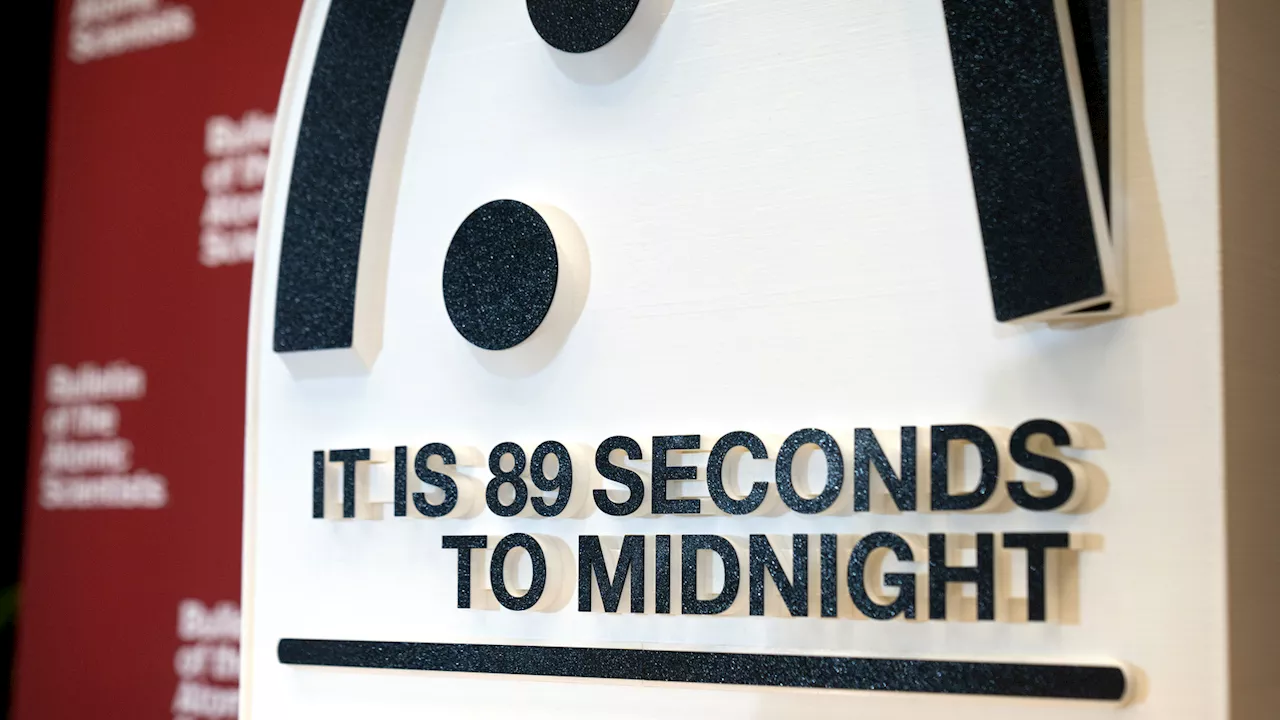
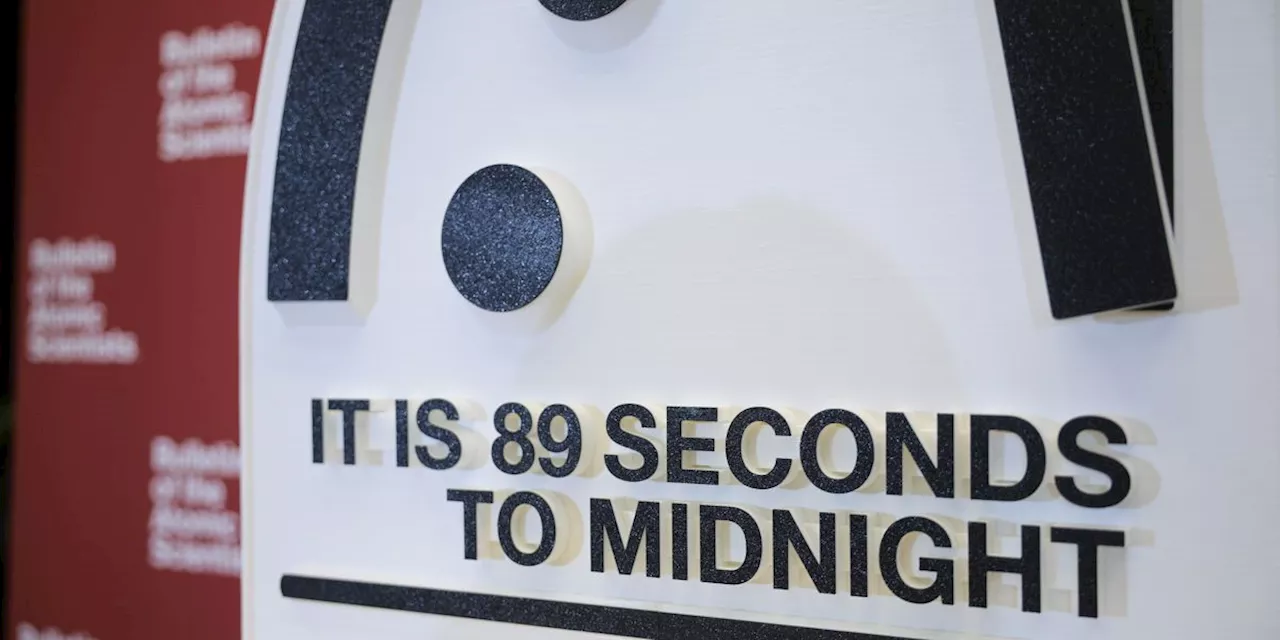
This analysis of an innovative AI consideration is part of my ongoing Forbes column coverage on the latest in AI including identifying and explaining various impactful AI complexities 2019: Doomsday Clock set at 2 minutes to midnight 2017: Doomsday Clock set at 2 ½ minutes to midnight2015: Doomsday Clock set at 3 minutes to midnightSadly, since then, the minute hand has been moved to a minute and a half, or 90 seconds, before midnight. The decision of which direction and how much to move the minute hand is made by the Bulletin of the Atomic Scientists in conjunction with a Board of Sponsors that has various selected Nobel prize winners.I’d like you to contemplate the ten years from 2015 to the present. Do you think that the minute hand deservedly has been moving closer to midnight? Or do you think that it should still be at the three-minute mark? Maybe somewhere else in between?An announcement was made this January 2025 about the status for 2024. The proclamation was spelled out in a posting entitled “Closer than ever: It is now 89 seconds to midnight”, 2025 Doomsday Clock Statement, Editor John Mecklin, Science and Security Board,“In 2024, humanity edged ever closer to catastrophe. Consequently, we now move the Doomsday Clock from 90 seconds to 89 seconds to midnight—the closest it has ever been to catastrophe.” “Our fervent hope is that leaders will recognize the world’s existential predicament and take bold action to reduce the threats posed by nuclear weapons, climate change, and the potential misuse of biological science and a variety of emerging technologies” “In setting the Clock one second closer to midnight, we send a stark signal: Because the world is already perilously close to the precipice, a move of even a single second should be taken as an indication of extreme danger and an unmistakable warning that every second of delay in reversing course increases the probability of global disaster.”The declaration states that the Doomsday Clock is now residing at 89 seconds before midnight.This is a one-second movement from the 90 seconds of the prior year. Some felt that this was a weakening of the time switches. It used to be that the time switches were mainly based on minutes. Then it went to seconds. But the use of seconds was at least in bunches and not on a second-at-a-time measurement. Going into just individual seconds seems like hair-splitting and not worthy of being heralded. Others counter that complaint by saying that the use of individual seconds is a recognition of movement that provides a directional sense to it. They argue that minutes could at times be interpreted as overly dramatic. The claim is that going to individual seconds shows a semblance of realism in how the hand is moving. Either way, you can bet that this is going to be an ongoing heated debate and could either help increase visibility or lessen attention to the Doomsday Clock. We will have to wait and see how people react.The formal announcement that I cited above also opted to provide some remarks about AI. Though AI wasn’t among the primary factors that determined the minute hand movement this time, there is an expectation that soon the advent of advanced AI will indeed enter the big picture.“As in years past, artificial intelligence continues to be a significant and disruptive technology. In particular, the sophistication of large language models such as GPT-4 has led to an intense public debate about the possible existential risks posed by such generative systems.” “The potential for this particular technology to constitute an existential threat on its own is highly speculative, but as succeeding generations of such models are released, the potential dangers, existential or otherwise, will increase.” “Of continuing concern are applications of AI in weapons of war, and most especially in its possible future application to nuclear weapons.” “AI is a disruptive technology, but any physical threat to humans posed by AI must be enabled by a link to a device that can change the state of the physical world, or to decisions that humans make about that world.” AI encompasses more than just generative AI and LLMs. Generative AI connected to physical devices raises pronounced issues. Artificial general intelligence and artificial superintelligence would be radical game changers. Those five major aspects are integral to deciding whether we are getting nearer to midnight or moving further away from midnight.Though most of the rapt attention right now is on generative AI and LLMs, please know that there are other types or categories of AI that deserve airtime too . For example, autonomous systems such as self-driving cars and self-flying planes tend to employ other kinds of AI and yet they too are vitally notable.AI can be used for the goodness of humankind such as the efforts to use AI to find a cure for cancer. If those breakthroughs arise, perhaps the minute hand on the clock ought to be moved further from midnight. The idea that AI is only for badness is a misnomer. There is duality involved. That being said, there are numerous dire consequences due to AI performing potentially evil acts or being used by evildoers. For my in-depth analysis of the dual-use nature of AI, seeThe latest advancements in generative AI involve connecting AI to physical devices such as robots, assembly line machinery, home-based controls, and the like. This is variously known as Physical AI, see my extensive explanation at The upside is that you can readily interact with generative AI in fluent language and tell the AI to perform various physical acts. The downside is that those physical acts can go awry, whereby the AI incorrectly commands a physical device or causes the device to harm humans.An aspect that catches people by surprise is that generative AI can do damage even if it isn’t connected to physical devices that will act out the commands of the AI. The damage can be caused by steering humans to take adverse actions. One concern that I’ve repeatedly raised about LLMs is that they are being used widely as a form of mental health therapy. This is a grandiose experiment in which humanity is the guinea pig. We don’t know what impact AI will have on population-wide mental status and yet globally, generative AI is freely giving out all manners of psychological guidance. For further background, see my coverage atSuppose that AI convinces people to do harmful acts. The AI itself isn’t carrying out the activities. But it had a role in persuading people to take actions that they perhaps would not have undertaken. If there is any good news involved, it could be that maybe AI will influence people to be supportive of their fellow humanity. Fingers-crossed.The AI that we have currently is not sentient. We don’t know if we will attain such AI. Our contemporary AI can do some impressive things, but it hasn’t reached any kind of pinnacle yet. You’ve undoubtedly heard all those rampant predictions that we are on the verge of artificial general intelligence or AGI. AGI would be AI that can perform entirely on par with whatever humans can do. A step beyond that would be artificial superintelligence or ASI, which would be AI that can do much better than anything humans can do. See my analysis of where we are on AGI and ASI, atThe dual-use conundrum would rise prominently. AGI or ASI could presumably seek to wipe out humankind, thus the basis for an existing uproar over the potent extensional risk of AI. There is presumably an equal chance that AGI or ASI would essentially save humankind from its own self-destruction. Maybe AGI or ASI would end up being the best outcome of all time.I would make a solid wager that AI is going to be instrumental in what happens to the annual movement of the Doomsday Clock and its elusive minute’s hand and second’s hand. To be clear, this isn’t solely in the direction of the dreaded midnight bell that tolls on us all. Consider the other side of the coin. AI can keep us away from midnight. Ask yourself a weighty question -- do the upsides of AI possibly overturn or outweigh the downsides? An optimist says yes, while a pessimist says no.Ralph Waldo Emerson famously made this remark about our existence: “One of the illusions of life is that the present hour is not the critical, decisive one.” I mention this to emphasize that we are in the driver’s seat at this time when it comes to the fruition of AI. It is up to humankind to decide what AI will consist of. The present hour is decisive. The last quote here goes to the legendary Albert Einstein: “It is the responsibility of every human being to aspire to do something worthwhile, to make the world a better place than the one we found.” It takes a village to devise, field, and employ AI. We all have a stake in this. The clock is ticking. Do your part if you can.
Generative AI Large Language Model LLM Doomsday Clock Einstein Midnight Scienistis Existensial Risk End Of Times Cataclysmic Openai Chatgpt GPT-4O O1 O3 Anthropic Claude Google Gemini Meta Llama Microsof Predictions Future AGI ASI Superintelligence
United States Latest News, United States Headlines
Similar News:You can also read news stories similar to this one that we have collected from other news sources.
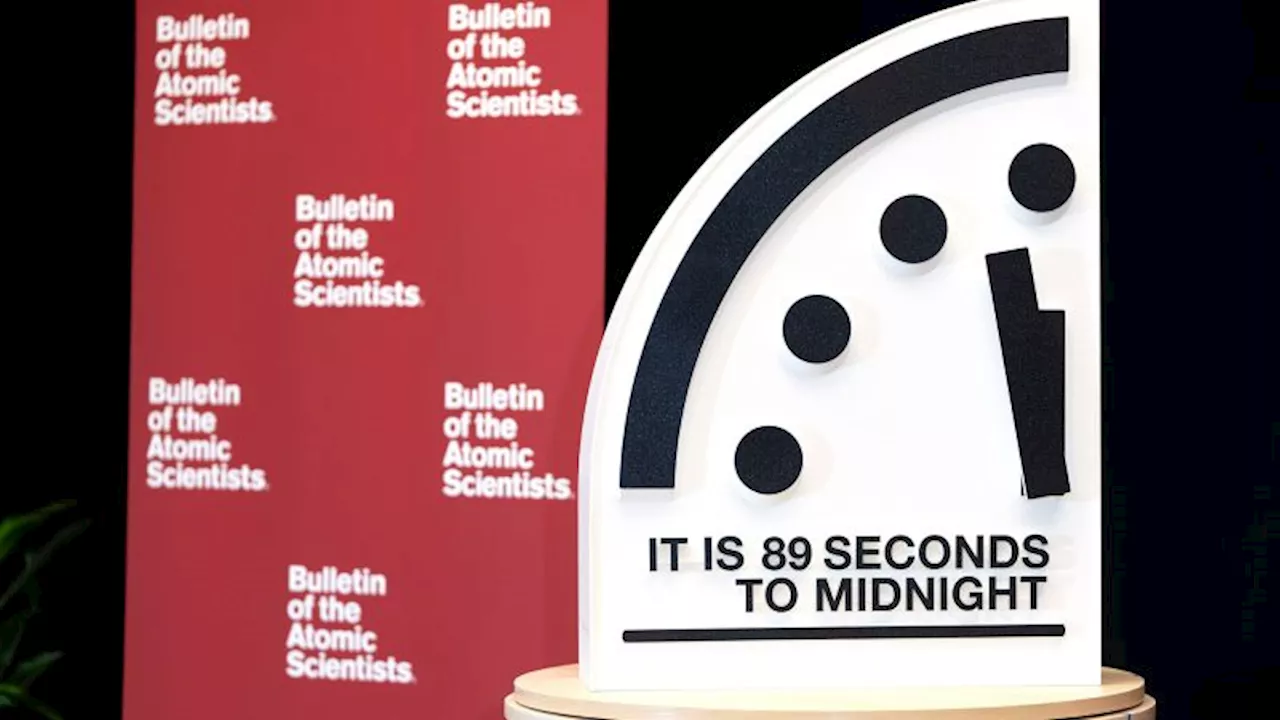 Doomsday Clock Set at 89 Seconds to Midnight, Closest Ever to Global CatastropheThe Doomsday Clock, a symbolic gauge of humanity's proximity to global catastrophe, has been set at 89 seconds to midnight, the closest it has ever been. The Bulletin of the Atomic Scientists, which established the clock in 1947, attributes the alarming shift to escalating nuclear threats, the ongoing war in Ukraine, climate change, and advancements in disruptive technologies. While the clock doesn't definitively measure existential risks, it aims to stimulate discussions about critical scientific issues and encourage global action.
Read more »
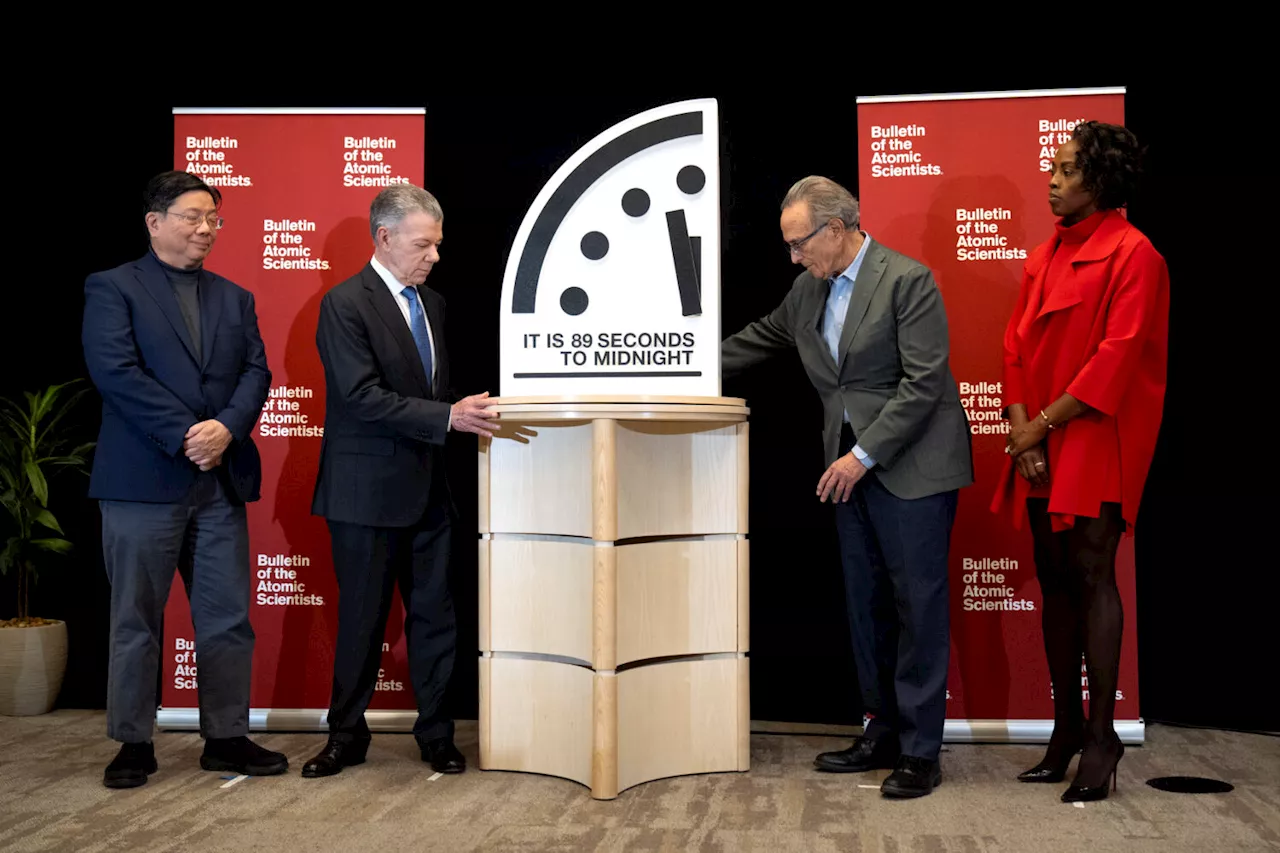 Doomsday Clock Set at 89 Seconds to Midnight, Closest EverA science-oriented advocacy group, the Bulletin of the Atomic Scientists, has moved its iconic Doomsday Clock to 89 seconds to midnight, the closest it has ever been. The alarming shift reflects growing threats to humanity, including climate change, nuclear proliferation, geopolitical instability, pandemics, and the increasing integration of artificial intelligence in military applications. The group warns of the dangers of escalating tensions and the potential for catastrophic events.
Read more »
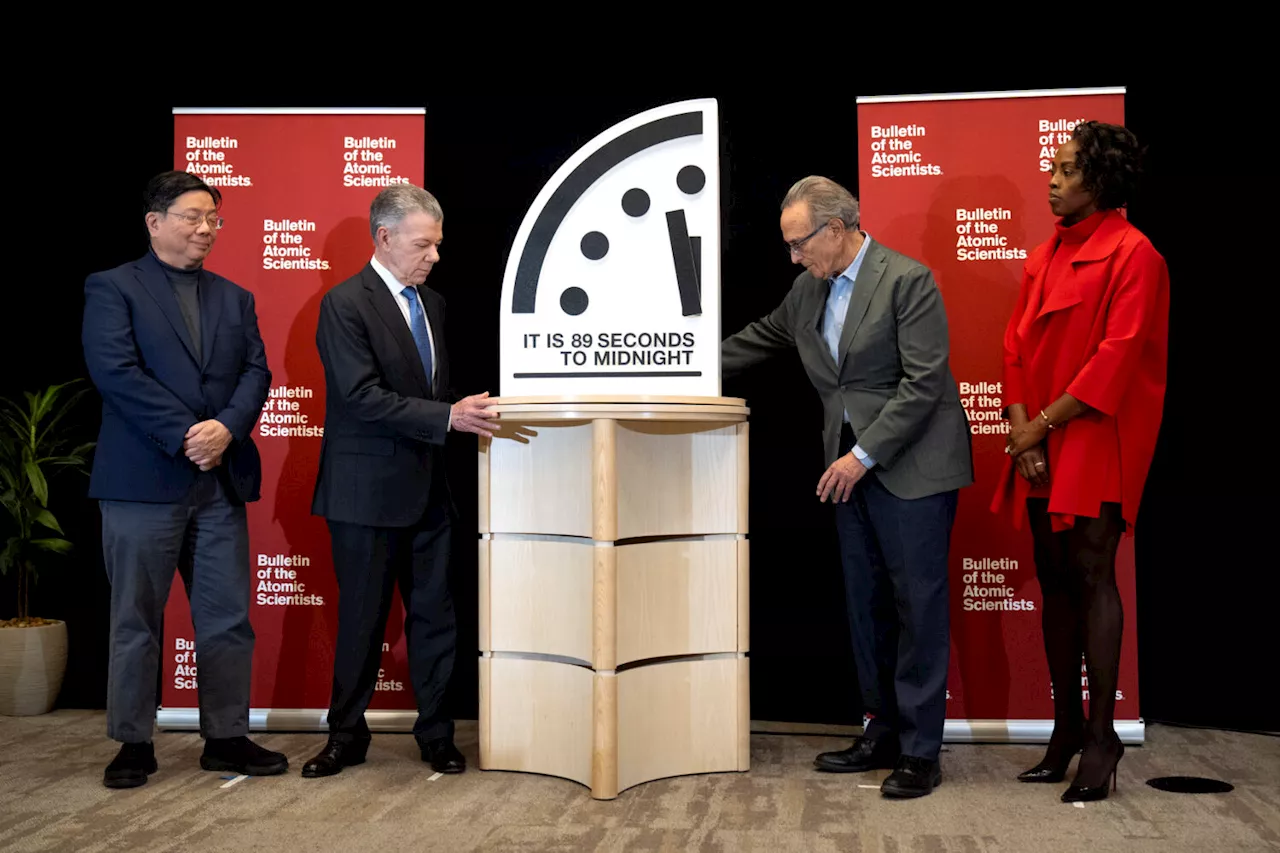 Doomsday Clock Moved to 89 Seconds to Midnight Over Global ThreatsThe Bulletin of the Atomic Scientists has moved its symbolic Doomsday Clock to 89 seconds to midnight, the closest it has ever been, citing threats such as climate change, nuclear proliferation, geopolitical instability, pandemics, and the increasing role of artificial intelligence in military affairs.
Read more »
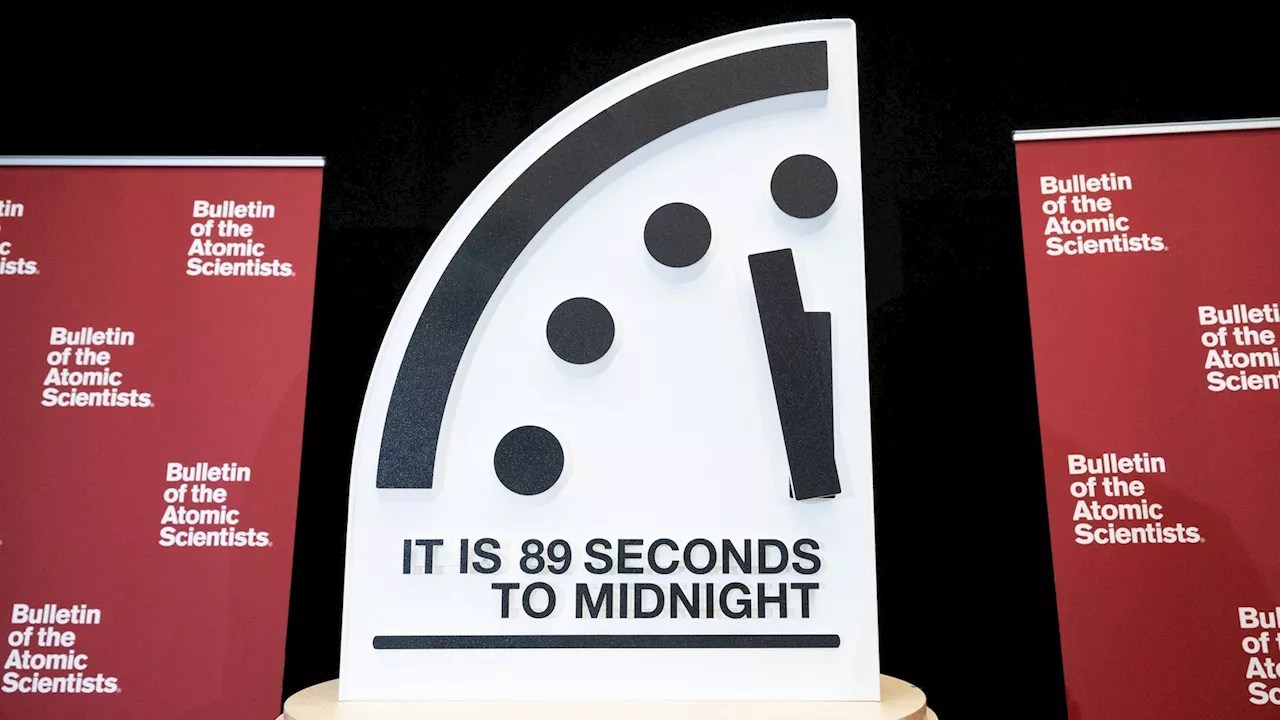 2025 'Doomsday Clock': This is how close we are to self-annihilation, scientists sayScientists said we haven't made enough progress addressing existential threats.
Read more »
 Doomsday Clock Set at 89 Seconds to Midnight, Closest EverThe Bulletin of the Atomic Scientists advances its iconic Doomsday Clock to 89 seconds before midnight, citing urgent threats including nuclear proliferation, climate change, and geopolitical instability.
Read more »
 As the Doomsday Clock Ticks Closer to Midnight, Will Trump Make the Ultimate Deal?Robert Dodge, a frequent Common Dreams contributor, writes as a family physician practicing in Ventura, California. He is the Co-Chair of the Security Committee of National Physicians for Social Responsibility, serves as the President of Physicians for Social Responsibility Los Angeles, and is a steering committee member of Back from the Brink.
Read more »