
IBM announced plans for its IBM Quantum Starling, a fault-tolerant quantum computer that will be ready in 2029.
for its IBM Quantum Starling, a fault-tolerant quantum computer, that brings quantum computing a step closer in a market that has long promised revolutionary capabilities while delivering laboratory curiosities.
Starling is a significant shift from experimental technology towards enterprise-ready infrastructure. The world's first large-scale, fault-tolerant quantum computer, expected by 2029, will finally bridge the gap between quantum potential and business reality.Today's most pressing business challenges push classical computing to its limits. Drug discovery timelines span decades, supply chain optimization extends across global networks, and financial risk modeling must navigate volatile markets.that quantum computing could create $1.3 trillion in value by 2035, yet current quantum systems remain too error-prone for meaningful business applications. The challenge is that existing quantum computers can only execute a few thousand operations before errors accumulate and corrupt results, making them unsuitable for many of the most complex algorithms that drive real business value.this fundamental limitation through error correction at an unprecedented scale. The system will operate 200 logical qubits while executing 100 million operations with accuracy.Netflix’s Best New Show Lands A 100% Rotten Tomatoes Score From CriticsThese logical qubits are quantum computing units protected against errors through sophisticated encoding across multiple physical components. According to IBM, this represents a 20,000-fold improvement over current quantum computers in operational capability. The business value lies in Starling's modular architecture, which is designed like an enterprise data center rather than an experimental prototype. The system will connect approximately 20 quantum modules within IBM's Poughkeepsie facility, creating a scalable infrastructure that enterprises can access through cloud services. This approach transforms quantum computing from a specialized research tool into a utility that integrates with existing enterprise workflows. Starling's real-time error correction, based on a state-of-the-art error correction called “the gross code,” uses the Relay-BP decoder to ensure computational accuracy throughout complex operations. This reliability enables the development of long, sophisticated algorithms required for practical business applications, ranging from pharmaceutical molecular modeling to financial portfolio optimization.IBM's approach fundamentally differs from competitors through its focus on resource efficiency rather than raw qubit count. Competitive systems that use the surface code require about 2,000 physical qubits to create approximately 12 logical qubits.code, only requires about 200 physical qubits to enable 12 logical qubits. This means that IBM’s qLDPC code is approximately 10X more efficient, and there are several codes within the qLDPC family of codes. Google and other competitors continue pursuing surface code approaches that, while technically sound, requires a significant resource overhead for practical business applications. IBM's modular design provides another competitive advantage: incremental scalability. Rather than rebuilding entire systems to increase capacity, enterprises can leverage additional capacity in IBM quantum computing services as their computational needs evolve.The company's long track record of meeting its public quantum roadmap commitments demonstrates an execution capability that its venture-funded startups and research-focused competitors have yet to match. It’s this steady execution of its quantum strategy that keeps the company in a leadership position within the quantum computing field. It’s early days for quantum computing and the competitive landscape remains fractured. Startups like QuEra and PsiQuantum pursue different technical approaches but lack IBM's enterprise relationships and infrastructure capabilities. Google and Amazon possess the resources to compete, but they have not committed to IBM's aggressive commercialization timeline or its enterprise-focused architecture. IBM's existing enterprise relationships across pharmaceutical, financial, and manufacturing sectors provide immediate market access that competitors cannot replicate quickly. The company's cloud infrastructure and enterprise sales organization also offer distribution advantages that pure-play quantum startups lack entirely.“Quantum advantage” is the ability for quantum computer to compute faster, more efficiently ore more accurately than classical computing alone. IBM's 2026 timeline for quantum advantage positions the company to capture early adopter revenue while competitors remain in development phases. The three-year lead time between quantum advantage and Starling's full deployment provides a competitive moat that will be difficult for competitors to breach. IBM's roadmap extends beyond Starling to Blue Jay, a 2,000-logical-qubit system capable of billions of operations. This progression is a clear demonstration of the company's commitment to quantum computing as a long-term business strategy rather than a research initiative.The quantum computing market is at an inflection point. IBM's Starling system will transform quantum computing from an expensive research curiosity into enterprise infrastructure that delivers measurable business value. This requires IBM to execute, but the company has built credibility by hitting every public milestone its put on its For executives evaluating quantum computing strategies, the question has shifted from whether quantum computing will impact their industries to how quickly they can integrate quantum capabilities into competitive advantage. Choosing a partner to help with that journey is a critical first step, with IBM taking an early leadership position. IBM’s leadership should be no surprise. The company, after all, is the only in the industry to help enterprises navigate nearly every major transition in compute technology over the past sixty years. Quantum computing is simply the next transition. Disclosure: Steve McDowell is an industry analyst, and NAND Research is an industry analyst firm, that engages in, or has engaged in, research, analysis and advisory services with many technology companies, including IBM. Mr. McDowell does not hold any equity positions with any company mentioned.
IBM Research IBM Amazon Web Services AWS Google Quera Psiquantum Quan Quantinuum
United States Latest News, United States Headlines
Similar News:You can also read news stories similar to this one that we have collected from other news sources.
 Ohio State Adds Navy and Youngstown State to 2029 Non-Conference Schedule, Moves Nevada to 2030Ohio State has added matchups with Navy and Youngstown State to its 2029 non-conference schedule and moved a matchup with Nevada to its 2030 non-conference slate.
Read more »
 Ohio State football announces changes to 2029 and 2030 nonconference schedulesOhio State football has made changes to its future nonconference schedules.
Read more »
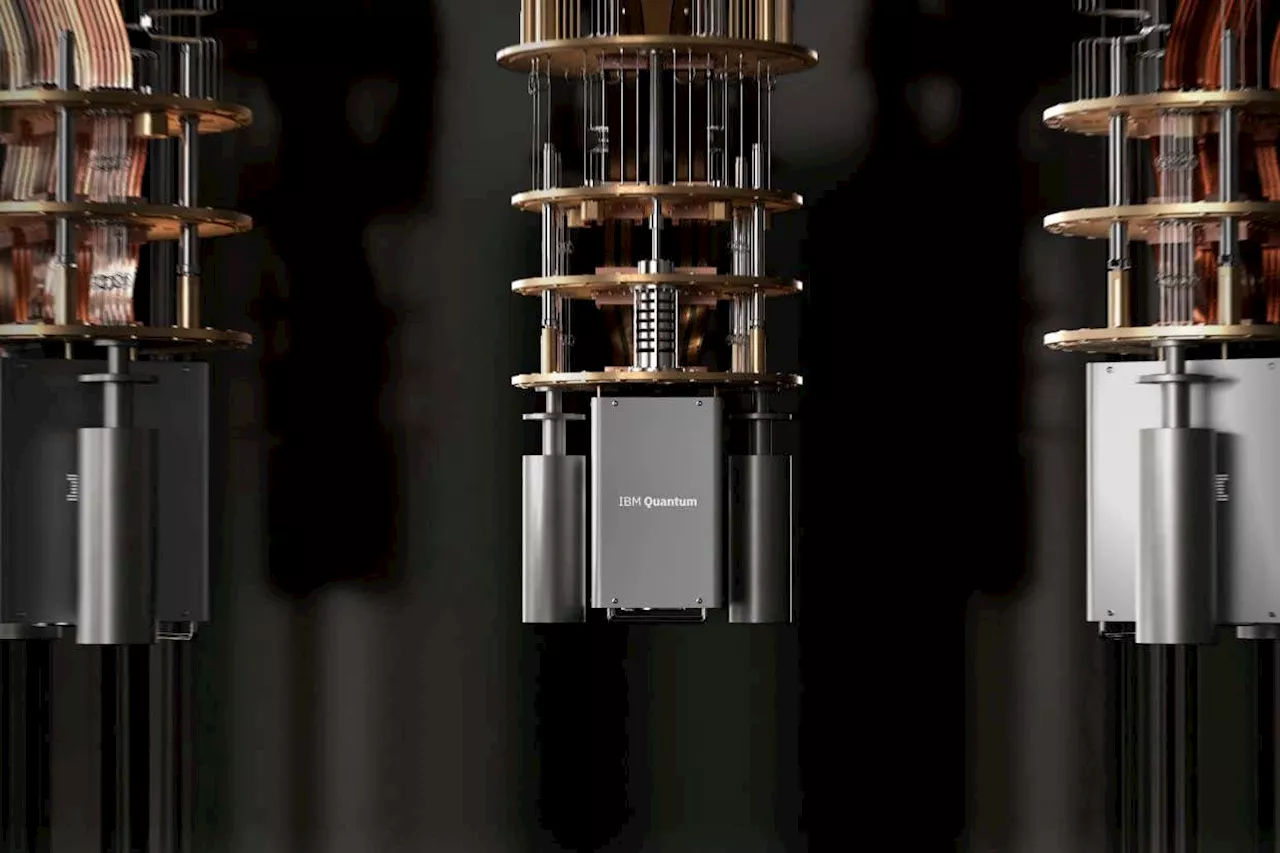 IBM says it will build a practical quantum supercomputer by 2029The company has unveiled new innovations in quantum hardware and software that researchers hope will make quantum computing both error-proof and useful before the end of the decade
Read more »
 IBM’s Vision For A Large-Scale Fault-Tolerant Quantum Computer By 2029The computing giant's new quantum roadmap shows its plan to achieve one of the most important goals in all of quantum computing by the end of this decade.
Read more »
 IBM will build monster 10,000-qubit quantum computer by 2029 after 'solving science' behind fault tolerance — the biggest bottleneck to scaling upIBM has unveiled its plans to build Starling, the world's first fault-tolerant quantum computer, by 2029.
Read more »
 IBM announces new quantum processor, plan for Starling supercomputer by 2029Part of the company’s plan involves the new IBM Quantum Nighthawk processor, which is set to release later this year.
Read more »