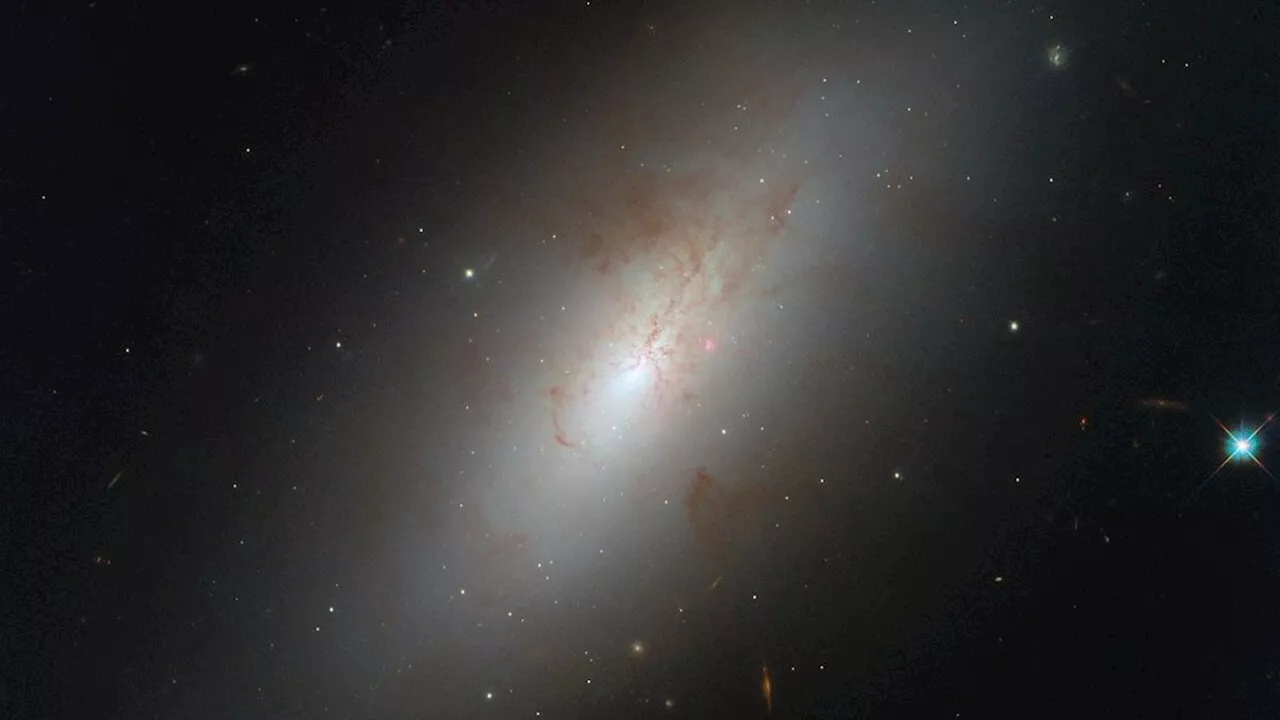
The Hubble Space Telescope has captured a stunning image of NGC 4694, a galaxy located 54 million light-years from Earth. This galaxy presents a classification challenge as it exhibits characteristics of both spiral and elliptical galaxies. While spiral galaxies are known for their star-forming gas and distinct arms, elliptical galaxies are dominated by older, redder stars. NGC 4694's unique blend of features has astronomers intrigued.
Where it is: 54 million light-years from Earth, in the constellation VirgoWhy it's so special: NGC 4694 is a galaxy that cannot be easily classified into one of the two basic galaxy types: spiral and elliptical.
Astronomers needed to examine its properties in detail to find its exact classification. Spiral galaxies, such as our Milky Way, are relatively young and abundant in star-forming gas. They showcase distinct spiral arms adorned with hot, bright, young stars. In contrast, elliptical galaxies are more tranquil. These oval galaxies are composed primarily of older, redder stars. Most galaxies fall into these basic types. However, NGC 4694 has properties of both types, complicating its classification, Hubble Space Telescope team members explained in a description of the image. It has a smooth-looking, armless shape, like an elliptical galaxy, and a disk with a low star-formation rate. However, it has relatively younger and newer stars forming in its central region. By contrast, elliptical galaxies do not typically contain the ingredients necessary for new stars to form. The active star formation, which powers the bright center, aligns more with the characteristics of a spiral galaxy. Like a young and lively spiral, NGC 4694 is rich in hydrogen gas and dust and is surrounded by a hydrogen gas cloud. The image also features reddish-brown dust forming unusual structures scattered across the galaxy, spreading out from the core. Interestingly, the surrounding cloud of hydrogen gas forms a long bridge to a faint and tiny nearby galaxy named VCC 2062. An in-depth study of this image revealed that the two galaxies may have interacted in an intense collision, allowing the larger NGC 4694 to steal gas from the smaller VCC 2062. This dramatic collision shaped NGC 4694 into its unique armless, smooth form characterized by active star formation, classifying it as a lenticular galaxy. Sign up for the Live Science daily newsletter nowGet the world’s most fascinating discoveries delivered straight to your inbox. By submitting your information you agree to the Terms & Conditions and Privacy Policy and are aged 16 or over.Related: Researchers spot rare 'triple-ring' galaxy that defies explanation—Hubble spies a 'cannonball galaxy' blasting through spaceLenticular galaxies are intermediates between ellipticals and spirals. They feature a central bulge and a large disk, but they lack majestic spiral arms and contain more fuel for star formation than typical elliptical galaxies. Using the Hubble Space Telescope, astronomers revealed the galaxy's classification. The stunning image is a result of combining ultraviolet data with optical data collected by Hubble's Wide Field Camera 3.
Astronomy Hubble Telescope Galaxy NGC 4694 Spiral Galaxy Elliptical Galaxy
United States Latest News, United States Headlines
Similar News:You can also read news stories similar to this one that we have collected from other news sources.
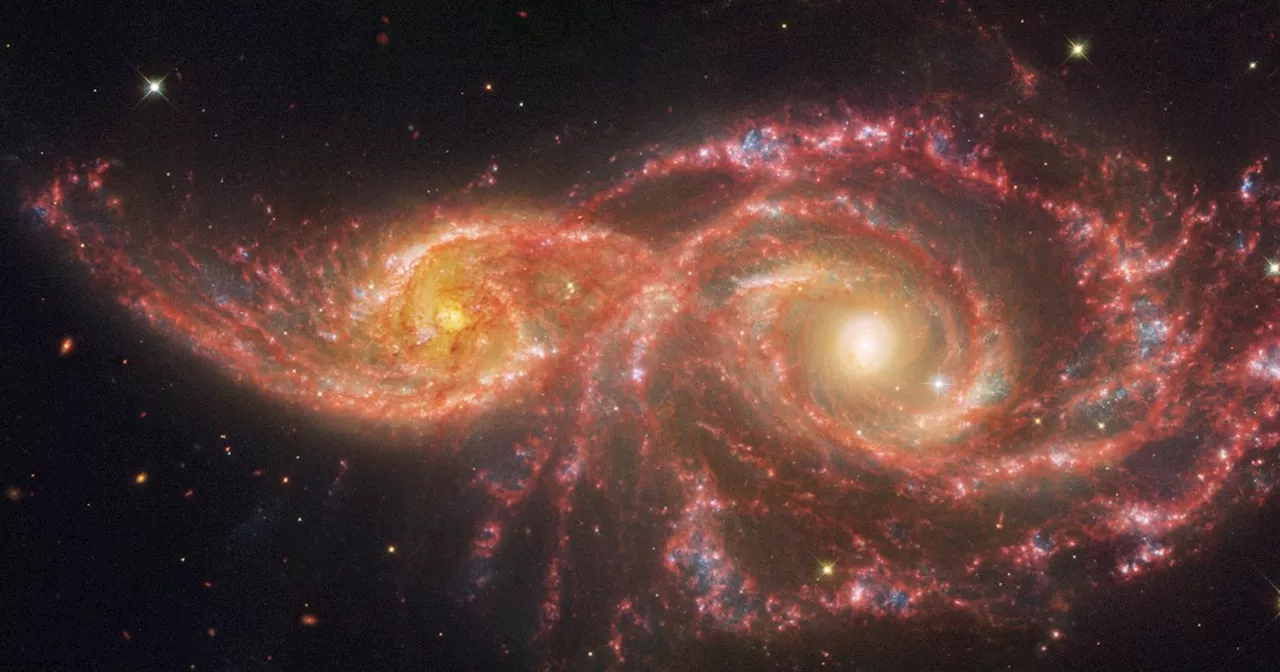 Creepy cosmic eyes stare out from space in Webb and Hubble imageIn time for Halloween, the Webb and Hubble space telescopes have worked together to image a creepy pair of cosmic eyes.
Read more »
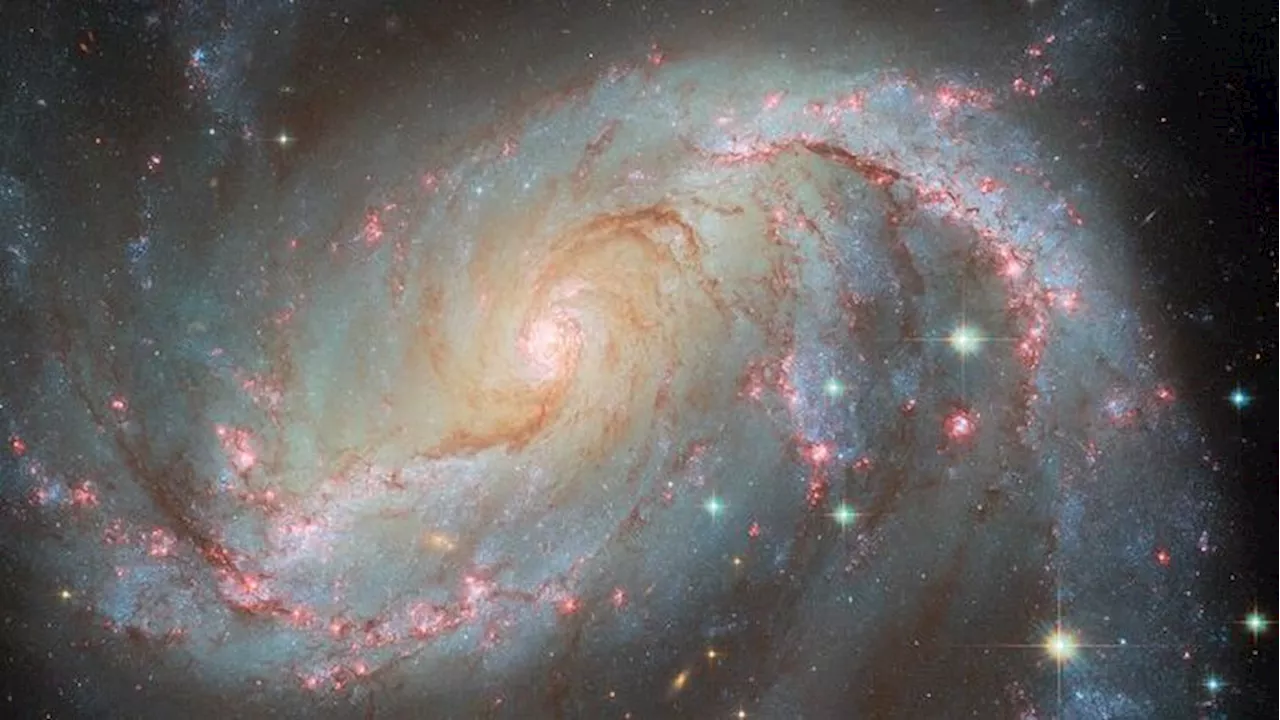 Supernova hides in new Hubble Telescope galaxy 'light show' image (photo)Samantha Mathewson joined Space.com as an intern in the summer of 2016. She received a B.A. in Journalism and Environmental Science at the University of New Haven, in Connecticut. Previously, her work has been published in Nature World News.
Read more »
 Spiral Galaxy 50 Million Light-Years Away Delivers Stellar Light ShowThe Hubble Space Telescope recently looked at NGC 1672, and caught a glimpse of a super-rare event, a supernova.
Read more »
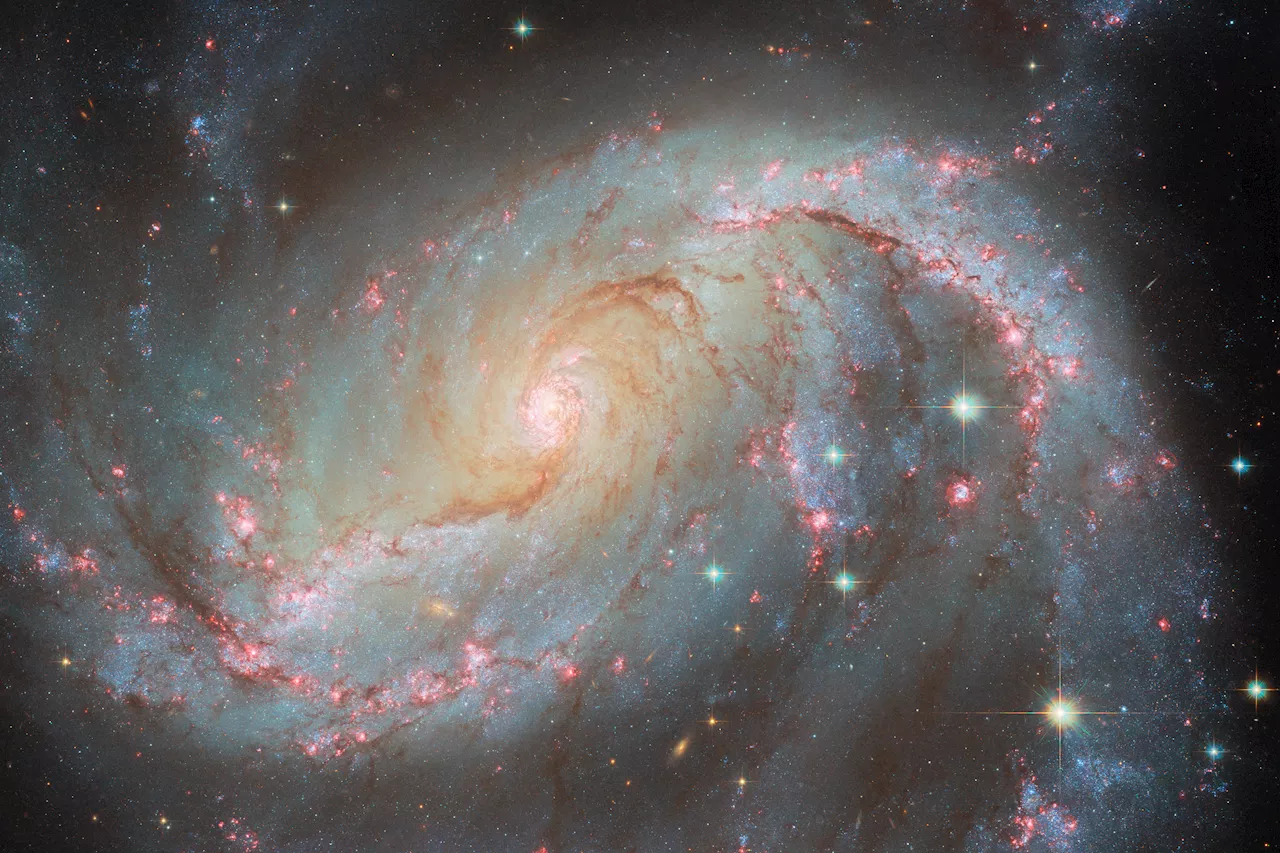 Hubble Captures a Galaxy with Many LightsThis NASA/ESA Hubble Space Telescope image features NGC 1672, a barred spiral galaxy located 49 million light-years from Earth in the constellation Dorado.
Read more »
 James Webb Confirms Hubble’s Calculation of Hubble’s ConstantSpace and astronomy news
Read more »
 Hubble’s Edgy New Photo Captures a Spiral Galaxy From an Unusual PerspectiveHubble's unusual edge-on view of the galaxy UGC 10043, located 150 million light-years away, shows a spiral galaxy with 'curve appeal.'
Read more »