
Ask open-ended questions designed to start a conversation and spark creativity in the candidate.
monitor their practices, our approach may help organizations save both time and money by finding the right people for the right roles.First, it is important to note that our process varies. We aim to structure our interviews around the skills we’re looking for from each candidate and give them the opportunity to demonstrate those skills.
Because no two candidates are the same, naturally, neither are two interviews. of our interviews, we share the questions we’ll be asking with candidates. We ask these questions during the conversational portion of the interview, which comes first and takes 45 to 90 minutes. We’re intentionally flexible with time here to allow for whatever subsequent discussions may arise.1) To test for preparation, we ask questions that are easy to research. For example, “Can you tell us what you know about our company?” is something that a quick Google search could answer. 2) To test for critical-thinking and tech savviness, we ask open-ended questions designed to start a conversation and spark creativity in the candidate. For example, we often ask engineering candidates how they would design an app to accomplish a certain task .We ask customer service or salesperson candidates to choose a piece of software they are familiar with and demo it to us. During an in-office interview, we would ask the candidate to control the mouse and keyboard to demo the software on a large monitor while we watch. In a Covid-19 world, we would ask them to demonstrate the product via Zoom. 3) To test for listening and communication skills, we format some questions as directions. This gives candidates a clear idea of what we want from them while, at the same time, allowing us to see whether they can deliver. For example, to measure a candidate’s ability to communicate effectively, we might say: “Teach us about one of your passions, something that you know a lot about or consider yourself to be a nominal expert in — and teach us as if we know nothing about it.” Many of our questions in categories two and three allow candidates to pick the topics of discussion themselves, as opposed to us thrusting ideas upon them. We aspire to stimulate a discussion that they want to engage in. If candidates choose topics they don’t actually know much about or aren’t able to explain, despite having time to prepare beforehand, it shows us that they didn’t care enough about the interview or the position to put the time in. Essentially, we want our hires to have the ability to think ahead and draw on real knowledge and experience in high-pressure situations. What we don’t want is to hire people simply because they have a knack for saying what they think we want to hear. Of course, today, we would be carrying out this process virtually over video calls. There are some pros to this, however. The video format would help us measure an additional, newly required skill: online communication. Over video, we can determine a candidate’s tech savviness with programs like Zoom, as well as how they present themselves over video — an important skill, as this is how many members of our team will be interacting with prospects, customers, and other employees for the foreseeable future.After the question portion of the interview, we schedule a 45- to 90-minute chat between the candidate and a team member who is an expert in their field, followed by a short exercise to test their collaboration skills. During the chat, our team members typically ask candidates role-specific questions to help us gauge whether they have a genuine interest in the work they’d be doing. With customer service positions, for example, we ask candidates whether they think helping people is rewarding, whether they like talking on the phone, and so on. Depending on the candidate and the flow of that interview, we might also ask less direct, general questions about their interests and what work they find most rewardingIf our hires love the work they are doing, we’ve found that they are more likely to stay for the long term. For the exercise portion of this stage, we aim to create scenarios that will allow us to see candidates’ skills in action and evaluate how well they collaborate with other employees. This time also gives the candidate an opportunity to experience what it would be like to work on a specific team. For instance, we may ask an engineering candidate to participate in pair programming — a technique in which two developers work together on a problem. While pair programming is in many coding job interviews, we’ve incorporated similar team exercises into the interviews for all of our roles. As with part one of the interview, we let candidates know beforehand which topics will be covered in the technical portion, as it puts the onus on them to come prepared. Video-conferencing technology that incorporates elements like screen-sharing and tools designed specifically for remote code interviews, such as CodeBunk, can be helpful in conducting these exercises virtually.Many companies collect writing samples from candidates before or after an initial interview. But we believe it is more beneficial to govern this process more closely because it gives us insight into the quality of a candidate’s writing without any outside assistance. We want to know that all of our hires will be able to communicate clearly in writing without extensive editing and, sometimes, under time pressure. Though we can’t ensure people aren’t seeking outside assistance as well virtually, our process still gives us a good idea of their writing and communication skills. The assignment we give is specific to the role each candidate is applying for. For example, we give customer service candidates a sample email of a hypothetical angry client, as well as an example email response that reflects our ideal company voice. We ask that they mimic the company voice and write up a client response email of their own;we also expect them to ask as many questions as possible beforehand — and take notes. We don’t specify the length of response, but the example gives them a good idea of our expectations.we typically give candidates 30-45 minutes in a quiet room to complete the writing assignment. Virtually, we would schedule a break in our video call to give them 30-45 minutes to complete the assignment. After they’ve finished, we would resume the interview online as we review the assignment and ask why they chose certain phrasing or structures in their response. When we review the sample, we look at whether they can think critically about composition and voice, and demonstrate thoughtfulness overall.We want to know how candidates will interact with their prospective colleagues on a day-to-day basis. But instead of making assumptions based on their answers to interview questions — like— our process allows us to observe their actual interactions. In the office, we design peer interactions around board games that challenge players to work together toward a goal, as opposed to games that pit players against one another in a zero-sum scenario. Virtually, we would go with a game, such as , that’s easier to play in a remote setting, but still allows for that key element of collaboration. The goal is twofold: Learn about how the candidate interacts with team members Because candidates interact with numerous employees throughout our interview process, many of whom don’t share their backgrounds or interests, we find team members who might have more common ground with them for this portion of the interview. While it’s important for us to make sure the candidate can engage with a diverse group of our employees, during this time specifically, we want them to feel comfortable, conversational, and included. If our current team is made up of individuals over the age of 45, for instance, and we’re interviewing a recent college graduate, we don’t necessarily look for the youngest person in the office to include in this step. Instead, we might look to include the newest, least experienced members of our team, regardless of age, to help the candidate feel more comfortable and less intimidated by experienced employees. The outcome of the game isn’t important. We’re looking for signs of a good cultural fit over the course of the three to four hours the players are together. For us, that means candidates are thoughtful, engaging, curious, and make a visible effort to enjoy the experience . These attributes aren’t role-specific; they’re qualities we value as a company.The four pillars above require regular iteration and experimentation. After each round of hiring, we sit down to evaluate the success of our process by looking at a couple of different factors. One of these is how often each pillar swayed our decision. Were we able to make more confident choices using these steps? If so, we take that as validation that the process is working. If not, we take a deeper look at what’s not working and how we can fix it.the quality of our hires . A couple of years ago, when we realized we had hired many interns who were perfectly capable of doing their work but weren’t actually interested in the work itself, we knew we had a quality problem to address. Some interns told us during exit interviews that they were just using the internship as a stepping-stone for their next destination, and some declined full-time job offers from us. That’s when we began drafting up more role-specific questions to ask candidates during the technical portion of the interview. Only then did we see our retention grow stronger. Our post-interview evaluation is another element of our process we had to adjust. Initially, staff members talked to each other about the candidate throughout the interview day and compared experiences. But we found this created bias and other conflicts throughout the interview itself. Now we forbid employees to talk with anyone about the candidate until after the interview is completed. Once it is, everyone who participated fills out a full survey with feedback about the various areas we assessed. After everyone has filled out the survey, we allow open discussion. It may be tempting for some leaders to simply accept that hiring is not a perfect science and use that as an excuse to stick with the same outdated interview process corporations have relied on for decades. But today, it’s safe to say that most businesses can’t afford to take a chance on bad hires. We think it’s possible to design an interview process that provides a clear assessment of a candidate’s skills, aptitude, and potential for culture fit. Our four pillars can be used as a framework for those who wish to do so.
United States Latest News, United States Headlines
Similar News:You can also read news stories similar to this one that we have collected from other news sources.
 The Latest Challenge in Costume Design: Reimagining Influencer FashionAs movies and television follow the stories of content creators, their wardrobes help create a riveting fantasy — while simultaneously sending a message.
Read more »
 From East to West, Louis Vuitton Celebrates a Legacy of Design in Two CitiesOver in the Hamptons, Vuitton feted their a savoir-faire studio in Shetler Island; and in sunny Los Angeles, the globally traveling exhibition '200 Trunks, 200 Visionaires' opened.
Read more »
 A Sneak Peek At The Honda Prologue Electric SUV Design (Video)In a recent press release and YouTube video, Honda's Design Studio in California gave us a peek at how the designed the upcoming Honda Prologue. It's the first Honda vehicle to be designed mostly in
Read more »
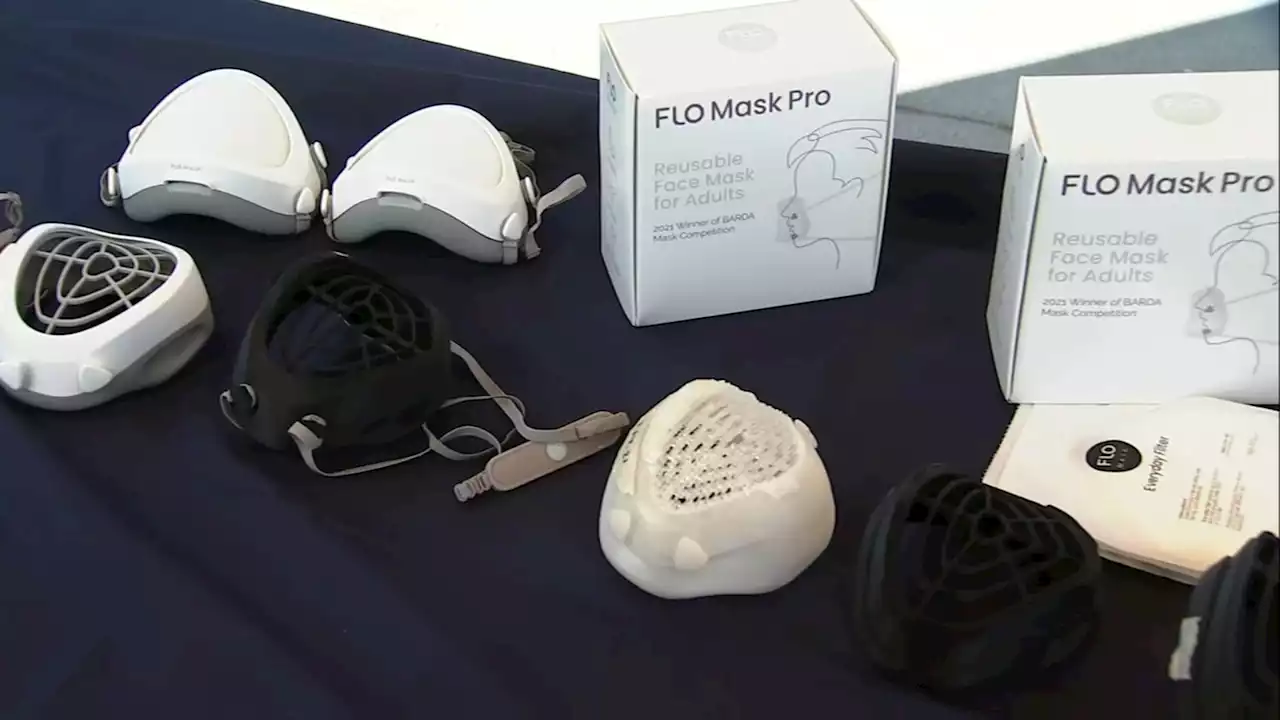 Bay Area dad uses tech background to design innovative face mask, motivated by his childrenWith inclusion in mind, part of Kevin Ngo's process involved 3D scanning the faces of dozens of children across different ethnicities.
Read more »
 How to design and plant your Colorado garden for pollinatorsThe summary: Pollinators need food, water and shelter. (via thknwco)
Read more »
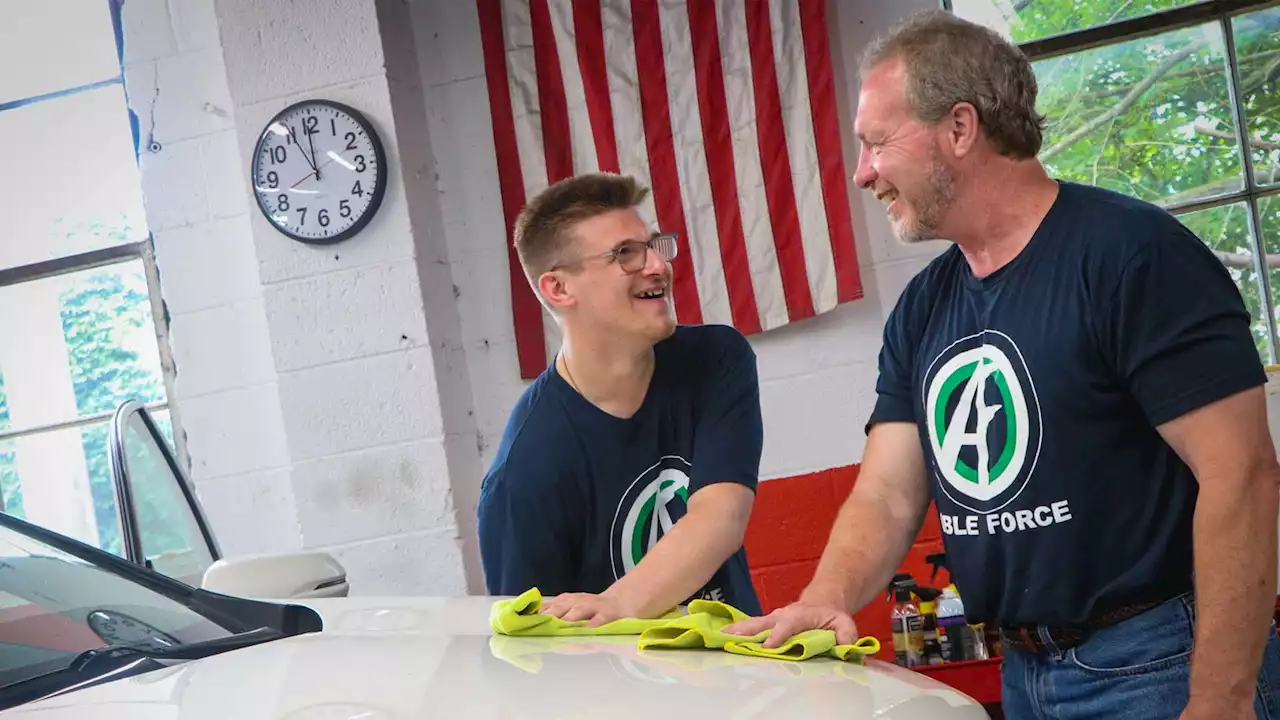 These devoted dads design jobs for sons with special needsTwo dads created 'ABLE Force' to give adults with special needs a chance to prove their worth in the workforce!
Read more »