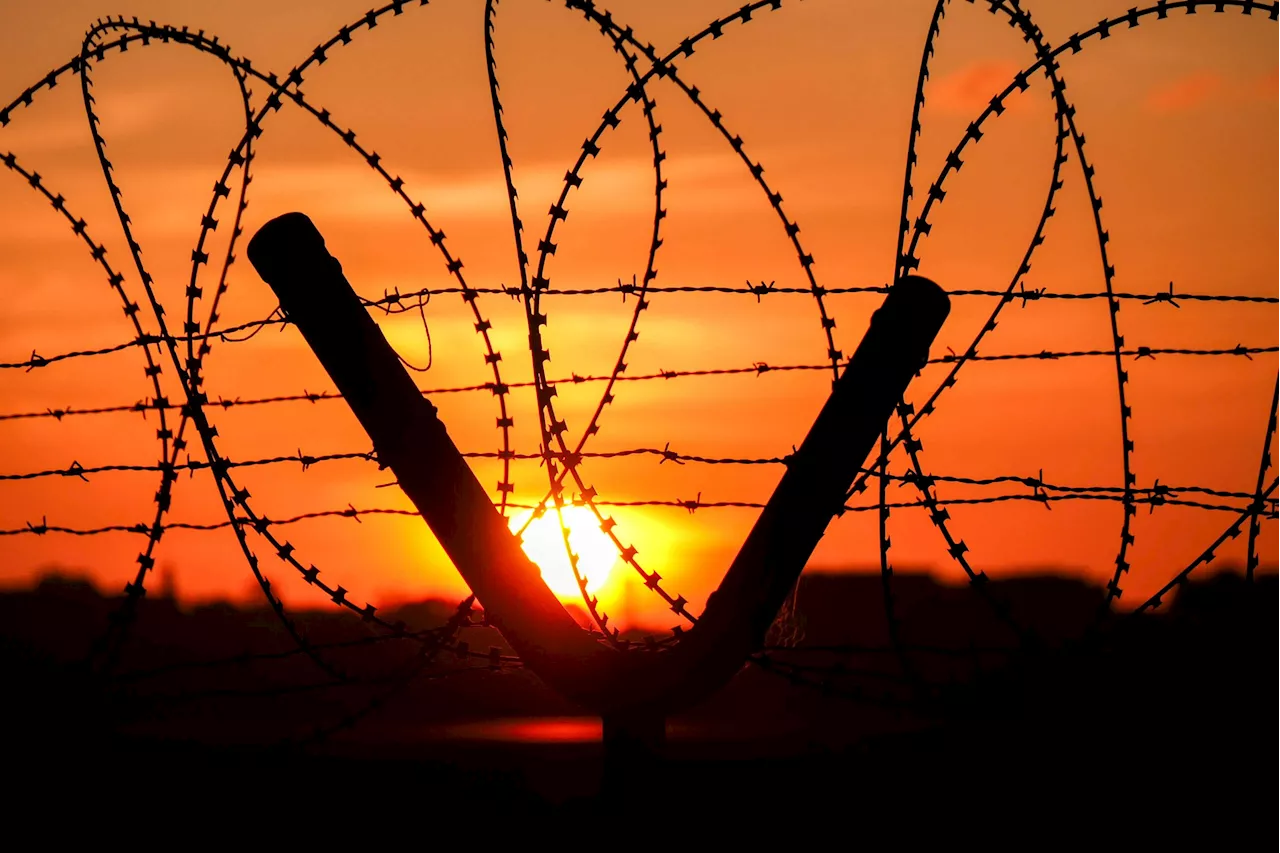
This article explores the connection between historical land theft from Native American tribes and the over-incarceration of Indigenous people. It highlights how revenue generated from state trust lands, originally seized from tribes, is used to fund prisons and correctional facilities, contributing to a cycle of injustice and perpetuating generational trauma.
Steven Amos feels hopeful for once. He’s finishing a drug and alcohol treatment program, living in a halfway house, and working a new job, doing carpentry. “I love anything outdoors,” he said. “I’m happy I’m not locked up.
” A member of the Northern Arapaho Tribe, Amos, age 53, grew up with the snow-capped Rocky Mountains set like a painting behind his childhood home in Ethete, Wyoming, on the Wind River reservation. He loved hunting and fishing along the Little Wind River, but his family — as well as many Wind River neighbors — had no running water, sometimes no electricity, or enough to eat. The reservation’s stunning landscape conceals more than a century of theft and neglect by the United States, whose officials stole Arapaho land, then doled it out to ranchers, real estate moguls, miners, and public institutions, while forcing the tribal nation to scrape together a future any way it could. One of Amos’s most searing childhood memories is watching police beat up his father. “They call it generational trauma,” he said, “It keeps going and going and going, and people don’t want to confront that. They want to sweep it under the rug.” He received his first prison sentence when he was 19 years old, and drifted in and out of jails and prisons for decades after that. Some of the carceral facilities where Amos was sent are paid for, in part, with Arapaho land and resources, through activities like oil and gas extraction and cattle grazing.To build America, the U.S. government enacted laws to redistribute Indigenous lands they had taken. Some land was given to individuals and corporations to build homes or private empires, through laws like the Homestead Act and the Pacific Railway Act, while the Morrill Act offered up freshly seized land as capital for states to establish what became— contained handouts of land that state governments could use to pay for public institutions. Those offerings are generally called state trust lands and continue to be used to fund public institutions, mostly K-12 schools, but also universities, hospitals, and penitentiaries. Last year, in Wyoming alone, nearly 409,000 acres of former and current Arapaho, Shoshone, Goshute, Bannock, Crow, Cheyenne, and Sioux land now held by the state as state trust lands, produced at least $8 million in revenue for the Department of Corrections. At least 200 acres of land inside the boundaries of the Wind River Reservation are also earmarked to provide revenue for corrections.has identified nearly 2 million acres of state trust lands — an area larger than the state of Delaware and broken into more than 20,000 surface and subsurface parcels scattered across the western U.S. — that are reserved for state prison systems in 10 states. In 2024, those state trust lands disbursed an estimated $33 million in funding to carceral facilities and programs. In reality, the figure is likely higher, as officials in Wyoming and Utah did not respond to requests for updated financial data for this story. North Dakota, Utah, Montana, and Idaho all use trust lands to fund detention facilities and systems for children. The land was taken from 57 Indigenous nations, through 71 land cessions, some of which are still contested to this day. To acquire those lands, the U.S. paid less than $1.5 million to tribes through legal treaty agreements. However, more than a third of the lands were taken through military action with no reimbursement to Indigenous nations for their stolen territories. “There’s a direct link between incarceration and the history of land theft our communities have endured,” said Sunny Red Bear, a member of the Cheyenne River Sioux Tribe and associate director of organizing for NDN Collective. “Our ancestral lands were taken, disrupting our traditional ways of life and governance. Displacement led to economic hardship and social challenges that have made our communities more vulnerable to the criminal justice system.”, a non-profit research organization dedicated to addressing over-criminalization. In South Dakota, North Dakota, and Montana, about a quarter or more of the state prison population is Indigenous, even though Native people make up less than a tenth of each state’s population. Nationally, Native youth are incarcerated at a higher rate than Hispanic, Asian, and white people combined. “The priorities are not to build treatment centers; they’re not to help with the healing our communities are needing,” said Red Bear, who has helped lead efforts to pressure officials in Rapid City, South Dakota to address discriminatory policing. “The redirecting of these funds could be used for so many different things including affordable housing, or substance abuse programs, or mental health programs, or youth programs, or restorative justice programs or reentry programs.” South Dakota Corrections spokesperson Michael Winder said that the department already remits the trust-land disbursements to the state general fund. A spokesperson for the Wyoming Department of Corrections indicated the agency is not responsible for the over-representation of Native people among its prisoners. “Regardless of one’s ethnicity, the Wyoming Department of Corrections does not arrest, commit or release any citizens,” wrote Stephanie Dack in an email. Although funds coming from state trust lands make up a fraction of corrections department budgets that range in the hundreds of millions, for resource-strapped tribal governments, they represent significant sums. Most tribal governments have their own justice systems — yet the money generated from trust lands only benefits state-run institutions, which are outside of tribal control., like Wyoming and South Dakota, courts send tribal citizens to state prisons when their crimes are committed off-reservation. If committed on reservation, that person can end up in a tribal or federal detention center. In other words, the justice systems that send tribal citizens to state prisons operate with little influence from tribal nations. “There’s so many people on this reservation afflicted by addiction and trauma that’s caused by the government coming in and taking our land,” said Terri Smith, who is in charge of the new Northern Arapaho Reentry Agency, which works with Northern Arapaho peoples who are reestablishing their lives after incarceration. The agency began accepting clients, including Steven Amos, in August. “If money is being generated off those lands, it should go back to those original tribes and help them become healthier people.” Smith, who was formerly incarcerated herself, said Amos’s experience isn’t unique. Most people from Wind River who are released from prison end up going back. Sometimes it’s a matter of access to basic resources, like transportation or gas money to traverse Wind River’s vast approximately 3,500-square mile expanse. Smith said, “80 percent of my job is giving people rides.”to coerce and steal land from Indigenous nations. Native people were initially thrown into U.S. prisons as punishment for fighting that theft., while treaties and Indian policy at times included language bringing tribal members under the jurisdiction of the U.S. or states’ criminal law. Andrew Jackson’s Indian removal policies in the 1830s, for example, were fulfilled in part by theThe Arapaho peoples once lived across a wide territory that included what is currently Wyoming, South Dakota, and Colorado. In the 1860s, officials pressured some tribal members into signing away swaths of their land in order to accommodate an influx of gold miners and to make way for Colorado to be established as a territory and Kansas as a state. In the 1870s, 74 Arapaho, Kiowa, Cheyenne, Comanche, and Caddo people, including several who survived the Sand Creek Massacre, were imprisoned at Fort Marion in Florida, as punishment for their rebellion during the Red River War, which was fought to repel U.S. forces from the Southern Plains. The Northern Arapaho were eventually pushed onto the Wind River reservation in present-day Wyoming, occupied already by the Eastern Shoshone, with whom they had recently been at war. “One way to think about these kinds of transitions in containment is as part of a continuum of war on Indigenous people to remove them from land,” said Shiri Pasternak, an associate professor in criminology at Toronto Metropolitan University , who helped develop anLaws designed to forcibly contain Indigenous peoples continued to evolve. For nearly a century, being an Indigenous person essentially became illegal. With the passage of the Indian Religious Crimes Code in 1883, Indigenous people facedif they practiced their religions. The first Indian Boarding School, Carlisle, was founded after Lieutenant Richard Pratt experimented with using militarized education to assimilate the prisoners of war at Fort Marion. The prison provided afor the network of schools built to strip children of their language, culture, and family connections. Those boarding schools have become the subject of investigation and scrutiny in both “You get to the horizon and you see the result, the impact, the outcome of centuries of state violence reflected in the prison population,” said Pasternak. About 172,000 acres of Northern Arapaho land is now earmarked for carceral beneficiaries across Wyoming, South Dakota, and Colorado. In Colorado, some of the Northern Arapaho acreage that makes up the state’s Penitentiary Trust is physically occupied by two prisons: Limon and Sterling. In Wyoming, it accounts for a portion of the trust land funds that go to state prisons — the rest was taken from the Crow, Goshute, Shoshone, Bannock, Cheyenne, and States generate revenue on these trust lands by leasing acreage out to extractive industries like oil and gas projects, mining, grazing, timber harvesting, renewable energy development. Over half of the trust land that funds prisons, a total of over 1.1 million acres, are used for subsurface activities, including fossil fuel extraction, accelerating climate change and its impacts. At the same time, the unequal representation of Native people in prisons means that tribal citizens will be disproportionately impacted by the climate crisis. People in prisons tend to be particularly vulnerable to extreme weather. During storms and wildfires, prisoners are often. Its prisoners are even sent to fight the fires for at most $1.50 per hour. In 2024, trust lands provided over $5 million to Idaho’s prisons.experience health conditions or take medications that make them sensitive to high temperatures. None of the states that receive trust land funds have fully air conditioned prisons, according to a 2022 analysis by, though some use a combination of air conditioning and swamp coolers, which don’t work well in humid weather. That means that when temperatures spike, people die. A two-day heat wave in the west means a mortality increase of 8.6 percent in prisons, according to a Of the state corrections departments that use trust land to pay for prisons, only Arizona, which took in $2.3 million in trust revenue last year, has facilities located in places that experience 50 or more days annually of heat indexes over 90 degrees. By 2100, with slow action on climate, state detention facilities in South Dakota, Idaho, Utah, Colorado and New Mexico will see similar levels of heat.. “Instead of looking deeper into root causes of why our mothers and aunties and grandmothers are being incarcerated, what they’re doing is Pasternak, the criminology professor, pointed out that prisons do more than put people away. “Prisons are a highly productive form of revenue for states because they bring in funding and jobs. Criminalization empowers a whole network of actors within society,” she said. However, there are alternatives. She added, “If the state, instead of collecting that rent to pay for prisons, was doing something different, in a way where those revenues could be shared back to Indigenous people, we’d have a different economy.” During Steven Amos’s time in South Dakota’s state penitentiary, known as The Hill, violence reigned, and the summers were so hot he’d sleep on the floor. Amos’ time at The Hill began with an arrest in Rapid City, South Dakota, where the Oglala Sioux Tribe recentlya U.S. Department of Justice investigation into discriminatory policing. State prison sentences often begin in reservation border towns and nearby communities withfor discriminatory policing. Amos was also arrested in Riverton, Wyoming, which sits in the middle of the Wind River Reservation but is not tribal land due toTerri Smith, with the Northern Arapaho Reentry Agency, said most of her clients on Wind River who spent time in state prison, including Amos, were arrested in border towns like Riverton. “I see the effects that these forced policies on Natives have caused — putting us on these reservations, genocide, assimilation policies,” she said. Returning Arapaho resources to the nation, she continued, would be a better use of the funds currently paying to incarcerate its members. For now, Amos is doing his best to focus on stability. Smith’s reentry program helped him get tools needed for his job. He plans to build a home for his daughter one day. “Sometimes you get stuck in a hopeless situation, and it’s hard to get out if you don’t have support and something to look forward to,” he said. For now, though, he feels strong.is a nonprofit, independent media organization dedicated to telling stories of climate solutions and a just future. Learn more atAs Donald Trump is inaugurated a second time, independent media organizations are faced with urgent mandates: Tell the truth more loudly than ever before. Do that work even as our standard modes of distribution are being manipulated and curtailed by forces of fascist repression and ruthless capitalism. Do that work even as journalism and journalists face targeted attacks, including from the government itself. And do that work in community, never forgetting that we’re not shouting into a faceless void – we’re reaching out to real people amid a life-threatening political climate. Our task is formidable, and it requires us to ground ourselves in our principles, remind ourselves of our utility, dig in and commit. As a dizzying number of corporate news organizations – either through need or greed – rush to implement new ways to further monetize their content, and others acquiesce to Trump’s wishes, now is a time for movement media-makers to double down on community-first models., we are reaffirming our commitments on this front: We won’t run ads or have a paywall because we believe that everyone should have access to information, and that access should exist without barriers and free of distractions from craven corporate interests. We recognize the implications for democracy when information-seekers click a link only to find the article trapped behind a paywall or buried on a page with dozens of invasive ads. The laws of capitalism dictate an unending increase in monetization, and much of the media simply follows those laws.and many of our peers are dedicating ourselves to following other paths – a commitment which feels vital in a moment when corporations are evermore overtly embedded in government.‘s funding comes from small individual donations from our community of readers, and the remaining 20 percent comes from a handful of social justice-oriented foundations. Over a third of our total budget is supported by recurring monthly donors, many of whom give because they want to help us keepThis piece was reprinted by Truthout with permission or license. It may not be reproduced in any form without permission or license from the source.Alleen Brown is a Minneapolis-based journalist whose work has appeared in the St. Paul Pioneer Press and at MinnPost.com. When she’s not writing, she coordinates a community garden and enjoys her city’s beautiful bike paths.As we rise to meet an era of unchecked right-wing authority, we urgently appeal for your support. We’ve set a goal to add 242 new monthly donors in the next 2 days – will you be one of them?
Social Justice Criminal Justice Native American Land Rights Incarceration Generational Trauma Social Justice
United States Latest News, United States Headlines
Similar News:You can also read news stories similar to this one that we have collected from other news sources.
 Native American Tribe Thrives in AgricultureThe Ute Mountain Ute Tribe is building a successful agricultural business, with their corn sold across the US and beyond.
Read more »
 Seattle native Jean Smart wins second Golden Globe amid big night for ‘Emilia Perez,’ ‘The Brutalist’Seattle native Jean Smart won her second Golden Globe in three years for best performance by a female actor in a television series.
Read more »
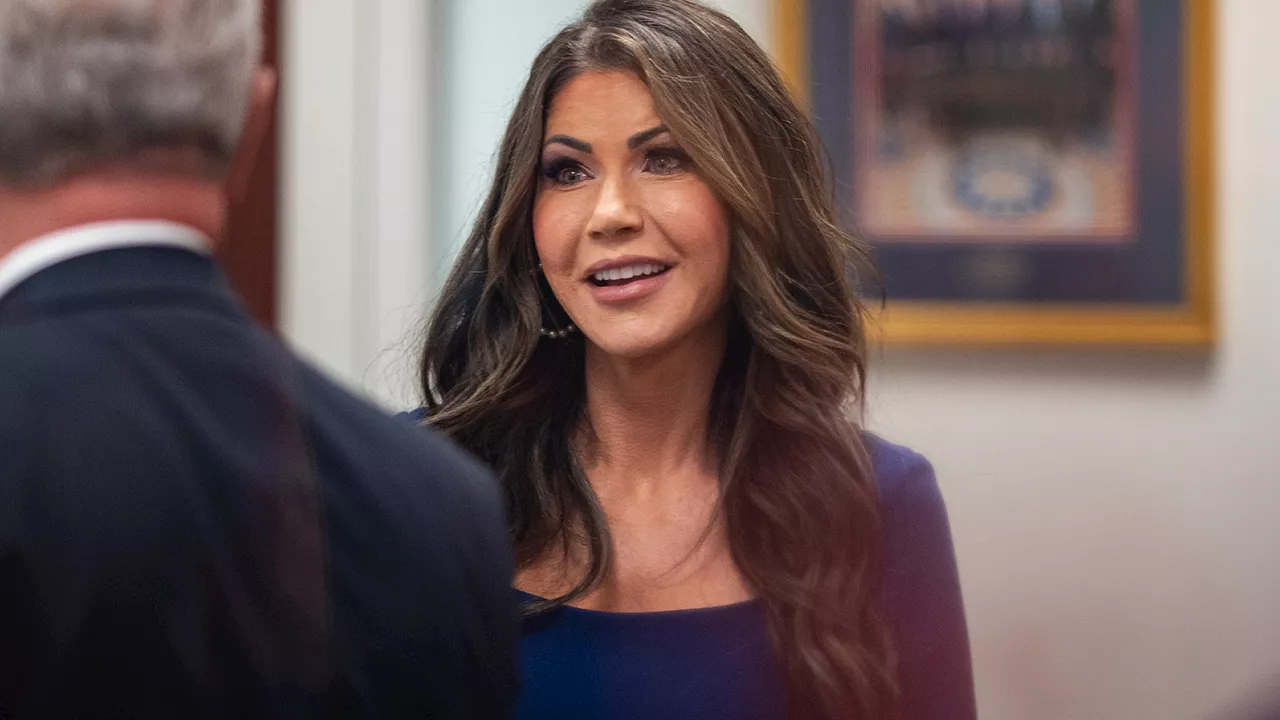 Native American Tribe Lifts Banishment on Gov. Noem, Endorses Her for DHSThe Flandreau Santee Sioux Tribe has lifted its banishment on South Dakota Gov. Kristi Noem, endorsing her nomination for Secretary of Homeland Security just days before her Senate confirmation hearing. The tribe's president cited Noem's apology for previous remarks deemed offensive by some tribal members and her commitment to the safety and security of the United States.
Read more »
 Native American Tribe Lifts Ban on Gov. Noem, Endorses DHS NominationThe Flandreau Santee Sioux Tribe has lifted its banishment of South Dakota Gov. Kristi Noem, endorsing her nomination as Secretary of Homeland Security just days before her Senate confirmation hearing.
Read more »
 Wedding rings stolen: Widower's keepsake items stolen in heartless crimeA Bay Area man who recently lost his wife was walking along, minding his own business one day when he was suddenly targeted in a heinous crime. Criminals ripped off a symbol of love that he's held close since his wife's passing.
Read more »
 Trump Moves to Recognize Lumbee Tribe as Native AmericanPresident Trump signed a memorandum Thursday asking the Department of the Interior to move toward fully recognizing the Lumbee Tribe of North Carolina as Native American. This move could provide legitimacy and federal benefits to the tribe, but has also sparked controversy from other Native American groups who question the Lumbee's right to claim Native identity.
Read more »