
Some have been hit with steep trade discount requests from American retailers, while others said they will continue to manufacture in China, citing quality and efficiency supremacy.
Emerging designer brands, many of which rely on Chinese manufacturing to supply U.S. retailers, fear they might have to say goodbye to their American business altogether if the situation doesn’t improve.
So far there appears to be no sign of a cessation in the trade war asSpeaking on the condition of anonymity, a designer who has shown regularly during Shanghai Fashion Week said the brand was immediately served with steep, nonnegotiable trade discount requests by three of its American retail partners.Female Founders, Including Rebecca Minkoff, Allison Luvera and More, Band Together Against Tariffs in Letter to Congress “They placed big orders, but I am afraid I have to terminate the business with them. If I agree to their trade discount, turning no profit would have been the best scenario,” the designer said. John Mercer, head of research and retail analyst at Coresight Research, said suppliers should expect to see more requests from U.S. brands and retailers for them to absorb some of the added costs. However, he noted that with tariffs now at 100-plus percent, full absorption of the cost of tariffs by manufacturers is not feasible. According to the U.S. Bureau of Economic Analysis, in 2023 the U.S. imported more than 80 percent of clothing items offered by American retailers from key low-cost manufacturing hubs like Bangladesh,and Vietnam. In 2022, Chinese goods made up 26.1 percent of the U.S.’ total apparel and textile imports and 43.6 percent of total footwear imports. Mercer believes the tariffs will lead to higher prices for consumers and fashion brands looking to move sourcing and re-engineer products. They already are pressing suppliers to absorb some of the additional cost, and looking for cost-savings in operations, which means retail and brand companies in the U.S. could turn to layoffs. “Assuming 100-plus percent tariffs remain in place for imports into the U.S. from China, we expect to see a sustained shift of manufacturing away from China, which is one of the intentions in the tariffs. Also, assuming the tariffs remain, we expect to see a greater focus on supplying non-U.S. markets among China-based suppliers,” Mercer said. A new survey conducted by ResumeTemplates confirmed that hiring freezes, delayed raises and layoffs rank among the top corporate responses from 735 import-reliant U.S. companies following the tariffs announcement.Siying Qu, cofounder of the New York- and Shanghai-based decade-old label Private Policy, said she is monitoring the tariff policy changes almost by the hour. “Truthfully, we won’t fully understand or calculate the impact of the new tariff until our next shipments go out. Our business is split roughly 50/50 between the U.S. and China — not just in sales but across branding, culture and public relations. Private Policy has always positioned itself as a bridge between the two countries, and now we’re feeling that bridge being pulled apart,” she added. The Parsons-trained designer, who resides in New York, said designers in the city are starting to gather and talk through this together. “We don’t want to sit in silence and cry alone. This is a time for community. But let’s be honest: How are emerging brands supposed to respond to such a sudden, market-shaking change? We all need time to process. Some are considering raising prices or cutting production to absorb the hit, but it’s clear we’re all bracing for impact. Wholesalers are also sending notices out to figure out the change together. It will be impossible for brands to absorb the drastic rise in tariff alone,” she added. She feared that a 145 percent tariff could make current business models unsustainable, especially for brands that have built their production structure around cross-border collaboration. The brand’s other cofounder, Hoaran Li, moved back to China during the pandemic to work closer with manufacturers. “Shifting manufacturing to the U.S. could mean a major setback in restructure and lack of choices. There are certainly brands committed to being made entirely in the U.S., but even they often rely on trims, fabrics, and materials sourced from overseas,” Qu said.Designer Negin Izad, founder of the 14-year-old sustainable, size-inclusive fashion label Noctex, argued from personal experience that even if China-made products end up costing a similar amount to American-made ones, fashion manufacturing is not returning to America. “My company’s clothes were all made in North America, actually made in Los Angeles, up until last year when we moved everything overseas. A lot of our cost per piece of things they made in the States and things that we made in China, at the end, with a landed cost, weren’t super different, but the quality was extremely different,” she said. “We have virtually no issues with quality control with our factories in China, but ultimately, in the U.S., even the best production runs and their quality control, we would go through and find errors, and ultimately, the factories didn’t care,” she added. “My favorite part was one guy after he sewed a sample wrong. I said: ‘This is the third sample, and we’re paying for it, and it’s not sewn up to my tech pack.’ He took the sample, threw it across the room, and said: ‘You know what? If you want something different, go to China.’ “I am physically in China right now. I took myself to China to find better vendors, to find people that are more professional, to understand that ultimately we just want to get work done in order to get the best item out to our consumers,” continued Izad, who has now relocated to Guangzhou to work closely with local factories. She believes that the American factories are not built to the same standards. In China, there are entire towns dedicated to just one type of product and machines dedicated to making certain products. In comparison, Izad thinks America is decades behind in technology terms and in training skilled workers to deliver the same product at the same quality. “People don’t want to work in these factories. The lifestyle and the pay and everything that it offers at the American wage system, it doesn’t work. To see these tariffs coming in and people not understanding how it’s quite literally impossible to build these kinds of manufacturing systems in America is disheartening,” she told WWD.Asked how she plans to deal with the ongoing trade war, Izad said: “With how the Trump administration is operating, I don’t think anything is permanent. So, I don’t think making long-term decisions is the correct move. But right now, I plan to work with the factories here and ask them to split the shipments so we don’t have to take on sudden costs.” A recent report from Reuters mirrored Izad’s concern over American fashion manufacturing. The report claimed that Louis Vuitton has faced a host of problems with its six-year-old factory in rural Texas. The report said Vuitton has struggled due to a lack of skilled leather workers able to produce at the brand’s quality standards, and errors made during the cutting, preparation, and assembly process led to the waste of as many as 40 percent of the leather hides, according to former workers. Still, some Chinese fashion players see the American market as a key source of growth, such as Meilleur Moment, a minimalist fashion label from the Hangzhou-based apparel giant Eifini Group, which boasts more than 4,000 points of sale across China. As the group’s international-facing brand, Meilleur Moment has opened stores in Paris and Singapore and is looking to enter the U.S. market by the end of April with the official launch of a brick-and-mortar presence on 257 Elizabeth St. in New York’s SoHo. “We’re still in the process of evaluating all of our options and determining what will be the best approach for us at this time. As we prepare to officially open our first U.S. store, our mission remains clear: to bring exceptional quality materials and thoughtfully crafted products to our customers at an accessible price point,” a representative from Meilleur Moment told WWD.Lauren Sánchez Channels 'Strength and Timeless Beauty' in Sophia…. We use vendors that may also process your information to help provide our services. // This site is protected by reCAPTCHA Enterprise and the Google. We use vendors that may also process your information to help provide our services. // This site is protected by reCAPTCHA Enterprise and the GoogleWWD and Women's Wear Daily are part of Penske Media Corporation. © 2025 Fairchild Publishing, LLC. All Rights Reserved.
United States Latest News, United States Headlines
Similar News:You can also read news stories similar to this one that we have collected from other news sources.
 Emerging ex-Pittsburgh Steelers coach finds new job in the NFLA former Pittsburgh Steelers coach is back in the NFL.
Read more »
 A new economic power is emerging in EuropeBusiness Insider tells the global tech, finance, stock market, media, economy, lifestyle, real estate, AI and innovative stories you want to know.
Read more »
 China's Mixue and other brands cut into American fast food’s dominanceChinese food and beverage brands are gaining fans across Southeast Asia, offering alternatives to big name American chains and expanding Beijing's commercial and cultural sway in neighboring economies. The Chinese beverage giant Mixue Group has become the world's largest F&B chain by number of outlets, overtaking Starbucks and McDonalds.
Read more »
 Xiaomi Aims To Sell More EVs In China Than All German Brands CombinedThe company will start Chinese deliveries of the YU7 in the middle of this year
Read more »
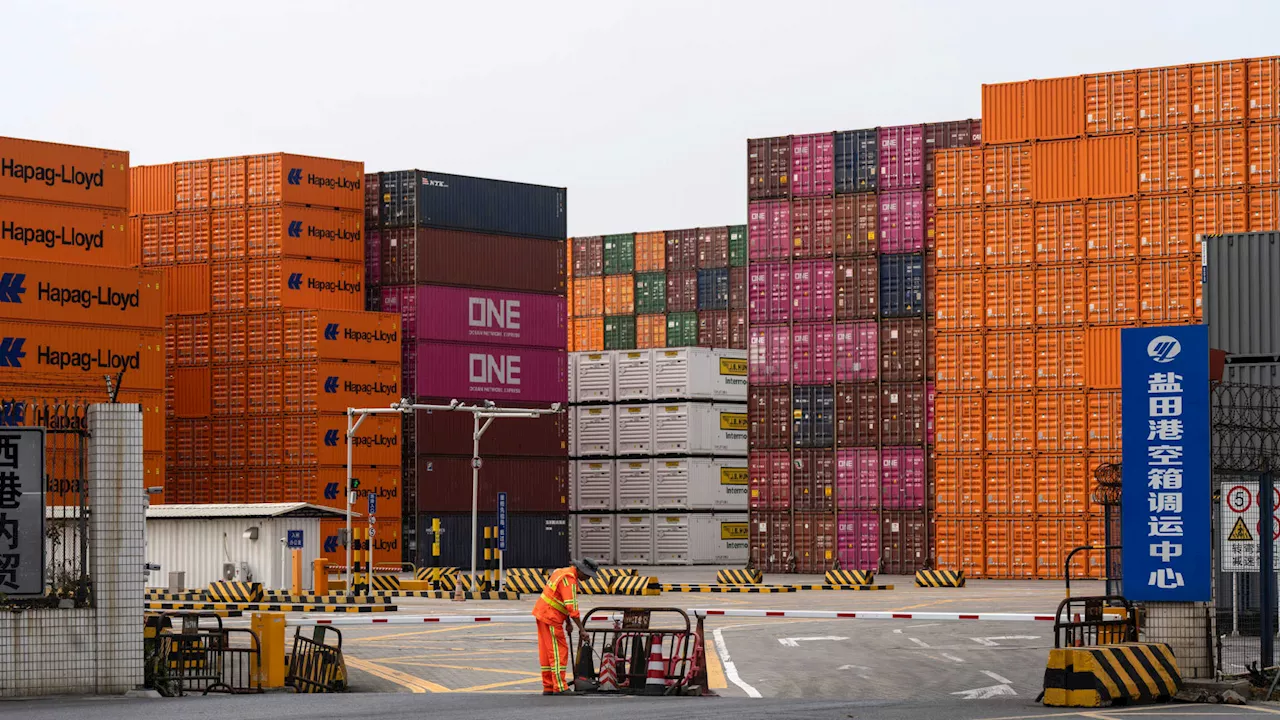 CNBC's The China Connection newsletter: No deal in sight to stop U.S.-China trade warAnalysts now talk not just of a war over trade, but one that could spread beyond technology to investment and other realms.
Read more »
 How Emerging Brands Are Accessing Trump’s Unpredictable Tariffs on ChinaSome have been hit with steep trade discount requests from American retailers, while others said they will continue to manufacture in China, citing quality and efficiency supremacy.
Read more »