
Astronomers believe thousands of large undiscovered asteroids, that could cause regional damage, may be in space.
Astronomers believe that 14,000 undiscovered near- Earth objects like asteroids, large enough to cause damage, could be in space.Recently, NASA was tracking a large asteroid flying past Earth known as the so-called 'city killer.
''This one got a lot of attention because it rose to a threat level that we just have not seen very often. We knew we had to monitor it and try to understand everything we could about it, not just where it is, but what is it made of? What size is it?' astronomer Nick Moskovitz said.Moskovitz says he's become an 'asteroid detective,' working to protect Earth from a possible disaster.'Find them before they find you. The sooner you find them, the more options you have for deflecting potentially hazardous asteroids,' Moskovitz said.In 2022, NASA performed a first-of-its-kind test. The agency intentionally crashed a spacecraft into a small asteroid, nudging it just enough to change its trajectory. The mission gave the space agency a tool that could potentially be used to counter an asteroid heading for our planet.'It's the only natural disaster that we could potentially prevent,' said NASA's acting planetary defense officer Kelly Fast. 'And if you were to find an impact threat to Earth well enough in advance, then you wouldn't have to deflect it much for it to be able to miss the Earth in the future.'The Lowell Discovery Telescope in northern Arizona is one of a handful around the world searching the night sky for asteroids that could potentially threaten Earth.'We can see orders of magnitude fainter than you would be able to with your naked eye,' Moskovitz explained.2024 YR4, 'city killer' asteroidSince December, Moskovitz had the Lowell Discovery Telescope trained on the 2024 YR4 asteroid. Scientists at one point projected it had about a 3% chance of hitting Earth in 2032.2024 YR4 is now expected to miss Earth and 'no longer poses a significant threat,' according to a recent analysis from NASA. It has approximately a 0.004% chance of hitting the planet in eight years, new calculations show.'The latest observations have further reduced the uncertainty of its future trajectory, and the range of possible locations the asteroid could be on Dec. 22, 2032, has moved farther away from the Earth,' NASA said.However, there is a 1.7% chance that it could impact the moon.Previous impacts of asteroidsIn 2013, a small asteroid, just 60 feet wide, exploded over Russia, injuring more than 1,600 people.An asteroid big enough to wipe out an entire city crashed to Earth 50,000 years ago in what is now northern Arizona. It left a crater that was three quarters of a mile wide and 600 feet deep.
United States Latest News, United States Headlines
Similar News:You can also read news stories similar to this one that we have collected from other news sources.
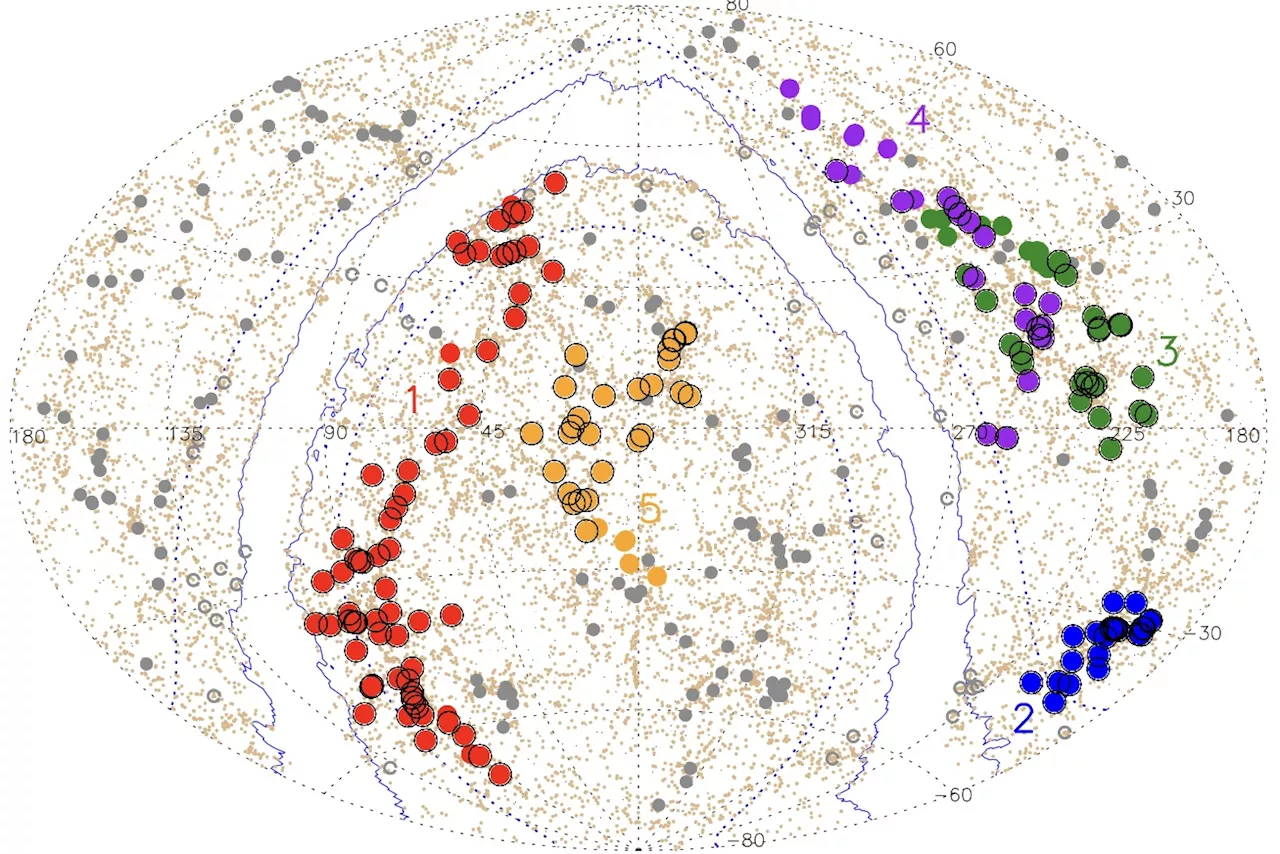 Astronomers Find the Largest Structure in the Universe and Name it 'Quipu'New research identified five new superstructures, the largest structures in the Universe. The largest contains 200 quadrillion solar masses.
Read more »
 How Can We Know If an Asteroid Will Hit Earth?“Keep your eye on the ball” is a motto for many athletes—and for astronomers trying to find Earth-threatening space rocks
Read more »
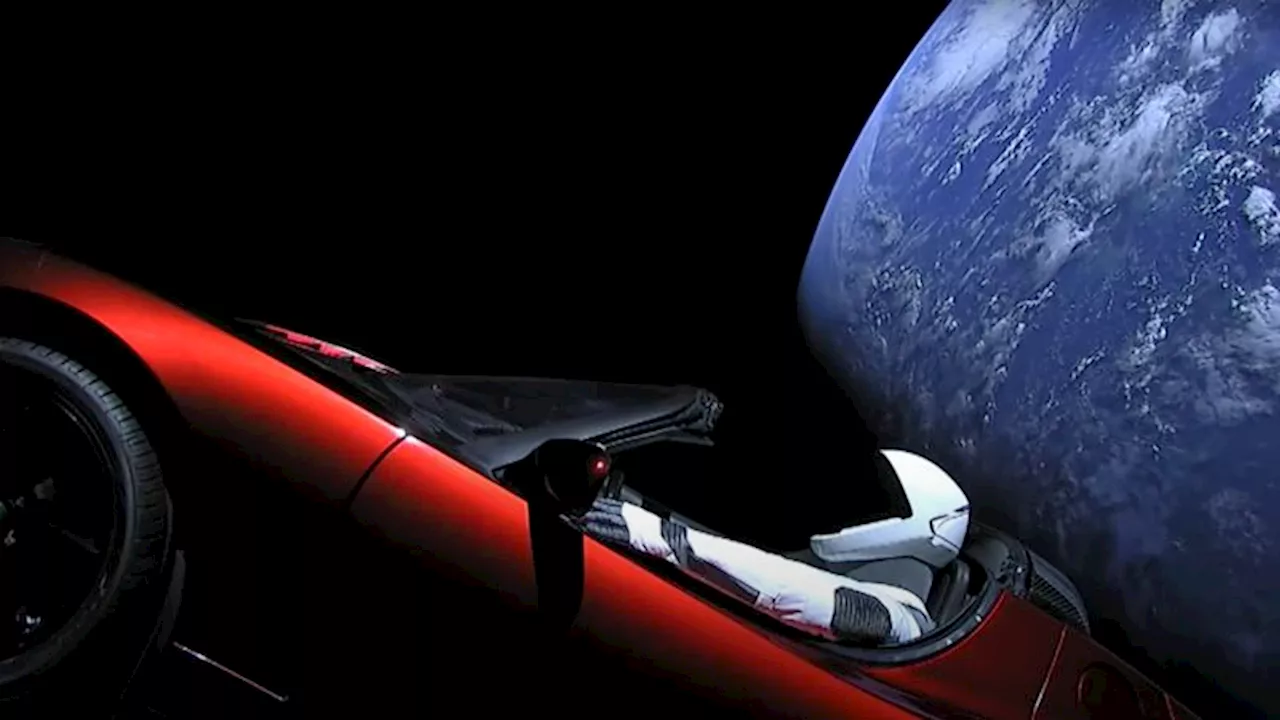 Elon Musk's Roadster Mistaken for Asteroid by AstronomersIn a surprising turn of events, Elon Musk’s cherry-red Tesla Roadster, launched into space in 2018, was recently misidentified as an asteroid by astronomers. This incident highlights the challenges of tracking objects in deep space, especially amidst the increasing number of human-made objects orbiting our planet.
Read more »
 Detecting Methane on Earth-like Exoplanets: A Promising Path to Finding Life Beyond EarthA new study published in The Astronomical Journal explores the potential of using a statistical method called BARBIE to detect methane on Earth-like exoplanets. The study highlights the importance of methane as a biosignature and the challenges associated with its detection in the presence of other atmospheric components like water. The Habitable Worlds Observatory (HWO), planned for launch in the 2040s, will utilize advanced techniques to search for methane and other biosignatures on potentially habitable exoplanets, advancing our quest to find life beyond Earth.
Read more »
 Astronomers are closely monitoring asteroid with a slightly increased chance of hitting EarthNamed 2024 YR4, the asteroid has a 2.2% chance of hitting our planet on December 22, 2032, according to the European Space Agency.
Read more »
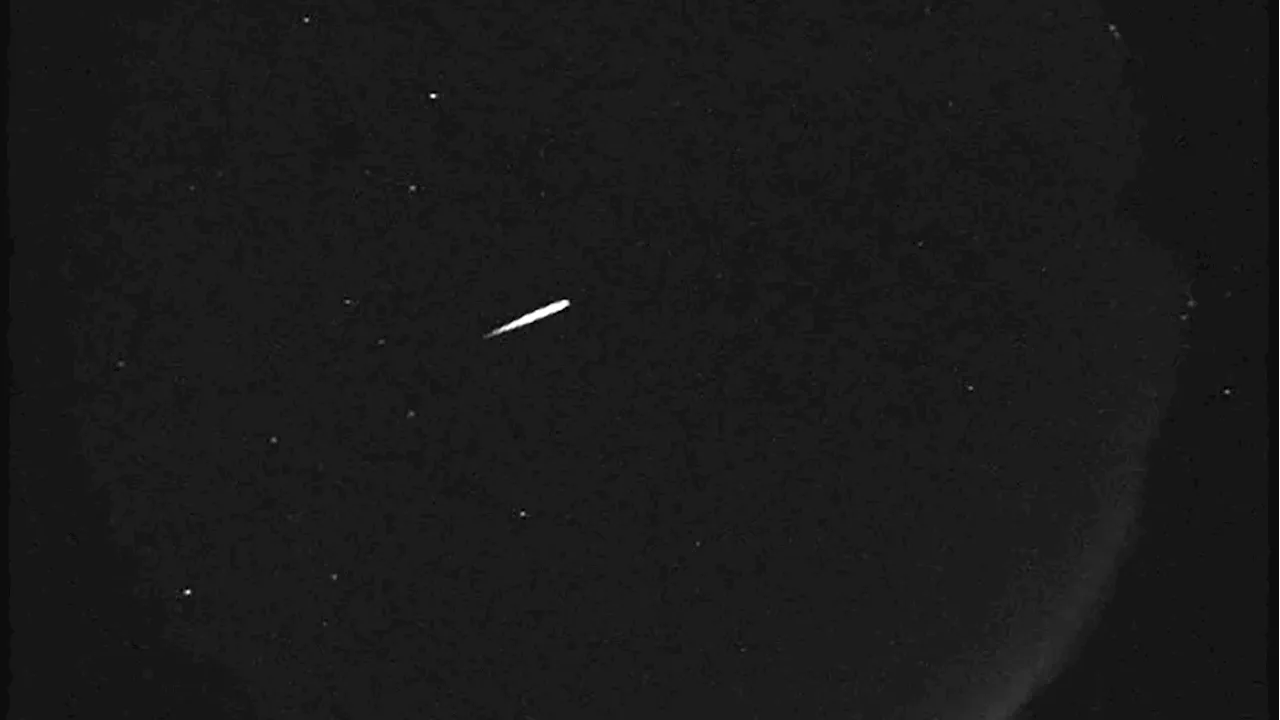 Astronomers Scrutinize Football-Field-Sized Asteroid for Potential Earth ImpactAn asteroid, 2024 YR4, comparable in size to a football field, is under close observation by astronomers due to the possibility of an Earth impact in 2032. While the current odds of a collision are estimated at 1 in 47, scientists are confident that further analysis of the asteroid's orbital path will likely reduce this probability to zero.
Read more »