
Artificial intelligence tools provide software developers and programmers freedom by automating tedious tasks.
technology tools such as ChatGPT, the opportunities and risks they pose and what impacts they could have on various aspects of our daily lives. DRAPER — It's easy to assume people who work in information technology and software engineering are geniuses who can just sit at their computers and come up with new code all day long.
But those who actually do the job say that's far from the truth. Dozens of Google tabs are a typical occurrence for software developers to help them accomplish tasks, find solutions and remember coding syntax. Artificial Intelligence tools such as ChatGPT and GitHub Copilot are rising in popularity as an extension to that: a way to help programmers streamline their work. Michael Seidle works as a mobile developer for Bill, a financial tech company with an office in Draper that helps businesses manage their finances. Seidle said when he first logged on to ChatGPT, he had no idea what it was capable of and what he could use it for. He messed around with it for a while to figure out some of the things it could do. When he was assigned a new project at work there was one component he didn't know how to do, so for fun he asked ChatGPT to build a component that would accomplish the things he needed.Seidle said he mainly uses ChatGPT to help in his own personal computer projects because at work he deals with private data and has strict rules to follow that can't be replicated with ChatGPT. But he enjoys using it in personal projects to explain programming languages or help him solve problems. "The best thing that I learned from that, is the time it saved me from going and Googling something, reading through three or four different webpages to find out exactly how maybe I should build it for my needs," Seidle said. "Whereas if I used ChatGPT, it did it not only faster, but it provided me a more narrowed-down answer." Seidle loves how he is able to expand on what AI gives him, by continually adding specifications and learning more as he adds layers. AI tools provide software developers and programmers freedom by automating tedious tasks, giving them the opportunity to be more efficient and creative in advanced areas.ChatGPT is a large language model that is meant to give human-like conversational responses. It's great at summarizing complex concepts, brainstorming ideas and is helpful for learning. Programmers can use it to answer questions or write basic code in any programming language. GitHub Copilot is another tool that helps programmers autocomplete code in real time. Both tools use a language model called Generative Pre-trained Transformer, or GPT, made by OpenAI, an artificial intelligence research and deployment company.OpenAI's latest release of its ongoing artificial intelligence project, ChatGPT, can do some astonishing things and the query-driven system is causing jaws to both drop, and flap, depending on how the output of the the super-smart super-bot is impacting any particular human's day-to-day world. "For my personal projects ... it has opened my ability to explore," Seidle said. Instead of always using repetitive methods, using AI helps Seidle learn new ways to solve problems and create solutions. ChatGPT isn't advanced enough to let just anyone suddenly know how to code. You have to know what you are talking about in programming languages when you ask it questions to be able to receive useful answers. As long as employees are trained in coding, they can use ChatGPT as another tool of problem-solving. "You're not going to hire people who can't do stuff," BYU philosophy and ethics professor Darin Gates said. But it will unleash creativity by making it so programmers don't have to do the tedious work and it gives them more time to be creative in the advanced, difficult tasks. Gates teaches a course required for computer science students called Ethics for Computers and Society. The use of AI in programming is a major discussion point in his course. "There's no question that because these technologies are so ubiquitous and powerful and impactful, that we have to think about the ethical dimensions of stuff," Gates said. Ian McShane is the vice president of strategy at cybersecurity firm Arctic Wolf. Although AI isn't new tech, it is becoming more popular to shorten time for repetitive tasks and improve overall efficiency and effectiveness of cybersecurity workers. "I think that's really what ChatGPT is useful for right now," McShane said. "Rather than being the savior of everything, and being capable of doing anything like a lot of folks seem to be painting it as, it's really the next generation of search technology that gives you extra context." Rather than being the savior of everything, and being capable of doing anything like a lot of folks seem to be painting it as, it's really the next generation of search technology that gives you extra context.ChatGPT is not perfect and does get things wrong, McShane said, which is why it's important those who use it know enough about programming to know when it gets the answer wrong. However, he said he thinks it's "ridiculous" when engineers put confidential information into a web-based portal. "It's one thing to use in a way that improves business and helps you get things done. But it's quite another thing when you're breaching confidentiality," McShane said. "So if you are circumventing that and shoving it on the internet, there's some questions to be asked there." Seidle said he typically only uses ChatGPT for personal projects as he deals with sensitive data at his job. He will sometimes use the application to come up with ideas on how to solve something at work, but then he adjusts it to his own data and needs. McShane said it's great the rise of AI is getting people to think about cybersecurity and lowers the barrier of entry to the industry. But he said it's important for people and organizations to be careful of the information they share and to defend themselves "in the face of an ever-changing threat landscape." Besides risking private information, ChatGPT gives adversaries the ability to sound more human in scams such as phishing emails or creating dialogue in the style of someone for deep-fake video and falsified audio. AI potentially can lower the entry barrier for "nefarious uses" such as people wanting to write malicious code, Gates said, or it can unintentionally aid in deception, fabrication, plagiarism and criminal actions. It can also lead to copyright violations if people use copyrighted code and algorithms without permission.LSU gymnast Olivia Dunne's endorsement of an artificial intelligence essay-writing tool is raising questions about whether college athletic programs should provide clearer ethical guidelines for athletes earning money from name, image and likeness contracts. "ChatGPT is the beginning stages of something that seems coherent and intelligent. Now, it doesn't understand, but it's going to get better and better," Gates said. "At what point will we not be able to distinguish if it's a person or if it's an AI agent?" AI learns from patterns of data and tries to predict what would come next, but it's trained on data only up until September 2021, Gates said. This gives the tool a wide range of application and it will continually improve over the years, but it still has a lot of limitations."It's just really important to remember that No. 1, it's not space magic. AI is generally provable and generally based on math. It's not going to do something necessarily outrageous that's going to change the world," McShane said. "It's been around a long time, but there's definitely a lot of scope and lot of potential for it to improve process, procedure and how we do things." While AI is a remarkable new technology, it can only do so much, Gates said. "We have to be careful we don't deceive ourselves in thinking it's better than it is and look out for inaccuracies and fabrications," he said. It's like using a calculator on a test, where if you don't understand what formulas to use, the calculator isn't going to save you. People are going to use it in their work, and we have to be able to integrate it into the industry, Gates said. The trick is finding a balance between using tech to make lives easier but not to make it so easy you became lazy and ineffective. "We have to make peace with it," Gates said. "We have to find a way to incorporate this technology in a way that helps people on the job because it's not going away." Society is walking a fine line of avoiding plagiarism, fabrication and copyright violation while also using it to augment what we do and make us more powerful, Gates said. We have to make peace with it. We have to find a way to incorporate this technology in a way that helps people on the job because it's not going away.Luckily, there are AI detection programs people can use to detect if fabrication or plagiarism is involved. Seidle believes as AI technology improves, so will tools that detect when AI is being used. "We have to learn to discern somehow both with the plagiarism issue and in the workplace — when this is just AI talking or when it's not," Gates said. Seidle said he knows someone who fears they will become a lazy developer by leaning on ChatGPT too much. "I think there's validity to that, but it's more how disciplined can you be," Seidle said. "Because managers and CEOs, I don't think really have a lot of guidelines or rules on how to handle this because it never existed." Seidle predicts AI applications will be viewed as just another tool tech companies buy subscriptions to for their workers to use internally rather than through an open source. He thinks managers will ask in hiring interviews about an applicant's ability to use the tool, just like they would when asking about programming language understanding. "And the right answer may not be, 'Oh, I don't want to use it because I don't want to cheat.' That might not be the right answer," Seidle said. "But the right answer might be, 'I would use it to answer questions. I would use it to make me a better programmer, use it to help me in my personal learning.' But I don't think it should be utilized as a crutch." While it could make some workers lazy, Seidle said it's ultimately up to the individual to maximize the power of AI in software development.
United States Latest News, United States Headlines
Similar News:You can also read news stories similar to this one that we have collected from other news sources.
 Artificial intelligence 'godfather' on AI possibly wiping out humanity: ‘It's not inconceivable’Geoffrey Hinton, a computer scientist known as 'the godfather of artificial intelligence,', said that it is 'not inconceivable' that AI may eventually wipe out humanity.
Read more »
 'Godfather of artificial intelligence' weighs in on the past and potential of AIArtificial intelligence is more prevalent than ever, with OpenAI, Microsoft and Google all offering easily available AI tools. The technology could change the world, but experts also say it's something to be cautious of.
Read more »
 Artificial intelligence ‘godfather’ on AI possibly wiping out humanity: ‘Not inconceivable’Computer scientist Geoffrey Hinton says it is “not inconceivable” that AI may develop to the point where it poses a threat to humanity.
Read more »
 Answer Man: How long has mechanical artificial cooling existed?Q: How long has air conditioning been around?
Read more »
 A fork in the road for artificial intelligence developers and regulatorsResearchers and practitioners in the AI space were alarmed this month after discovering that GPT-4, the latest and greatest upgrade to the AI chatbot ChatGPT, is no longer open-sourced. This decision could have the unintended consequence of stifling innovation.
Read more »
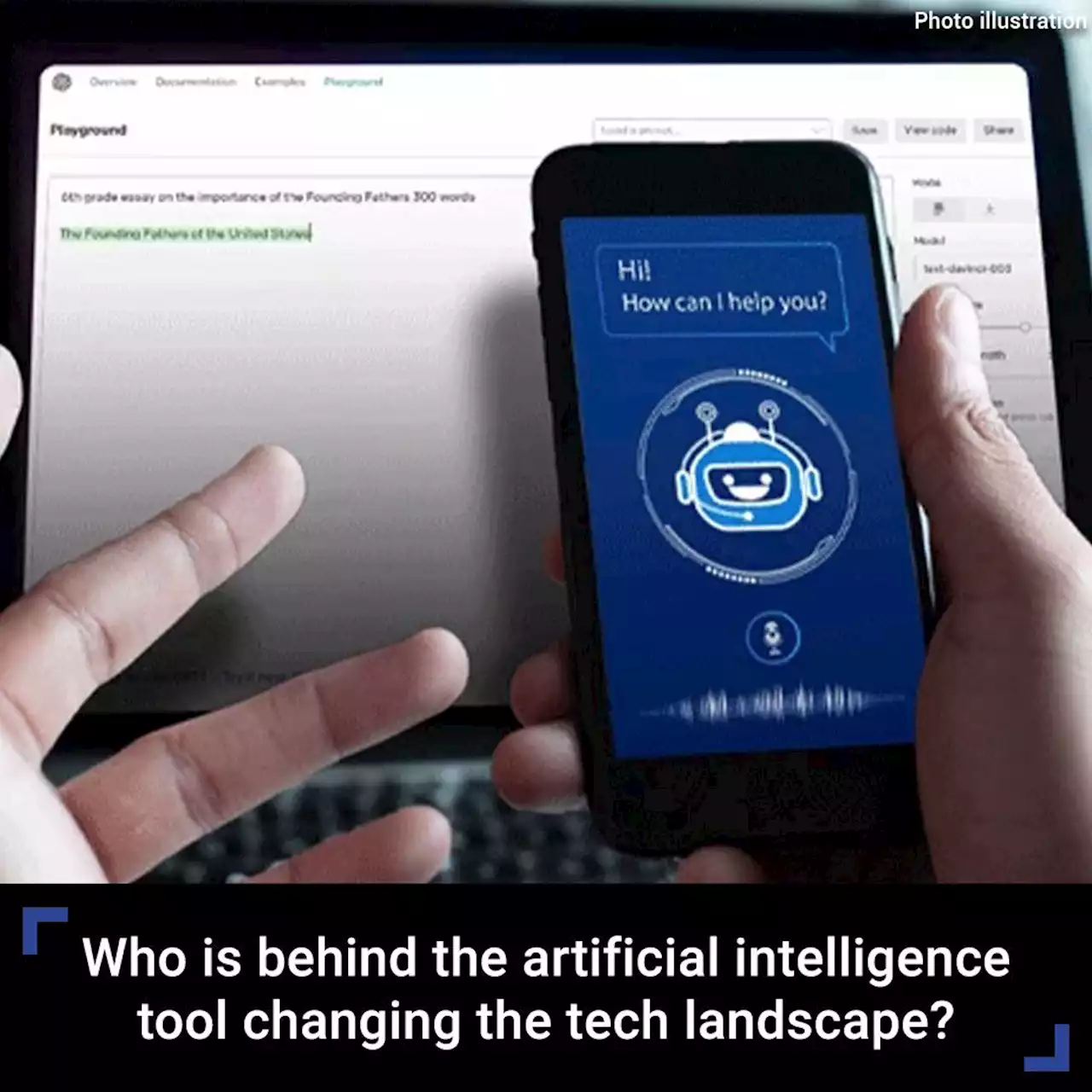 ChatGPT: Who and what is behind the artificial intelligence tool changing the tech landscapeSam Altman and OpenAI created the popular artificial intelligence tool ChatGPT with the help of substantial investments from Elon Musk, Microsoft and more.
Read more »