
Josh Dinner is Space.com's Spaceflight Staff Writer. He is a writer and photographer with a passion for science and space exploration, and has been working the space beat since 2016. Josh has covered the evolution of NASA's commercial spaceflight partnerships and crewed missions from the Space Coast, NASA science missions and more.
'An incredible privilege and responsibility': Artemis 2's Christina Koch is ready to become the 1st woman to fly around the moonBreaking space news, the latest updates on rocket launches, skywatching events and more!Receive email from us on behalf of our trusted partners or sponsorsSign up to our monthly entertainment newsletter to keep up with all our coverage of the latest sci-fi and space movies, tv shows, games and books.
Discover this week's must-see night sky events, moon phases, and stunning astrophotos. Sign up for our skywatching newsletter and explore the universe with us!Space.com's Sci-Fi Reader's Club. Read a sci-fi short story every month and join a virtual community of fellow science fiction fans!, carrying out a long list of mission objectives that includes the first human lunar flyby in more than half a century. The, which includes NASA astronauts Reid Wiseman, Victor Glover and Christina Koch, and Canadian Space Agency astronaut Jeremey Hansen. The moon is the main focus of their mission, but their 10 days aboard Orion will be filled with science, spacecraft maneuverability tests, medical checks, survival training and more. Here's the day-by-day breakdown.Much of an astronaut's training often focuses on a mission's shortest events, which is perhaps most true of launch itself. The first eight minutes of the Artemis 2 mission are some of its most crucial. The astronauts aboard Orion will ride NASA's rocket into space, dropping the two solid rocket boosters at its sides, followed by the vehicle's 212-foot tall first stage on its way to orbit.Once in space, Orion and its service module will still be attached to SLS's Interim Cryogenic Propulsion Stage . Within the first few hours after liftoff, the crew will ignite the ICPS engine for a pair of burns to place the spacecraft in a high elliptical orbit.Breaking space news, the latest updates on rocket launches, skywatching events and more!Receive email from us on behalf of our trusted partners or sponsors At this point, the crew will detach from the ICPS for a critical part of the Artemis 2 mission. Once separated, the crew will fly Orion around the spent stage to perform proximity operations, or"prox ops." The maneuvers are meant to demonstrate Orion's ability to fly in tandem and operate around another object in space, as it will have to do on future missions with the Artemis lunar lander. After prox ops, ICPS will fire its engine one more time, setting the stage on a course to burn up in Earth's atmosphere. Meanwhile, the astronauts will begin a series of systems checks, stow their launch couches and change out of their space suits into some more comfortable clothing ahead of their first sleep cycle. The Artemis 2 crew's sleep schedule is set depending on the time of their liftoff, but at least 8.5 hours are blocked off each day of their mission for them to get some shut-eye. Their first rest, however, will be split into two halves, with another orbit-raising burn planned in between.How will Artemis 2 be different from NASA's Apollo moon missions? From left to right: Canadian Space Agency astronaut Jeremey Hansen and NASA astronauts Christina Koch, Reid Wiseman and Victor Glover.The long-term objective of NASA's Artemis program is to build a sustained human presence on the surface of the moon. Through the continuous habitation of the International Space Station infor the past 26 years, scientists have come to better understand the effects of microgravity on the human body. With that experience in hand, NASA has included exercise equipment aboard Orion for the Artemis 2 crew to test out and use. Each astronaut will have a go on the spacecraft's flywheel exercise device during their first full day in space, but getting in a quick workout is far from the day's main event.About six hours after they wake up, the Artemis 2 astronauts will strap-in for Orion's translunar injection burn. This is the maneuver that will commit the mission to its flight around the moon. Without it, the crew never leaves Earth orbit. The 30-minute firing of the Orion service module engine will place the spacecraft on a free-return trajectory — a course that loops around the far side of the moon and slingshots back toward Earth. The flight path eschews Orion's entry into lunar orbit, but ensures the crew's safe return without the need for another substantial engine burn. In this sense, Orion's TLI burn is essentially also the crew's course home.Steadily on their way to the moon, the Artemis 2 crew will spend much of their third day practicing the tasks they'll perform during lunar flyby. The astronauts will only have about three hours during Orion's closest pass above the surface of the moon to complete their lunar survey, including a long list of observations they're hoping to record. While the crew has rehearsed those activities repeatedly in preparation for the mission, it's important for them to familiarize themselves with performing the same tasks in zero-g, where the whole position of their body may be different from where they stood in the spacecraft simulator. In addition to the crew's flyby rehearsals, Hansen is scheduled to prepare Orion for a minor correction burn to keep their trajectory on course, expected to fire during the second half of their day. The astronauts will also use the third day of the mission to perform some safety demonstrations, including CPR procedures.On the mission's fourth full day in space, still outward bound for the moon, Orion will perform a second small correction burn. Much of the day will be spent performing standard operations like communications with mission control and a few public affairs media events, but the Artemis 2 crew has some reserved time for additional lunar imaging reviews and practice scoping out specific geographic targets they'll need to keep an eye out for while recording their experiences during lunar flyby. 20 minutes are reserved specifically for snapping photos of theThe Artemis 2 prime and backup crews practice eating in a simulator. From left: Jenni Gibbons, backup crew ; Victor Glover, prime crew and Christina Koch, prime crew .On this day, Artemis 2 enters lunar space! Flight day 5 is the day that the moon's gravitational pull on the Orion spacecraft becomes stronger than Earth's. This officially puts the Artemis 2 crew in lunar space, making them the first humans to venture there since 1972. The Artemis 2 astronauts will spend the first several hours of their day performing tests donning their spacesuits. Part of the suit test assesses the crew's ability to rapidly don and pressurize their suits, pressurize them and get strapped into their seats. The iconic orange garments aren't normally needed during spaceflight, but are worn by the crew during launch and reentry in case of cabin depressurization. The spacesuits are equipped with feeding, drinking and waste management tubes, and can protect the crew for up to six days if Orion loses pressure during their mission as well.Prepare for lunar flyby! This is the day the mission is all about: the day the astronauts will fly by the moon. A short hour or so after they wake up, the Artemis 2 astronauts will begin their lunar observations operations. Orion's closest approach will bring the spacecraft to between 4,000-6,000 miles above the lunar surface. To the astronauts, the moon will appear out Orion's window to be about the size of a basketball held at an arm's length. It will take most of the day for Orion to swing around the moon's far side, during which the crew will spend about three hours recording extensive observational data, taking photos, and tracking specific geological formations. Depending on the crew's time and day of launch, this part of their journey could fly them further from the Earth than any crewed space mission in history, and award them a unique look at aspects of the moon never before seen during human spaceflight. A photo from the Artemis 1 moon mission, which launched in 2022 as a test before this Artemis 2 mission, showing the uncrewed Orion spacecraft and its view of the moon and Earth. This was taken during a livestream on Nov. 28, 2022.Orion will exit lunar space this morning. The Artemis 2 crew will spend the first half of their day relaying data to scientists back on Earth, who are interested in everything from Orion's performance, the astronauts' physical experiences and their psychological frame of mind in order to fully evaluate the crew's experience. They will also have the opportunity for a spaceflight first. Artemis 2 will be the first time astronauts flying beyond low Earth orbit will have the chance to look back at our home planet with the knowledge that they are not the only ones in space. In recognition of this milestone, a short audio call between Orion and the crew aboard the International Space Station will be held during the afternoon. The crew will also initiate the first of three small return trajectory correction burns to keep Orion on a pinpoint course for landing on its way back to Earth. The rest of the day is reserved for the astronauts to rest, reflect and enjoy a few hours of off duty time before the final leg of their mission.There's still more to do as the astronauts cruise the distance between the moon and Earth, and NASA has reserved the outward leg of the Artemis 2 crew's journey for a few more demonstrations.Once major risk in space is radiation exposure. This is true of spacecraft components like computer boards and circuitry, as well as the human body. It's something that NASA has studied extensively over more than 20 years aboard the International Space Station, but with few opportunities to do so in deeper space. To practice taking shelter from something like a solar flare, the Artemis 2 crew will use Orion's onboard supplies, like the water tanks, as shields from radiation on one side, and position themselves to use the spacecraft's heatshield as a built-in radiation barrier.In the afternoon, the astronauts will perform another exercise to demonstrate Orion's maneuverability. The spacecraft has two thruster modes: six-degree-of-freedom and three-degree-of-freedom attitude controls. The six-degree configuration ensures Orion's course isn't altered as the spacecraft makes attitude adjustments, auto-correcting any deviation caused by the slight movements. In the three-degree configuration, Orion uses less fuel and requires less complex calculations, but requires course corrections due to inevitable drift.It's the last full day in space for the Artemis 2 crew, and the astronauts will spend most of their day preparing for their return. Their schedule includes a few more technology demonstrations, a small trajectory correction burn, and trying on their orthostatic intolerance garments — compression clothing worn after landing to help counteract the effects on the body after returning from a microgravity environment. Once their day is wrapped, the astronauts will ensure everything is strapped down and ready for the next day's big return.Orion will perform its final trajectory correction burn as the spacecraft barrels toward Earth. The crew will don their spacesuits, unfold their couches and strap in for a fiery return. As they approach the planet, the Artemis 2 astronauts will jettison Orion's service module and point the capsule's headshield toward the atmosphere, which will protect them from the 3,000-degree Fahrenheit temperatures caused by the friction of their reentry through Earth's atmosphere. A canopy of three parachutes will deploy and hang overhead during the final minutes of descent, slowing Orion's fall to just 17 mph as it hits the water. The crew's splashdown will take place in the Pacific Ocean, off the coast of San Francisco, where a U.S. Navy ship and other recovery assets will rendezvous with Orion at sea and collect the spacecraft onboard, where the crew can egress for transportation back to terra firma and the end of their mission. Josh Dinner is Space.com's Spaceflight Staff Writer. He is a writer and photographer with a passion for science and space exploration, and has been working the space beat since 2016. Josh has covered the evolution of NASA's commercial spaceflight partnerships and crewed missions from the Space Coast, NASA science missions and more. He also enjoys building 1:144-scale model rockets and spacecraft. Find some of Josh's launch photography onArtemisInterstellar comet 3I/ATLAS may be nearly 12 billion years old — so ancient its star system may no longer exist'It didn't feel like a sci-fi movie': Esai Morales on bringing an Army Ranger to life in Netflix's sci-fi hit 'War Machine'
United States Latest News, United States Headlines
Similar News:You can also read news stories similar to this one that we have collected from other news sources.
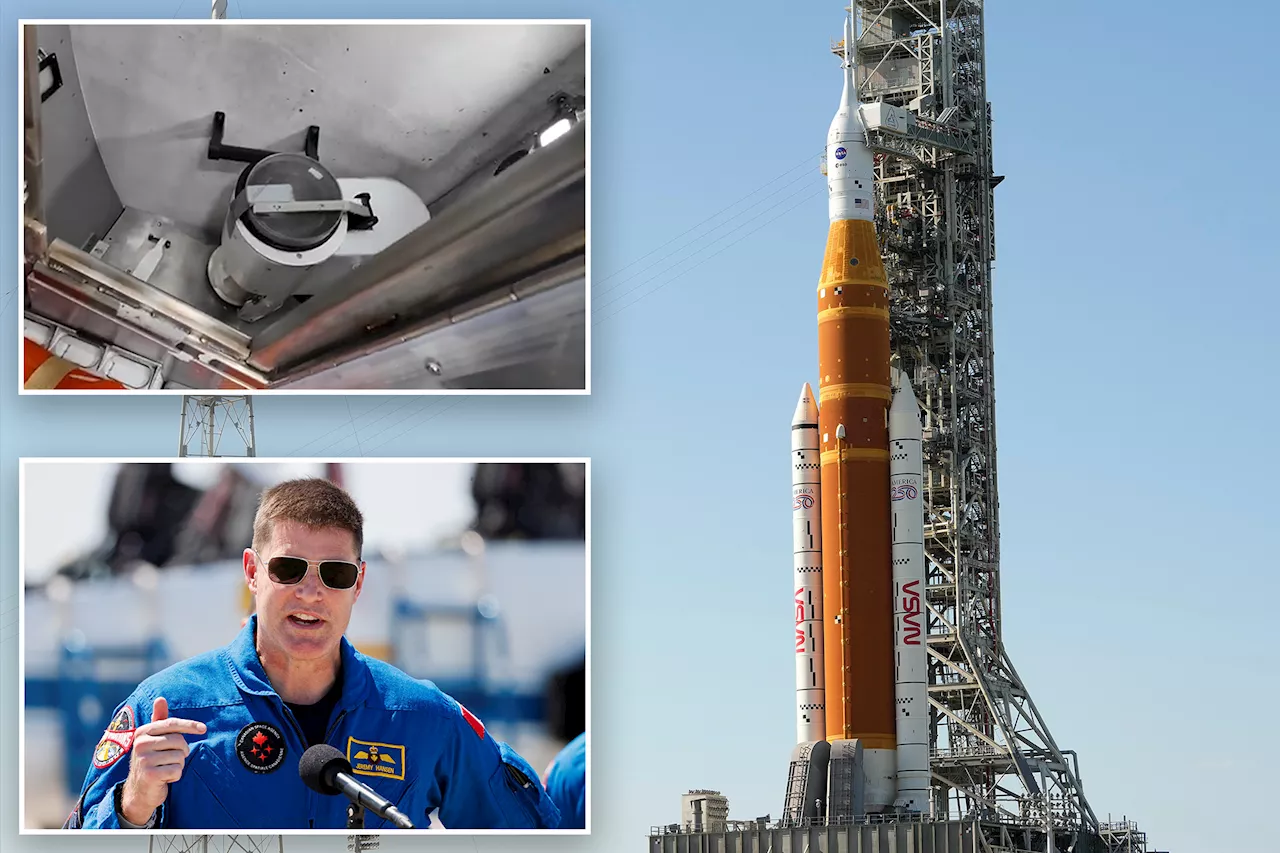 Astronauts excited for alone time on space toilet ahead of Artemis II trip around the moonThey’re gonna aim for the stars. NASA’s Artemis II four crew members will blast off April 1 for a 10-day trip around of the moon — in a camper‑sized space capsule with their prized new …
Read more »
 Space Epic Continues to Soar at Box OfficeThe Ryan Gosling-led sci-fi film has earned $300 million worldwide.
Read more »
 NASA Astronaut Suddenly Couldn't Speak in Space, And Doctors Don't Know WhyThe Best in Science News and Amazing Breakthroughs
Read more »
 Mysterious Space Station Incident Leaves NASA BaffledA medical incident in January caused Mike Fincke to be evacuated from the space station - but no one understands what happened.
Read more »
 How will Artemis 2 be different from NASA's Apollo moon missions?Robert Pearlman is a space historian, journalist and the founder and editor of collectSPACE.com, a daily news publication and community devoted to space history with a particular focus on how and where space exploration intersects with pop culture. Pearlman is also a contributing writer for Space.
Read more »
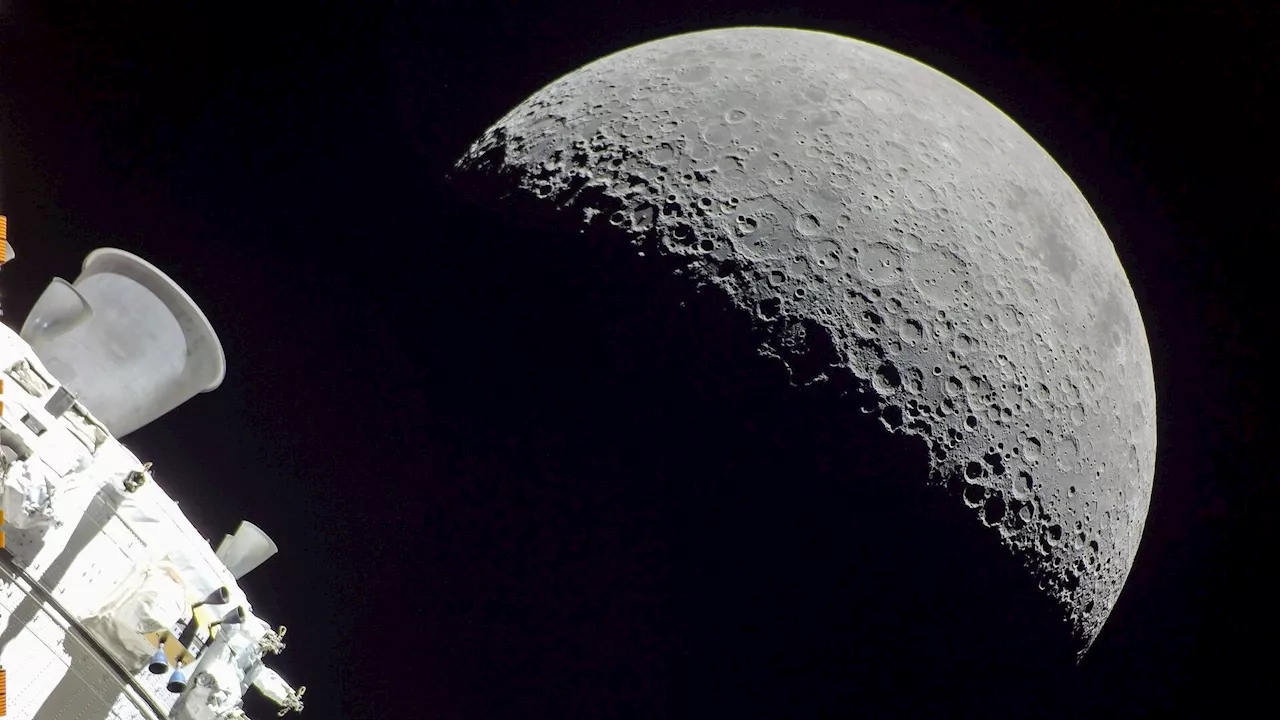 Could bad space weather endanger the Artemis 2 moon astronauts?Leonard David is an award-winning space journalist who has been reporting on space activities for more than 50 years. Currently writing as Space.
Read more »