Science, Space and Technology News 2024
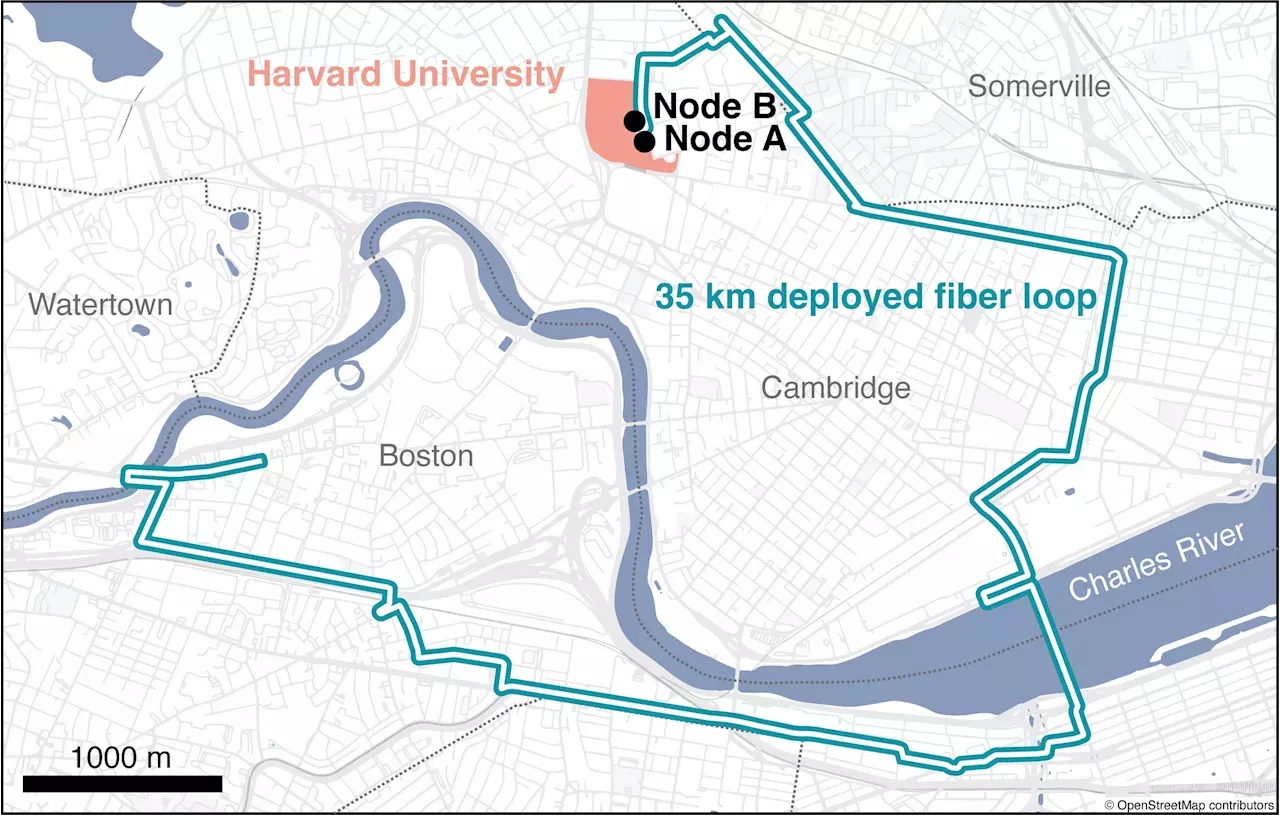
Map showing path of two-node quantum network through Cambridge and Boston, Massachusetts. Credit: Can Knaut via OpenStreetMapImagining a quantum internet capable of transmitting hacker-proof information globally through photons superimposed in different quantum states is one thing; demonstrating its feasibility in the real world is quite another.
That’s exactly what Harvard physicists have done. They used existing Boston-area telecommunication fiber in a demonstration of the world’s longest fiber distance between two quantum memory nodes to date. Think of it as a simple, closed internet between points A and B, carrying a signal encoded not by classical bits like the existing internet, but by perfectly secure, individual particles of light. , was led by Mikhail Lukin, the Joshua and Beth Friedman University Professor in the Department of Physics, in collaboration with Harvard professors Marko Lončar and Hongkun Park, who are all members of the Harvard Quantum Initiative, alongside researchers at Amazon Web Services. The Harvard team established the practical makings of the first quantum internet by entangling two quantum memory nodes separated by an optical fiber link deployed over a roughly 22-mile loop through Cambridge, Somerville, Watertown, and Boston. The two nodes were located a floor apart in Harvard’s Laboratory for Integrated Science and Engineering.have been created in the past, the Harvard team’s is the longest fiber network between devices that can store, process and move information. Each node is a very small quantum computer, made out of a sliver of diamond that has a defect in its atomic structure called a silicon-vacancy center. Inside the diamond, carved structures smaller than a hundredth the width of a human hair enhance the interaction between the silicon-vacancy center and light. The silicon-vacancy center contains two qubits, or bits of quantum information: one in the form of an electron spin used for communication, and the other in a longer-lived nuclear spin used as a memory qubit to store entanglement . Both spins are fully controllable with microwave pulses. These diamond devices – just a few millimeters square – are housed inside dilution refrigeration units that reach temperatures of -459at Harvard. The technology solves a major problem in the theorized quantum internet: signal loss that can’t be boosted in traditional ways. A quantum network cannot use standard optical-fiber signal repeaters because copying of arbitrary quantum information is impossible – making the information secure, but also very hard to transport over long distances. Silicon vacancy center-based network nodes can catch, store, and entangle bits of quantum information while correcting for signal loss. After cooling the nodes to close to, light is sent through the first node and, by nature of the silicon vacancy center’s atomic structure, becomes entangled with it.“Since the light is already entangled with the first node, it can transfer this entanglement to the second node,” explained first author Can Knaut, a Kenneth C. Griffin Graduate School of Arts and Sciences student in Lukin’s lab. “We call thisOver the last several years, the researchers have leased optical fiber from a company in Boston to run their experiments, fitting their demonstration network on top of the existing fiber to indicate that creating a quantum internet with similar network lines would be possible. “Showing that quantum network nodes can be entangled in the real-world environment of a very busy urban area, is an important step towards practical networking between quantum computers,” Lukin said. A two-node quantum network is only the beginning. The researchers are working diligently to extend the performance of their network by adding nodes and experimenting with more networking protocols. Reference: “Entanglement of nanophotonic quantum memory nodes in a telecom network” by C. M. Knaut, A. Suleymanzade, Y.-C. Wei, D. R. Assumpcao, P.-J. Stas, Y. Q. Huan, B. Machielse, E. N. Knall, M. Sutula, G. Baranes, N. Sinclair, C. De-Eknamkul, D. S. Levonian, M. K. Bhaskar, H. Park, M. Lončar and M. D. Lukin, 15 May 2024, The work was supported by the AWS Center for Quantum Networking’s research alliance with the Harvard Quantum Initiative, the National Science Foundation, the Center for Ultracold Atoms , the Center for Quantum Networks , the Air Force Office of Scientific Research, and other sources.SciTechDaily: Home of the best science and technology news since 1998. Keep up with the latest scitech news via email or social media.NASA’s Juno mission captured detailed images of Jupiter during its 59th close flyby, revealing the planet’s colorful belts, swirling storms, and the tiny moon Amalthea….
United States Latest News, United States Headlines
Similar News:You can also read news stories similar to this one that we have collected from other news sources.
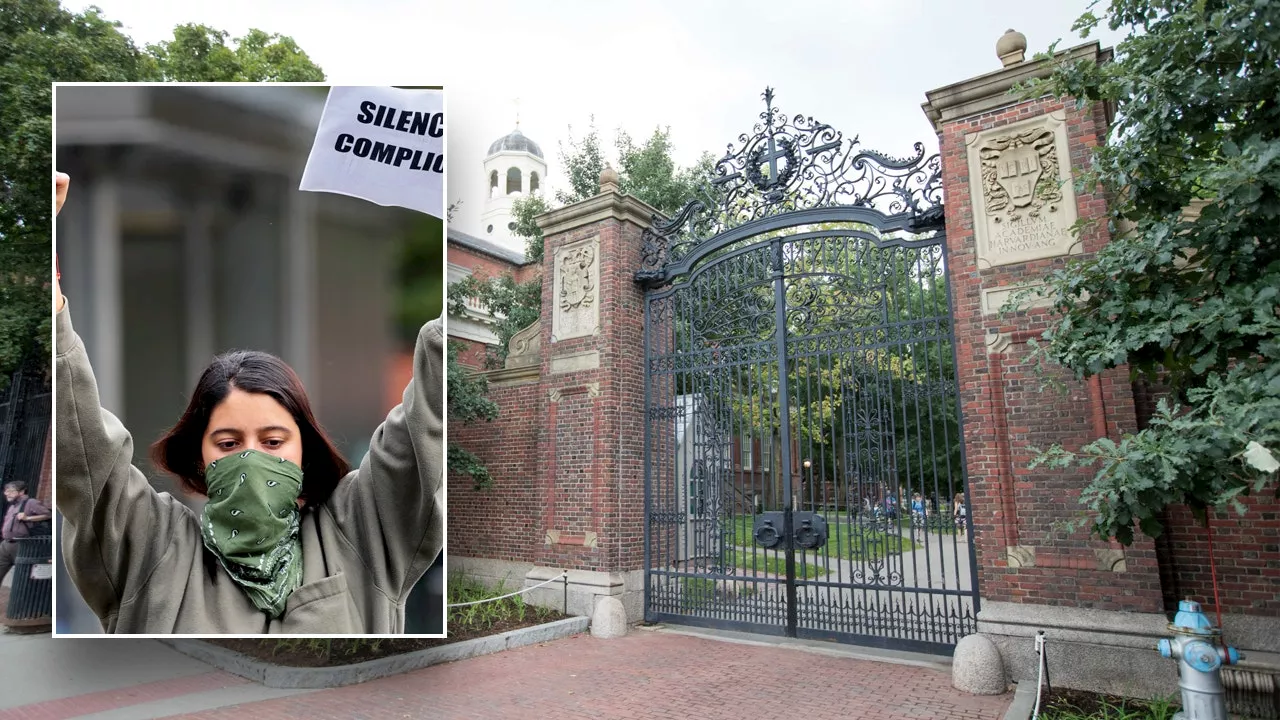 Harvard closes Harvard Yard as anti-Israel protesters take over Ivy League campuses across country: reportHarvard University is reportedly restricting access to Harvard Yard this week as anti-Israel protesters take over open areas of other Ivy League campuses.
Read more »
 Scientists demonstrate high-resolution lidar sees birth zone of cloud droplets, a first-ever remote observationA team led by atmospheric scientists at the U.S. Department of Energy's Brookhaven National Laboratory has demonstrated the first-ever remote observations of the fine-scale structure at the base of clouds.
Read more »
 Physicists create an optical tweezer array of individual polyatomic molecules for the first timeA team of physicists at Harvard University has succeeded in trapping individual polyatomic molecules in optical tweezer arrays for the first time. In their paper published in the journal Nature, the group describes how they achieved their feat and the possible uses for it. A Research Briefing also describes their work in the same journal issue.
Read more »
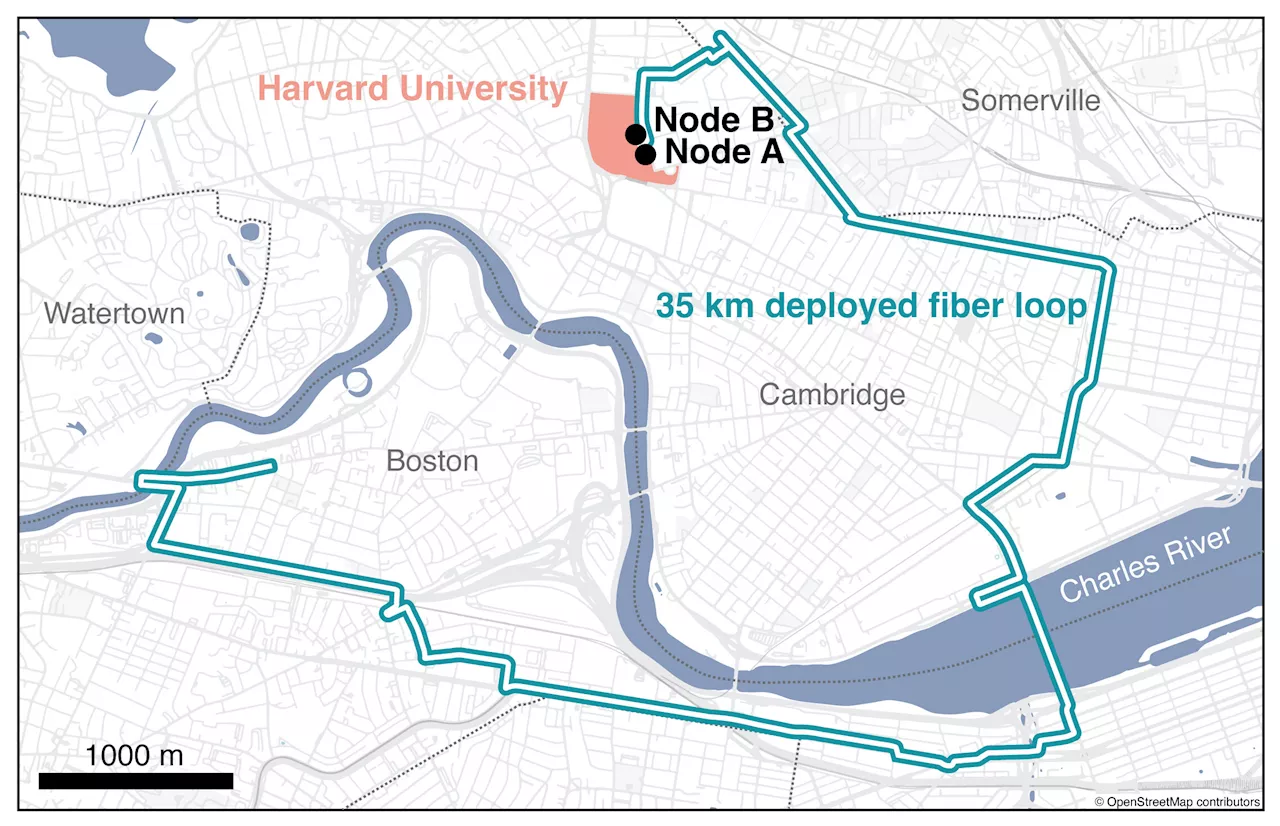 Physicists demonstrate first metro-area quantum computer network in BostonIt's one thing to dream up a quantum internet that could send hacker-proof information around the world via photons superimposed in different quantum states. It's quite another to physically show it's possible.
Read more »
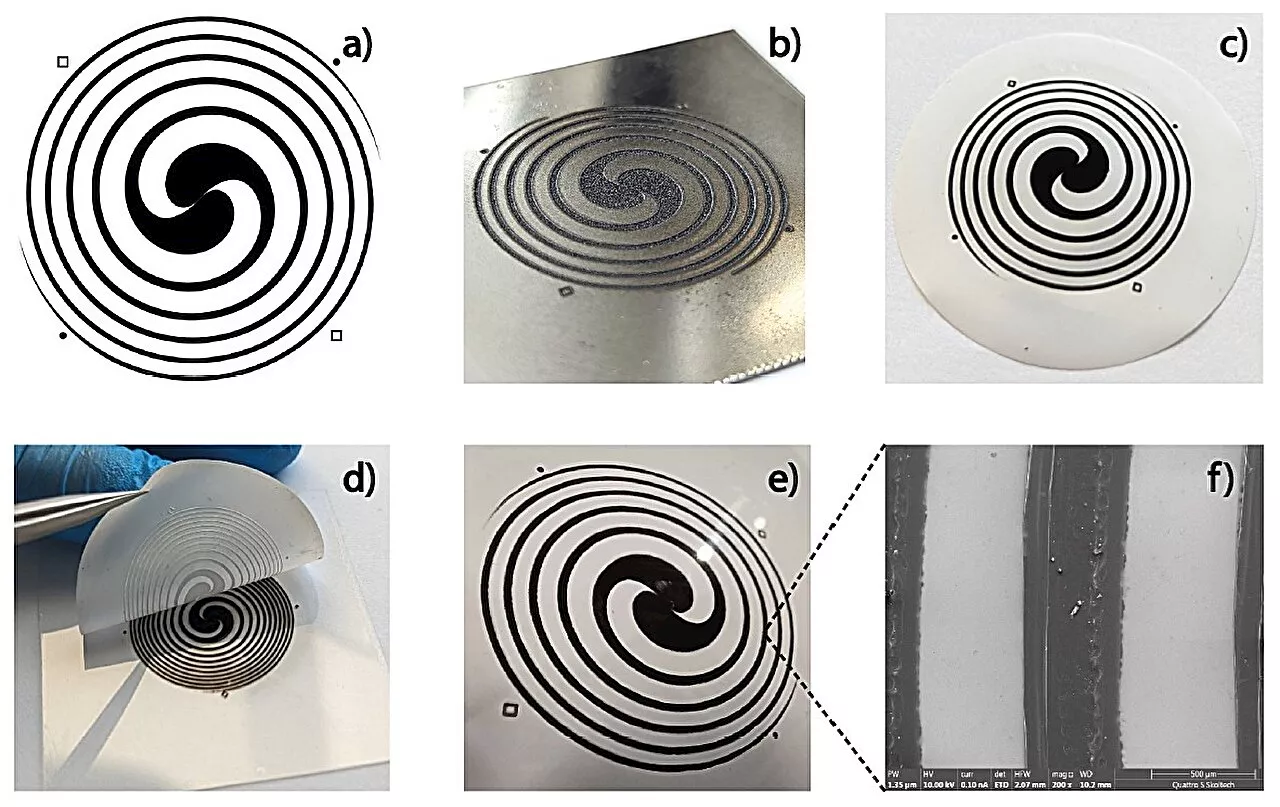 Physicists create optical component for 6GA joint team of physicists from Skoltech, MIPT, and ITMO developed an optical component that helps manage the properties of a terahertz beam and split it into several channels. The new device can be used as a modulator and generator of terahertz vortex beams in medicine, 6G communications, and microscopy.
Read more »
 A new space mission may help physicists answer 'hairy' questions about black holesPhysicists consider black holes one of the most mysterious objects that exist. Ironically, they're also considered one of the simplest. For years, physicists like me have been looking to prove that black holes are more complex than they seem. And a newly approved European space mission called LISA will help us with this hunt.
Read more »