
For older people, this tool can predict dementia and other age-related diseases years before symptoms show up, providing a vital opportunity to intervene early.
A new tool could estimate how fast a person is biologically aging using a single MRI brain scan .Dubbed DunedinPACNI, it has been developed by researchers from Duke, Harvard, and the University of Otago in New Zealand.
The tool offers a unique insight into an individual’s age beyond chronological years.Tracking 1,037 individualsWe’ve all seen it — some people defy time, while others age much faster. It’s a reminder that the number of birthdays we’ve had doesn’t always tell the whole story of how we’re aging.To help people live longer, healthier lives, there’s a need to monitor how we age accurately. And a lot of research has already been done. While blood tests are commonly used to estimate biological age by measuring factors like epigenetic aging and DNA methylation, these methods are ineffective for accurately determining the age of the brain.This new tool analyzes a midlife brain scan to foresee your risk of developing chronic diseases, even those that might not manifest for many years.The information could be a powerful motivator for lifestyle changes, inspiring better diet and exercise. So, how did they do it? The scientists leveraged data from the Dunedin Study in New Zealand, which has followed over 1,037 individuals since birth in the early 1970s.It tracked participants’ health every few years, monitoring various indicators. These included standard measures like blood pressure, body mass index , glucose, cholesterol levels, and lung and kidney function assessments. They even looked at less common health markers such as gum recession and tooth decay.The long-term data allowed them to create a unique “aging score” for each person. DunedinPACNI was then “trained” to estimate this aging score using only a brain MRI taken when participants were 45.Biological aging and diseases It was found that individuals with faster “aging scores” exhibited poorer performance on cognitive tests. The brain scan also showcased accelerated shrinkage in the hippocampus linked to memory.In a study involving individuals between 52 and 89 years old, the tool predicted that those identified as “aging fastest” were 60 percent more likely to develop dementia.But it’s not just the brain. Those aging at a quicker pace also showed greater frailty and were 18% more likely to be diagnosed with a chronic disease in the following years.A striking 40 percent are more likely to die within the same timeframe compared to those aging at an average or slower pace.The research team was stunned by the initial results.“Our jaws just dropped to the floor. The link between aging of the brain and body is pretty compelling,” said Ahmad Hariri, professor of psychology and neuroscience at Duke University.With the global population aging rapidly, the number of people experiencing chronic age-related diseases, including dementia, is set to skyrocket. DunedinPACNI could be the key to evaluating new interventions and even preventing the disease from progressing. However, the team says that more research is needed before this tool enters the setting for practical healthcare applications.Using AI and MRI scans to assess brain aging and predict cognitive decline is being actively researched, and similar tools have been developed previously.For instance, an earlier AI-powered tool was also showcased that could non-invasively track the pace of brain changes using MRI scans. The big question now is how quickly these kinds of tools will be adopted by the general public and integrated into health clinics.The findings were published in the journal Nature Aging.
Alzheimer's Biology Brain Scan Dementia Dunedin Study Dunedinpacni Health MRI
United States Latest News, United States Headlines
Similar News:You can also read news stories similar to this one that we have collected from other news sources.
 What's the Difference Between a CT Scan and MRI?Both are imaging procedures. CT scans use X-rays while MRIs use magnetic fields and radio waves to produce detailed images of the internal structures of your body.
Read more »
 Federal Judge Blocks Trump Administration's Move to Restrict Harvard's International StudentsA federal judge has blocked the Trump administration's attempt to prevent Harvard University from hosting international students. The ruling is a victory for Harvard, which has been challenging multiple government sanctions amid a conflict with the White House. While the judge preserved Harvard's ability to host foreign students, the federal government still has authority to review Harvard's ability through established legal processes.
Read more »
 Arizona Diamondbacks Corbin Carroll to Have MRI on Injured HandThe Arizona Diamondbacks' superstar outfielder is still unable to swing the bat appropriately
Read more »
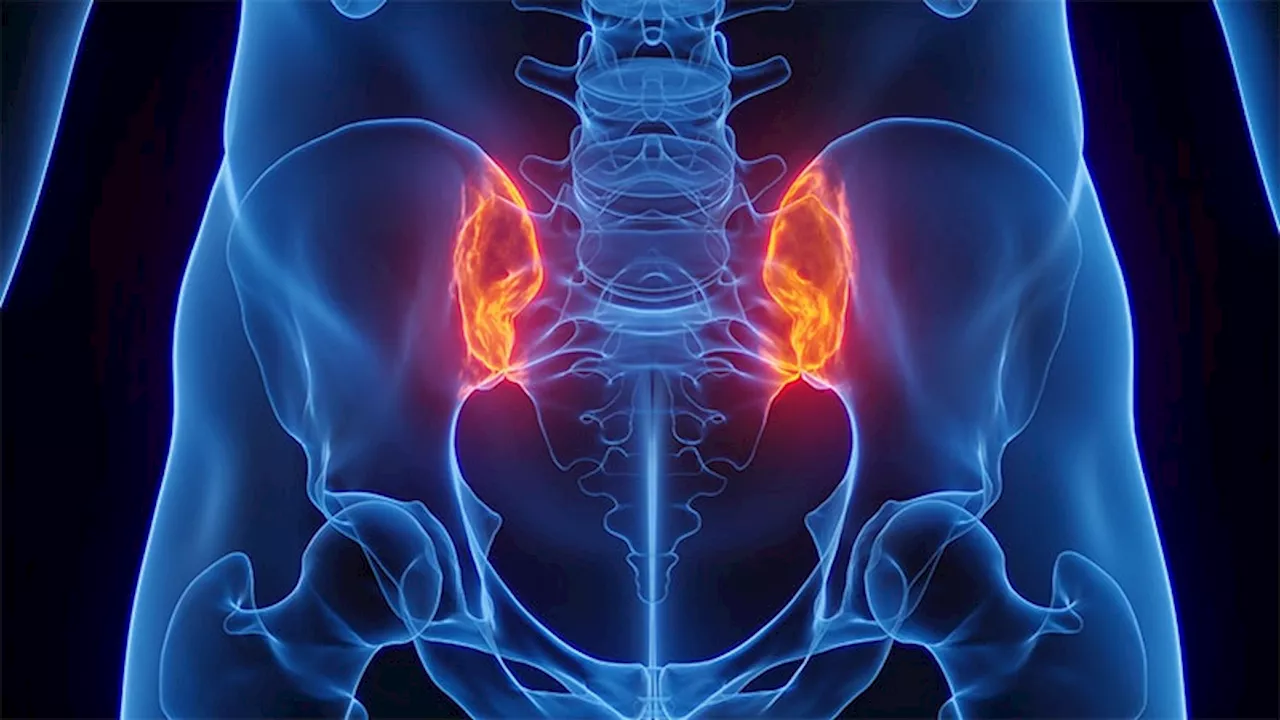 Do NSAIDs Affect Sacroiliitis Visibility on MRI in Axial Spondyloarthritis?Among patients with axial spondyloarthritis, one fifth with active sacroiliitis on MRI after NSAID washout experience full resolution after NSAID reintroduction.
Read more »
 MRI comes back clean on shoulder of Angels' Zach NetoAn MRI test showed no structural damage in Zach Neto's surgically repaired right shoulder. He is day-to-day.
Read more »
 MRI Reveals Joint Damage After Cancer TreatmentIn a UK study, whole-body MRI reveals underrecognised musculoskeletal inflammation in patients on immune checkpoint inhibitors, with distinct imaging patterns.
Read more »