
Science, Space and Technology News 2024
ICFO researchers have discovered a new method to control electron valleys in bulk materials, potentially revolutionizing the way information is encoded and manipulated in computing and quantum technologies.
Artistic illustration of the trefoil field incident on the bulk material MoS2. Electrons within solid materials are restricted to specific energy levels, known as “bands.” The space between these bands, the forbidden energies, are known as “band gaps.” Both of them together constitute the “band structure” of the material, which is a unique characteristic of each specific material. When physicists plot the band structure, they usually see that the resulting curves resemble mountains and valleys. In fact, the technical term for a local energy maximum or minimum in the bands is called a “valley,” and the field that studies and exploits how electrons in the material switch from one valley to the other is coined “valleytronics.” In standard semiconductor electronics, the electric charge of the electrons is the most used property exploited to encode and manipulate information. But these particles have other properties that could also be used for the same purpose, such as the valley they are in. In the past decade, the main aim of valleytronics has been to reach the control of the valley population in materials. Such an achievement could be used to create classical and quantum gates and bits, something that could really drive the development of computing and quantum information processing. Previous attempts presented several drawbacks. For example, the light used to manipulate and change valley polarization had to be resonant, that is, the energy of its photons had to correspond exactly to the energy of the band gap of that particular material. Any small deviation reduced the efficiency of the method so, provided that each material has its own band gaps, generalizing the proposed mechanism seemed something out of reach. Moreover, this process had only been achieved for monolayer structures . This requirement hindered its practical implementation, as monolayers are usually limited in size, quality and difficult to engineer. Schematic of the valley polarization effect, where the incident trefoil field causes valley polarization in the bulk material MoS2. This effect can be controlled by rotating the field with respect to the material. Credit: ICFO Now, ICFO researchers Igor Tyulnev, Julita Poborska, and Dr. Lenard Vamos, led by Prof. ICREA Jens Biegert, in collaboration with researchers from the Max-Born-Institute, the Max-Planck Institute for the Science of Light, and Instituto de Ciencia de Materiales de Madrid have found a new universal method to induce valley polarization in centrosymmetric bulk materials. The discovery, published in, unlocks the possibility to control and manipulate the valley population without being restricted by the specific chosen material. At the same time, the method can be used to obtain a more detailed characterization of crystals and 2D materials.The adventure began with the experimental group led by ICREA Prof. at ICFO Jens Biegert who initially wanted to experimentally produce valley polarization using their particular method in 2D materials, following the lines of what had been theoretically proved in a previous theoretical paper by Álvaro Jiménez, Rui Silva and Misha Ivanov. To set up the experiment, the initial measurement was tried on bulk MoS with the surprising result that they saw the signature of valley polarization. “When we started working on this project, we were told by our theory collaborators that showing valley polarization in bulk materials was rather impossible,” explains Julita Poborska. The theoretical team remarks as well how, at the very beginning, their model was only suitable for single 2D layers. “At first glance, it seemed that adding more layers would hinder the selection of specific valleys in the sample. But after the first experimental results, we adjusted the simulation to bulk materials and it validated the observations surprisingly well. We did not even try to fit anything. It is just the way it came out,” adds Prof. Misha Ivanov, the theorist leader. In the end, “it turned out that yes, you can actually valley polarize bulk materials that are central symmetric, because of the symmetry conditions,” concludes Poborska. Researchers at ICFO. From left to right: Dr. Lenard Vamos, Julita Poborska, Igor Tyulnev, and Prof. ICREA Jens Biegert. Credit: ICFO As Igor Tyulnev, first author of the article, explains, “Our experiment consisted in creating an intense light pulse with a polarization that fitted this internal structure. The result was the so-called “trefoil field,” whose symmetry matched the triangular sub-lattices that constitute hetero-atomic hexagonal materials.” This symmetry-matched strong field breaks the space and time symmetry within the material, and, more importantly, the resulting configuration depends on the orientation of the trefoil field with respect to the material. Therefore, “by simply rotating the incident light field, we were able to modulate the valley polarization”, concludes Tyulnev, a major achievement in the field and a confirmation of a novel universal technique that can control and manipulate the electron valleys in bulk materials.The experiment can be explained in three main steps: First, the synthesis of the trefoil field; then its characterization; and finally, the actual production of valley polarization. The researchers emphasize the incredibly high precision that the characterization process required, as the trefoil field is made of not just one, but two coherently combined optical fields. One of them had to be circularly polarized in one direction, and the other needed to be the second harmonic of the first beam, polarized with the opposite handedness. They superimposed these fields onto each other, so that the total polarization in time traced the desired trefoil shape.publication. The appearance in such a prestigious journal recognizes the new universal method which, as he states, “can be used not only to control the properties of a wide variety of chemicalAs Prof. ICREA at ICFO Jens Biegert remarks: “Our method may provide an important ingredient to engineer energy efficient materials for efficient information storage and fast switching. This addresses the pressing need for low-energy consumption devices and increased computational speed. I cannot promise that what we have provided is THE solution, but it is probably one solution on this big challenge.” Reference: “Valleytronics in bulk MoS2 with a topologic optical field” by Igor Tyulnev, Álvaro Jiménez-Galán, Julita Poborska, Lenard Vamos, Philip St. J. Russell, Francesco Tani, Olga Smirnova, Misha Ivanov, Rui E. F. Silva and Jens Biegert, 24 April 2024,SciTechDaily: Home of the best science and technology news since 1998. Keep up with the latest scitech news via email or social media.Scientists have constructed a groundbreaking tree of life using 1.8 billion letters of genetic code. A recent study published in the journal Nature by an…
United States Latest News, United States Headlines
Similar News:You can also read news stories similar to this one that we have collected from other news sources.
 How you can use AI to help plan your summer vacationHow AI technology is revolutionizing summer vacation booking.
Read more »
 Revolutionizing Weight Loss: Scientists Uncover New Secrets to Natural Appetite ControlScience, Space and Technology News 2024
Read more »
 Revolutionizing Layer 2 Networks: Orbiter Finance’s Vizing zkEVM InitiativeCrypto Blog
Read more »
 Revolutionizing Care: AI’s Role In Reducing Physician BurnoutSince our founding in 1997, athenahealth has been committed to a single, unwavering vision: to make health care work as it should. To fulfill that vision, we’ve developed a business model completely focused on driving clinical and financial results for our clients.
Read more »
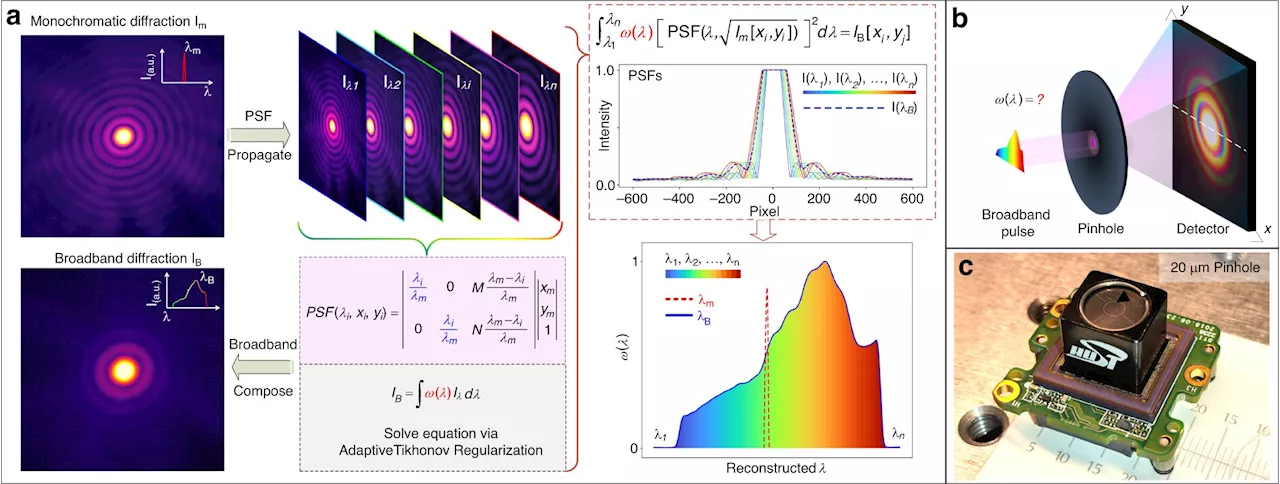 Revolutionizing spectrometry with ultra-simplicity: Disrupting conventional designs through novel diffraction computingSpectrometers are crucial scientific instruments in various research fields and have consistently served as indispensable tools for foundational research. However, the unwieldy size of conventional spectrometers poses challenges for cost-effective and compact mobile platforms.
Read more »
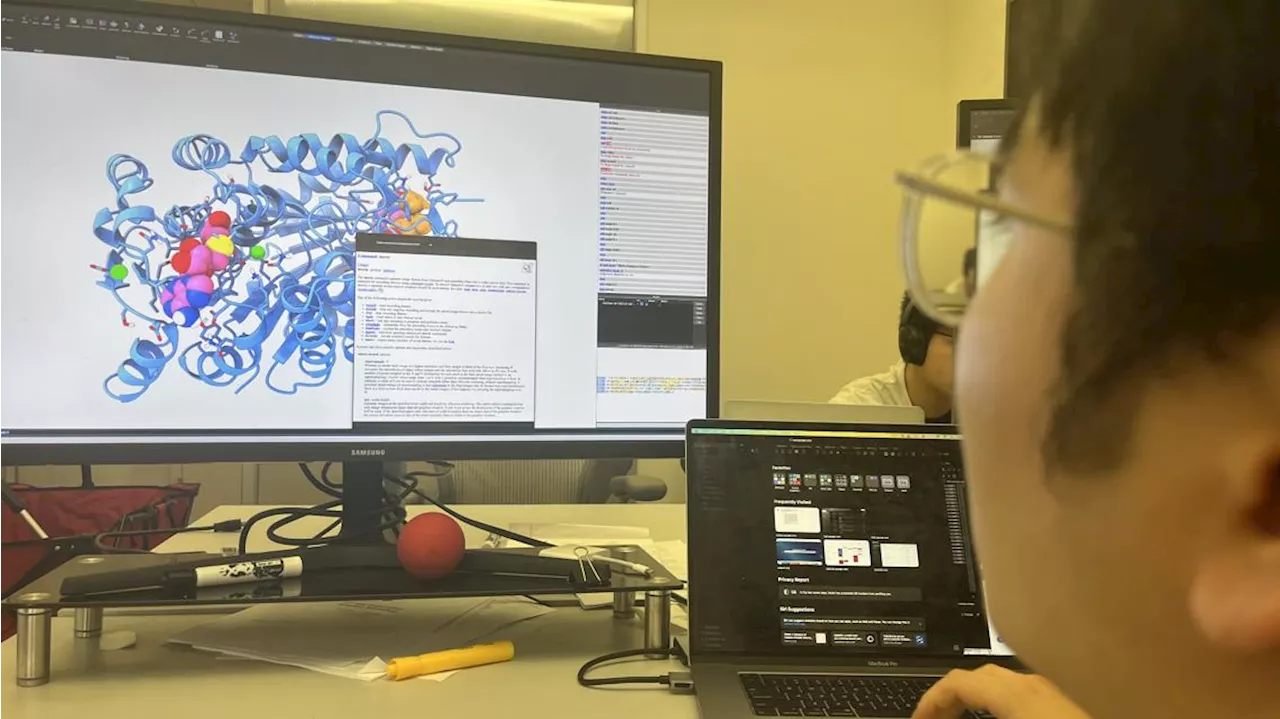 'Revolutionizing how we manufacture goods' | AI being used by UT researchers to create Alzheimer's drugResearchers at the University of Texas are using AI tools to help speed up the production of medicine used to treat Alzheimer's disease.
Read more »