
A new study reveals that the rare Desertas Petrels (Pterodroma deserta), a wide-ranging seabird in the North Atlantic, exhibit unique foraging behaviors during hurricane season.
A new study reveals that the rare Desertas Petrels , a wide-ranging seabird in the North Atlantic, exhibit unique foraging behaviors during hurricane season. Contrary to other pelagic seabirds, these petrels do not avoid intense tropical cyclones but instead exploit the dynamic conditions for their benefit, providing new insights into the impact of cyclones on open ocean marine life.
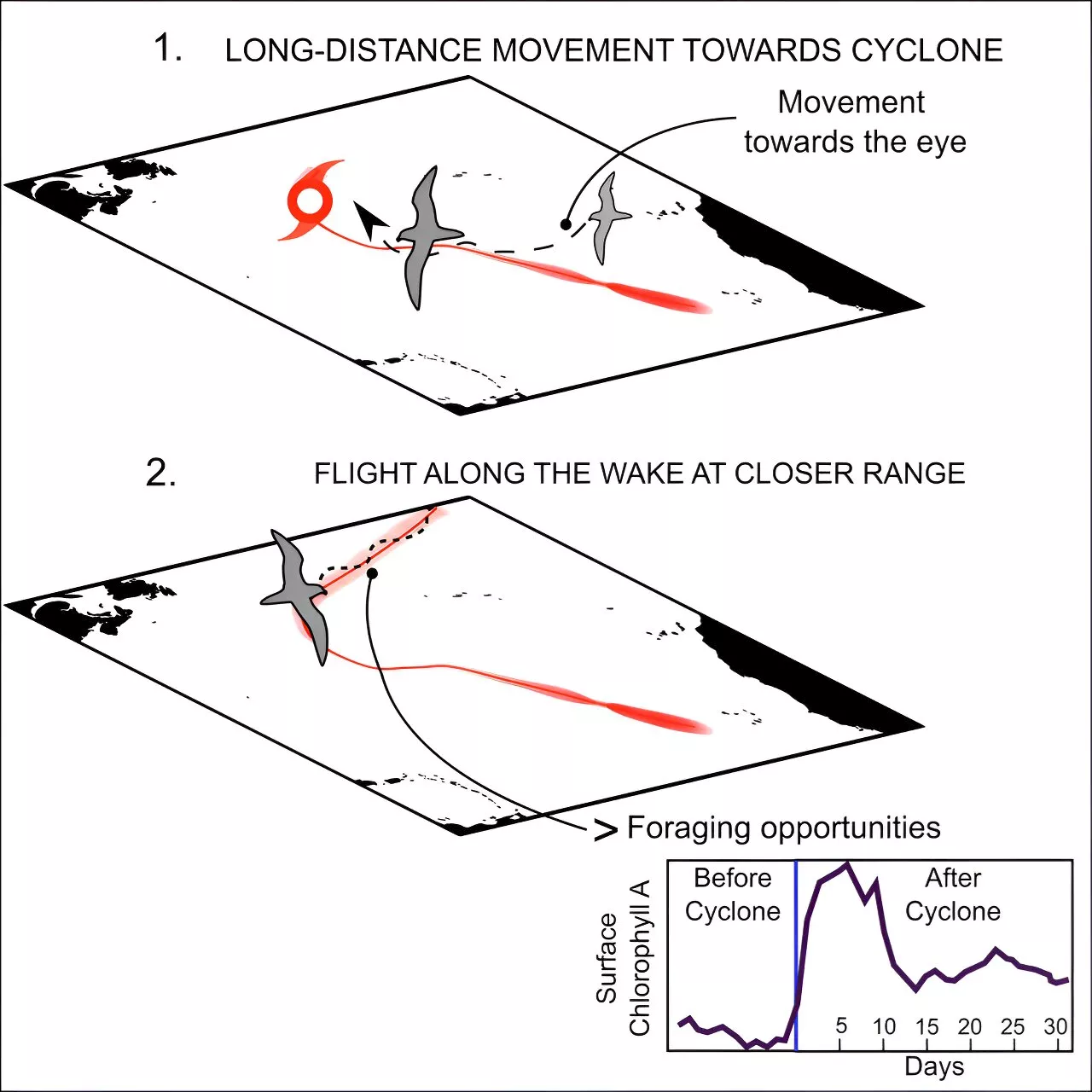
"Oceanic Seabirds Chase Tropical Cyclones," reveals that the rare Desertas Petrels , a wide-ranging seabird in the North Atlantic, exhibit unique foraging behaviors during hurricane season. Contrary to other pelagic seabirds, these petrels do not avoid intense tropical cyclones but instead exploit the dynamic conditions for their benefit, providing new insights into the impact of cyclones on open ocean marine life. "Initial studies suggested that seabirds either circumnavigate cyclones or seek refuge in the calm eye of the storm. However, the Desertas Petrels we tracked did neither; instead, one-third of them followed the cyclone for days, covering thousands of kilometers," stated Francesco Ventura, lead author and a Postdoc Investigator in Biology at the Woods Hole Oceanographic Institution ."When we saw the data, we nearly fell off our chairs. This is the first time we have observed this behavior." "It's striking how well the birds know how to exploit the large-scale wind conditions over the North Atlantic for their travels," said Caroline Ummenhofer, Associate Scientist, Physical Oceanography, at WHOI."When you overlay the petrels' foraging trips on top of average winds, it's a very close match." The Desertas Petrels nest on the Bugio Island in Portugal, located off the western coast of North Africa. This island hosts the only known nesting colony of these pigeon-sized seabirds in the world, with fewer than 200 pairs residing on a plateau surrounded by steep cliffs. During their six-month breeding season, Desertas Petrels embark on extraordinary foraging journeys, often spending weeks at sea and flying roundtrips up to 7,500 miles across the Atlantic in search of food. They belong to the genus Pterodroma, which means"wings on the run." "We correlated the birds' locations with intensifying storm conditions, including waves up to 8 meters high and wind speeds of 100 kilometers per hour," said Ventura."Upon encountering strong winds, the birds reduced ground speed, likely by spending less time in flight to avoid injury to their wings. In addition, the wakes of the storms provided predictably favorable wind conditions with higher tailwind support than alternative routes. Impressively, none of the birds we tracked were harmed by the storms and there was no incidence of nest desertion." The petrels pursue small fish, squid, and crustaceans that typically dwell at depths of 600 to 3,000 feet. Since they cannot dive to such depths, these seabirds have to wait until nightfall when their prey ascends closer to the surface. "As we've now discovered, Desertas Petrels follow hurricanes where prey have accumulated closer to the surface in the wakes of the storms," said Ummenhofer. The study shows that cyclone wakes provided enhanced foraging conditions, with sharp drops in sea surface temperature and striking increases in surface chlorophyll. These changes suggest enhanced ocean mixing and productivity, which presumably increase prey abundance and accessibility for surface-feeding petrels. "One of the interesting aspects of the interaction of a tropical cyclone and the ocean is the intense vertical mixing in the upper ocean layers caused by very strong winds and huge breaking seas," said Philip Richardson, Emeritus, Physical Oceanography at WHOI and a co-author on the paper."The cyclonic winds can cause a divergence in the upper layer that moves cooler, deeper water toward the surface." "The cyclones present a highly valuable foraging opportunity for Desertas Petrels because the storms churn up mesopelagic prey from deep within the vertical column, giving the seabirds an easy meal at the surface," explained Ventura."While storms are typically seen as destructive, particularly in coastal areas, our research reveals that functional perturbance driven by storms can create new opportunities. We're advancing our understanding of how petrels navigate the open ocean to find food." "We now have a fresh perspective on hurricanes' impact on marine ecosystems through the eyes of an apex predator," said Ummenhofer."This study provides valuable insights into the resilience and foraging strategies of pelagic seabirds in the face of extreme weather events." While cyclones are known to dramatically affect oceanic and coastal ecosystems, their impacts on pelagic marine life are poorly understood. This research reveals how higher predators like Desertas Petrels adapt their foraging strategies in the dynamic ocean environment and utilize cyclone-induced oceanographic changes to their advantage.Francesco Ventura, Neele Sander, Paulo Catry, Ewan Wakefield, Federico De Pascalis, Philip L. Richardson, José Pedro Granadeiro, Mónica C. Silva, Caroline C. Ummenhofer.Tropical cyclone researchers report a warming climate could increase the number of tropical cyclones and their intensity in the North Atlantic, potentially creating more and stronger hurricanes. In a ... It had always been thought that the Mediterranean population of the European storm petrel -- the smallest seabird in the Mediterranean -- spent the year in this sea and that only a small part of the ... An increase in overall hospitalizations was reported for older adults in the week following exposure to a tropical cyclone, according to a new study. Over 16,000 additional hospitalizations were ... New research reveals that tropical cyclones were actually more frequent in the southern Marshall Islands during the Little Ice Age, when temperatures in the Northern Hemisphere were cooler than they ...EARTH & CLIMATEEverybody Needs Good Neighbors: Resident Quolls Help Newcomers Settle in at Mulligans FlatGiant Salamander-Like Creature Was a Top Predator in the Ice Age Before the Dinosaurs Sixty-Million-Year-Old Grape Seeds Reveal How the Death of the Dinosaurs May Have Paved the Way for Grapes to Spread
Fish Sea Life Birds Severe Weather Hurricanes And Cyclones Oceanography Storms
United States Latest News, United States Headlines
Similar News:You can also read news stories similar to this one that we have collected from other news sources.
 Unraveling Secrets of Ancient Egypt – Groundbreaking Study Rewrites the Nile’s HistoryScience, Space and Technology News 2024
Read more »
 Groundbreaking Spaceflight Study Reveals How Our Bodies React And RecoverThe Best in Science News and Amazing Breakthroughs
Read more »
 Groundbreaking Pennsylvania program revamps school curriculum to help students 'win at capitalism'Creator Dr. Adelle Schade and student Nikita Patel discussed the benefits of applying business principles to the traditional classroom structure.
Read more »
 Groundbreaking approach to sleep study expands potential of sleep medicineBye bye sleep lab: An engineer is redesigning sleep studies, so they can be done at home without all the cumbersome wires dangling all over your body. Instead, only two wires needed.
Read more »
 Mediterranean diet helps cancer survivors live longer, groundbreaking new study uncoversMediterranean diet can keep your mind sharp in old age - even if your brain show signs of dementia, study finds
Read more »
 New study reveals oceanic seabirds chase tropical cyclonesA new study published today in Current Biology, 'Oceanic Seabirds Chase Tropical Cyclones,' reveals that the rare Desertas Petrels (Pterodroma deserta), a wide-ranging seabird in the North Atlantic, exhibit unique foraging behaviors during hurricane season.
Read more »