
Google’s trio of 10th-generation Pixels is better than ever, but there’s an off-putting dose of generative Al.
All products featured on WIRED are independently selected by our editors. However, when you buy something through our retail links, we may earn an affiliate commission.my friend in Russian over the phone.
I don't speak Russian. “Oh my God, this is crazy!” she responded.in phone calls, which employs generative AI to listen to a snippet of your voice at the start of the call, and then generates an approximation . I could hear myself on her end, a familiar deep rumbling, except in a completely foreign language. My friend said she preferred hearing my voice, even if it was slightlyOn a different day, I tried the Pixel 10's Camera Coach feature, and it successfully ran me through a few steps to capture a stellar photo of my wife, my dog, and a friend. Later on, I was looking at some other images I captured and asked the new conversational photo editing tool in Google Photos to remove the leash my wife was holding, and it did the deed in a few seconds—no need to fuss with editing tools. These are the kinds of everyday helpful featureshave more generative AI capabilities than ever before. Some of these are helpful, while others feel like they've been shoved in so someone could check a box on a list. There's a certain dissonance in using some of these features, at least for me. Google's Pro Res Zoom feature, which allows you to capture photos at 100X zoom, is incredibly impressive. But if parts of the photo are generated by what the AIshould be there, is it really my original image? That's what you may wrestle with if you want these Pixels as your next phone upgrade., but it's not launching until October 9. I won't rehash many of the spec improvements made this year, but you The first thing I want to impart—because I've seen a lot of discourse about benchmarks on social media—is that Pixels have never delivered the best results in raw performance. They're smooth-performing phones, but much of Google's prowess with its Tensor chips is in optimizing its devices to power those smart features. The new Tensor G5. I never saw a hang-up in day-to-day use, but if you're chasing power, this might not be the phone for you.All products featured on WIRED are independently selected by our editors. However, we may receive compensation from retailers and/or from purchases of products through these links., one of the most graphically demanding games on Android. On the Pixel 10 and Pixel 10 Pro, I maxed out the settings and played the game for more than an hour. I saw a few stutters here and there on the Pro, more on the base Pixel 10, which also warmed up noticeably faster. The experience was completely playable and fine, and the game looked great, but it's not quite as smooth as you'll find on the, which have better graphics performance. This example is for one of the more graphics-heavy games on the mobile market. Most titles, likeSimilarly, Google's Pixels don't offer the fastest charging speeds on a phone, nor do they have any major improvements in battery run time. Things are slightly better across the board on the spec front, but real-world results feel largely the same as the Pixel 9 series. The batteries lasted me a full day with average use on all three devices, though the Pixel 10 Pro XL eked out the longest screen-on time at nearly seven hours. On a more demanding day, when I used the hot spot function, GPS for navigation, and an hour of video capture, I had to recharge the Pixel 9 Pro by 4 pm. . Long story short: Like iPhones, these Pixels have magnets baked in that allow for faster wireless charging that's also more efficient. But it's not just for charging. I have thoroughly enjoyed slapping the Pixel 10 to the variousalso works well and has earned a permanent spot on my nightstand. Just know that only the Pixel 10 Pro XL supports Qi2 25W, allowing it to charge slightly faster wirelessly than the others with a compatible charger.All products featured on WIRED are independently selected by our editors. However, we may receive compensation from retailers and/or from purchases of products through these links.Qi2 is a broad ecosystem change that will affect the entire accessory market. As more and more Android phones follow Google's suit and add proper magnetic support I've been testing the Pixel 10 cameras over the past week against the competition, specifically pitting Samsung's Galaxy S25 against the Pixel 10, since they both cost $799, and the Pro models against the iPhone 16 Pro Max. I also toted out theWith the main camera, the results are pretty great across the board. Sometimes the iPhone's photo was sharper, other times the Pixel 10 Pro got the win. The Pixel 10's main camera doesn't have as large a sensor and often wasn't as bright or sharp as its pricier siblings, but it held its own. Its photos were marginally better than those from the Pixel 9a. It traded blows with the Galaxy S25, with no decisive win by one over the other. On the ultrawide camera, the Pixel 10 Pro phones deliver great results in sunny and low-light conditions, rivaling the quality from the iPhone 16 Pro Max, and they eke out a slight win in low light. The Pixel 10's ultrawide is a smidge better than the Pixel 9a's, but there's a noticeable drop in sharpness compared to the Pro models if you look closely. The Galaxy S25's ultrawide outperformed the Pixel 10, though not the Pixel 10 Pro.All products featured on WIRED are independently selected by our editors. However, we may receive compensation from retailers and/or from purchases of products through these links.All Pixel 10 phones now have a 5X optical zoom camera, though the sensors remain larger on the Pro models, which also sport better image stabilization. Let me just say that zoom on these phones is a treat. Itelephoto lenses, so I'm constantly using the zoom option on smartphones. The Pixel 10 Pro models outclass the 5X optical zoom on the iPhone 16 Pro Max, delivering sharper, cleaner results with less grain. That's in any lighting condition. What's even more impressive is that Google says you can get “optical” results at 10X digital zoom, and yes, there's a marked difference at that zoom level compared to the iPhone. It's impressive. By nature of having a 5X zoom lens, the Pixel 10 outperforms the Galaxy S25, which is limited to 3X zoom. It's able to pick up more detail, even at higher digital zoom levels. Compared to the Pixel 10 Pro, the Pixel 10's 5X zoom camera isn't as sharp, and photos are dimmer in low-light conditions. For portraits, generally, I preferred the results from the Pixel. My wife did too. In one portrait photo comparison I did with her between the iPhone and Pixel 10 Pro, the iPhone turned her skin tone far more yellow than it was in the scene, whereas the Pixel's image was more balanced. I also tried portrait mode in low light via the selfie camera, and the iPhone's result was comically poor. Surprisingly, the Galaxy S25 took the cake, though the Pixel 10 Pro wasn't far behind. All of these phones delivered solid low-light selfies, but the Pixel 9a had softer shots . The Galaxy S25's photo was also slightly blurry.Pixel 10 Pro, low-light portrait mode on the selfie camera. What the heck does all of this mean? I think the Pixel 10 Pro series offers the best balance between all the cameras, with an ultrawide that's among the best on a phone , a versatile main camera that measures up against its flagship competition, and some of the best telephoto zoom quality in any lighting. The selfie camera is strong, too. The Pixel 10 has a noticeable dip in quality across the board, but it still offers strong results that will satisfy most people, especially at that $799 price. But the Pixel 10 cameras have a few more tricks up their sleeves. The two most notable smart features in this year's models are Camera Coach and Pro Res Zoom, though the latter is exclusive to the pro Pixels. Scan the scene with Camera Coach, and it'll offer a few example shots you can try to mimic. It'll then run you through a series of steps to nail that shot. It doesn't work perfectly all the time—some of its suggestions don't quite make sense—but I've been happy with a few of the photos it guided me to capture.All products featured on WIRED are independently selected by our editors. However, we may receive compensation from retailers and/or from purchases of products through these links. However, Camera Coach—which launches in a preview —has a Get Inspired button that uses generative AI to deliver some photos it thinks you might like to try and mimic. These photos are often quite a bit different from the originally scanned image, and I found these less helpful. I think Camera Coach is a great way to teach someone about their phone's camera capabilities, because most people barely scratch the surface, but I don't think this generative add-on was really necessary. Then there's Pro Res Zoom, which is conflicting. On the Pixel 10 Pro and Pro XL, you can digitally zoom in anywhere from 30X to 100X, and the phone runs through more than 200 frames, blending images, and using generative AI to fill in the details. The results are spectacular. Take a look at the image of the Chrysler building in Manhattan, which I captured from Greenpoint, Brooklyn, across the water at 100X zoom. I've compared the image with real photos of the Chrysler building, and the results match up. It still leaves a weird taste in my mouth. The composition is mine, but a part of me feels like it isn't my photo. Lastly, there's video capture. Google has made strides over the years in improving the video output of its phones, but it has largely started relying on Video Boost. Once enabled, this sends your footage to the cloud for processing, making the clips brighter, sharper, more colorful, and better stabilized. genuinely look great once they've been put through the Video Boost ringer, but I still find the iPhone delivers better native footage, with better stabilization. You also have to account for the fact that some of these boosted videoclips arrivedfor me . It's a smart solution, but I'd like to see Google improve the native video capture. Case in point: The Galaxy S25's video footage was brighter, less grainy, and better stabilized than the Pixel 10’s.their operating systems this year, and I think Google's Material 3 Expressive design language came out on top. It's bubbly, colorful, fun, and playful. Apple'sAll products featured on WIRED are independently selected by our editors. However, we may receive compensation from retailers and/or from purchases of products through these links.The big new feature Google is debuting on the Pixel 10 is Magic Cue. This on-device AI tool automatically surfaces details from your personal context during conversations or just generally in the Gboard keyboard app. For example, if someone asks where the dinner reservation is for tomorrow, Magic Cue will find that information instantly from your Google Calendar , and it'll serve up a button you can press to reply with, no need to find anything yourself. Or at least, that's how it's supposed to work. During the entire testing period, Magic Cue hasn't consistently been available. A part of this is because I've been switching between the three Pixel 10 phones, and it takes time for Magic Cue to process all of your data. Also, I was in the beta version of the Messages and Phone app, which messed up access to the prerelease version of Magic Cue. It's now sort of working, still not consistently. I looked at a few restaurant recommendations on Eater, and when I went to search for them on Google Maps, I saw the names of a few restaurants from the Eater article automatically populate in Gboard's suggestions bar. When a friend asked for another friend's number, Magic Cue served up the contact details without me having to do anything. After repeated attempts, I finally was able to get Magic Cue to work in the Phone app. When I called a restaurant to cancel a reservation, the details of the reservation populated on the screen. This is probably more helpful if you're calling an airline, but I wasn't about to book a fake flight. It's far from consistent right now, and it will require more testing. You also have to be comfortable with letting it read data from your apps like Gmail, Calendar, and Messages.All products featured on WIRED are independently selected by our editors. However, we may receive compensation from retailers and/or from purchases of products through these links.Some of the new AI features lacked polish. There's a new way to create music in Google's Recorder app if you have a recording of yourself singing. I've tried to generate a music track to accompany my singing a few times, but the app has been stuck on 90 percent “harmonizing the track.” I can't tell if that just means I'm a bad singer. And that phone voice translation feature I talked about earlier? After several minutes of real-time translation, the whole thing stopped working, and I couldn't hear my friend, so we had to restart the call. for it to process, to the point where I assumed it just wasn't working. Thankfully, it finally did the job. It made what's essentially a podcast based around the topic of the PDF, and I surprisingly found it an entertaining and helpful way to ingest the information rather than sifting through PDF pages looking at tiny text.I'm not much of a journaler, but you have the option with Google's new Pixel Journal app. I have one entry! I liked writing it, so maybe I'll try to stick with it. It's easy to use, and there's an AI-powered reflection that'll show up assessing your entry. That feels a bit unnecessary—again, generative AI overload. Far and away the greatest feature debuting on the Pixel 10, but not exclusive to it, is Google's new conversational editing tool in Google Photos. Just tap the edit button on any photo, and you're greeted with a new text box where you can type and ask the phone to make any changes you want to the photo.really like the experience on mobile. Most people also don't want to edit their photos and fuss with tools and settings.All products featured on WIRED are independently selected by our editors. However, we may receive compensation from retailers and/or from purchases of products through these links.Here, I was able to ask the AI editor to remove objects from images without having to select an object on the screen. I asked it to fix the lighting of an image, and it color-corrected it nicely. It doesn't work perfectly—it struggles to straighten a picture for some reason—but this feature solves a pain point of photo editing, while also educating people aboutJuxtapose this with the new Photo to Video feature in Google Photos. It takes your still photos and uses gen AI to imagine up some movement, whether that's slightly moving your sleeping dog's leg, or a group photo with friends coming to life by making everyone move around slightly. I found it really weird, creepy, and I don't think I'd ever use it. It even added a fifth person that didn't exist to one of my group photos. No ghost person! Bad Google! It's this balance you have to navigate. I've enjoyed my time with the Pixel 10 series; they're easily the best phones Google has made. They have some genuinely smart features as always, which continually get better. I still very much like Google's Assistant Voice Typing in Gboard, for example, which is one of the best on a phone. But then you have the other spectrum that takes creative liberties no one asked for.All products featured on WIRED are independently selected by our editors. However, we may receive compensation from retailers and/or from purchases of products through these links.is a senior reviews editor at WIRED, and has been covering personal technology and reviewing consumer products for a decade. He specializes in
Reviews Smartphones Phones Android Google Shopping Pixel
United States Latest News, United States Headlines
Similar News:You can also read news stories similar to this one that we have collected from other news sources.
 Pixel 10 Pro XL vs Pixel 9 Pro XL: All the expected differencesVictor, a seasoned mobile technology expert, has spent over a decade at PhoneArena, exploring the depths of mobile photography and reviewing hundreds of smartphones across Android and iOS ecosystems.
Read more »
 Pixel 10 Pro XL vs Pixel 8 Pro: Similar but differentMariyan, a tech enthusiast with a background in Nuclear Physics and Journalism, brings a unique perspective to PhoneArena. His childhood curiosity for gadgets evolved into a professional passion for technology, leading him to the role of Editor-in-Chief at PCWorld Bulgaria before joining PhoneArena.
Read more »
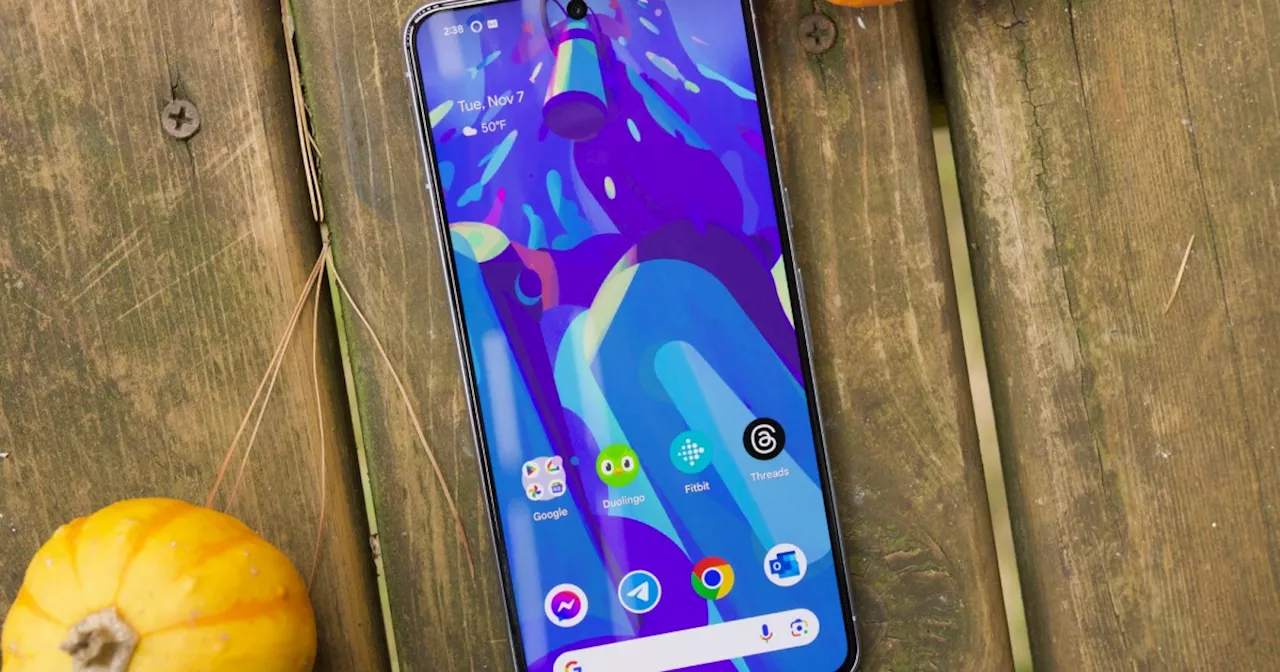 Best Google Pixel deals: Save on Pixel 8, Pixel Buds, and Pixel WatchWhether you're planning to buy a new smartphone, tablet, wireless earbuds, or smartwatch, we've rounded up the best Google Pixel deals to make shopping easier.
Read more »
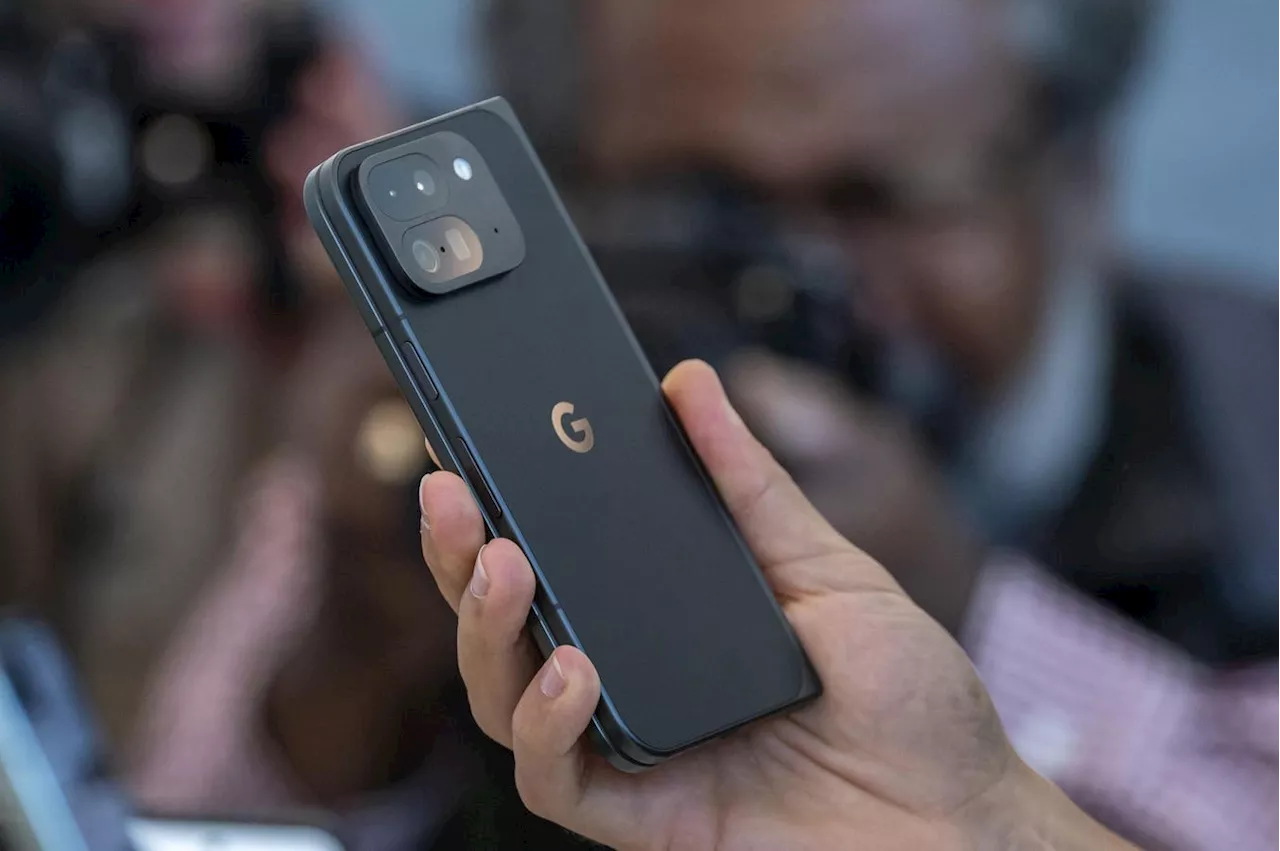 Google Pixel 9 Pro Fold Price Slashed Ahead Of Pixel 10 ReleaseThe Google Pixel 9 Pro Fold has received its biggest discount yet just weeks ahead of the Pixel 10 Pro Fold release. Should you buy it?
Read more »
 Google Pixel 10 Series, Pixel Watch 4, Pixel Buds 2a: Specs, Features, Release DateThe Pixel 10 series is here. These are the first official flagship Android phones with magnetic Qi2 wireless charging. Also in tow are the Pixel Watch 4 and Pixel Buds 2a earbuds.
Read more »
 Google Pixel 10 Pro Fold vs Pixel 9 Pro Fold: Small, important changesGoogle's new Pixel 10 Pro Fold introduces a few small improvements to the Pixel 9 Pro Fold, but which should you buy and should you upgrade? Let's find out!
Read more »