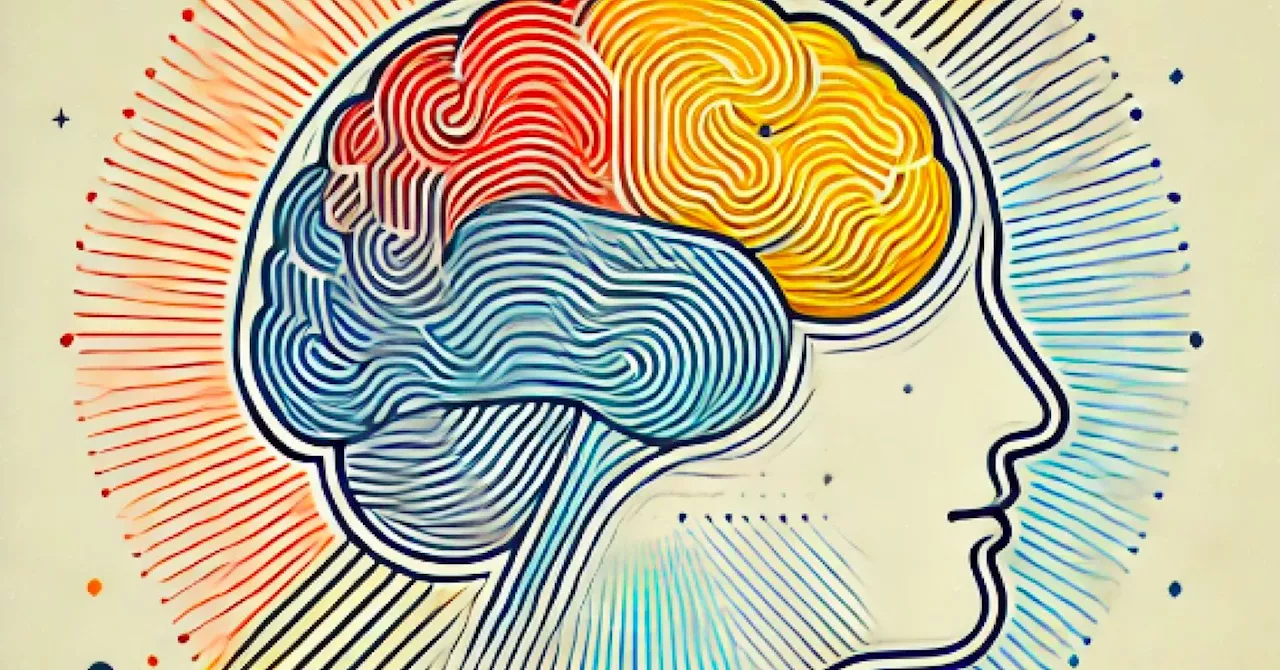
LLMs are reshaping cognitive optimization, enhancing how we learn, solve problems, and engage with ideas.
LLMs don't enhance but "optimize" thinking by structuring ideas, synthesizing data, and fostering creativity.Source: Art: DALL-E/OpenAI—one that doesn’t directly alter brain chemistry but instead transforms how we engage with our cognitive capabilities.
Unlike conventional stimulants or enhancers, LLMs amplify and optimize thinking by structuring thought, synthesizing information, and fostering creativity.in the traditional sense, but they act as powerful amplifiers and scaffolding tools that extend what we can think and achieve.LLMs work externally to augment cognitive processes, acting as dynamic scaffolding that enhances how we think. They don’t alter the underlying mechanics of cognition but instead optimize how we use our existing abilities. Their adaptability allows them to tailor responses to specific needs, enabling users to tackle complex problems with greater efficiency and depth.By combining these capabilities, LLMs help users bridge the gap between information overload and meaningful understanding. In this way, they function not just as tools but as collaborative partners in thought, amplifying our capacity for critical and, particularly for aging individuals. Research consistently shows that engaging in mentally stimulating activities—like puzzles, learning new skills, or participating in deep conversations—helps maintain cognitive function and may even delay age-related decline. LLMs provide a dynamic, accessible form of this mental exercise. By interacting with LLMs, older users can engage in iterative problem-solving, explore topics of personal interest, or brainstorm creative projects. These interactions mimic the benefits of real-life discussions and intellectual exploration while offering adaptability and scalability that traditional methods often lack. LLMs provideCreativity and problem-solving are hallmarks of peak cognition, and LLMs can amplify both. Through their conversational nature, they serve as collaborative partners, helping users refine and expand ideas. When faced with a complex problem, an LLM can break it down into smaller components, offering structured pathways to resolution while suggesting alternative approaches. For creative pursuits, LLMs inspire divergent thinking by reframing concepts or generating entirely new perspectives.creates a feedback loop that mirrors the benefits of brainstorming with a human partner. However, unlike human collaborators, LLMs are infinitely patient, always available, and capable of drawing from an extensive repository of knowledge. They don’t just enhance creativity; they make it more accessible and sustainable.they bring to the process of learning. Interactions with LLMs tap into the natural human pleasure of curiosity and discovery. Unlike chemically mediated tools, which may provide fleeting bursts of focus or energy, LLMs foster sustained engagement through meaningful dialogue and exploration.This joy arises from the conversational dynamics of interacting with an LLM. Users can pose questions, test hypotheses, or challenge assumptions, receiving thoughtful responses tailored to their needs. These interactions mimic the intellectual satisfaction of engaging with a mentor or collaborator. The result is an environment where learning is not just effective but enjoyable, motivating users to delve deeper and explore further., and diminished memory retention, particularly among students. These findings underscore the importance of using LLMs as supplements to critical thinking rather than replacements for it., accuracy, and accessibility. The outputs of LLMs are only as reliable as the data they’re trained on, necessitating critical evaluation by users. Furthermore, disparities in access to technology and digital literacy could widen existing inequalities, limiting the democratizing potential of these tools. Addressing these challenges requires fostering digital literacy, encouraging critical engagement, and integrating LLMs thoughtfully into workflows.LLMs represent more than just another step in humanity's quest for cognitive enhancement—they mark a fundamental shift in how we extend our mental capabilities. Unlike traditional tools that alter our brain chemistry, LLMs serve as intellectual mirrors and catalysts, amplifying our natural cognitive abilities through structured dialogue and collaborative exploration. What makes them revolutionary is their unique combination of human-like interaction with machine-like capabilities, creating something unprecedented: a tool that doesn't just enhance our thinking, but transforms how we understand and develop our own cognitive capabilities. The key lies not in LLMs replacing human thought but in their ability, but in their ability to help us think better, learn deeper, and explore further than ever before—potentially redefining the veryWhen we fall prey to perfectionism, we think we’re honorably aspiring to be our very best, but often we’re really just setting ourselves up for failure, as perfection is impossible and its pursuit inevitably backfires.
United States Latest News, United States Headlines
Similar News:You can also read news stories similar to this one that we have collected from other news sources.
 ChatGPT Can Tell You What Scientists Are Doing With LLMsConfused about LLM architectures? Ask a model. They’ll tell you.
Read more »
 When training medical LLMs, specialization may not always be better.General AI models rival specialized ones in most medical tasks, proving that optimized prompts and strategic use may outpace costly domain-specific training.
Read more »
 Stretching From LLMs To LGMs: Intelligence And The Amazing Promise Of Large Geospatial ModelsDr. Lance B. Eliot is a world-renowned AI scientist and consultant with over 8.1+ million amassed views of his AI columns and been featured on CBS 60 Minutes. As a CIO/CTO seasoned executive and high-tech entrepreneur, he combines practical industry experience with deep academic research.
Read more »
 LLMs: The timeless role of the scribe meets the transformative power of AI.LLMs are modern scribes—dynamic collaborators that transform scattered ideas into refined expression, reshaping how we think, create, and solve problems.
Read more »
 How AI and LLMs are changing the way we "think" about being smart.Technology Quotient (TQ) redefines intelligence, showing how we think, create, and learn with AI as a collaborative partner.
Read more »
 Orange Partners With OpenAI To Make LLMs More Inclusive In AfricaMeghan McCormick is a Ghana-based entrepreneur covering women building high-impact organizations across the African continent. She's written about Ghana's successful 'Year of Return', entrepreneurs moving to Africa to launch businesses, and women leading the continent's burgeoning tech scene.
Read more »