
How does the manner in which a radical idea is conveyed—through a public manifesto, through a telegram, through Telegram—impact its message?
? Or, given that Loy’s manifesto remained unpublished until 1982, is Beckerman positing a more indirect course of transmission? “This is how it moves, a radical idea incubated in one place and time revealed nearly a hundred years later,” he writes.
The scholar Rachel Greenwald Smith, in her incisive new book “archive and concludes, provocatively, that the subculture could have left a bigger mark on history if not for its “residualliberalism.” If Beckerman takes a similarly stark view—for example, that there would never have been a riot-grrrl subculture if there hadn’t been a Mina Loy—he doesn’t come out and say so. What we lose in conclusiveness we gain in cinematic momentum. We leave Zik as we found him, in Accra harbor. One hopes that he’s got a bigger boat this time, because we learn that he’s departing with “a printing press on board.” Next comes an audacious flash-forward, spanning three decades in two sentences: “He was headed to Lagos, where he would start a new newspaper, the, hoping to continue what he’d begun. It would take another quarter century before Nigeria would declare its independence from Britain, and when it did, Nnamdi Azikiwe was sworn in as the republic’s first president.” Not too shabby, as third acts go. Azikiwe would go on to have a fourth act, and a fifth—he was ousted by a violent coup in 1966, earned a lot of enemies by switching allegiances during the Biafran War, and then ran for office a few more times, unsuccessfully—but most of this takes place offstage. What lights the revolutionary spark is one matter; what happens after the flame catches is quite another. “The Quiet Before” is arranged chronologically, which means that about halfway through, we’re introduced to a new main character: the Internet. The question now becomes why the same qualities that seemed romantic and liberatory in an underground zine or a small newspaper might strike us as frivolous, or even sinister, when applied to a WhatsApp thread or a Discord server. Surely part of the explanation is that, these days, we tend to associate the former with outcomes we like and the latter with potential developments we find unsettling . But that’s a vibe, not an argument. It can’t be that simple. Can it? This part of the book begins in Egypt, in 2010, by now a familiar starting point for cautionary tales about the promise and peril of online organizing. Hosni Mubarak has ruled as an autocrat for almost three decades, but embers of change are starting to glow, especially on the Internet. Security forces in Alexandria have accosted a young man named Khaled Said, pulling him out of a cybercafé and beating him to death in the street. In the past, given Mubarak’s grip on state media, this is the sort of outrage that would have faded quickly. This time, though, gory pictures of Said’s mangled body start to circulate online, and an anonymous dissident starts a Facebook page called We Are All Khaled Said. The page gains twenty thousand subscribers, then two hundred and fifty thousand. Anonymous posters use the page to organize in-person demonstrations, such as silent vigils. Soon people start calling for more radical tactics. Others worry that brash, uncoördinated demonstrations could become targets for state repression, but, given the mechanics of social media, this argument doesn’t stand a chance. The Facebook page, like all Facebook pages, is geared toward growth, momentum, escalation—“a restless place,” Beckerman writes, where a “desire for intensity and action could be satisfied.” In January, 2011, the administrator gives in, scheduling a more confrontational event, to take place later that month in Cairo’s Tahrir Square. He calls it “January 25: Revolution Against Torture, Poverty, Corruption, and Unemployment.” Everyone knows what happened next: incredibly, the demonstration succeeded. With shocking speed, and without planting any bombs, the Tahrir Square protesters got the dictator to leave town. The administrator of the Facebook page was revealed to be Wael Ghonim, a twenty-nine-year-old marketing director at Google. Within a few months, he was jailed, released, elevated to international fame, granted a Profile in Courage Award, and nominated for a Nobel Peace Prize. If this all seemed too good to be true—the Easy-Bake Oven version of regime change—most people still went along with it, at least for a time. Several democratic uprisings—in Tunis, in Cairo, in Kyiv—were sometimes referred to as “Facebook revolutions,” even though there was also a surprisingly successful democracy movement in Myanmar, where almost no one had Internet access, and a failed one in Russia, where more than half of the population did. During the Cairo uprising, President Barack Obama reportedly told one of his aides, “What I want is for the kids on the street to win and for the Google guy to become President. What I think is that this is going to be long and hard.” After the uprising succeeded, Obama stopped emphasizing the second half of the sentiment. “It’s no coincidence that one of the leaders of Tahrir Square was an executive for Google,” he said, in a May, 2011, speech at the State Department. He pledged to “support open access to the Internet,” reasoning that, “in the twenty-first century, information is power, the truth cannot be hidden, and the legitimacy of governments will ultimately depend on active and informed citizens.” Again, we know what happened after that, although here’s where the popular recollection starts to grow dimmer, and grimmer. The legitimacy of the post-Mubarak state disintegrated quickly. Egypt’s first freely elected President was not the Google guy. It was
United States Latest News, United States Headlines
Similar News:You can also read news stories similar to this one that we have collected from other news sources.
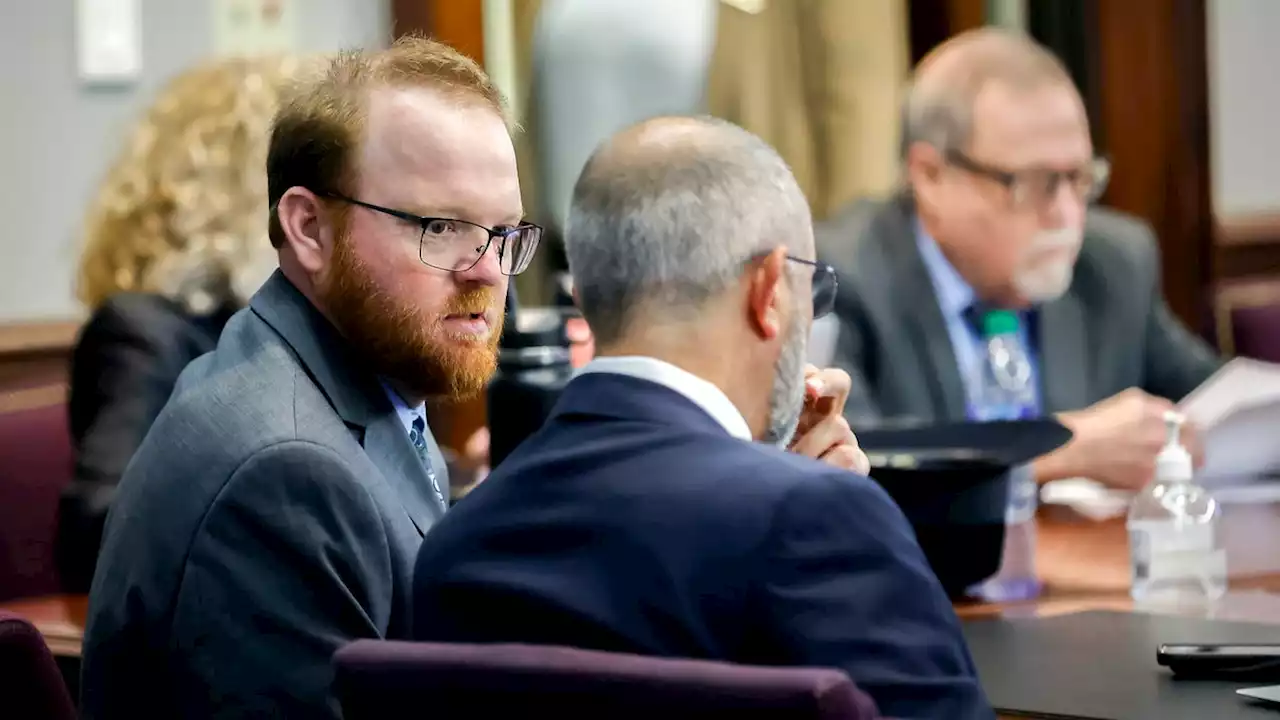 FBI witness: 2 men\u00a0convicted of Ahmaud Arbery's murder used racial slurs in texts, on social mediaRacist comments made by two of the defendants – Travis McMichael and William 'Roddie' Bryan – dated as far back as 2016, according to the FBI.
Read more »
 ‘Axiom’ Review: A Perfectly Truthful Portrait of a Pathological LiarPerhaps you know the feeling, the strange tingle of vertigo you get when you’re having an entirely normal conversation with an acquaintance, and you suddenly realize that for seemingly no rea…
Read more »
 Twitter now lets anyone pin DM conversations | EngadgetTwitter now gives anyone the option of pinning DM conversations for quicker chats — you don't need to pay for Blue..
Read more »
 The Last Word: Francis Ford Coppola on Brando, Smartphones and 'Live' Movies'My movies are completely different — a gangster movie, a war movie, a musical. I was just trying to please myself rather than stick to an industry template of success.' Francis Ford Coppola on movies, wine, and why he keeps going, and going...
Read more »
 Tom Holland Reveals He Secretly Bartended in LondonHolland spoke about his time behind the bar during a conversation with SiriusXM’s Jessica Shaw.
Read more »