Beyond the Breaking News

Feral hogs and their meat: This is what you need to know about chomping down on these Texas swine

United States News News

Feral hogs and their meat: This is what you need to know about chomping down on these Texas swine
United States Latest News,United States Headlines

Feral hogs and their meat: This is what you need to know about chomping down on these Texas swine KPRC2

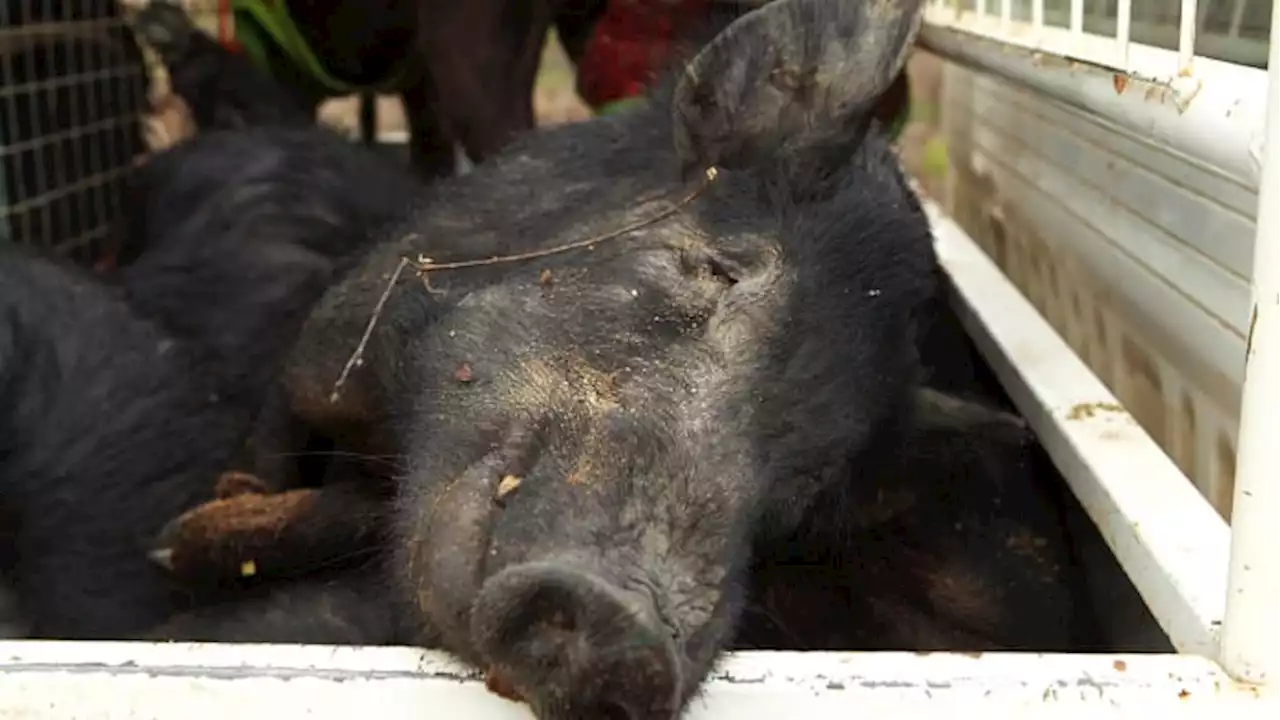
A dead feral pig is seen on the back of a truck during hunting on Silver Plains Station on October 8, 2011 outside of Coen, – Feral hogs are a problem in Texas, as KPRC 2 has reported extensively over the years.

Many hunters and trappers are doing their best to rid the state of these destructive creatures, and there’s plenty of meat to show for their labors.We’ve wondered that a time or two and have seen a few warnings about doing so. We decided to dig in to this tasty topic and see about eating feral hog meat.-- or wild hogs as they’re sometimes called -- are descendants of Eurasian wild boar and released or escaped domestic hogs. The Centers for Disease Control and Prevention notes that more than four million wild hogs are found in at least 35 states and can destroy farmland and crops, compete with native wildlife for food, and can spread disease to other animals and people.Hunting wild hogs is a popular sport among hunters, as well as a population control method supported by wildlife agencies. The hog meat is a viable food source, though you need to be careful with it. There are more than 24 diseases that people can get from wild hogs, the CDC notes. Most of these diseases make people sick when they eat undercooked meat. But-- a risk factor with feral hog meat -- is different. The germs that cause brucellosis are spread among hogs through birthing fluids and semen. Infected hogs carry the germs for life. People may get the germs through contact with an infected hog’s blood, fluids, or tissues .You may be at risk for brucellosis if infected hog tissue, blood or fluid, comes into contact with your eyes, nose, mouth or a skin cut. You can get sick when field dressing an infected hog or when butchering or eating undercooked meat. The CDC notes you may start to feel sick a week to months after coming into contact with germs that cause brucellosis with symptoms like fever, low appetite, chills, fatigue, sweating, joint pain, headache and muscle pain. To protect yourself, avoid all contact with visibly ill animals or those found dead, use clean, sharp knives for field dressing and butchering, wear eye protection and rubber or latex gloves when handling carcasses, avoid direct contact with fluid or organs from the hog, burn or bury disposable gloves and inedible parts of the carcass after butchering, wash hands as soon as possible with soap and warm water for 20 seconds or more and dry hands with a clean cloth, clean all tools and reusable gloves used in field dressing and butchering with a disinfectant—such as dilute bleach.How do you handle feral hog meat when preparing it to eat?Wash hands often with soap and warm water for 20 seconds or more.Cook pork to an internal temperature of 160° F using a food thermometer.

We have summarized this news so that you can read it quickly. If you are interested in the news, you can read the full text here. Read more:

KPRC2 /  🏆 80. in US


United States Latest News, United States Headlines


Render Time: 2026-06-08 15:11:27