The Oak Ridge National Laboratory says wireless charging will be getting faster, but how far away and how fast could it charge?
The Oak Ridge National Laboratory says wireless charging will be getting faster, but how far away and how fast could it charge?It would be great if we could one day just park our electric vehicles and have them charge without plugging them in via a clunky cord.
While wireless charging exists, even in the EV world, the size of the power transmitter for something smallish like, unfortunately, deliver rather slow rates of charging. That might not be reality for long if the latest demonstration by the Oak Ridge National Laboratory is anything to go by. Not only did the lab make a wireless EV charger smaller, but also far faster than anything else out there thus far.of up to 20 kW speeds—far below even the slowest maximum charge rates of yesterday's EVs, they also require a large footprint that doesn’t make installation at your local grocer or shopping spot easy or practical in most cases. That size doesn’t just mean its width and length, either. To get a proper connection, a wireless charger needs a specific air gap between the transmitter and the receiver to work as efficiently as possible due to size of the electromagnetic field created by the transmitter. The researchers at ORNL are no strangers to pushing wireless charging to its limits, being the first group to create the 20-kW wireless charging system in 2016. And it now has created a traditional wireless charger that is Tight air gaps and wieldy size are easy to achieve for, say, your phone, as you’re able to nearly place it directly on top of the transmitter. That’s not so easymost civilian EVs sit well off the ground . Adjustable-height air suspensions that can squat a car down to a charging pad or movable receivers are expensive, complex solutions to a problem afflicting something that is generally already too complex and expensive. Never mind making the transmitter movable, and while we do see that with public transport bus stops, those buses are made to meet a single specification. What we need is a wireless car charging pad that is more compact, powerful, and more efficient at larger air gaps—i.e., farther away from the car. AndWhile there are a few details we’re still waiting to hear back from ORNL about , here are the major points noted in a news post on its site. The transmitter is compact, at just over 14 inches in diameter, and utilizes an innovation ORNL created in 2022 called the “polyphase electromagnetic coupling coil” with rotating magnetic fields. Polyphase technology isn’t new or radical as it’s essentially the same technology used in electric motors and generators right now. It’s just that this is being applied to wireless charging but still offering much of the same advantages: more power out of a conductor the same size and same applied voltage as a single-phase version. And it’s that reason the biggest innovation here is that this polyphase coil can produce bipolar electromagnetic fields on three-phase AC power with a 120-degree shift between each phase, allowing the transmitter to use three compact coil loops in two layers where most wireless chargers use single-phase AC power on a single “racetrack” transmitter. While that may sound easier,a monopole EMF that reduces its efficiency, requires a larger space for the transmitter wiring, and requires a tighter air gap. There’s morebeing made more compact, such as each coil pair having an opposing polarity and negative interphase mutual inductances, but the big picture is that this new wireless charger is smaller, more efficient, and more powerful.a five-inch air gap, achieving around a 90 percent efficiency on average when comparing its input power to its output power. This polyphase wireless transmitter can produce 100 kW charge rate with the same air gap at 96 percent efficiency. This is also in the same power delivery capacity as many early DC fast chargers, but without the plug and its bulky wiring. In theory, and following what we know about wireless power transmission, this polyphase transmitter could allow an increase in air gap with only a minor drop in efficiency when compared to the single-phase transmitter., “Our technology reaches power densities eight to ten times higher than conventional coil technology and can increase battery charge state by 50 percent in under 20 minutes.” That’s based on their test vehicle, which we believethe black plastic fender flares and bumpers, but we have asked ORNL for conformation. Regardless, all model years of the Hyundai Kona Electric until 2024 have a 64.8-kWh battery pack good for 258 miles. In ideal conditions, its battery architecture will do 10 to 80 percent DC fast charge between 40 to 45 minutes at an average of about 67 to 70 kW. Being able to get 100 kW on the car's end would require some modifications to this Kona and we’ve reached out to ORNL on those modifications beyond the need for a wireless power receiver—or whether the 100-kW-capable transmitter simply maxes out the stock Kona Electric's charge rate. Regardless, this was still an early demonstration of polyphase coils in a wireless EV charger within a lab-scale environment. The next step is to find what the challenges will be in mass production of a polyphase wireless power transmitter. Given what we already know about winding polyphase AC motors, this shouldn’t pose much of a problem or even add an unknown expense or challenge as there shouldn’t be a need to create new tooling for windings. After that, it’s seeing just how far the power input can be pushed to reach the same charge rate as current DC fast chargers or if they can be faster while maintaining the same efficiency ORNL is seeing lab testing. There will be the same challenges with heat control in both the transmitter and receiver, but the lack of a bulky connector means the biggest issue of cooling is no longer an issue and might be an easier challenge to solve when compared to connected fast chargers. All we can say it that it's hopefully soon as this lab test looks promising.
United States Latest News, United States Headlines
Similar News:You can also read news stories similar to this one that we have collected from other news sources.
 Dual-energy device unlocks potential for wireless medical implantsThis first-of-a-kind device harvests dual-energy sources simultaneously with high-efficiency.
Read more »
 14 Best Noise-Canceling Headphones (2024): Over-Ears, Wireless Earbuds, WorkoutTune out (or rock out) with our favorite headphones and earbuds.
Read more »
 New type of tunable filter reveals the potential for terahertz wireless communicationsElectromagnetic waves in the terahertz frequency range offer many advantages for communications and advanced applications in scanning and imaging, but realizing their potential poses challenges.
Read more »
 How fast is wireless charging on smartphones in 2024?Victor, a seasoned mobile technology expert, has spent over a decade at PhoneArena, exploring the depths of mobile photography and reviewing hundreds of smartphones across Android and iOS ecosystems.
Read more »
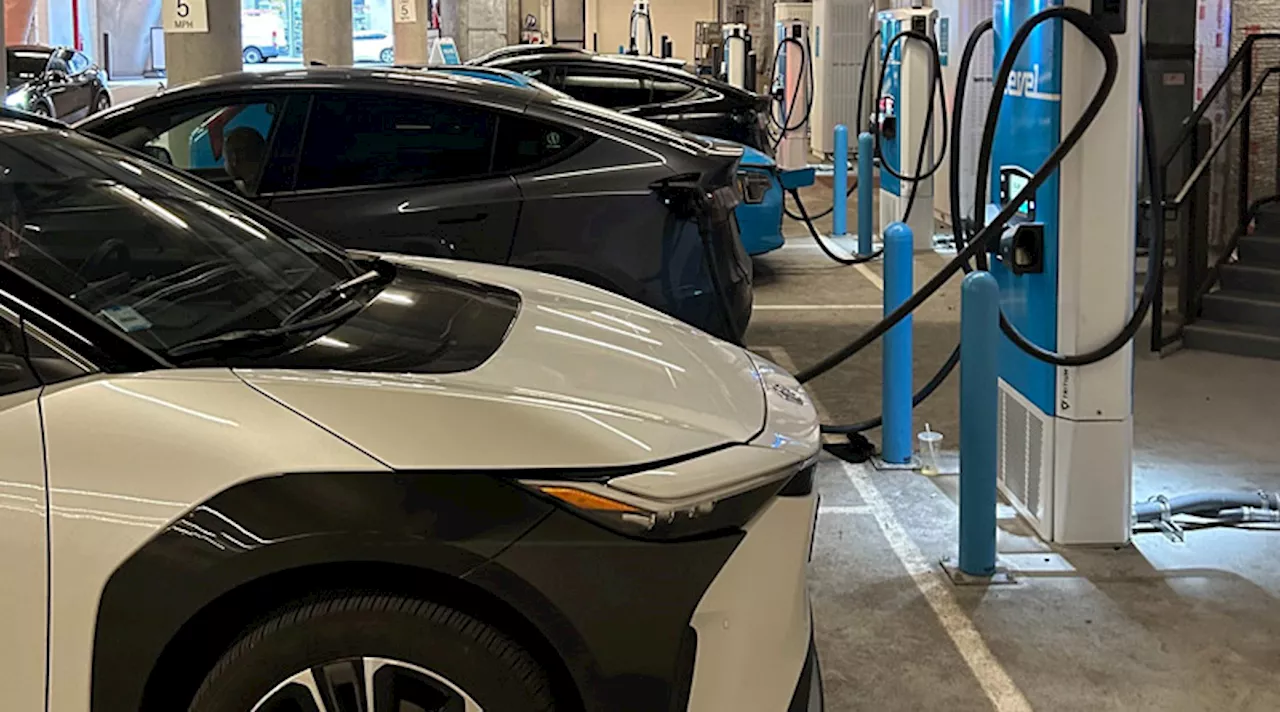 Ride-Share Competitors Revel & Uber Ink Deal for EV Fast Charging Infrastructure Expansion100% electric ride-share startup Revel recently announced a partnership with rideshare giant (and competitor) Uber to help accelerate EV infrastructure expansion in the United States.
Read more »
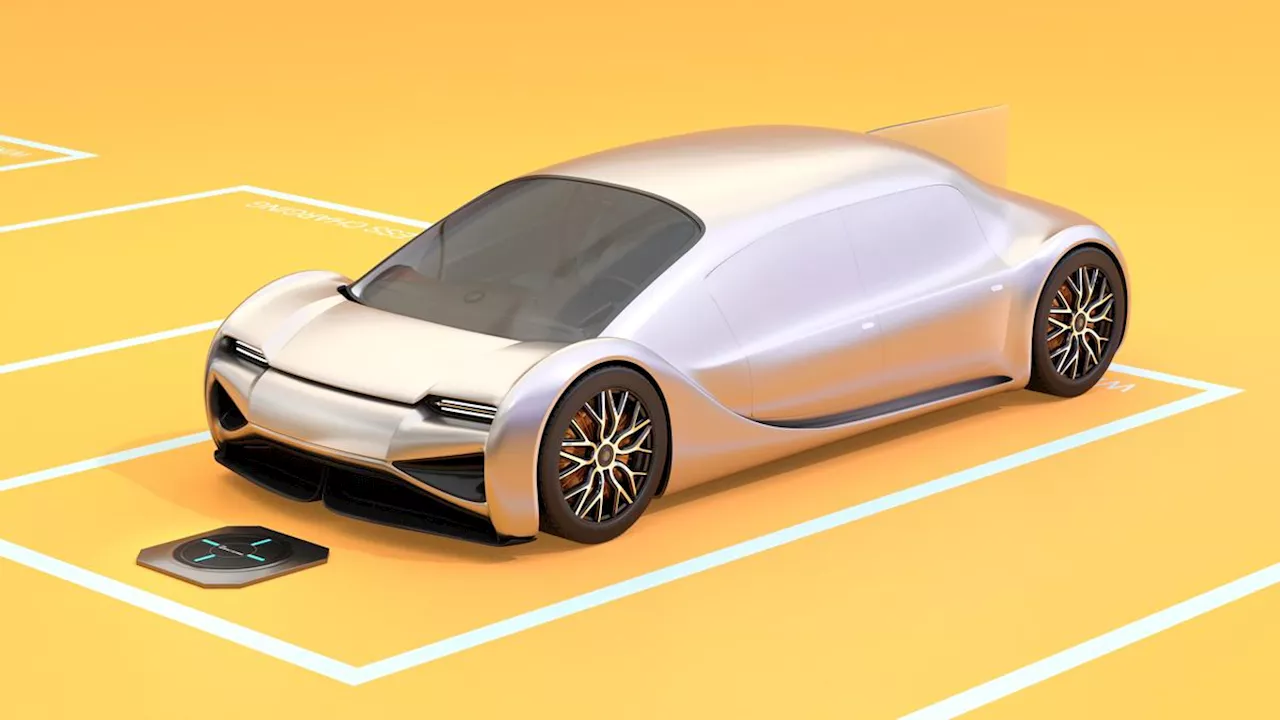 Experimental wireless EV charger is just as fast as a superfast wired plug, scientists sayKeumars is the technology editor at Live Science. He has written for a variety of publications including ITPro, The Week Digital, ComputerActive, The Independent, The Observer, Metro and TechRadar Pro. He has worked as a technology journalist for more than five years, having previously held the role of features editor with ITPro.
Read more »