Everyone is aware of simple forgetting, but more complex processes can result in completely inaccurate eyewitness accounts.
Our beliefs and experiences can change our memories, as can information that contributes to those beliefs.Confident, credible eyewitnesses provide very compelling evidence in courtroom proceedings. Yet eyewitness errors frequently have tragic consequences for the wrongly accused.
In previous posts of the Everyone is aware of simple forgetting, of course, but much more complex processes are involved in the production of eyewitness mistakes. It's been known for nearly a century that memories change in the mind, becoming briefer, less detailed, and even aligning themselves with our personal beliefs ; but some of the most compelling evidence of the influence of these psychological effects in the criminal justice realm was provided by classic experiments onthe specific event of interest, information which may contribute to the reconfiguration of the relevant memories. Loftus & Palmer showed respondents a film of a car collision, essentially a fender-bender at relatively low speed. After the film, respondents were asked about the speed of the vehicles in language which suggested the cars had merely ”hit” each other. Their estimates of velocity were relatively realistic. However, when the language was changed from “hit” to “smashed,” thisimplying the idea of a violent collision resulted in much higher vehicle speed estimates. The “smashed” language also led to higher levels of confirmation of reports of vehicle damage which had not been present in the film at all. In another study , respondents were questioned about the speed of a vehicle passing a barn in a film of a country road. Many respondents clearly recalled seeing this barn, even though there was no barn in the film. Post-event information can clearly create new memories in the minds of eyewitnesses, with obvious and deleterious effects on the accuracy of their memories.can influence eyewitness accounts, as well. In studies in my laboratory, we found that a type of short-barreled revolver frequently used in crimes was correctly recognized, under-free conditions, less than half the time by average witnesses only a few minutes after observing the weapon initially. However, a Colt .45 semiautomatic pistol, of the type used by the American military for most of the 20th century resulted in significantly higher levels of recognition. Our memories, and hence our eyewitness accounts, can be dramatically altered by information we already possess, as well as by that provided post-event . These effects can be readily observed in the criminal justice system. In cases on which I have consulted, I have on several occasions encountered eyewitness reports of guns which could best be characterized as large, police-type semiautomatics, when in fact no such weapons were actually present at the givenscene. In one homicide case, the weapon involved was initially identified as a typical police-type weapon; then, in witness accounts, the weapon morphed over the course of the investigation into a revolver, at one point into an, and then back into some unspecified type of gun. Ultimately, none of these weapons bore any resemblance to the actual handgun used in the crime. There was no indication that the witness wasor dissimulating in any way; each of these identifications was held very sincerely, at least until the next one came along. It is difficult to pinpoint exactly what kinds of information, pre- or post-event, led to the extraordinary series of false weapon identifications in this specific case. Yet the large number of crimes which are initially attributed to perpetrators wielding police-type semiautomatic weapons is puzzling. If perpetrators can afford high-quality weapons typically costing over $1000 apiece, what on earth are they doing knocking over a local liquor store for $50 and a bottle of rum? In the immediate aftermath of a violent crime, conditions are frequently chaotic, and witnesses are often in a high state of excitement, which precludes their being at their intellectual best. These are the conditions under which initial reports must frequently be elicited by law enforcement from potential witnesses, and it is important to realize that under these conditions, post-event information may be readily imparted to the given witness. An officer, for example, may ask witnesses if they saw the gun carried by a perpetrator, and what type of gun it was. Witnesses will frequently proclaim that they have no idea, as they know nothing about firearms at all. Very competent, experienced police officers have told me, on a number of occasions, that under these circumstances, they have sometimes taken their own service weapons from their holsters and asked witnesses something like “Did it look like this?” in attempts to elicit comparisons with the gun the witness actually saw. Yet, under these circumstances, in which the given witness may only have a vague, gestalt idea of some kind of gun or weapon, the officer has actually and inadvertently provided the witness with misleading post-event information, with a solid, feature-intensive mental image of a weapon which enters the witness’s memory. Now the witness has in mind a precise image of a gun; and that image can readily and erroneously become the gun used in the crime, at least in the elastic mind of the witness.Police officers with whom I’ve discussed these dynamics have understood them immediately, and have sworn off this practice in their work, a salutary example of the importance of psychological understanding in practical law enforcement. But how far can the effects of false information operate in the eyewitness realm? Beyond descriptions of firearms and auto collisions, can entire eyewitness accounts be altered by extraneous information?Loftus, E.F., & Palmer, J.C. . Reconstruction of Automobile Destruction: An Example of the Interaction between Language and Memory.Matthew Sharps, Ph.D.,As the lines between real and fake blur, Americans increasingly chase the idea of authenticity. The first step may be to consider self-knowledge, truthfulness, and other building blocks on the road to personal growth.
United States Latest News, United States Headlines
Similar News:You can also read news stories similar to this one that we have collected from other news sources.
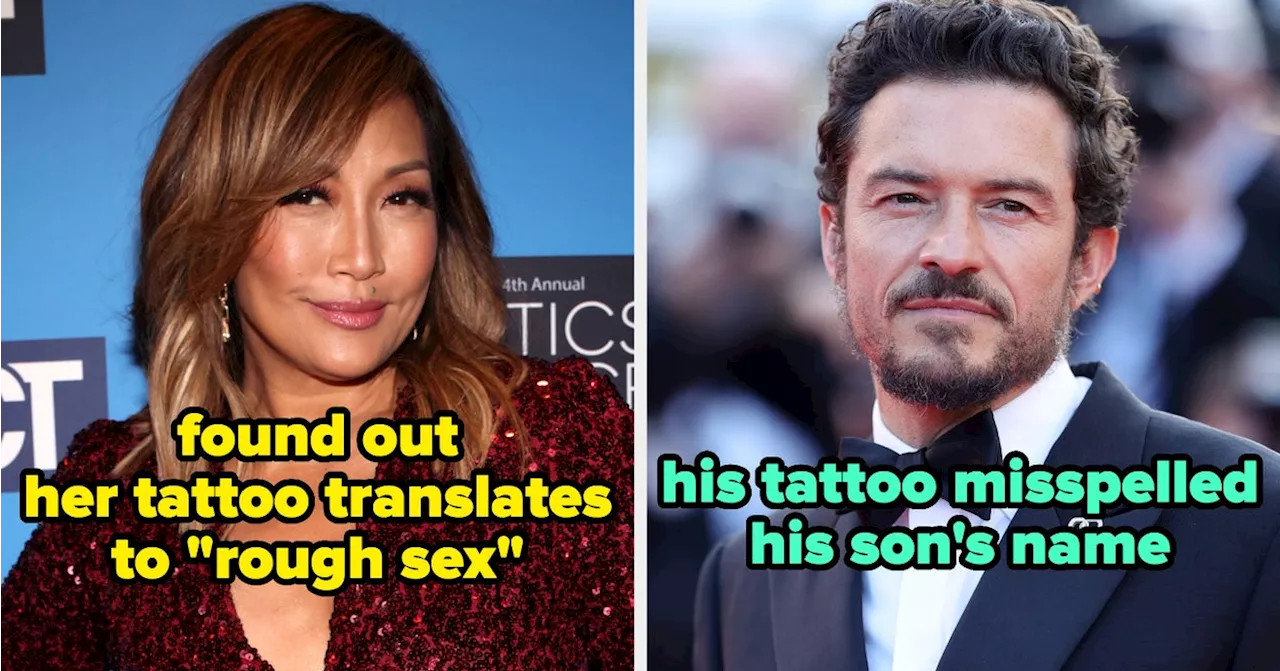 Celebrity Tattoos With Misspellings Or ErrorsThe Japanese characters that Ariana Grande got tattooed on her hand translate to “Japanese BBQ finger.'
Read more »
 Underrated Books That Everyone Should Read'Found it in a donation bin, gave it a shot, and it's one of the best books I've ever read.'
Read more »
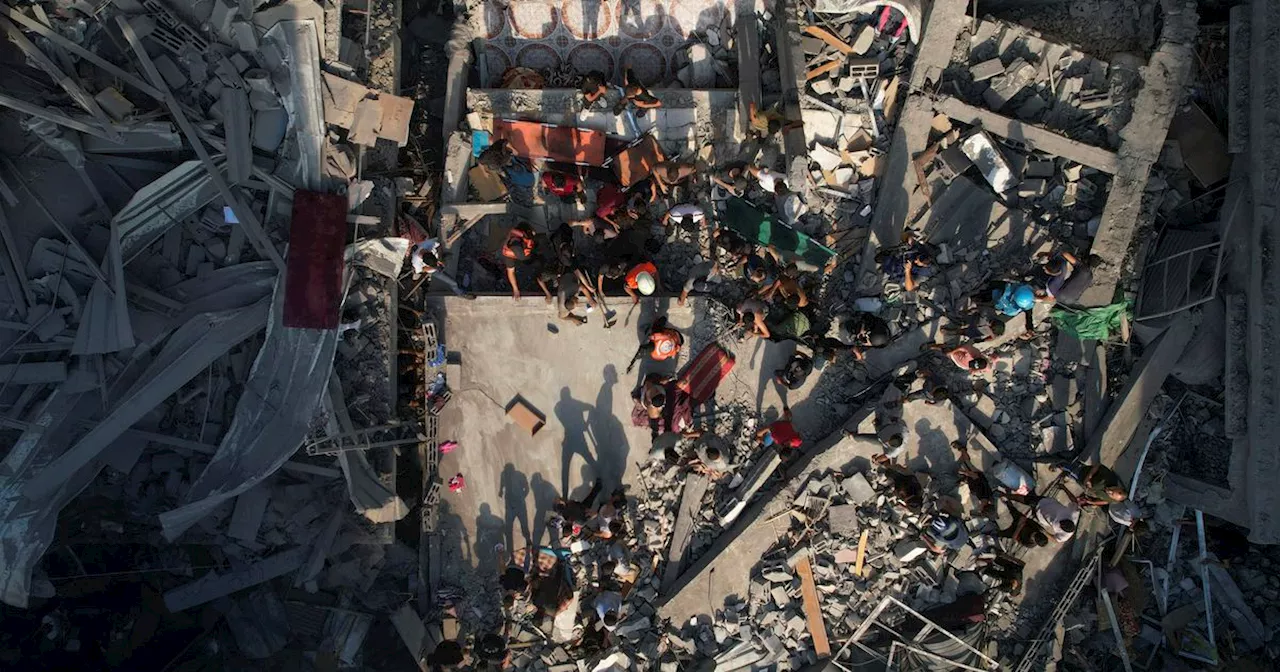 Sahar Qumsiyeh: Pray for everyone in the Holy Land, whether they be Israeli or Palestinian“I totally agree that Israel has the right to defend itself against Hamas,” writes Sahar Qumsiyeh. “But Gaza is not Hamas. Hamas is not all Palestinians. The people of Gaza are not terrorists.”
Read more »
 Everyone is steamy in the Fire Nation preview images from Netflix’s Avatar: The Last AirbenderIt all looks pretty serious, but Daniel Dae Kim pulls it off well
Read more »
 YouTube Has Introduced An Anti-Adblock Feature—Not Everyone Is HappyI am a Michigan-based writer who has contributed to more than four dozen magazines, newspapers and websites. I covered the Detroit bankruptcy for Reuters in 2014, and I currently cover international affairs for 19FortyFive and cybersecurity for ClearanceJobs.
Read more »