
Science, Space and Technology News 2024
New research indicates that unlike flu vaccines, previous COVID-19 immunizations may enhance the efficacy of subsequent vaccines by fostering broad-spectrum neutralizing antibodies, suggesting annual updates could help combat emerging variants and related viruses.
responsible continues to circulate, hospitalizing thousands weekly and frequently producing new variants. Due to the virus’s remarkable capacity for mutation and immune evasion, the World Health Organization advises yearly updates to COVID-19 vaccines. But some scientists worry that the remarkable success of the first COVID-19 vaccines may work against updated versions, undermining the utility of an annual vaccination program. A similar problem plagues the annual flu vaccine campaign; immunity elicited by one year’s flu shots can interfere with immune responses in subsequent years, reducing the vaccines’ effectiveness. A new study by researchers at Washington University School of Medicine in St. Louis helps to address this question. Unlike immunity to influenza virus, prior immunity to, the virus that causes COVID-19, doesn’t inhibit later vaccine responses. Rather, it promotes the development of broadly inhibitory antibodies, the researchers report., shows that people who were repeatedly vaccinated for COVID-19 — initially receiving shots aimed at the original variant, followed by boosters and updated vaccines targeting variants — generated antibodies capable of neutralizing a wide range of SARS-CoV-2 variants and even some distantly related coronaviruses. The findings suggest that periodic re-vaccination for COVID-19, far from hindering the body’s ability to recognize and respond to new variants, may instead cause people to gradually build up a stock of broadly neutralizing antibodies that protect them from emerging SARS-CoV-2 variants and some other coronavirus“The first vaccine an individual receives induces a strong primary immune response that shapes responses to subsequent infection and vaccination, an effect known as imprinting,” said senior author Michael S. Diamond, MD, PhD, the Herbert S. Gasser Professor of Medicine. “In principle, imprinting can be positive, negative, or neutral. In this case, we see strong imprinting that is positive, because it’s coupled to the development of cross-reactive neutralizing antibodies with remarkable breadth of activity.” Healthcare workers received the first doses of the COVID-19 vaccine in December 2020. A study by researchers at Washington University School of Medicine in St. Louis has found that repeat vaccination with updated versions of the COVID-19 vaccine promotes the development of antibodies that neutralize a wide range of variants of the virus that causes COVID-19, as well as related coronaviruses. Credit: Matt Miller/Washington University Imprinting is the natural result of how immunological memory works. A first vaccination triggers the development of memory immune cells. When people receive a second vaccination quite similar to the first, it reactivates memory cells elicited by the first vaccine. These memory cells dominate and shape the immune response to the subsequent vaccine. In the case of the flu vaccine, imprinting has negative effects. Antibody-producing memory cells crowd out new antibody-producing cells, and people develop relatively few neutralizing antibodies against the strains in the newer vaccine. But in other cases, imprinting can be positive, by promoting the development of cross-reactive antibodies that neutralize strains in both the initial and subsequent vaccines.To understand how imprinting influences the immune response to repeat COVID-19 vaccination, Diamond and colleagues including first author Chieh-Yu Liang, a graduate student, studied the antibodies from mice or people who had received a sequence of COVID-19 vaccines and boosters targeting first the original and then omicron variants. Some of the human participants also had been naturally infected with the virus that causes COVID-19. The first question was the strength of the imprinting effect. The researchers measured how many of the participants’ neutralizing antibodies were specific for the original variant, the omicron variant, or both. They found that very few people had developed any antibodies unique to omicron, a pattern indicative of strong imprinting by the initial vaccination. But they also found few antibodies unique to the original variant. The vast majority of neutralizing antibodies cross-reacted with both. The next question was how far the cross-reactive effect extended. Cross-reactive antibodies, by definition, recognize a feature shared by two or more variants. Some features are shared only by similar variants, others by all SARS-CoV-2 variants or even all coronaviruses. To assess the breadth of the neutralizing antibodies, the researchers tested them against a panel of coronaviruses, including SARS-CoV-2 viruses from two omicron lineages; a coronavirus from pangolins; the SARS-1 virus that caused the 2002-03 SARS epidemic; and the Middle Eastern Respiratory Syndrome virus. The antibodies neutralized all the viruses except MERS virus, which comes from a different branch of the coronavirus family tree than the others. Further experiments revealed that this remarkable breadth was due to the combination of original and variant vaccines. People who received only the vaccines targeting the original SARS-CoV-2 variant developed some cross-reactive antibodies that neutralized the pangolin coronavirus and SARS-1 virus, but the levels were low. After boosting with an omicron vaccine, though, the cross-reactive neutralizing antibodies against the two coronavirus species increased. Taken together, the findings suggest that regular re-vaccination with updated COVID-19 vaccines against variants might give people the tools to fight off not only the SARS-CoV-2 variants represented in the vaccines, but also other SARS-CoV-2 variants and related coronaviruses, possibly including ones that have not yet emerged. “At the start of the COVID-19 pandemic, the world population was immunologically naïve, which is part of the reason the virus was able to spread so fast and do so much damage,” said Diamond, also a professor of molecular microbiology and of pathology & immunology. “We do not know for certain whether getting an updated COVID-19 vaccine every year would protect people against emerging coronaviruses, but it’s plausible. These data suggest that if these cross-reactive antibodies do not rapidly wane — we would need to follow their levels over time to know for certain — they may confer some or even substantial protection against a pandemic caused by a related coronavirus.” Reference: “Imprinting of serum neutralizing antibodies by Wuhan-1 mRNA vaccines” by Chieh-Yu Liang, Saravanan Raju, Zhuoming Liu, Yuhao Li, Guha Asthagiri Arunkumar, James Brett Case, Suzanne M. Scheaffer, Seth J. Zost, Cory M. Acreman, Matthew Gagne, Shayne F. Andrew, Deborah Carolina Carvalho dos Anjos, Kathryn E. Foulds, Jason S. McLellan, James E. Crowe Jr., Daniel C. Douek, Sean P. J. Whelan, Sayda M. Elbashir, Darin K. Edwards and Michael S. Diamond, 15 May 2024,SciTechDaily: Home of the best science and technology news since 1998. Keep up with the latest scitech news via email or social media.Ever since Darwin introduced his groundbreaking theory of evolution, biologists have been captivated by the complex processes that enable species to evolve. Can mechanisms responsible…
United States Latest News, United States Headlines
Similar News:You can also read news stories similar to this one that we have collected from other news sources.
 New COVID variants are a reminder of coronavirus realityEven with COVID at a low point, the virus is still circulating and evolving.
Read more »
 Film AI EvolvingThe most important stories for you to know today
Read more »
 The Equalizer Will "Finally" Address McCall & Dante's Evolving Relationship, Says StarThe Equalize McCall and Dante in Screen Rant Exclusive Image
Read more »
 Freya Allan on Evolving Her Kingdom of the Planet of the Apes CharacterAllan gives her insight into Kingdom's core human and how Mae changed in small, but key ways during the film's ediitng process.
Read more »
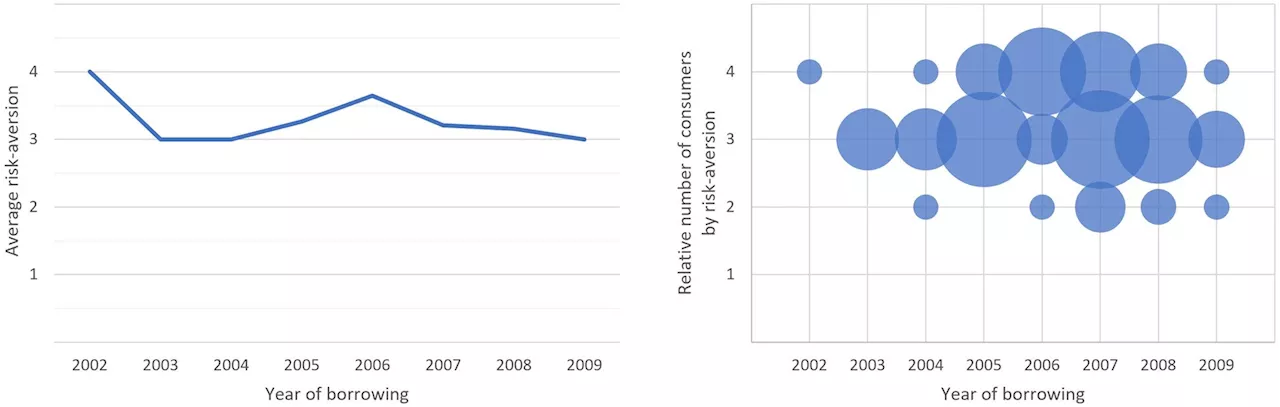 Evolving market dynamics foster consumer inattention that can lead to risky purchases, says researchersResearchers have developed a new theory of how changing market conditions can lead large numbers of otherwise cautious consumers to buy risky products such as subprime mortgages, cryptocurrency or even cosmetic surgery procedures.
Read more »
 The Role Of Strategic Innovation In Evolving IndustriesI am a documentary filmmaker and the Founder of Studio 15, a socially responsible fashion brand. After leaving behind a 15-year career in the corporate fashion world, I started a company that focuses on doing good and supporting women.
Read more »