
The European Space Agency's Euclid telescope has captured an intriguing Einstein Ring, a phenomenon where light from a distant galaxy is bent around a massive object, creating a ring-like structure. This discovery offers scientists a valuable opportunity to study dark matter and gain insights into the early universe.
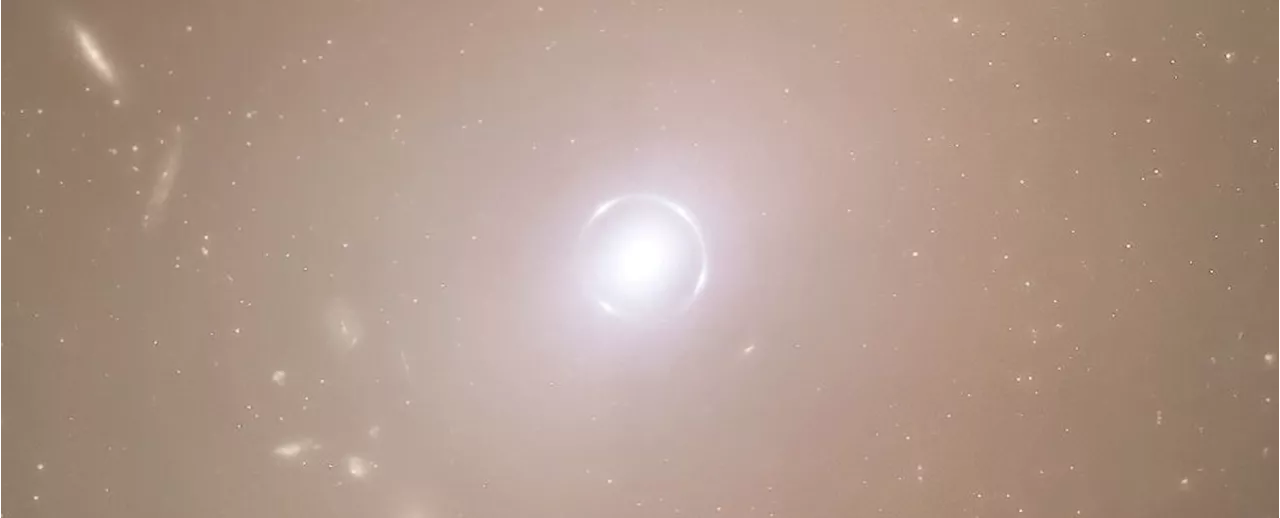
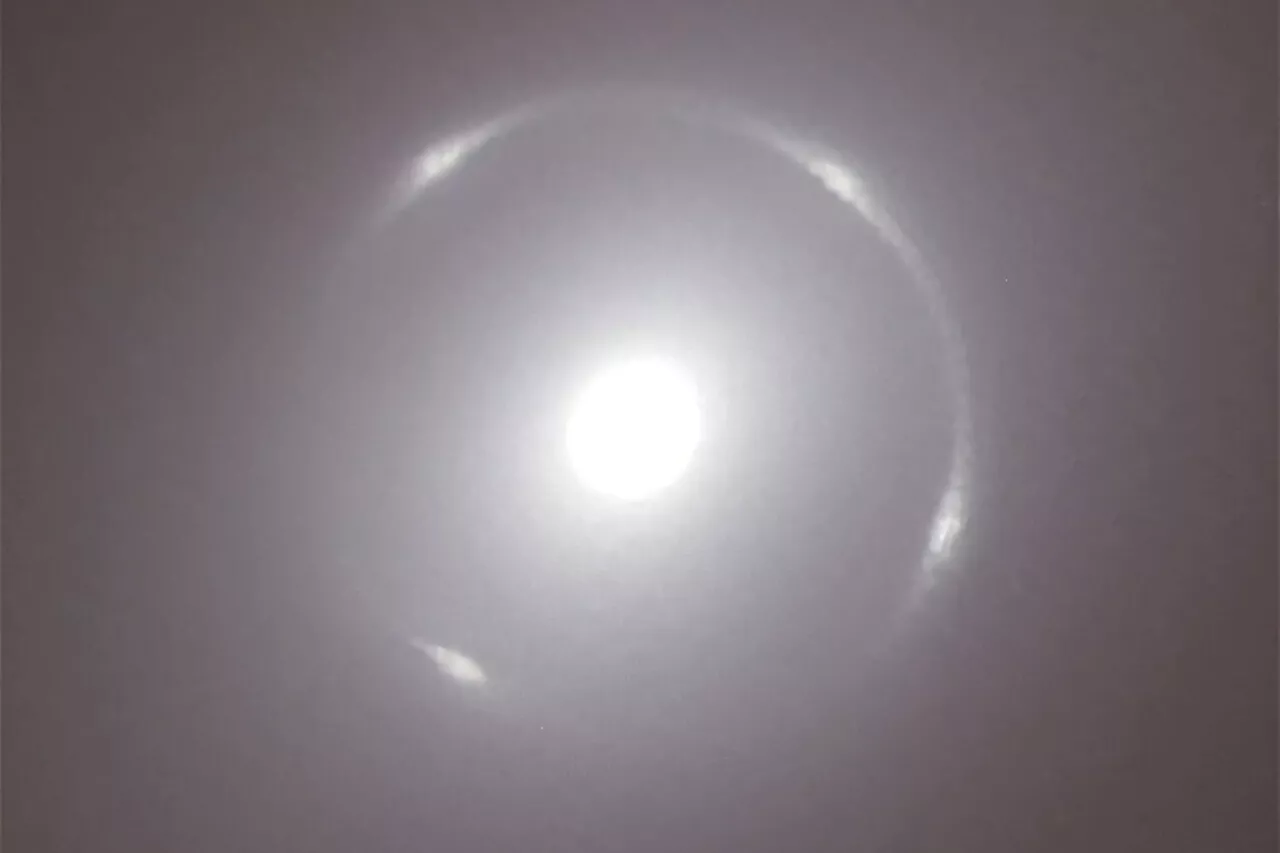
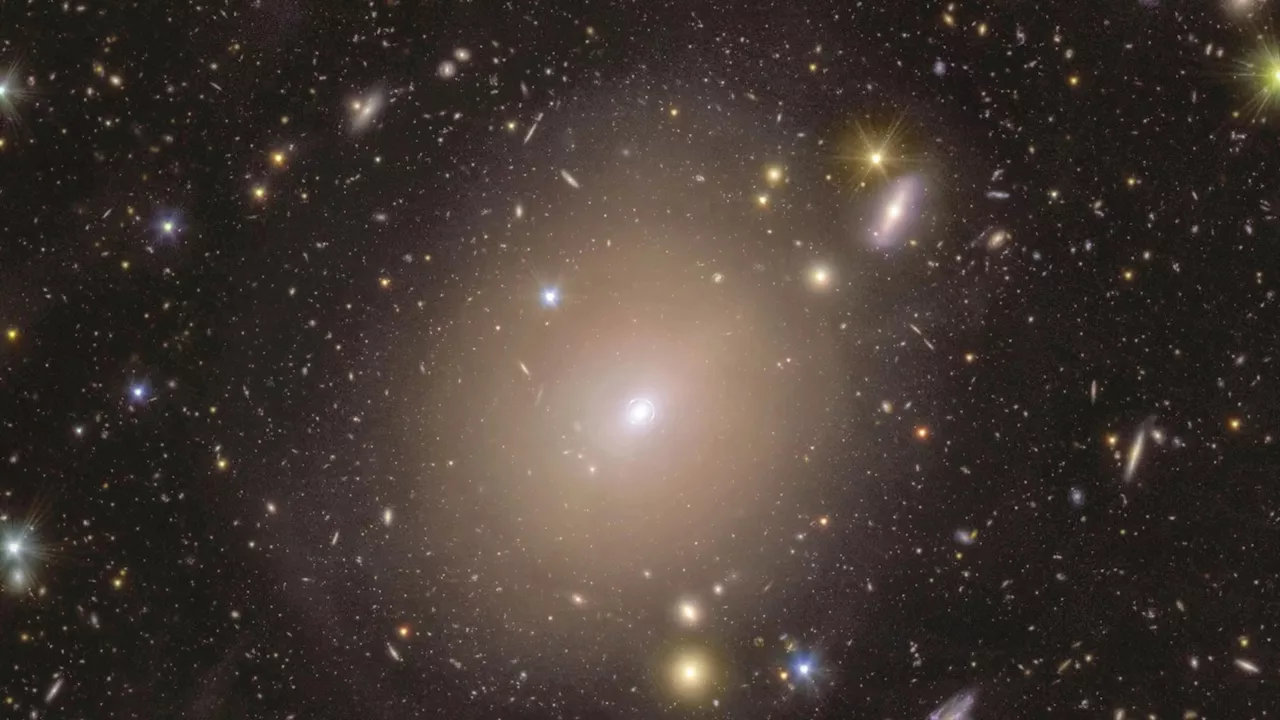
A ring of light surrounding the center of NGC 6505, a nearby galaxy, has been captured by the European Space Agency's Euclid telescope, showcasing an example of an Einstein Ring . This rare discovery, announced by the European Space Agency on Monday, involves a ring of light encircling a galaxy situated approximately 590 million light-years from Earth.
The Euclid telescope, embarked on a six-year mission to map the cosmos by observing billions of galaxies, captured this extraordinary phenomenon. Images of the Einstein Ring reveal a bright core with a luminous, cloudy ring surrounding it. Named after Albert Einstein, who predicted the bending of light through his theory of relativity, the first known Einstein Ring was discovered in 1987. While several have been identified since then, the exact number remains unknown. An Einstein Ring forms as a ring of light around a dark matter entity, a galaxy, or a cluster of galaxies. This particular Einstein Ring, previously unseen around NGC 6505, was readily identifiable due to Euclid's outstanding resolution and sensitivity. As Dr. McCleary, an assistant professor of physics at Northeastern University, explains, 'You'd think that after generations of telescopes have looked at this thing for a century and change, we'd have figured out everything that there is to know about it, right? Wrong.' With previous generations of telescopes, this Einstein Ring was effectively masked by the light of the large galaxy. The alignment creating the Einstein Ring is expected to persist for a significant duration, allowing astronomers to continue their investigations. Telescopes like Euclid are anticipated to provide scientists with a deeper understanding of dark matter, invisible matter that exerts gravitational forces. However, Dr. McCleary harbors hopes for more 'dramatic discoveries' and glimpses into the universe's mysteries. 'We'll be able to study distant old galaxies from early in the universe's history in far better detail and in far greater numbers than we have been able to up to this point,' he notes
Euclid Telescope Einstein Ring Dark Matter Galaxy Space Exploration Cosmology
Trending
 A gorgeous April afternoon in store across the Denver metro area
  ‘Artemis Mission Cannot Lead To Interplanetary Wild West,’ Astronomer Warns
  Trump says US forces will ‘finish the job’ soon in first prime-time speech since starting Iran war
  Former Wisconsin football player, who left the sport amid mental health struggles, dead at 24
  Drew McIntyre Gives Honest Take About His Recent WWE Title Reign
  U.S. Sen. Bernie Sanders introduces bill that could keep the Padres in San Diego
 United States Latest News, United States Headlines
Similar News:You can also read news stories similar to this one that we have collected from other news sources.
 Rare Einstein Ring Discovered Around Galaxy by Euclid TelescopeAstronomers using the Euclid space telescope have observed a perfect ring of light, known as an Einstein ring, surrounding a galaxy named NGC 6505. This rare phenomenon occurs when the gravity of a massive object, like NGC 6505, bends the light from a more distant galaxy, creating a ring-like structure. The discovery offers scientists a unique opportunity to study the distant galaxy in greater detail.
Read more »
 Euclid Telescope Captures Stunning Einstein Ring in Early Test ImageThe Euclid Space Telescope has captured a breathtaking image of an Einstein Ring - a rare phenomenon where light from a distant galaxy is bent into a perfect circle by the gravity of a foreground galaxy. This image, taken just 24 hours after the telescope's initial observations, demonstrates Euclid's impressive capabilities and promises exciting discoveries in the future.
Read more »
 Euclid Telescope Discovers Stunning Einstein Ring in Nearby GalaxyThe Euclid space telescope, launched in 2023 to explore the dark Universe, has captured an incredibly detailed image of an Einstein Ring. This rare phenomenon, predicted by Albert Einstein's theory of relativity, occurs when the gravity of a foreground galaxy bends the light from a background galaxy, creating a ring of light. The discovery, made during Euclid's early testing phase, highlights the telescope's remarkable capabilities and its potential to uncover many more hidden secrets about the Universe.
Read more »
 Einstein Ring Spotted Surrounding Distant Galaxy by Euclid TelescopeThe European Space Agency's Euclid telescope has captured an image of an Einstein ring - a bright halo of light surrounding a galaxy 590 million light-years away. This rare phenomenon occurs when the gravity of a closer galaxy distorts the light from a much more distant galaxy, creating a ring-like effect. The discovery, reported in the journal Astronomy and Astrophysics, provides valuable insights into dark energy and dark matter.
Read more »
 Euclid Telescope Spots Rare 'Einstein Ring' Around Nearby GalaxyThe European Space Agency's Euclid space telescope has made a remarkable discovery, detecting a rare 'Einstein ring'—a luminous halo surrounding a distant galaxy—providing valuable insights into the nature of gravity and the universe. This finding, published in the journal Astronomy and Astrophysics, showcases the telescope's capabilities and its mission to unravel the mysteries of dark energy and dark matter.
Read more »
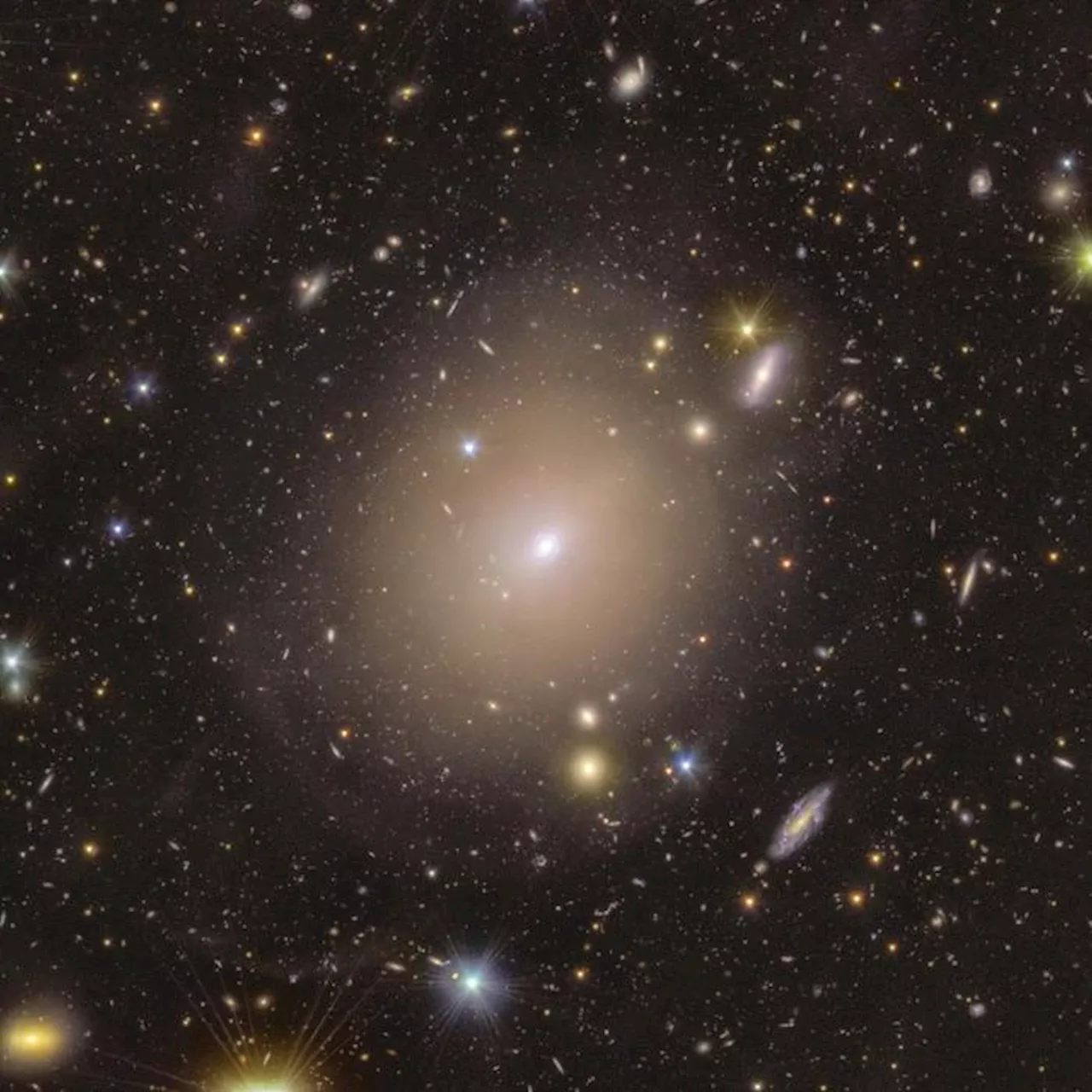 Euclid Telescope Captures Stunning Einstein RingThe European Space Agency's Euclid telescope has captured an unexpected and remarkable image of an Einstein ring. This phenomenon, predicted by Einstein's theory of relativity, occurs when the gravity of a foreground galaxy bends and magnifies the light from a background galaxy, creating a ring-like structure. The image showcases the ring surrounding the nucleus of the galaxy NGC 6505, with colourful foreground stars and background galaxies adding to the spectacle.
Read more »