


 +34
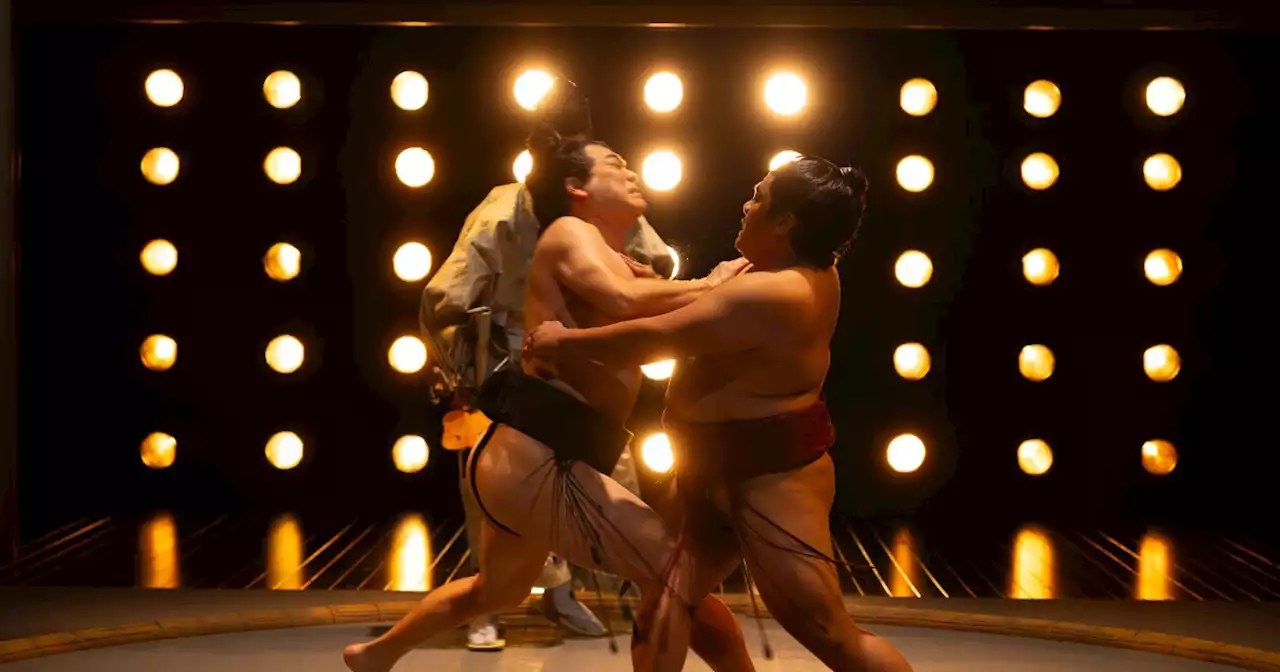
La Jolla Playhouse hosts the world premiere of Japanese-American playwright Lisa Sanaye Dring's play about the ancient Japanese sport, sumo.
You can listen to playwright Lisa Sanaye Dring's Midday Edition interview from last week.JADE HINDMON Welcome back to KPBS Midday Edition. I'm Jade. Hindmon. Next week, La Jolla Playhouse hosts the world premiere of Sumo, a play that looks into an elite sumo training facility in Tokyo.
Six men practice, live together and ultimately fight each other there. KPBS arts reporter Beth Accomando speaks with playwright Lisa Sanaye Dring about out the beauty, power, and rich tradition of Japanese sumo wrestling.BETH ACCOMANDOLisa, you have a play called Sumo. How did you decide that you wanted to write something about sumo wrestling?LISA SANAYE DRINGWell, sumo is amazing. It was around. I'm Japanese American. Hafu. And so I had grown up and it was just sort of something that was on sometimes, and I sort of followed it, and I was like, this is amazing, when I watched it and then forgot about it when I didn't watch it. And then I went to Japan and I saw honbasho, I saw a tournament live. And I was so entranced by the idea or the feeling of a sport being so powerful and so ferocious and so wild and then also so restrained and so filled with ceremony and honor. Like, the amount of tradition that is present in there and the amount of ritual that takes place is so different than any sport I know in America that it really messed with my paradigms. And so then I was like, wow, that's incredible. And I just thought about it for a really long time. And then I pitched it to McDowell as a residency idea, and they picked it up and I was like, well, I guess I'm writing this play now. And I spent a winter really thinking about it and developing it in East West players, writers, group. So at the core of it, too, I felt, looking back, I think I was trying to understand men and learn how to love men and be with these people, men specifically, that I feel like I didn't understand. And now we're here.LISA SANAYE DRINGI wanted to tell the story of someone who is rising to power inside of a structured hierarchy, who is also challenging that hierarchy and then is also so changed by the system which he is in that he doesn't know who he is at the end of it.BETH ACCOMANDONow, at the rehearsal, there was a lot of focus on the choreography that's going on and about the movement, just movement without language. So talk about the part that that plays in communicating a lot of what's going on. I mean, how are you kind of writing these fights or the sumo, just the physicality of it into your play?LISA SANAYE DRINGI mean, it's one of the cores of the play. So sometimes there's a ton, like a literal ton of power when you do the math on two bodies hitting each other like that, that's there. And so that is hopefully what we are portraying to the audience of how strong these men are. And I'm trying to let that be a language of the peace. And I can get really interested in heightened language and what verbal language can do. And I'm hoping that letting the body speak and tell the story is also speaking to what silence and corporeal forms can do. So the answer is, I'm not quite sure yet because we haven't done it yet. And also, I think we're all mindful of the beauty of the form and that being one of the core tenets of the piece. I also think it's really beautiful because we're doing it really safely. Like, we have Chelsea Pace and James Yay Geshi working on the fights together. And so having that journey of building that physicality of La Jolla Playhouse says that they are a safe place to make unsafe work. And so how do we do something that is categorically dangerous? Like, they do it safely in the sport, but it is a lot of power. How do we create that story while also being respectful of the bodies on stage who are doing it? And so in building this, how do we tell this audience this story? And then how do we create a safe space for us to do this? I'm really moved.BETH ACCOMANDOAnd what kind of research did you do into sumo wrestling? I mean, watching it is one thing, but kind of creating a play where that is such a big part of it.LISA SANAYE DRINGSo with research, I read a lot and I watched a lot of documentaries, and then I just started emailing people and being like, hey, I see you're a sumo wrestler. Do you want to talk to me? And I've gone to a bunch of tournaments in America and then I've gone to some practice here in the States. And actually, I know someone who's into theater and sumo, so that was like an in for me. So I was like, tell me about what got you involved. And now we have James, who's from Japan and he's working on the show, who really is embedded in the culture and has people who are in that world. So I'm trying to get more and more invested. But it's interesting, as I do the play, I start talking to more people, like someone who is a referee for that reached out to me and was like, oh, hey, I hear you're doing this. Someone who wrote a book about it sent that book to me. So it's emerging like I'm getting more immersed in the world and learning about the world of the play as I am making it.BETH ACCOMANDOAnd while you were doing this research, was there anything that kind of surprised you or that you were really fascinated by?LISA SANAYE DRINGI think that the rules around the way people live who want to be these fighters is profoundly the rules are well formed and some might say rigid. And so it made me think about what an athlete is what a devotional practice is and how you give your whole self to it. Ahaya, is where these men live and train, especially before they're professional wrestlers. They have to live together, and they eat all their meals together, and the translation is stable. So it's like, what is it to completely revolutionize your mindset from being an entity unto oneself into a part of this machine? And that's also Japanese culture as well. Like, being Japanese American, there's that feeling, that unified consciousness of, like, you are the people around you that I feel and that I also don't feel at all being American. And so know, in America, to fight to be a champion is to rise above everyone else. And I think that friction, that juxtaposition of what it is like to live in a unified mindset and then also rise above is really interesting to me.BETH ACCOMANDOHow did it feel being an outsider from this world and trying to get into it? Did you get any pushback from kind of the people who were part of this sumo world or did they appreciate kind of outside eyes looking in and maybe seeing something different?LISA SANAYE DRINGI think people were like, what are you up to? And then everyone I know who's read the text is like, okay, I see what you're doing. And I think encountering something with humility and curiosity and respect and asking a lot of questions is useful, and so I'm trying to do the best we can and keep checking in with the communities involved. I mean, sumo is amazing, and it's getting a resurgence or a surgeonce here in America. Like, people are interested in it, and so I think people are excited that its beauty and its intensity and its magnitude is reaching us. Itch Knee Sun she go.BETH ACCOMANDOAnd I got to go to one of the rehearsals and see some of the practice that was going on. And you had a drummer to kind of set the tone, and there was a lot of ritual just to the rehearsal process. So what has that been like, actually going through that rehearsal and getting all these actors kind of acclimated to the sumo world?LISA SANAYE DRINGYeah, I mean, in any rehearsal room, you enter a new universe. So this is a universe where we bow before we go into the rehearsal room, everybody, and we take our shoes off for there's a part of the stage we can't wear shoes in because it's where they fight, but also it's very Japanese to take your shoes off when you enter a space. We're a mixed cultural room, and there's a lot of Asian men in the room. And I think that this plays about creating a brotherhood of sorts. So seeing how everybody stretches together in the morning, sometimes I join, but usually they just do it. And seeing what engaging with those rituals and moving one's body in sequence and learning the rules of this. Even the language training of how we pronounce a thing. Undergoing that is just part of the way that families are formed, the way we form a culture with one language. And I see it in every play, but every play does it very differently. And so it's been really beautiful to see the way we've entered it in this space, how we're forming a family. I mean, this isn't sumo related, but, like, our snack table is crazy because we're Asian. And so we're like, let's feed each other. So everybody's bringing all kinds of foods, like a lot of which are Japanese treats. But it's just really beautiful to be able to connect, because this is a play in America for Asian people, for many audiences, but also to feel like what it is to not only bring in Japanese culture and sumo. Culture, but also to create a place for Asian men to have lead roles and to be with one another and then know part of the intention of this play was so that we, as Asian Americans, wouldn't have to talk about whiteness and wouldn't have to talk about racism in America, which is something that I think is a really wonderful conversation and is also a place where often we are addressing how we've been victimized. And so in this play, it leads with, oh, that's not the conversation here. We are not having to prove our masculinity, not me, but the men on stage. And the people on stage are not having to prove their masculinity because it's not challenged, which I feel like in many conversations in the theater right now, whiteness is assaulting some parts of Asianness, and it's tricky. I don't know all the answers to this conversation, but I'm hoping that this play creates a new form of questions, which is, like, what is good for our community that isn't face on fighting racism or looking at the worst cultural trauma we've had? What is it to enter in a place of strength and be like, look how beautiful we can be together. That's interesting. No, I think they should just come. We're trying to create an invitation and an open space where there are some things that are explained and some things that aren't, but give people enough information to come along for the ride. The primary intention is not to teach people about the sport. It is to illuminate humanity inside of this sport. And so I hope both are happening. And it would be great if people left here and were like, let's go watch know it's amazing. It's a lot. James is a martial artist who also has a lot of knowledge in Sumo, so he knows what fighting techniques are acceptable and what's also, you know, being raised in Japan, knows about the ritual involved and what things mean. So things you see, like when a Sumo wrestler wins, they do this chopping motion, which means heart. They're spelling out the kanji for heart. And James understands the substrate of that and why that is happening. And so in any theater process, you are essentializing in some ways, so you're finding out, what can we do in this form? And so we are figuring out all the things that are involved with this and then figuring out what is the core that we need to say. And it's wonderful to work with him because he lives in America, he's very much an American, and so thinks about what that translation is. He describes himself as fully Japanese and fully American. His family lives in both places. And so being able to speak that language really beautifully illuminates a lot and has changed the text just from working it out with people. Yeah, I think so. A lot of this has to do with the director, Ralph Pena's work. I'm hugely fond. I mean, and he's been with this piece for two years now, and the way he leads Space is really beautiful. I think that this play I mean, something I hope and I think is happening with this play is that this play creates fraternity and connection amongst the people in it. And Ralph is a wonderful leader in the Asian American theater field who has engendered that for decades in our cultures. "SUMO" runs through Oct. 22 at La Jolla Playhouse's Mandell Weiss Forum."SUMO" was part of the La Jolla Playhouse's
Scratch the next story
United States Latest News, United States Headlines
Similar News: You can also read news stories similar to this one that we have collected from other news sources.
 Japanese spacecraft to meet large space debris in world firstAstroscale and JAXA's ADRAS-J mission could help prevent a 'devastating' Kessler syndrome scenario, according to COO Chris Blackerby.
Read more »
 Biden declares disaster for La Jolla Band of Luiseño Indians after tropical storm HilaryPresident Joe Biden Thursday declared that a major disaster exists for the La Jolla Band of Luiseño Indians and ordered federal aid to supplement tribal efforts in the areas affected by Tropical Storm Hilary last month.
Read more »
 What's going on with the vacant Jack in the Box in La Jolla?The former Jack in the Box on Pearl Street has sat empty for two years. CBS 8 is Working For You and got a response from the owner.
Read more »
 La Jolla Playhouse's world premiere 'Sumo' to explore ritual, masculinity and the high art of Japanese wrestlingPlaywright Lisa Sanaye Dring said her six-character drama was inspired by a trip she took to Japan 10 years ago to trace her late mother's roots
Read more »
 Two women crossing street in La Jolla hit by car, seriously injuredTwo women were hospitalized Friday -- one with a fractured pelvis and a brain bleed -- after they were struck by a compact car in La Jolla.
Read more »
 President declares 'major disaster' for La Jolla Band of Luiseño Indians after Tropical Storm HilaryThe declaration makes federal funding available to the band for repairs to washed out roads and damage to roofs, among other fixes
Read more »