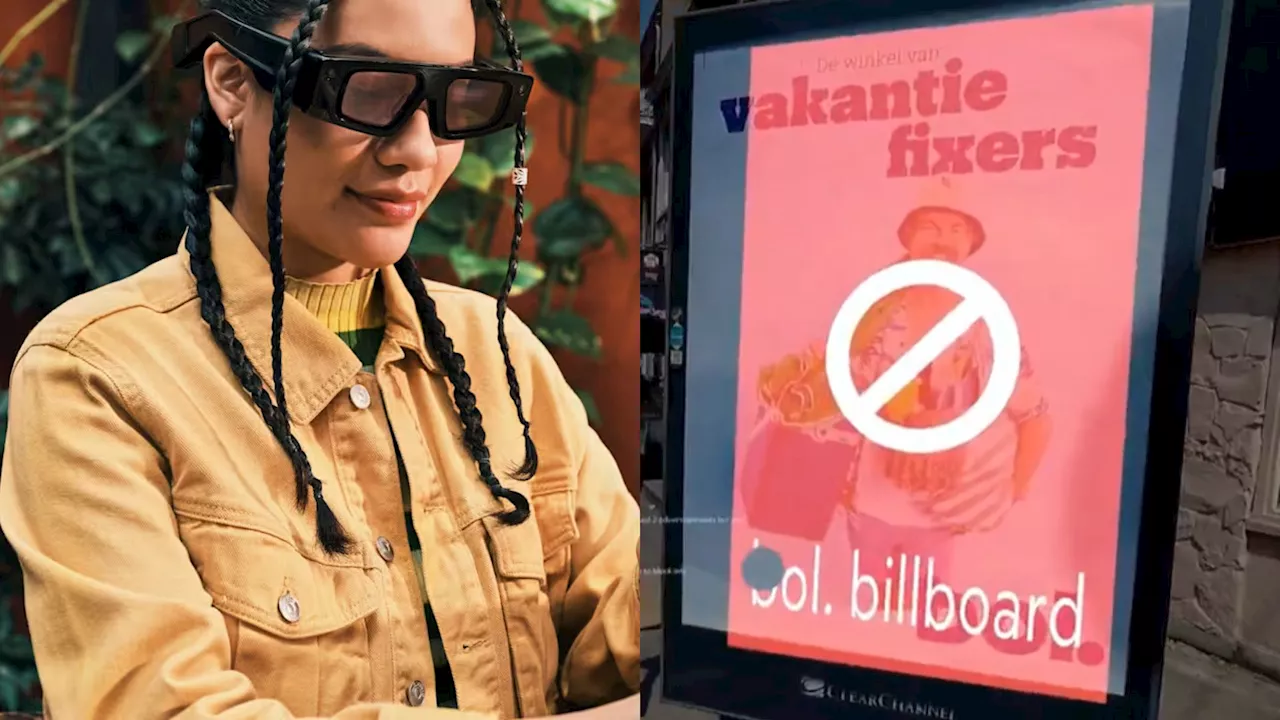
A Belgian programmer has turned AR glasses into a real-world ad blocker powered by Google’s AI and Snap APIs.
You can pay for YouTube Premium to avoid watching ads during your sacred food-with-YouTube ritual, or pay for Spotify to not pester you with ads while you try to get a morning workout in, but what can you do about real-life advertisements?A Belgian software developer may have found a workaround.
Stijn Spanhove has created an experimental augmented reality app that detects and digitally covers physical ads like billboards and soda cans in the real world. Built for Snap’s fifth-generation AR glasses , the prototype uses Google’s Gemini AI to identify branded content and instantly mask it.Instead of the original imagery, the app places a bright red square over the detected ad. These red blocks also name the hidden brand, like “Bol. billboard,” turning ad removal into a kind of real-time brand callout.“It’s exciting to imagine a future where you control the physical content you see,” Spanhove posted on X . In follow-up replies, he hinted at additional features, including options to replace the red square with personal photos or text from a notes app. Check it out below – 🚫🕶️ I've been building an XR app for a real-world ad blocker using Snap @Spectacles. It uses Gemini to detect and block ads in the environment.It’s still early and experimental, but it’s exciting to imagine a future where you control the physical content you see. pic.twitter.com/ySkFfF6rxS— Stijn Spanhove June 19, 2025Combines Snap and Google toolsThe app relies on Snap’s Depth Cache API to register objects in 3D space and maintain spatial consistency as the user moves. Gemini, Google’s generative AI model, identifies the ads themselves, whether on large posters, newspaper pages, or food packaging.This allows the blocker to function beyond obvious signage. In demo clips shared by Spanhove, it successfully covers ads on cereal boxes, magazines, and public signage, though not without a delay of a second or two. The red overlays appear to float stably, following head movements and perspective shifts with accuracy.Still, it’s early days. Spanhove describes the software as “experimental,” and the user experience reflects that.Because Snap Spectacles use transparent displays, the overlays can’t fully block light, so the original ad sometimes faintly shows through. Also, the Spectacles’ narrow 46-degree field of view limits coverage to only what’s directly ahead.Design stirs debateThe app has sparked strong reactions online. Many praised the concept of user-controlled visual space, while others criticized the bold red boxes as more jarring than the ads themselves.One suggestion, from user @hexographer, proposed replacing the red blocks with more visually pleasing alternatives, such as “images of local foliage or animal life.” They also suggested that users could set a custom folder of replacement visuals, including personal or family photos.Others asked for cross-platform support, but the app currently only works with Snap Spectacles. Devices like the Apple Vision Pro or Meta Quest will need separate development efforts.Despite its limitations, the project arrives at a moment when major tech firms like Meta and Microsoft have scaled back their AR ambitions. Snap, meanwhile, continues renting its Spectacles to developers at $99 per month, making experiments like Spanhove’s possible.A public release hasn’t been announced yet, but the goal is clear: in an AR-powered world, ad-free space might soon be something you can actually see.
AR Glasses Augmented Reality Google Gemini Real-World Ads Snap Spectacles Spatial Computing
United States Latest News, United States Headlines
Similar News:You can also read news stories similar to this one that we have collected from other news sources.
 With this new capability, Gemini moves closer to being the perfect Assistant replacementAlan, an ardent smartphone enthusiast and a veteran writer at PhoneArena since 2009, has witnessed and chronicled the transformative years of mobile technology. Owning iconic phones from the original iPhone to the iPhone 15 Pro Max, he has seen smartphones evolve into a global phenomenon.
Read more »
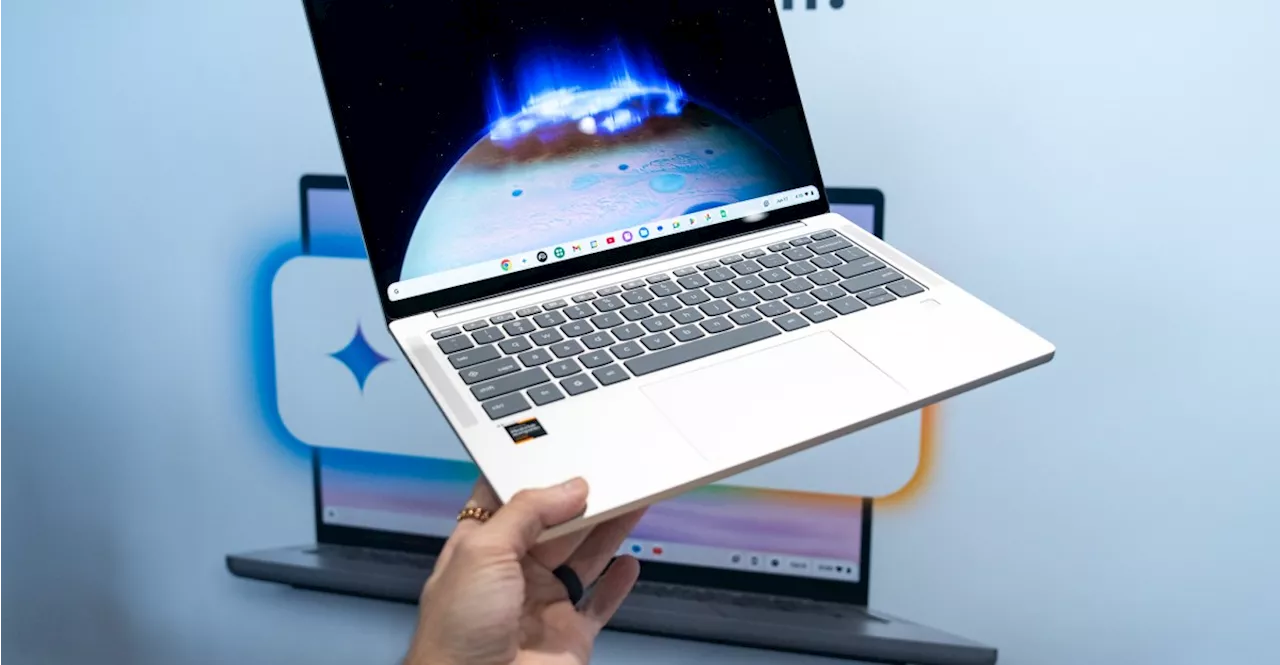 Chromebook Plus laptops like Lenovo’s sleek, new 14-incher are getting free Gemini AI featuresGoogle adds new Gemini features like select to search to Chromebook Plus laptops. Lenovo’s Chromebook Plus 14 also debuts with a new processor for on-device AI.
Read more »
 Verizon adopts Google’s Gemini AI to help customers solve ‘complex’ issuesVerizon is trying to streamline its customer service experience by overhauling it with more chatbots and AI tools.
Read more »
 Google DeepMind Launches On-Device Gemini Robotics Model for Autonomous OperationGoogle DeepMind unveils Gemini Robotics On-Device, a powerful AI model enabling robots to function autonomously without cloud connectivity. This marks a significant advancement in on-device robotics, enabling faster, more adaptable robots for real-world applications.
Read more »
 Gemini Horoscope July 2025: Uranus Is Setting You FreeYou're remembering who you really are.
Read more »
 Gemini is getting ready to replace Google Assistant on AndroidAndroid users will soon be able to let Gemini control device features and apps with fewer privacy concerns.
Read more »