
Berkeley Lab’s new Doudna supercomputer, built by Dell, will fuse scientific simulations with cutting-edge AI performance.
A new U.S. supercomputer named after a Nobel laureate signals a seismic shift in how government labs embrace commercial artificial intelligence .Once seen as two different worlds, scientific computing and artificial intelligence are now colliding—with a major milestone set to take shape in Berkeley, California.
The U.S. Department of Energy has tapped Dell Technologies to build its next flagship supercomputer, which will be powered by Nvidia’s latest chips designed to handle both AI and traditional simulations.Slated to arrive in 2026, the machine will be named Doudna, after Jennifer Doudna, the Nobel-winning biochemist from UC Berkeley and co-inventor of CRISPR gene-editing.This naming choice reflects the intersection of cutting-edge science and computing, and symbolizes the lab’s ambition to merge AI with top-tier research.According to the Lawrence Berkeley National Laboratory, which will host the system, Doudna is expected to deliver performance at least ten times faster than its most powerful current machine.This leap in speed positions the supercomputer as one of the Energy Department’s most critical assets for training large AI models and conducting next-gen scientific research.“The Doudna system represents DOE’s commitment to advancing American leadership in science, AI, and high-performance computing,” said U.S. Secretary of Energy Chris Wright. “It will be a powerhouse for rapid innovation that will transform our efforts to develop abundant, affordable energy supplies and advance breakthroughs in quantum computing. AI is the Manhattan Project of our time, and Doudna will help ensure America’s scientists have the tools they need to win the global race for AI dominance.”Dell breaks the moldIn a departure from tradition, the Energy Department passed over its usual partner Hewlett-Packard Enterprise for this project, awarding Dell its first big win in the U.S. supercomputing arena.The Round Rock-headquartered hardware company has been picked because of its growing prowess in building large commercial AI systems—an expertise that government labs now want to harness.The new machine will use Nvidia’s Rubin chip, alongside general-purpose processors built on Arm architecture, rather than the Intel or Advanced Micro Devices chips typically used in such systems.Berkeley’s National Energy Research Scientific Computing Center already employs Nvidia GPUs in its current Perlmutter supercomputer.Supercomputing meets smart learningHistorically built for precision-heavy tasks like nuclear modeling and climate simulations, supercomputers are now evolving to tackle AI jobs that favor speed over absolute accuracy.Nvidia’s chips allow for a blend of high-precision and lower-precision instructions, opening the door to advanced modeling applications like quantum computing, geothermal field analysis, and fusion reactor simulations.By blending high-precision 64-bit computing with faster 8- and 16-bit AI operations, Doudna bridges traditional science and commercial AI techniques.The system also supports modeling emerging technologies like quantum computers, leveraging Nvidia’s expanding AI software ecosystem for scientific use.Executives at Dell, which outbid rivals for the project, said the Berkeley win marks a shift away from bespoke systems and toward modular, scalable, and adaptable architectures.“This market had shifted into some form of autopilot,” said Paul Perez, a senior vice president and senior technology fellow at Dell. “What we did was disengage the autopilot,” noting that the company designed Doudna’s system with scalability in mind, making it potentially replicable across research labs and enterprises beyond Berkeley.The new supercomputer shows the increasing desire of government labs to adopt more technologies from commercial artificial intelligence systems.
Arm Processors Dell Technologies Department Of Energy Doudna Supercomputer High-Performance Computing Lawrence Berkeley National Laboratory Nvidia Gpus Scientific Research AI U.S. Supercomputer
United States Latest News, United States Headlines
Similar News:You can also read news stories similar to this one that we have collected from other news sources.
 Jennifer Doudna: A Multi-Billion Dollar Market For CRISPR Therapies Is PossibleDoudna's insights on the future of CRISPR in medicine and agriculture, including the barriers that must be overcome to pave the way for a CRISPR blockbuster.
Read more »
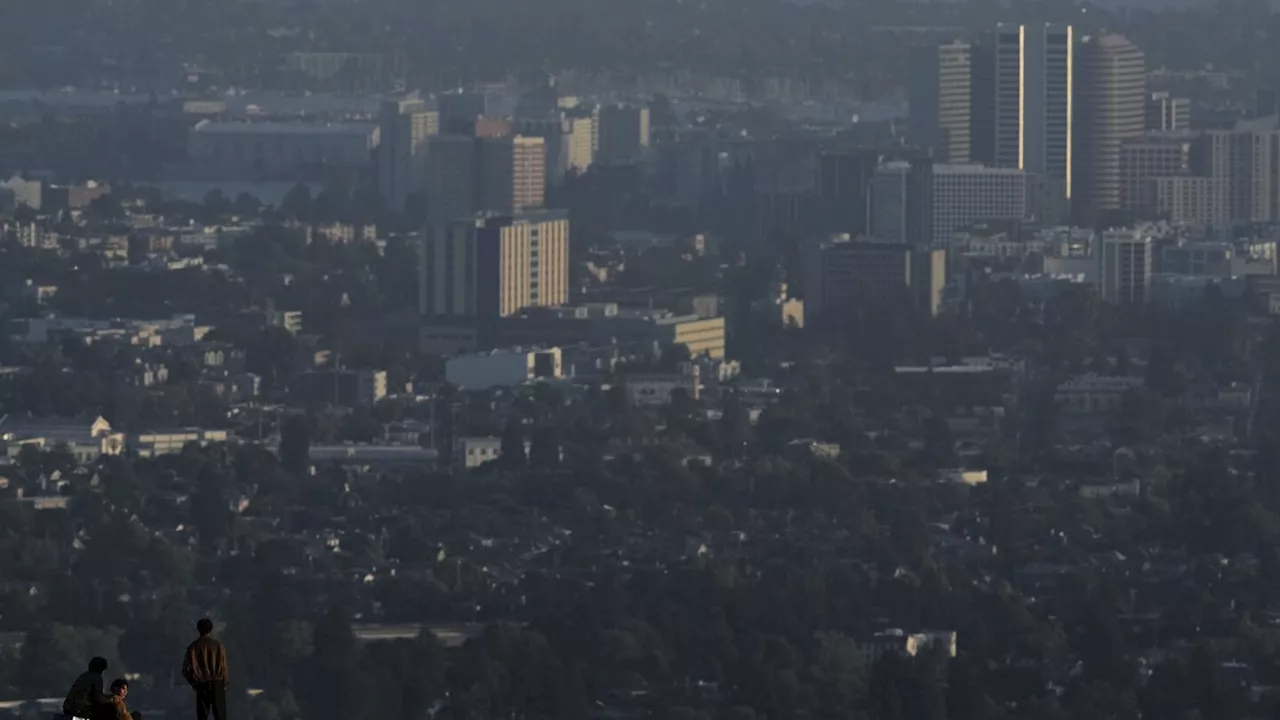 US supercomputer named after Nobel laureate Jennifer Doudna to power AI and scientific researchA new supercomputer named after a winner of the Nobel Prize in chemistry will help power artificial intelligence technology and scientific discoveries from a perch in the hills above the University of California, Berkeley, federal officials said Thursday. U.S.
Read more »
 US supercomputer named after Nobel laureate Jennifer Doudna to power AI and scientific researchA new supercomputer named after a winner of the Nobel Prize in chemistry will help power artificial intelligence technology and scientific discoveries from a perch in the hills above the University of California, Berkeley, federal officials said Thursday.
Read more »
 US supercomputer named after Nobel laureate Jennifer Doudna to power AI and scientific researchA new supercomputer named after a winner of the Nobel Prize in chemistry will help power artificial intelligence technology and scientific discoveries from a perch in the hills above the University of California, Berkeley, federal officials said Thursday.
Read more »
 Nvidia, Dell partner with Trump admin to make next-gen supercomputerNvidia and Dell announced a partnership on the AI-powered Doudna supercomputer at the Berkeley National Laboratory, which will advance research on fusion energy and more.
Read more »
 Berkeley Mayor Adena Ishii talks history-making election, pride and moreCalling the role 'the best job I've ever had', Berkeley Mayor Adena Ishii says she sees the job of being the first Asian American in the role as a big responsibility.
Read more »