
In an era when automobiles are gaining mass and potency in equal measure, is this classic performance metric still relevant?
The weight-to-power ratio, that time-honored golden metric of performance, is easily calculated but an increasingly poor way to assess a car. For example, the new Land Rover Defender Octa’s 9.3 lb/hp is nearly identical to the 1990 Corvette ZR-1’s 9.
4 lb/hp. Which would you rather drive around a racetrack or down a canyon road?This story originally appeared in Volume 34 of Road Track.For improving the ratio, adding power has long been easier than cutting mass, but trimming weight brings virtues beyond reducing the amount of work every pony must do. A lighter car will change direction better, use less fuel, and put less wear on components. It won’t require as much cooling, and brakes can be smaller.Colin Chapman’s “simplify and add lightness” ethos was born from motorsport. His team aggressively simplified cars, at times to the point of component failure. But the philosophy translated into some spectacular road cars, none more influential than the original Lotus Elan. In its most powerful Euro-spec Sprint guise, it had 126 hp propelling just 1500 pounds of mass. It was the direct inspiration for the Mazda Miata years later.But weight-to-power suffers from inflation. Its value diminishes over time, as expectations change and technology advances. The Elan Sprint’s sub-seven-second 0-to-60-mph time was scintillating five decades ago but is now achievable by many three-row SUVs. Thanks to rising grip levels of steadily improving tires, along with the proliferation of safety systems from anti-lock brakes to stability control to active drift modes, drivability has stayed ahead of ever-decreasing weight-to-power ratios. With 14.9 lb/hp, the E30-generation BMW M3 was considered pretty spicy in 1988, but the current Miata RF boasts a superior 13.6 lb/hp.Consider evolution through a single bloodline. The 1978 Porsche 911 Turbo pushed 10.9 pounds with each horsepower, a figure that—in conjunction with a tendency to lift off oversteer—led this car to be cited as a barely tamable widowmaker. Successive generations have seen the fear factor reduce as outputs have swollen. The 992.2 Turbo S’s 5.5 lb/hp is almost half that of the original car, despite a weight increase of nearly 1000 pounds, but thanks to all-wheel drive and electronic stability management, it can handle a wet, twisting road without drama.Then there’s the question of torque. A vehicle’s weight-to-torque ratio is arguably a better measure of subjective performance. With newer engines tending to make peak torque at much-lower rpm, they can feel eager and willing even when being driven gently. Electric motors have seamless urge from any speed. Many modern drivers get all the hit of speed and titillation they need without ever getting close to a redline.While we love lightweight cars, increasing weight is inevitable, as the physical size of vehicles and the amount of stuff they’re expected to have increases. Plus, let’s not forget, safety vastly beyond that of older models. How many people would really be willing to sacrifice airbags or carefully designed impact-absorption structures to save a couple of hundred pounds?In short, the optimal weight-to-power is both subjective and situational. That beat-up Camaro or GTI you drove as a teenager is probably remembered as a personal exemplar of excitement. But that was likely more down to its low-quality tires and your much-higher tolerance for crazy risks than to thrilling longitudinal g-forces. How much is just enough? Try this argument on for size: The ideal weight-to-power ratio is one that, matched to an appropriately able chassis, allows you to push a car on a demanding road or in slippery conditions without terrifying yourself: sufficient zing to get some impressive numbers on the speedo and enough performance to play with a cornering line using the gas pedal, but no substantial likelihood of ending up parked in a field facing the way you came or getting the sort of speeding citation that nets you time on a chain gang.Which is a long way of explaining why my 987.2 2009 Porsche Cayman S—2977 pounds, 320 hp, 9.3 lb/hp—is the perfect car.
United States Latest News, United States Headlines
Similar News:You can also read news stories similar to this one that we have collected from other news sources.
 GLP‑1 drugs may do more than control blood sugar and weightReporter at News 5 Cleveland
Read more »
 Hormone therapy boosts weight loss drug results by 35% in women, study findsFox News Channel offers its audiences in-depth news reporting, along with opinion and analysis encompassing the principles of free people, free markets and diversity of thought, as an alternative to the left-of-center offerings of the news marketplace.
Read more »
 Hormone Therapy Boosts Weight Loss in Postmenopausal Women on Obesity DrugA new study suggests that combining hormone therapy with the obesity drug tirzepatide leads to greater weight loss in postmenopausal women. The study found that women using both therapies lost about 35% more weight compared to those using only the drug tirzepatide. Researchers analyzed 120 postmenopausal women, highlighting a potential new strategy to manage weight gain and related health risks after menopause.
Read more »
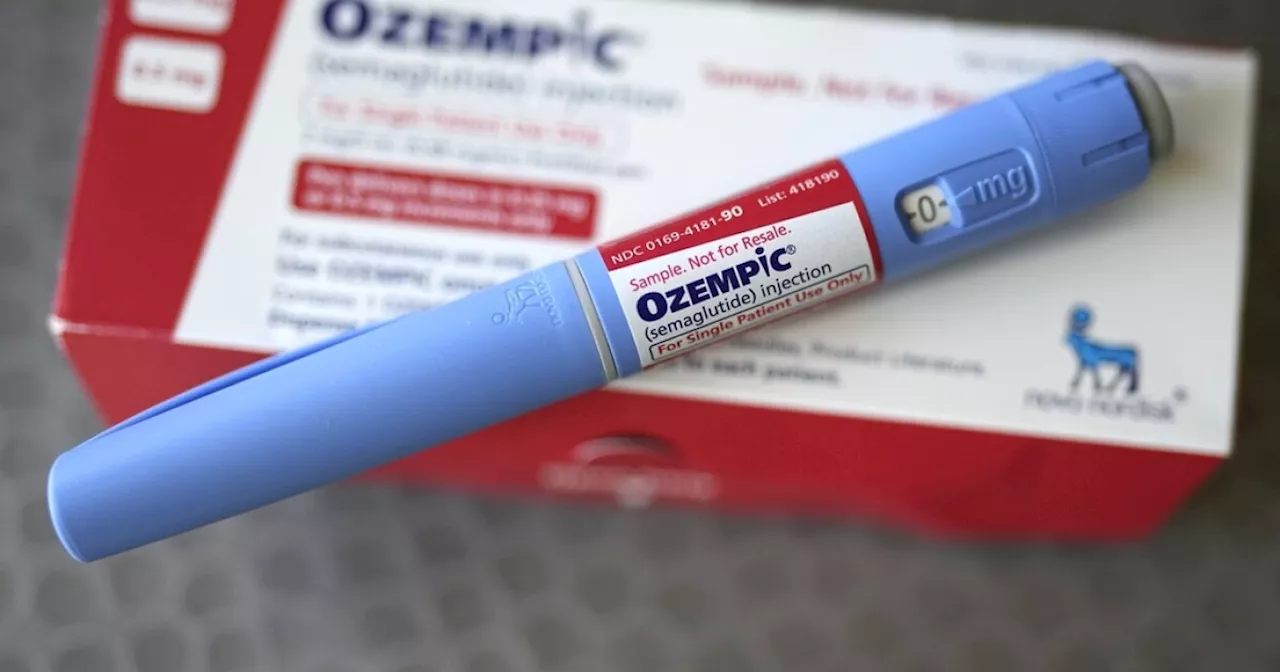 Beyond Weight Loss: GLP-1 Drugs Reveal Unexpected Health BenefitsNew research suggests that GLP-1 drugs, initially developed for diabetes and known for weight loss, may offer surprising additional health benefits, including improvements in cardiovascular health, sleep apnea, and potential benefits for chronic inflammatory conditions and substance addiction. However, side effects and the need for long-term study remain critical considerations.
Read more »
 Distance, perspective and the weight of AmericaThere is something clarifying about being far from home.
Read more »
 Unexpected Drug Combo May Supercharge Weight Loss in Older WomenThe Best in Science News and Amazing Breakthroughs
Read more »