
Nearly half reported decreased drinking after initiating any anti-obesity medication, including second-generation GLP-1 receptor agonists.
SAN ANTONIO — Several types of anti-obesity medications , including glucagon-like peptide 1s , are associated with decreased alcohol use , new research suggests. The findings, from surveys of more than 14,000 participants in WeightWatchers’ telehealth weight management program, were presented on November 6 at the Obesity Society’sSimilar reductions in alcohol consumption were seen in people taking different classes of AOMs, suggesting “an additional mechanism by which AOMs reduce energy intake, and also signal a potential role for these medications to reduce alcohol use ,” Cardel said, adding “Clinicians treating individuals for obesity may consider anti-obesity medications particularly among those who report higher alcohol intake.
” Asked to comment, session moderator and obesity researcher Joseph A. Skelton, MD, professor of pediatrics at Wake Forest University School of Medicine, Winston-Salem, North Carolina, told, “I think there are some overlapping pathways there, possibly a reward system or something like that in the brain. I don’t think we know exactly what the end result will be as a potential use of the medications. But there’s a signal that needs to be investigated more.”that analyzed social media threads of people saying they’d quit drinking after starting a GLP-1 drug. But this new study is the first to examine the relationship with different classes of AOMs and to quantify the amount of alcohol consumed.The study included 14,053 WeightWatchers’ telehealth program participants who initiated an AOM between January 2022 and August 2023 and refilled the same AOM between October and November 2023. Those who had previously used AOMs before coming to the program or who had undergone bariatric surgery were excluded. Participants had a mean age of 43 years, were 86% women, were 60% White, and had a mean body mass index of 36. They were surveyed about their weekly alcohol use prior to AOM initiation and again at the time of AOM refill.At the second survey, 24% reported decreased drinking after starting an AOM, 71% reported no change, and 4% reported increased drinking . But when just the 7491 individuals who reported any alcohol use at baseline were included, 45% reported decreased drinking after starting an AOM, 52% reported no change, and only 2% reported increased drinking. The decrease in drinking with AOM use rose with greater alcohol use at baseline, from 37% for category 1, 76% for category 2, and 91% for category 3. The proportions reporting increased drinking were just 3%, 1%, and 0%, respectively. The adjusted odds ratios for decreasing drinking were 5.97 for category 2 , and 45% for the second-generation GLP-1 drugs . All were statistically significant atThe highest proportion reporting increased drinking was 4% for bupropion/naltrexone. Compared with women, men were significantly more likely to report decreased drinking with AOM use (adjusted OR, 0.74;Compared with those who had overweight, those in obesity classes I, II, and III were all more likely to decrease drinking with AOM use, with adjusted ORs of 1.26 (During the discussion, Cardel said that qualitative assessments with participants suggest that there are at least two mechanisms behind this phenomenon: One biological and the other intentional. “What we hear from them is twofold, one, particularly amongst those folks on GLP-1 medications, we’re hearing that physiologically, they feel different with the medications, that their cravings for alcohol are decreased, and that when they do choose to drink that there’s often a very much a negative reinforcement...I’ve had a patient tell me, ‘I used to be able to have two or three margaritas, and maybe I didn’t feel like the best I’d ever felt in the morning, but I was okay. And now if I have two or three drinks, I will be throwing up for 5 hours, and it’s the worst hangover I’ve ever had in my life.’ And so it very much creates that negative reinforcement loop.” But at the same time, “folks who are coming to us and seeking these medications are very much on a on a health-based journey. That’s what they tell us. The majority of our patients are there to improve their health. We rarely hear about the vanity or aesthetic part of it. So perhaps it’s that, in terms of trying to improve their health, they’re also trying to reduce their alcohol consumption, either just for their overall health or also as a means of trying to decrease their overall calorie consumption.” In future research, Cardel said, “we want to examine whether the anti-obesity medications are more successful at reducing alcohol use compared to non-pharmacological weight management interventions, as we know that people often reduce their alcohol consumption on a weight management journey as a means of prioritizing their calories for food and decreasing the calories from alcohol.” Cardel and all the study coauthors were employees and shareholders at WeightWatchers at the time the research was conducted. Skelton is editor in chief of the journal Miriam E. Tucker is a freelance journalist based in the Washington, DC, area. She is a regular contributor to Medscape Medical News, with other work appearing in the Washington Post, NPR’s Shots blog, and Diatribe. She is on X: @MiriamETucker.
Obese Alcohol Use Childhood Obesity Obesity In Children Pediatric Obesity Paediatric Obesity Bariatric Surgery Obesity Surgery Weight Loss Surgery GLP-1 Receptor Agonists Glucagon-Like Peptide-1 Receptor Agonists Washington DC Washington - District Of Columbia Children Child Childhood Pediatrics Kids Receptors Washington Weight Management Diabetes Mellitus Type 2
United States Latest News, United States Headlines
Similar News:You can also read news stories similar to this one that we have collected from other news sources.
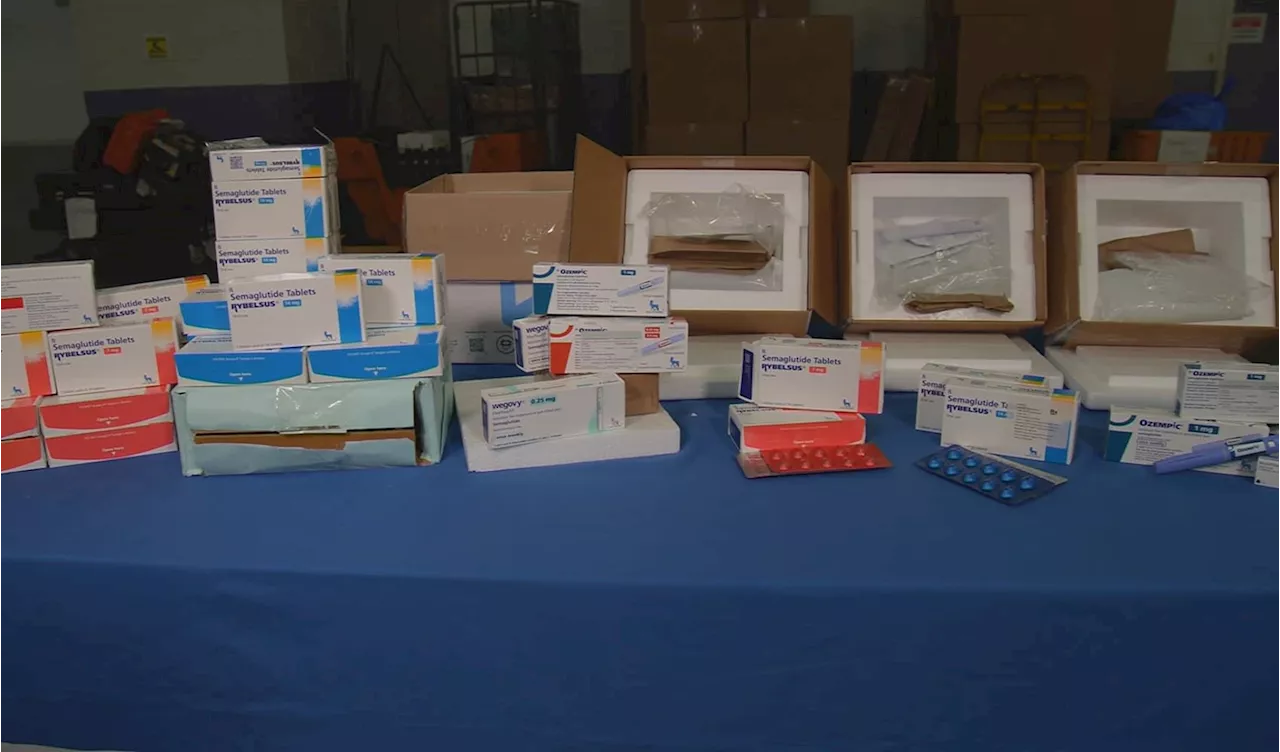 Ozempic underworld: Inside the black market of obesity drugsA CNBC investigation into illegal weight loss drugs reveals a marketplace where criminals brazenly counterfeit the drugs or ship the real product from overseas.
Read more »
 Ozempic underworld: Inside the black market of obesity drugsMelissa Lee is a correspondent for CNBC.
Read more »
 Wegovy and Zepbound rival targeting ‘next generation' of obesity drugs, Zealand Pharma CEO saysDanish biotech Zealand Pharma is targeting the “next generation” of weight loss drugs as competitors pile into a market dominated by heavyweights…
Read more »
 Obesity drugs the 'most compelling story in healthcare sector'Obesity drugs the 'most compelling story in healthcare sector' - Wells Fargo
Read more »
 Teens With Obesity Less Likely to Be Suicidal on Weight Loss Drugs: StudyWeight loss drugs like Ozempic were associated with a lower risk of suicidal thoughts in teens with obesity, a new study found.
Read more »
 Why weight-loss drugs may be no obesity silver bulletMinisters are lauding the new generation of weight-loss drugs - but are they really the solution?
Read more »