
The research model and its findings could facilitate the creation of synthetic self-healing materials or synthetic cells.
Scientists have discovered a new way bacteria organize themselves during cell division , which they describe as “dying to align.” In this process, misaligned filaments in the cell naturally break down, allowing a ring structure to form at the center, which is crucial for the cell to divide properly.
The big question is how non-living matter organizes itself in ways that lead to life. Self-organization, a key feature of life, involves the natural formation and breakdown of active biological matter. But how do these molecules know when and where to come together and when to fall apart? Professor Anđela Šarić and PhD student Christian Vanhille Campos at the Institute of Science and Technology Austria are exploring these questions by studying how bacteria divide.The researchers developed a computer model to study how a protein called FtsZ, which plays a key role in bacterial cell division, assembles itself. During cell division, FtsZ forms a ring at the center of the bacteria, which is crucial for creating a new wall that divides the cell into two. However, some details about how FtsZ organizes itself still need to be clarified. The researchers’ model shows that when FtsZ filaments encounter obstacles, they break down and then reassemble, which helps them align properly to form the division ring. This discovery might be useful in developing materials that can heal themselves.FtsZ filaments constantly grow and shrink in “treadmilling,” where subunits are added to one end and removed from the other. This treadmilling process happens in many life forms, including Scientists used to think of treadmilling as a way for the filaments to move forward, but these models needed to capture the process fully and overestimate the forces involved. So, Professor Šarić’s team created a new model to understand better how FtsZ subunits interact and form filaments through treadmilling. “Everything in our cells is constantly changing, so we need to think about biological active matter in a way that considers this continuous turnover and how it adapts to the environment,” says Professor Šarić.and create a noticeable effect, the FtsZ filaments behaved differently. When these filaments were out of alignment and encountered an obstacle, they would break down or “die.” “Active matter made up of mortal filaments does not take misalignment lightly. When a filament grows and collides with obstacles, it dissolves and dies,” explains the study’s lead author, Vanhille Campos. “When a filament grows and hits an obstacle, it dissolves.” Professor Šarić adds, “Our model demonstrates that treadmilling assemblies lead to local healing of the active material. When misaligned filaments die, they contribute to a better overall assembly.” By considering the cell’s shape and the filaments’ curvature, the team demonstrated how the death of misaligned FtsZ filaments aids in forming theEnergy-driven self-organization of matter is a key concept in physics. The team led by Professor Šarić now suggests that FtsZ filaments represent a unique type of active matter that uses energy for continuous renewal rather than movement. “In my group, we ask how to create living matter from non-living material that looks living. Thus, our present work could facilitate the creation of syntheticMoving forward, her team plans to model how the bacterial division ring contributes to building the wall that splits the cell into two.Srishti studied English literature at the University of Delhi and has since then realized it's not her cup of tea. She has been an editor in every space and content type imaginable, from children's books to journal articles. She enjoys popular culture, reading contemporary fiction and nonfiction, crafts, and spending time with her cats. With a keen interest in science, Srishti is particularly drawn to beats covering medicine, sustainability, gene studies, and anything biology-related.
Cell Division Self-Healing Materials
United States Latest News, United States Headlines
Similar News:You can also read news stories similar to this one that we have collected from other news sources.
 YouTuber Billy LeBlanc Says His Partner Natalie Clark Died After Contracting Bacterial Infection from OystersOn July 14, Billy LeBlanc posted on his Instagram that his partner Natalie Clark died after contracting a bacterial infection from consuming raw oysters.
Read more »
 Catch a virus by its tail—researchers find bacterial immune system alters tails of phagesPhages, viruses that attack bacteria, have a head and a tail. The head contains the phage's genetic material and the tail is used to identify a potential host, that is, a bacterial cell into which it can inject this material.
Read more »
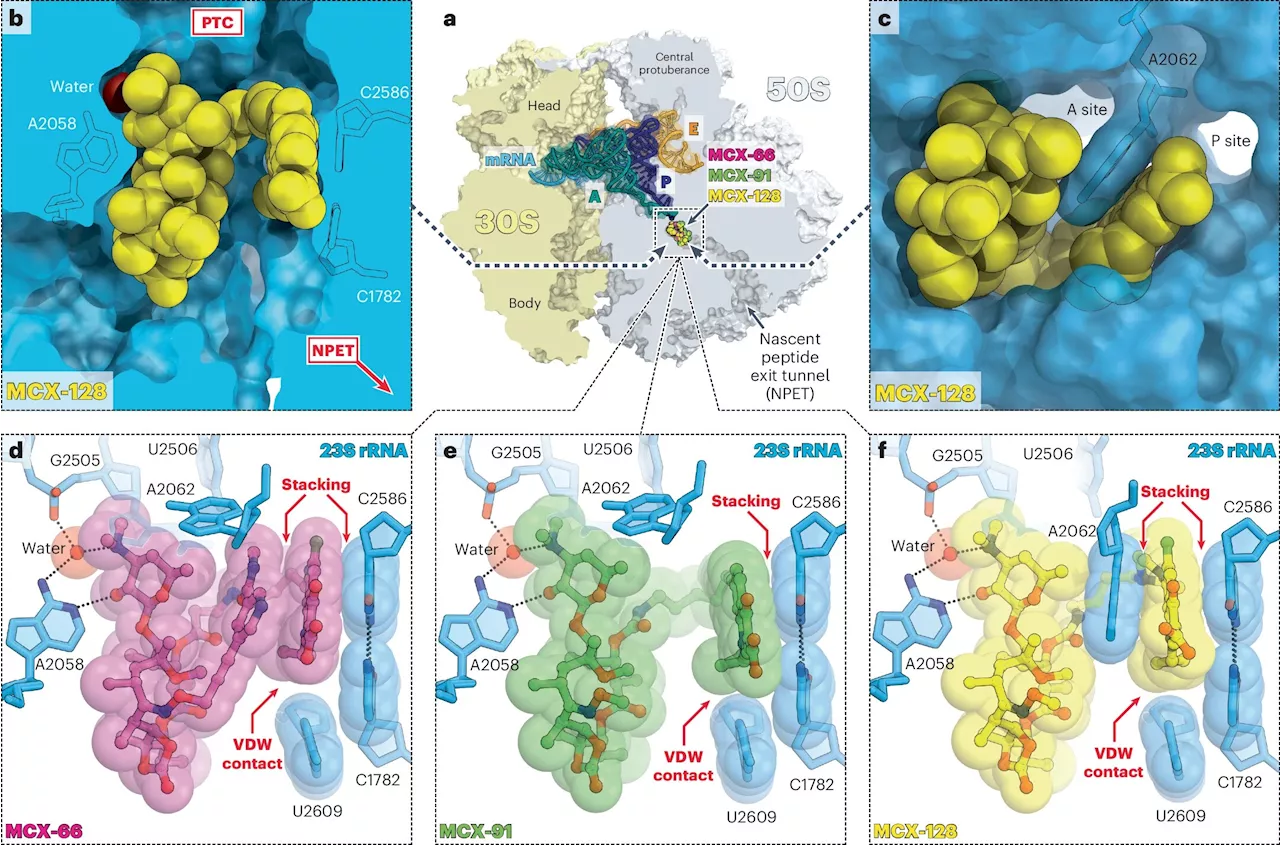 Dual action antibiotic could make bacterial resistance nearly impossibleA new antibiotic that works by disrupting two different cellular targets would make it 100 million times more difficult for bacteria to evolve resistance, according to new research from the University of Illinois Chicago.
Read more »
 Dual action antibiotic could make bacterial resistance nearly impossibleNew drug that disrupts two cellular targets would make it much harder for bacteria to evolve resistance.
Read more »
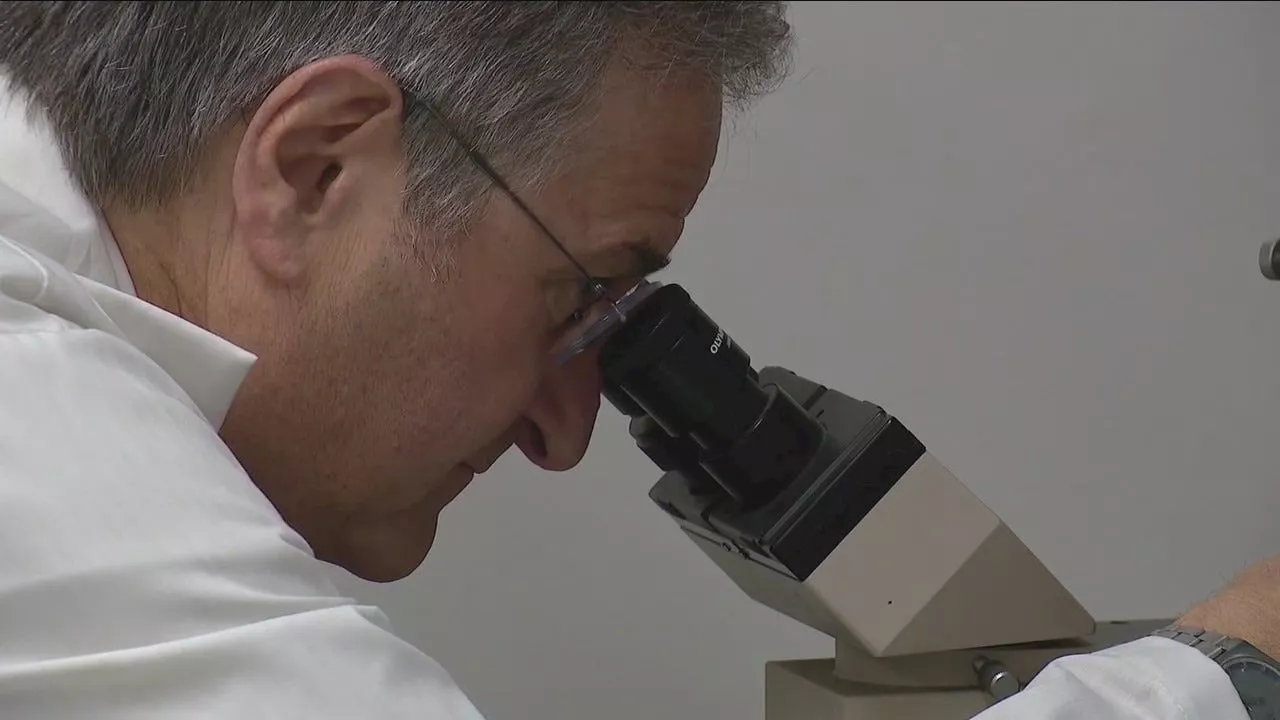 Chicago scientists discover new antibiotic that may defeat bacterial resistanceScientists at the University of Illinois Chicago have discovered a new antibiotic that may make it nearly impossible for bacteria to develop resistance, marking a significant breakthrough in the fight against infectious diseases.
Read more »
 New drug could make bacterial resistance ‘nearly impossible’University of Illinois Chicago researchers developed a dual-action antibiotic that makes bacterial resistance to drugs nearly impossible.
Read more »