
Scientists develop diffraction casting, a new optical computing technique inspired by 1980s research, promising faster computing.
On one hand, with the rise of quantum computing , artificial intelligence, blockchain, and cloud gaming, the demand for faster and more powerful computing technology is increasing with each passing year.
On the other hand, the electronic systems that power modern-day computers, gadgets, and high-tech scientific equipment are reaching their theoretical limits in speed and efficiency. This situation indicates the strong need for alternatives to electronic computing. One such promising alternative is optical computing. While traditional electronic systems employ electrical signals to perform computing tasks, an optical system harnesses the power of light for processing data and performing complex calculations. Scientists believe that optical computing applications will be much better, faster, and energy efficient than their electronic counterparts. However, currently, many challenges and technical limitations prevent us from realizing this A new study proposes a promising solution to these challenges. The study authors have created a design architecture, called diffraction casting. They claim this method can bring us closer to unlocking the full potential ofTo understand the fundamentals of diffraction casting, one needs to go back to the 1980s when a group of Japanese researchers proposed shadow casting, an optical computing method that utilized large geometric optical patterns to perform simple logical operations. However, shadow casting required a large setup. Plus, it required precise alignment of its optical components and careful control of light paths, which made it complex and challenging to integrate and use. This method was almost forgotten until recently when the study authors at the University of Tokyo decided to create diffraction casting, an “We introduce an optical computing scheme called diffraction casting which improves upon shadow casting. While shadow casting is based on light rays interacting with different geometries, diffraction casting is based on the properties of the light wave itself,” Ryoichi Horisaki, one of the study authors and an associate professor at UTokyo, This means that diffraction casting takes advantage of the natural behavior and characteristics of light, such as how it bends, spreads, and interacts with different materials, instead of relying on the physical shapes or structures to manipulate light as in shadow casting. This difference allows diffraction casting to incorporate flexible and compact optical elements — demonstrating a design architecture that could power practical“We ran numerical simulations which yielded very positive results, using small 16-by-16 pixel black-and-white images as inputs, smaller than icons on a smartphone screen,” Horisaki said.The study authors suggest that optical computing isn’t here to replace electronic computing but to work as a parallel technology. This also makes sense as electronic systems serve as foundations of global digital infrastructure. Moreover, methods such as diffraction casting can overcome various challenges associated with optical computing, but they are still in an early stage. For instance, researchers suggest that diffraction casting itself can take 10 years or more to become commercially viable. “Diffraction casting is just one building block in a hypothetical computer based around this principle and it might be best to think of it as an additional component rather than a full replacement of existing systems,” Ryosuke Mashiko, lead study author and researcher at UTokyo, said. Nevertheless, this method is likely to play an important role in enabling optical computing to share the immense workload of electronic systems in areas such as machine learning,Rupendra Brahambhatt is an experienced writer, researcher, journalist, and filmmaker. With a B.Sc in Science and PGJMC in Mass Communications, he has been actively working with some of the most innovative brands, news agencies, digital magazines, documentary filmmakers, and nonprofits from different parts of the globe. As an author, he works with a vision to bring forward the right information and encourage a constructive mindset among the masses.
United States Latest News, United States Headlines
Similar News:You can also read news stories similar to this one that we have collected from other news sources.
 10 Best Horror Comedies Of The 1980sAryanna is a homebody who enjoys spending her time watching her favorite movies and TV shows or listening to music and podcasts. However, she understands the benefits of giving her eyes and mind a break, so the rest of her time is spent journaling, spending time with loved ones and playing with her dog.
Read more »
 10 Best R-Rated Sci-Fi Movies of the 1980s, RankedRe-Animator, The Terminator, and The Thing are all among the best R-rated sci-fi movies of the '80s.
Read more »
 South Korean truth commission says it found more evidence of forced adoptions in the 1980sA South Korean truth commission says it found evidence that women were pressured into giving away their infants for foreign adoptions at government-funded facilities where thousands of so-called “vagrants” were confined and enslaved from the 1960s to the 1980s.
Read more »
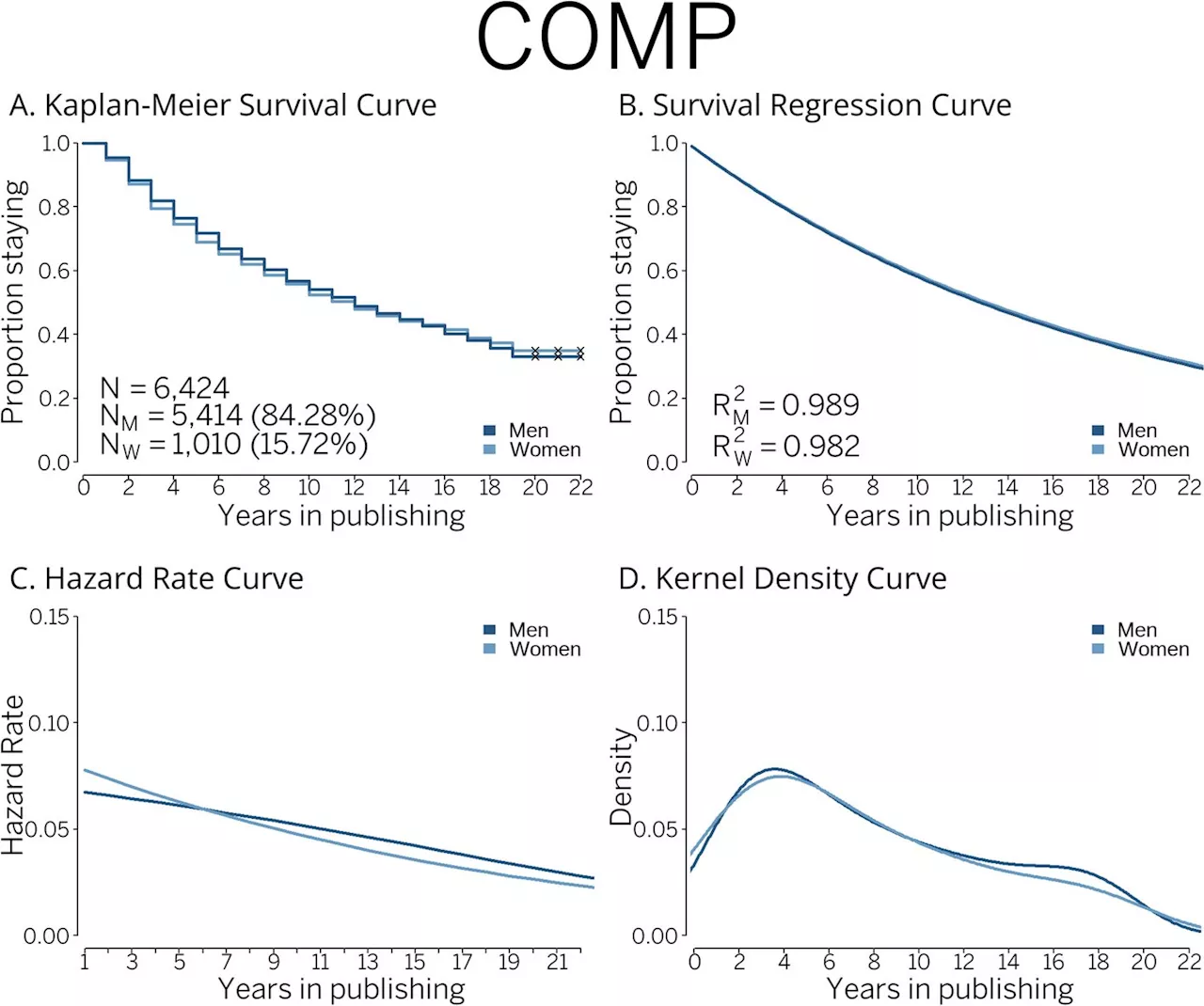 Disappearing scientists: Attrition and retention patterns of 2.1 million scientists in 38 OECD countriesResearch has been showing that women scientists continue to disappear from science at a significantly higher rate and in higher percentages than men. This is what social scientists have thought for decades—but this is no longer the case today, according to a study published in Higher Education.
Read more »
 Electron backscatter diffraction elucidates the microstructure of alkali metals deposited in a batteryLithium and sodium metal anodes play a crucial role in the further development of high-performance solid-state batteries. In order to favorably influence the electrochemical properties of these highly reactive alkali metals, understanding their microstructure is essential.
Read more »
 Logic with light: Introducing diffraction casting, optical-based parallel computingIncreasingly complex applications such as artificial intelligence require ever more powerful and power-hungry computers to run. Optical computing is a proposed solution to increase speed and power efficiency but has yet to be realized due to constraints and drawbacks.
Read more »