
This article delves into the history, rationale, and current practices surrounding daylight saving time in the United States, highlighting its evolution, controversies, and impact on daily life.
While Chicago-area residents are enduring a predominantly frigid January, days are gradually lengthening as the start of daylight saving time approaches. Although another full month of meteorological winter remains, daylight saving time will commence shortly thereafter, mandated by federal law to begin on the second Sunday in March. For 2024, daylight saving time concluded on November 3rd, with clocks 'falling back' an hour. In 2025, it's scheduled to resume in the U.S.
on March 9th, when clocks move one hour ahead (and people, consequently, lose one hour of sleep).The practice of adjusting clocks has evolved over time. Clocks previously 'sprung ahead' on the first Sunday in April and remained that way until the final Sunday in October. This shift was partly implemented to allow children to trick-or-treat in more daylight. In the United States, daylight saving time spans a total of 34 weeks, running from early to mid-March to the beginning of November in participating states.Contrary to popular belief, Benjamin Franklin isn't credited with inventing daylight saving time. While he wrote a satirical essay in 1784 about saving candles and promoting an early-to-bed, early-to-rise lifestyle, his intention wasn't a serious proposal. Germany was the first country to adopt daylight saving time on May 1st, 1916, during World War I, as a means to conserve fuel. The rest of Europe followed suit shortly after. The United States adopted daylight saving time on March 19th, 1918, with the aim of extending daylight hours and conserving energy during World War I. During World War II, President Franklin Roosevelt instituted year-round daylight saving time, known as 'wartime,' from February 9th, 1942, to September 30th, 1945, again to conserve fuel and support national security.Daylight saving time became standardized in the US with the Uniform Time Act of 1966, which established standard time across the country within designated time zones. The Act mandated that clocks advance one hour at 2 a.m. on the last Sunday in April and revert back one hour at 2 a.m. on the last Sunday in October. States retained the option to exempt themselves from daylight saving time, provided the entire state opted out. In the 1970s, due to the 1973 oil embargo, Congress implemented a trial period of year-round daylight saving time from January 1974 to April 1975, aiming to conserve energy.The current daylight saving time policy, enacted by former President George W. Bush in 2005, extended the practice by a few weeks, starting on the second Sunday in March and ending on the first Sunday in November. Nearly every US state observes daylight saving time, with exceptions being Arizona (although some Native American tribes do observe DST within their territories) and Hawaii. US territories, including Puerto Rico, American Samoa, Guam, and the U.S. Virgin Islands, do not observe daylight saving time. Former President Donald Trump expressed a desire to eliminate daylight saving time during his 2016 presidential campaign, citing its inconvenience and cost to the nation. However, his administration did not ultimately pursue any legislative changes regarding the practice. As daylight saving time is observed in Illinois from March to November, sunsets will reach as late as 8:29 p.m. under daylight saving time on June 20th, accompanied by a 5:15 a.m. sunrise, according to The Weather Channel. If Chicago and the rest of Illinois maintained standard time after the early March switch, both sunrise and sunset times at the peak of summer would be an hour earlier, with a 4:15 a.m. sunrise and 7:29 p.m. sunset. Standard time would result in earlier sunsets overall, including a 6:03 p.m. sunset on March 20th, compared to a 7:03 p.m. sunset that Chicago will experience on that date next year under daylight saving time.
Daylight Saving Time History Energy Conservation Time Zones United States
United States Latest News, United States Headlines
Similar News:You can also read news stories similar to this one that we have collected from other news sources.
 Will America Ditch Daylight Saving Time?President-elect Trump's call to end Daylight Saving Time sparks debate.
Read more »
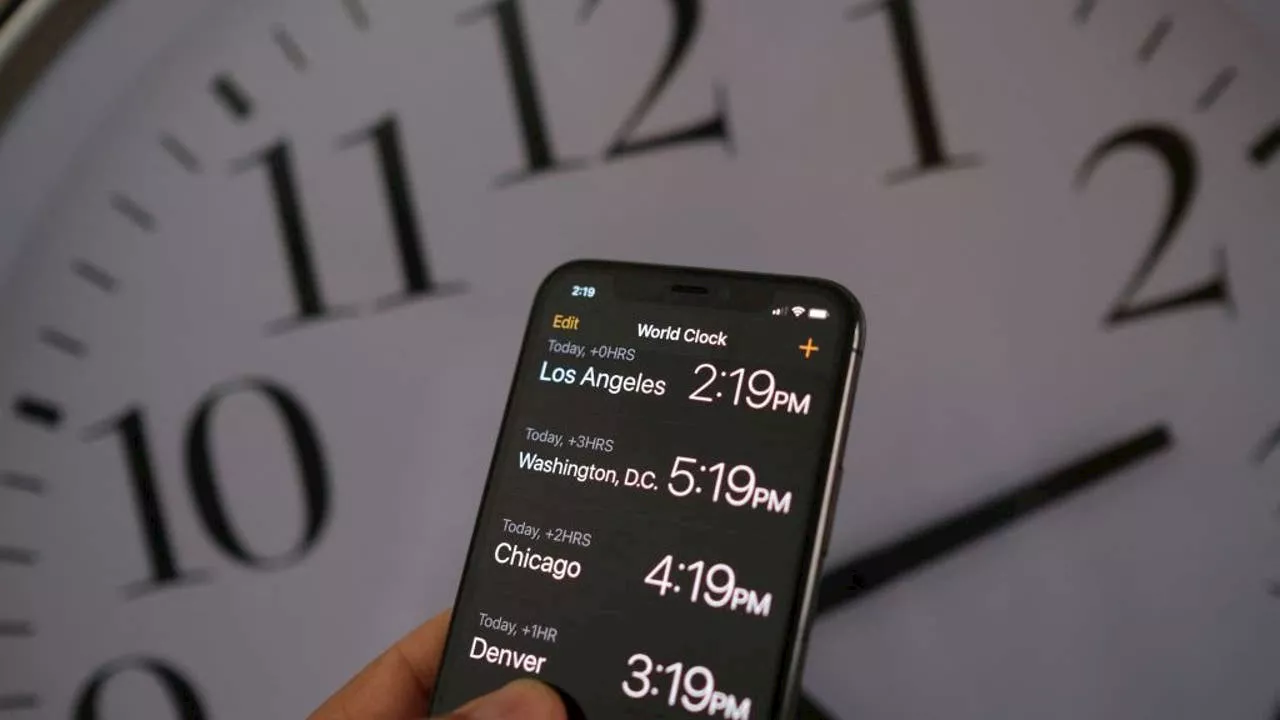 Trump Aims to End Daylight Saving TimePresident-elect Donald Trump has stated his desire to eliminate Daylight Saving Time (DST), citing its inconvenience and cost. Some experts believe ending the practice could improve health and wellness by reducing sleep disruptions.
Read more »
 Why Experts Say Eliminating Daylight Saving Time Is BestMillions of Americans adjust their clocks for Daylight Saving Time (DST) twice a year, but experts argue that this practice is outdated and harmful. They claim DST disrupts our natural sleep rhythms, reduces productivity, and negatively impacts our health. The article discusses the science behind circadian rhythms and melatonin production, highlighting how DST interferes with these essential processes.
Read more »
 Brazil Reconsiders 'Banished' Daylight Saving Time Amid Energy CrunchAfter five years without daylight saving time, Brazil is considering its reinstatement due to concerns about energy conservation during a historic drought. The government is laying the groundwork to bring back the practice as soon as this year.
Read more »
 Trump Wants to End Daylight Saving Time, Sparking DebatePresident-elect Trump's proposal to end daylight saving time has ignited a debate about the practice's benefits and drawbacks.
Read more »
 Daylight Savings 2025: When does Daylight Saving Time start this year?Clocks will 'spring forward' one hour overnight at 2 a.m. in less than two months for Daylight Saving Time.
Read more »