
CBOE Global Markets' Mandy Xu contends the bond market has been more sensitive to economic uncertainty than stocks. But now, that gap may be starting to close.
CBOE Global Markets ' Mandy Xu warns the stock market is underpricing tariff risks — even after Monday's sharp sell-off. Xu contends the bond market has been more sensitive to economic uncertainty than stocks over the past few months.
But now, that gap may be starting to close. "There's scope for it to go even higher because the way the options market is still pricing tariffs is as a stock-specific catalyst, not as a macro catalyst," the firm's head of derivatives market intelligence said on CNBC's " Fast Money ." According to Xu, the stock market is still trying to pick out the winners and losers of President Donald Trump 's tariff policy. The president said that the U.S. would impose 25% duties on imports from Canada and Mexico on Tuesday. He also said he would slap an additional 10% tariff on China goods. "But what the bond market is signaling is that we could be in for weaker growth — potentially recession. And, that as we know, is bad for all stocks," said Xu. On Monday, the CBOE Volatility Index surged 16% to 22.78. It came as the S & P 500 turned negative for the year. The Nasdaq Composite was more than 9% off its high, nearing correction territory. .VIX 1D mountain Volatility surged on Monday. Yet, Xu finds the market doesn't seem alarmed. "We were seeing elevated hedging activity all throughout the last couple of months going into this. So, I think that's partly the reason why we haven't seen panic," said Xu, who added that S & P 500 zero days-to-expiration options volume surged to a record last month . It's a way to manage risks in this uncertain environment, according to Xu. "Whenever a headline comes through, you don't know how long it's going to last, right? Are the tariffs going to get walked back the next day? The next month," she noted. "I think that's why we're seeing just record volumes. Not just in the S & P options, but across the board." Xu shares the bond market's economic growth concerns — including the tariff impact paired with government layoffs. She worries it could spark a demand shock. "This is happening at the same time we're seeing large-scale reductions in the federal workforce. What does that mean in terms of consumer spending? That is going to be key to watch." said Xu. The U.S. Bureau of Labor Statistics will release the February employment report this Friday. Sign up for the Spotlight newsletter, a hand curated collection of video clips selected by CNBC's top editors and producers. Your daily recap of top business highlights and leading stories. Disclaimer
Robinhood Markets Inc Consumer Prices Personal Spending Layoffs Jobs Deflation Inflation Recessions And Depressions Stock Markets Interest Rates Monetary Policy Fiscal Policy Mexico Canada Personal Investing Donald Trump Global Trade Investment Strategy Breaking News: Investing Markets Breaking News: Markets Wall Street Technology Treasury Notes Treasury Bills Corporate Stock U.S. Dollar Tariff NASDAQ Composite S&P 500 Index CBOE Volatility Index Department Of Government Efficiency Donald J. Trump Business News
Trending
 A gorgeous April afternoon in store across the Denver metro area
  ‘Artemis Mission Cannot Lead To Interplanetary Wild West,’ Astronomer Warns
  Trump says US forces will ‘finish the job’ soon in first prime-time speech since starting Iran war
  Former Wisconsin football player, who left the sport amid mental health struggles, dead at 24
  Drew McIntyre Gives Honest Take About His Recent WWE Title Reign
  U.S. Sen. Bernie Sanders introduces bill that could keep the Padres in San Diego
 United States Latest News, United States Headlines
Similar News:You can also read news stories similar to this one that we have collected from other news sources.
 Trump's Tariff Blitz: Markets Brace for Volatility and a Global Currency WarPresident Trump's imposition of tariffs on Mexico, Canada, and China triggers a wave of market uncertainty. Asian markets open to volatility, Bitcoin dips, and the US dollar strengthens. Gold edges higher, while US Treasuries face conflicting pressures. The impact on global trade and currencies remains a major question mark.
Read more »
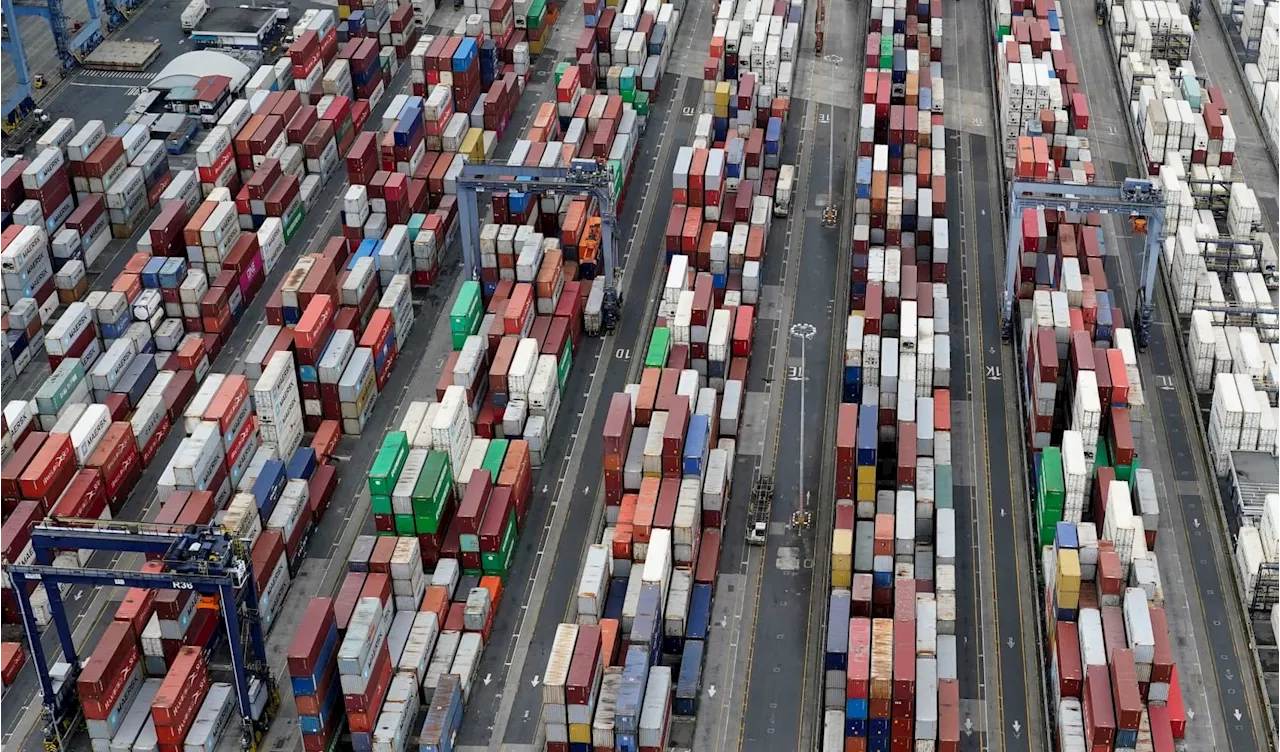 Tariffs Hit Global Markets, DeepSeek's Cost RevealedCNBC Daily Open reports on the impact of new tariffs on imports from Mexico, Canada, and China. The report also discusses the potential cost of DeepSeek, a new Chinese AI model, and how market sentiment might be affected by earnings season and ongoing trade tensions.
Read more »
 Global Markets Brace for Impact as Trump Imposes TariffsU.S. President Donald Trump's weekend imposition of trade tariffs on Mexico, Canada, and China has triggered a wave of concern and volatility in global markets. European markets are expected to open sharply lower on Monday, reflecting the anxieties surrounding the escalating trade war and its potential impact on the global economy. The U.S. dollar strengthened, trading near five-year highs as investors sought stability in a turbulent market.
Read more »
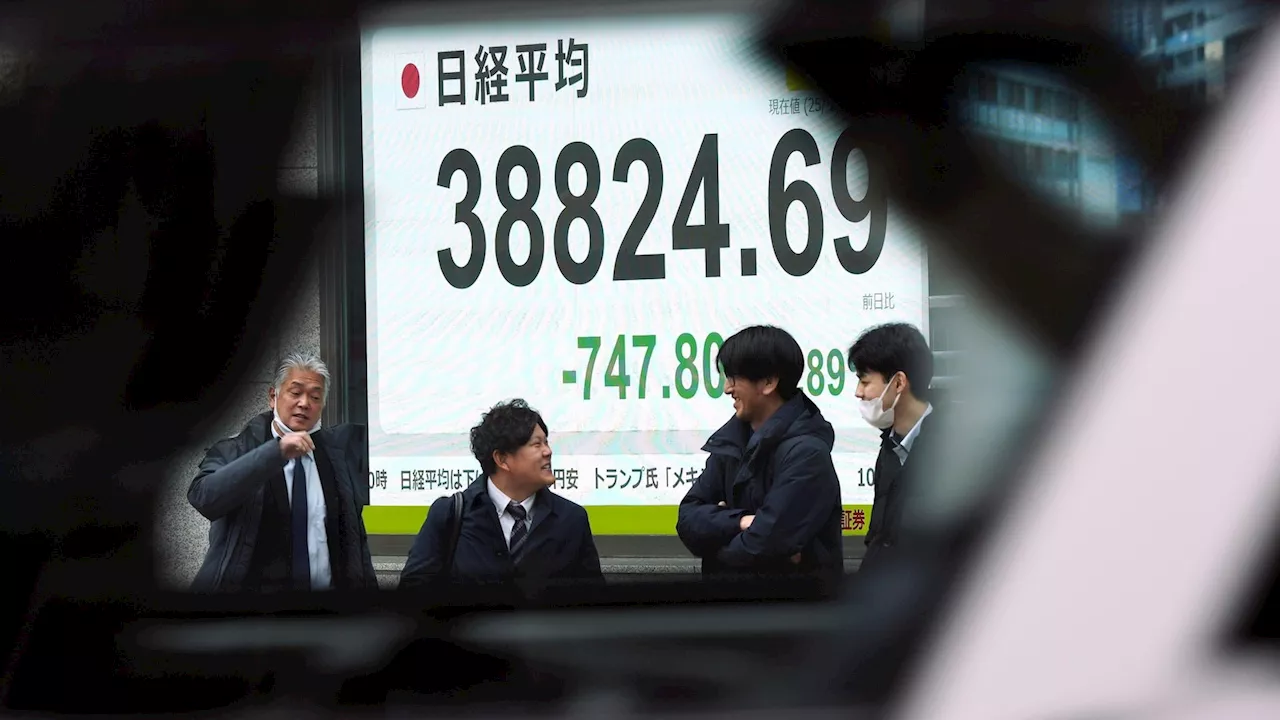 Global Markets Tremble as Trade Tensions EscalateWorries about President Trump's new tariffs on goods from Canada, Mexico, and China triggered a decline in global markets on Monday. Japan, Australia, and South Korea saw significant drops in their key stock indices, while trading in Hong Kong was subdued. Analysts warn of potential disruptions to global trade flows, supply chain shifts, and increased inflation as a result of these trade tensions.
Read more »
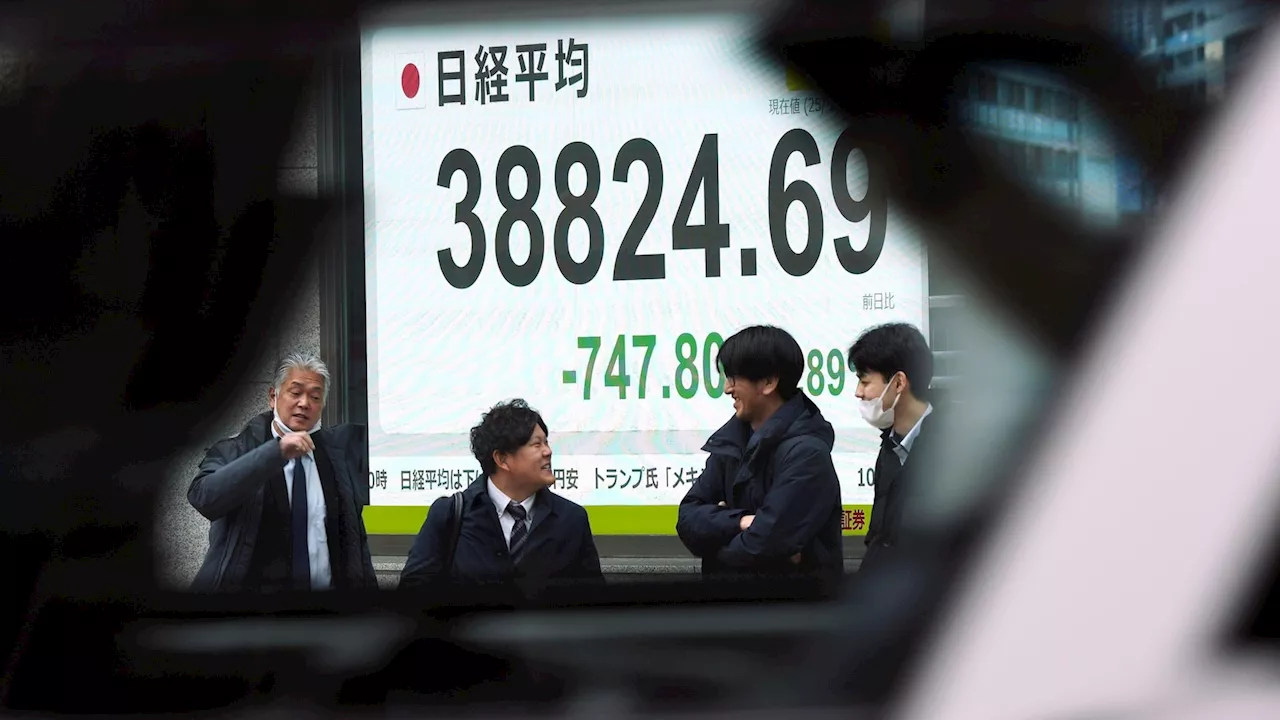 Global Markets Tumble Amid Trade War FearsWorries over President Trump's planned tariffs on imports from Canada, Mexico, and China triggered a sell-off in global markets on Monday, February 3, 2025. Japan's Nikkei, Australia's S&P/ASX 200, and South Korea's Kospi all experienced significant declines. The U.S. markets also ended last week lower, adding to investor concerns.
Read more »
 BTS Reunion Optimism Sends HYBE Stock Up Even as Global Markets TumbleBTS reunion optimism sent HYBE stock up this week following the company's earnings report, even as markets fell on inflation and recession fears.
Read more »