
University of Liverpool researchers develop a new material that captures coronavirus particles and could transform the efficiency of face masks. A research team at the University of Liverpool has developed a new material that captures coronavirus particles and could transform the efficiency of fa
A new material that captures coronavirus particles. Credit: University of Liverpool University of Liverpool researchers develop a new material that captures coronavirus particles and could transform the efficiency of face masks.
A research team at the University of Liverpool has developed a new material that captures coronavirus particles and could transform the efficiency of face masks and other filter equipment to stop the spread of, the team showed that the new material used in a conventional face mask was approximately 93% more efficient at capturing proteins, including coronavirus proteins, with little impact on breathability. The Liverpool scientists behind the new material are Professor Peter Myers, a research leader in chromatography, and Dr. Simon Maher, a mass spectrometry expert. They had been collaborating on high-performance liquid chromatography processes where proteins “stick” to the surface of the chromatographic support materials. During the pandemic, Professor Myers realized that reversing this process would provide a way to absorb proteins, and specifically the protruding S1 spike protein which covers the outer lipid membrane of theWorking together, the team from the University of Liverpool’s Department of Chemistry and Electrical Engineering and Electronics, “re-tuned” the surface of the spherical silica particle they used for chromatography to make the surface very “sticky” for the COVID-19 S1 spike protein. At the same time, they increased the porosity of the silica particle to give it a very large surface area of 300mper gram, which is approximately the same area as a tennis court. Furthermore, they increased the internal volume of the silica sphere to provide a large capacity to “capture” the virus. The new material is at the proof of concept stage and the team has shown it works in face masks in addition to air filters such as those used in airplanes, cars, and air conditioning. The group, which includes the Liverpool School of Tropical Medicine, also developed a method to attach the sticky particles onto the surface of a conventional face mask. Professor Peter Myers said: “This proof of concept research has only scratched the surface and whilst COVID-19 is no longer a global threat to our health, this material has the potential to be used in a wide range of applications. Our research team is looking at developing more advanced “sticky” surfaces for a variety of bioaerosols including the new Covid variant BA.2.86 as well as influenzas and other deadly viruses such as Nipah.” Reference: “Attaching protein-adsorbing silica particles to the surface of cotton substrates for bioaerosol capture including SARS-CoV-2” by Kieran Collings, Cedric Boisdon, Tung-Ting Sham, Kevin Skinley, Hyun-Kyung Oh, Tessa Prince, Adham Ahmed, Shaun H. Pennington, Philip J. Brownridge, Thomas Edwards, Giancarlo A. Biagini, Claire E. Eyers, Amanda Lamb, Peter Myers and Simon Maher, 18 August 2023,
United States Latest News, United States Headlines
Similar News:You can also read news stories similar to this one that we have collected from other news sources.
 Robb Recommends: This New GoPro Can Capture All Your Action-Packed Moments in 4K QualityThe new GoPro Hero12 Black is a must-have device for adventure seekers and hobbyists.
Read more »
 Cyberpunk 2077 Firestarter: Should You Help Songbird Escape or Help Reed Capture HerYou have the critical choice to side with Songbird or Reed in Cyberpunk 2077's Firestarter mission. Who should you choose?
Read more »
 Robberies at Loyola, DePaul prompt safety concerns among college students across ChicagoFrom the University of Illinois Chicago to DePaul University and Loyola University, Chicago has recently seen an uptick in armed robberies on or near college campuses at all different times of the day. On Saturday, Loyola University Campus Police sent out an alert, advising that three students were robbed outside Marquette Hall before 4 a.m. Meanwhile, neighbors heard commotion near…
Read more »
 Stacking order and strain boosts second-harmonic generation with 2D Janus hetero-bilayersA group of researchers from Tohoku University, Massachusetts Institute of Technology (MIT), Rice University, Hanoi University of Science and Technology, Zhejiang University, and Oak Ridge National Laboratory have proposed a new mechanism to enhance short-wavelength light (100–300 nm) by second harmonic generation (SHG) in a two-dimensional (2D), thin material composed entirely of commonplace elements.
Read more »
 The Top U.S. Colleges for PartyingAt the top: Indiana University of Pennsylvania. Also getting high marks for fun were two Christian schools, along with James Madison University, Tulane University and University of Dayton
Read more »
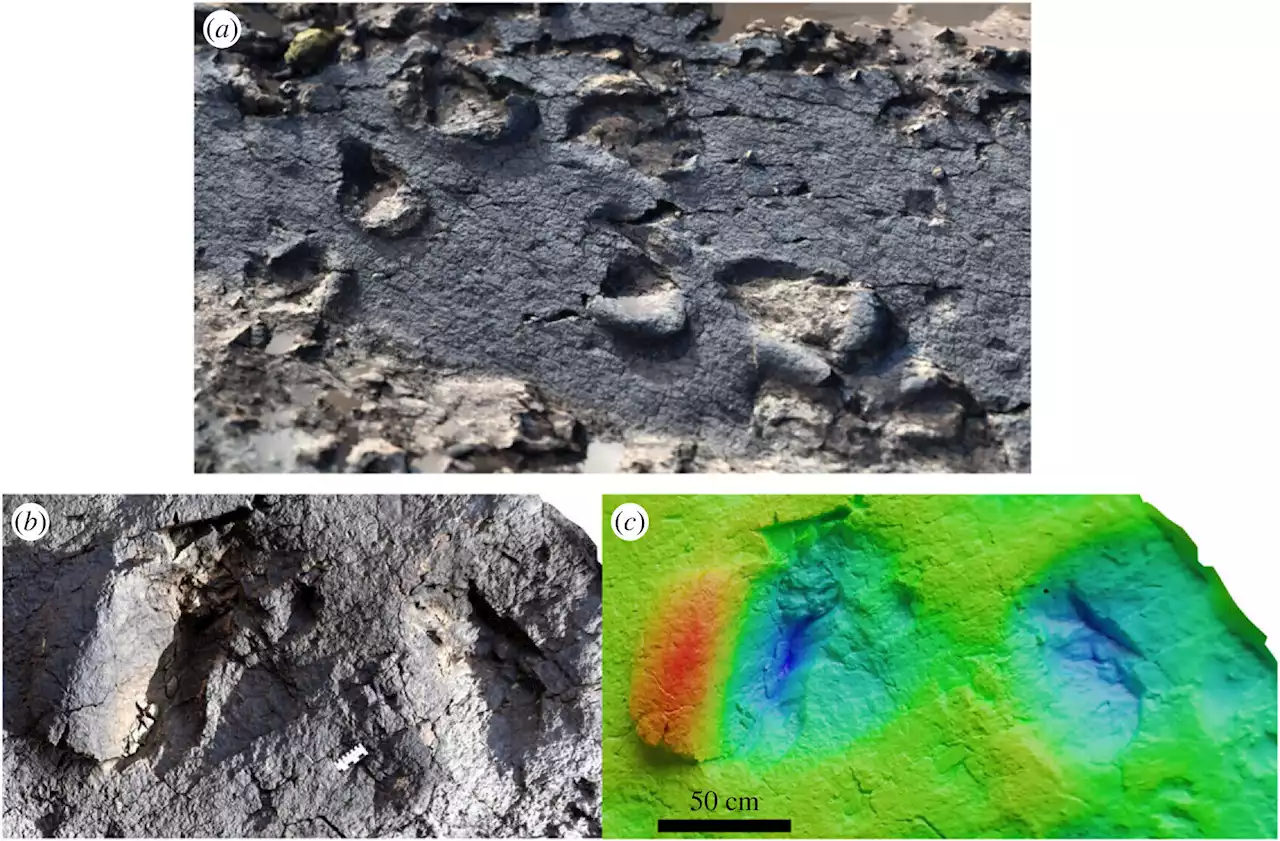 Three new Jurassic-era dinosaur track sites found in MoroccoA small team of paleobiologists, with members from Sidi Mohamed Ben Abdellah University, Liverpool John Moores University and the University of Birmingham has discovered three new Jurassic-era dinosaur track sites in Morocco. In their paper published in the journal Royal Society Open Science, the group describes where the track sites were found and the types of tracks that were preserved.
Read more »