
According to a new study the X-ray light emitted by a certain magnetar - a highly magnetized dead star - appears to indicate that the star has a solid surface and no atmosphere. A study published in the journal Science has used data from NASA's Imaging X-ray Polarimetry Explorer (IXPE) satellite
This artist’s impression shows a magnetar in the star cluster Westerlund 1. Credit: ESO/L. Calçada According to a new study the X-ray light emitted by a certain magnetar – a highly magnetized dead star – appears to indicate that the star has a solid surface and no atmosphere.
’s Imaging X-ray Polarimetry Explorer satellite to reveal that a highly magnetized dead star known as a magnetar has a solid surface with no atmosphere. Led by researchers at the University of Padova, the study represents the first time polarized X-ray light from a magnetar has been observed. This was the first time polarized X-ray light from a magnetar had been observed. IXPE, a collaboration between NASA and the Italian Space Agency, allows scientists to examine X-ray light in space by measuring its polarization – the direction of the light waves’ oscillation. The team studied magnetar 4U 0142+61, located in the Cassiopeia constellation approximately 13,000 light years from Earth. Magnetars are neutron stars – very dense remnant cores of massive stars that have exploded as supernovae at the ends of their lives. Unlike other neutron stars, they have an immense magnetic field – the most powerful in the universe. They emit bright X-rays and show erratic periods of activity, with the emission of bursts and flares which can release in just one second an amount of energy millions of times greater than our Sun emits in one year. They are believed to be powered by their ultra-powerful magnetic fields, 100 to 1,000 times stronger than standard neutron stars. The research team found a much lower proportion of polarized light than would be expected if the X-rays passed through an atmosphere. The team also found that for particles of light at higher energies, the angle of polarization – the wiggle – flipped by exactly 90 degrees compared to light at lower energies, following what theoretical models would predict if the star had a solid crust surrounded by an external magnetosphere filled with electric currents. Co-lead author Professor Silvia Zane , a member of the IXPE science team, said: “This was completely unexpected. I was convinced there would be an atmosphere. The star’s gas has reached a tipping point and become solid in a similar way that water might turn to ice. This is a result of the star’s incredibly strong magnetic field. “But, like with water, temperature is also a factor – a hotter gas will require a stronger magnetic field to become solid. “A next step is to observe hotter neutron stars with a similar magnetic field, to investigate how the interplay between temperature and magnetic field affects the properties of the star’s surface.” Lead author Dr. Roberto Taverna, from the University of Padova, said: “The most exciting feature we could observe is the change in polarization direction with energy, with the polarization angle swinging by exactly 90 degrees. “This is in agreement with what theoretical models predict and confirms that magnetars are indeed endowed with ultra-strong magnetic fields.” Quantum theory predicts that light propagating in a strongly magnetized environment is polarized in two directions, parallel and perpendicular to the magnetic field. The amount and direction of the observed polarization bear the imprint of the magnetic field structure and of the physical state of matter in the vicinity of theAt high energies, photons polarized perpendicularly to the magnetic field are expected to dominate, resulting in the observed 90-degree polarization swing. Professor Roberto Turolla, from the University of Padova, who is also an honorary professor at the UCL Mullard Space Science Laboratory, said: “The polarization at low energies is telling us that the magnetic field is likely so strong to turn the atmosphere around the star into a solid or a liquid, a phenomenon known as magnetic condensation.” The solid crust of the star is thought to be composed of a lattice of ions, held together by the magnetic field. The atoms would not be spherical but elongated in the direction of the magnetic field. It is still a subject of debate whether or not magnetars and other neutron stars have atmospheres. However, the new paper is the first observation of a neutron star where a solid crust is a reliable explanation.added: “It is also worth noting that including quantum electrodynamics effects, as we did in our theoretical modeling, gives results compatible with the IXPE observation. Nevertheless, we are also investigating alternative models to explain the IXPE data, for which proper numerical simulations are still lacking.” Reference: “Polarized x-rays from a magnetar” by Roberto Taverna, Roberto Turolla, Fabio Muleri, Jeremy Heyl, Silvia Zane, Luca Baldini, Denis González-Caniulef, Matteo Bachetti, John Rankin, Ilaria Caiazzo, Niccolò Di Lalla, Victor Doroshenko, Manel Errando, Ephraim Gau, Demet Kırmızıbayrak, Henric Krawczynski, Michela Negro, Mason Ng, Nicola Omodei, Andrea Possenti, Toru Tamagawa, Keisuke Uchiyama, Martin C. Weisskopf, Ivan Agudo, Lucio A. Antonelli, Wayne H. Baumgartner, Ronaldo Bellazzini, Stefano Bianchi, Stephen D. Bongiorno, Raffaella Bonino, Alessandro Brez, Niccolò Bucciantini, Fiamma Capitanio, Simone Castellano, Elisabetta Cavazzuti, Stefano Ciprini, Enrico Costa, Alessandra De Rosa, Ettore Del Monte, Laura Di Gesu, Alessandro Di Marco, Immacolata Donnarumma, Michal Dovčiak, Steven R. Ehlert, Teruaki Enoto, Yuri Evangelista, Sergio Fabiani, Riccardo Ferrazzoli, Javier A. Garcia, Shuichi Gunji, Kiyoshi Hayashida, Wataru Iwakiri, Svetlana G. Jorstad, Vladimir Karas, Takao Kitaguchi, Jeffery J. Kolodziejczak, Fabio La Monaca, Luca Latronico, Ioannis Liodakis, Simone Maldera, Alberto Manfreda, Frédéric Marin, Andrea Marinucci, Alan P. Marscher, Herman L. Marshall, Giorgio Matt, Ikuyuki Mitsuishi, Tsunefumi Mizuno, Stephen C.-Y. Ng, Stephen L. O’Dell, Chiara Oppedisano, Alessandro Papitto, George G. Pavlov, Abel L. Peirson, Matteo Perri, Melissa Pesce-Rollins, Maura Pilia, Juri Poutanen, Simonetta Puccetti, Brian D. Ramsey, Ajay Ratheesh, Roger W. Romani, Carmelo Sgrò, Patrick Slane, Paolo Soffitta, Gloria Spandre, Fabrizio Tavecchio, Yuzuru Tawara, Allyn F. Tennant, Nicholas E. Thomas, Francesco Tombesi, Alessio Trois, Sergey S. Tsygankov, Jacco Vink, Kinwah Wu and Fei Xie, 3 November 2022,
United States Latest News, United States Headlines
Similar News:You can also read news stories similar to this one that we have collected from other news sources.
 What do you want to accomplish in 2023? This New Year's resolution guide can help✨ Make 2023 your year! NPRLifeKit compiled 40+ guides with inspiring and practical ways to help you reach your goals:
Read more »
 'I was told that my child was fine, then I discovered the truth'In an original essay, Hope Riley talks about an unexpected diagnosis that changed her son's life.
Read more »
 BTK killer's daughter sickened to discover Bryan Kohberger studied fatherDennis Rader, who called himself BTK, was arrested in February 2005 and confessed to 10 killings in the Wichita, Kansas area between 1974 and 1991.
Read more »
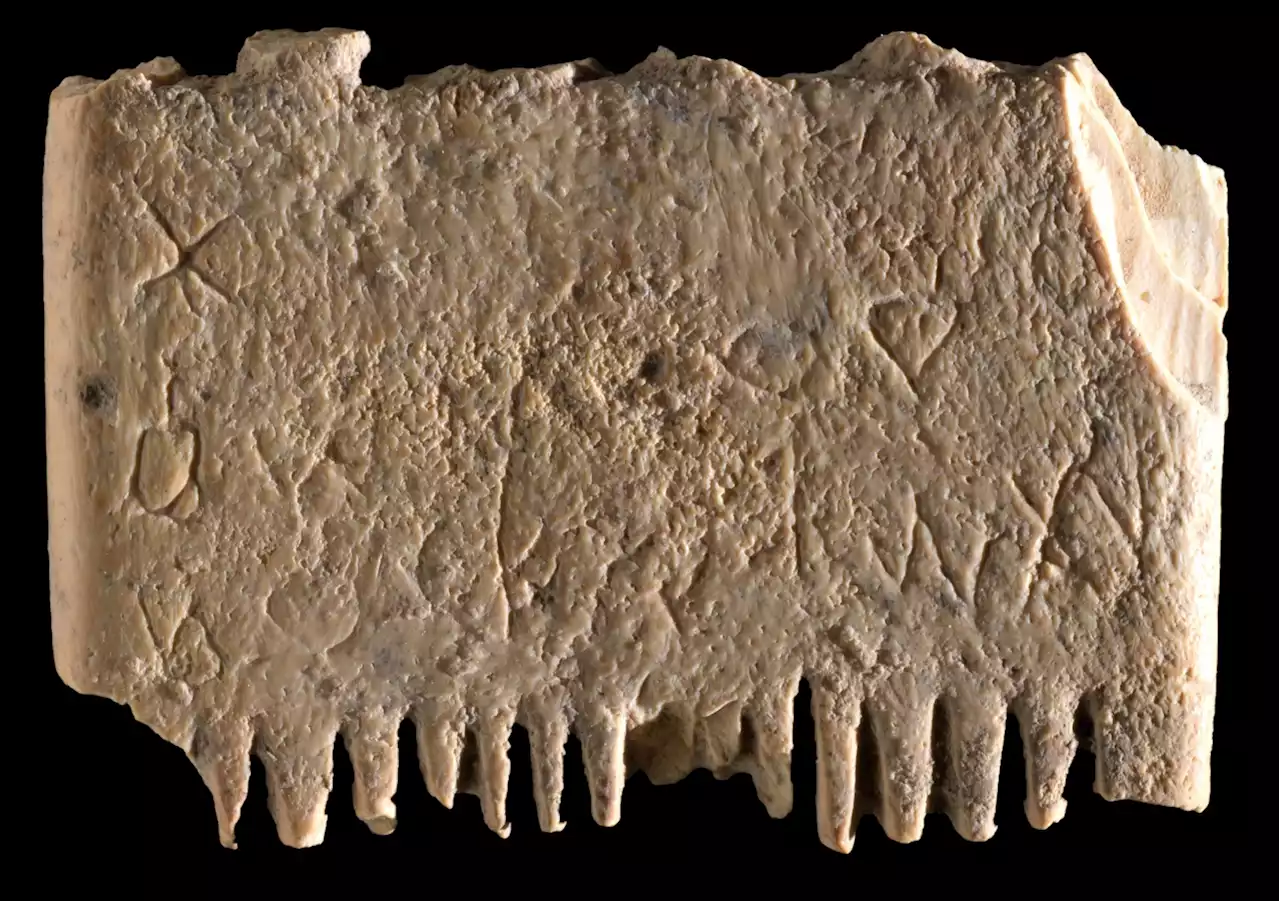 3,700 Years Old – Scientists Discover the First Sentence Ever Written in CanaaniteThe Hebrew University has discovered an ivory comb from 1700 BCE that is inscribed with a plea to rid oneself of lice. The inscription reads: 'May this [ivory] tusk root out the lice of the hair and the beard.' The alphabet was developed around 1800 BCE and was used by the Canaanites and later, m
Read more »
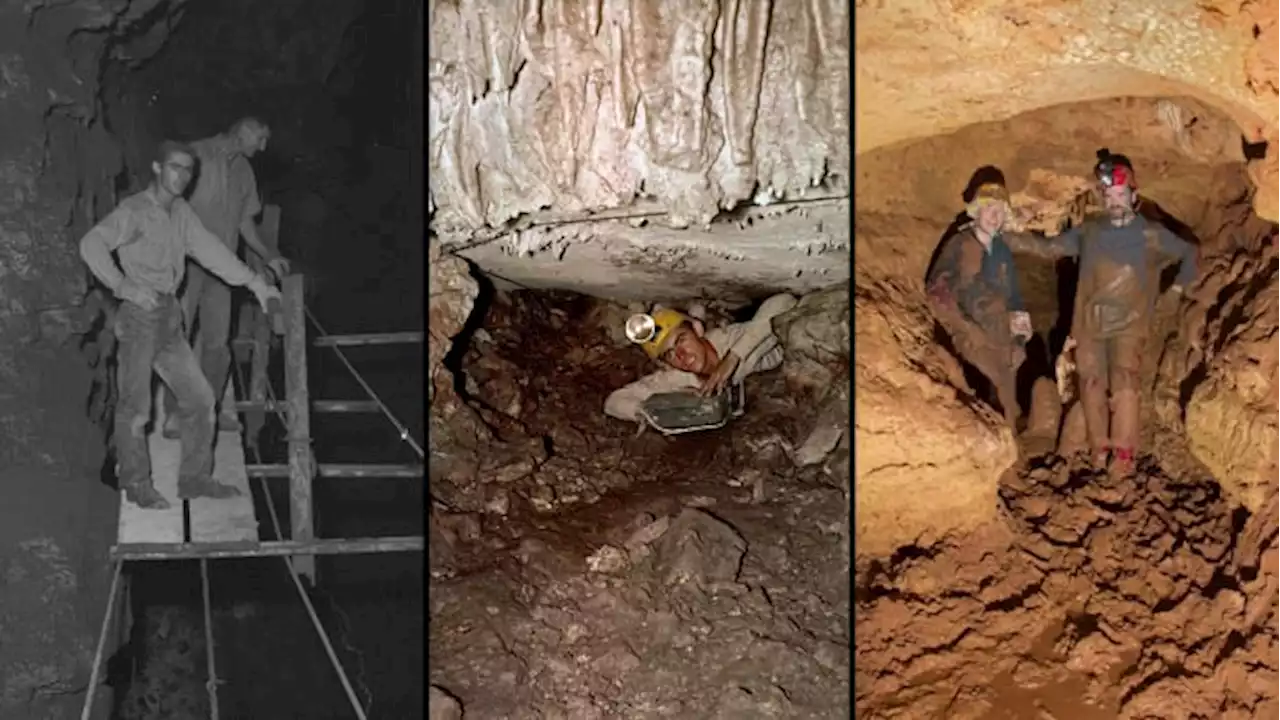 Man who helped discover, develop Natural Bridge Caverns diesOrion Knox Jr., 81, helped develop the caverns after their discovery in 1960s
Read more »
 Woke Wall Street firms discover they have no allies on Capitol HillInvestment firms that have turned woke are now realizing that the team they chose to join doesn’t really care about them.
Read more »