
Researchers have developed an inexpensive and potentially scalable approach that uses a commercially available peroxide to bind polyethylene and polypropylene together, thereby creating a more useful, high-quality plastic recycling additive.
Researchers have developed an inexpensive and potentially scalable approach that uses a commercially available peroxide to bind polyethylene and polypropylene together, thereby creating a more useful, high-quality plastic recycling additive.
Polyethylene and polypropylene account for two-thirds of the world's plastics. But the polymers' popularity has an equally large downside. Because they have similar densities and physical properties, the polymers are difficult -- and expensive -- to separate when mechanically recycled together. What results is a weak, degraded material that really isn't good for anything. Now, Cornell researchers have developed an inexpensive and potentially scalable approach that uses a commercially available peroxide to bind the polymers together, thereby creating a more useful, high-quality plastic recycling additive.. The co-lead authors were postdoctoral researcher Moritz Kränzlein and doctoral student Shilin Cui. The project was led by Geoffrey Coates, the Tisch University Professor of Chemistry and Chemical Biology in the College of Arts and Sciences, the paper's senior author. In a way, the project is itself a recycled product. In 2017, Coates' lab worked with collaborators from the University of Minnesota to create a multiblock polymer that could combine polyethylene and polypropylene mixtures. The new material was an important scientific achievement, according to Coates, but it proved difficult to scale up. It was also too expensive to be practical. "We had to go back to the drawing board and think of the Venn diagram of what material would work and what synthetic methods would be affordable," he said."Why didn't we just do that in 2017? Trust me, if it was easy, somebody else would have done this long ago." The key to developing their new polyolefin compatibilizer was to look for existing polymers that, with the right processing, could do the job, rather than creating a new one from scratch. Kränzlein began by experimenting with the materials that were already in the lab, always with a few parameters in mind. "Every second meeting, when I was giving Geoff an update, his first question was, 'What's the cost?' There was always this line of price per pound that I shouldn't cross," Kränzlein said."We tried to really keep that as a focus of this project. Instead of finding a very elegant or sophisticated solution, we tried to find a real-world solution that works." A year and a half -- and more than 200 experiments -- later, the researchers settled on an organic alkyl peroxide that, when heated, essentially plucks hydrogen molecules off high-density polyethylene and isotactic polypropylene so they can be grafted together and form a copolymer material that can be added to a mechanical recycling process for HDPE and iPP mixtures, restoring their properties."When we have mixtures of commodity plastics like HDPE and iPP, those don't mix very well, and those phases separate from each other, which makes the material properties of those mixtures pretty bad," Kränzlein said."This process adds in a third component that acts like a soap between those two phases, and that soap facilitates a better miscibility between the polymers, and that restores the physical properties of those mixtures, essentially. "It took us a very, very long time playing around with all the different tuning points," he said,"until we finally achieved something that that we were happy with." To better understand their compatibilizer's properties and the grafting reaction, the researchers turned to Brett Fors, the Frank and Robert Laughlin Professor of Physical Chemistry , and doctoral student Jenny Hu, who conducted rheological characterization studies on it. "So we've got the material," Coates said."The question is, now can you make larger amounts? We're doing grams-at-a-time scale. Ultimately, you'd want to be doing dozens of kilograms. We're confident it'll scale, but there's going to be a lot of work to get it there." Coates is hopeful that the compatibilizer could also lead to the creation of new polymer alloys that leverage the respective strengths of different waste plastics. There would be no need for giant million-dollar plants: Just take some preexisting polymers and add the compatibilizer. "You could make a whole kind of pallet of alloys that might have better properties than either one of the pure polymers alone, just like stainless steel," said Coates, who recently launched a startup that specializes in the compatibilizer technology through Cornell's Praxis Center for Venture Development."The dream is, if you can make a really rigid polymer that's also really tough, then you can make packaging that uses less material, yet has the same sort of properties. That's one of the other big applications for this technology."The research was supported the Gerstner Family Foundation, with additional funding from the U.S. Department of Energy through Ames National Laboratory's Institute for Cooperative Upcycling of Plastics, an Energy Frontier Research Center.Chicago Chemists have developed a catalytic process that turns the largest component of today's plastic waste stream, polyolefin plastic bags and bottles, into gases -- propylene and isobutylene -- that ... Scientists have developed a breakthrough process to transform the most widely produced plastic -- polyethylene -- into the second-most widely produced plastic, polypropylene , which could ... Polyethylene plastics -- single-use bags and general-purpose bottles -- are indestructable forever plastics. That also makes them hard to recycle. Chemists have found a way to break down the polymer ... Researchers have developed an upcycling approach that adds value to discarded plastics for reuse in additive manufacturing, or 3D printing. The readily adoptable, scalable method introduces a ...Empowering Robots With Human-Like Perception to Navigate Unwieldy Terrain
Chemistry Inorganic Chemistry Engineering And Construction Electronics Physics Thermodynamics Nanotechnology
United States Latest News, United States Headlines
Similar News:You can also read news stories similar to this one that we have collected from other news sources.
 Researchers Achieve Highest-Resolution Image of Bacteriophage, Unveiling Secrets of Bacterial AttackScientists at Pitt have produced the most detailed image yet of a bacteriophage, revealing the part that attaches to its Mycobacterium target. This breakthrough could lead to engineered phages targeting specific bacteria, a promising solution to antibiotic resistance.
Read more »
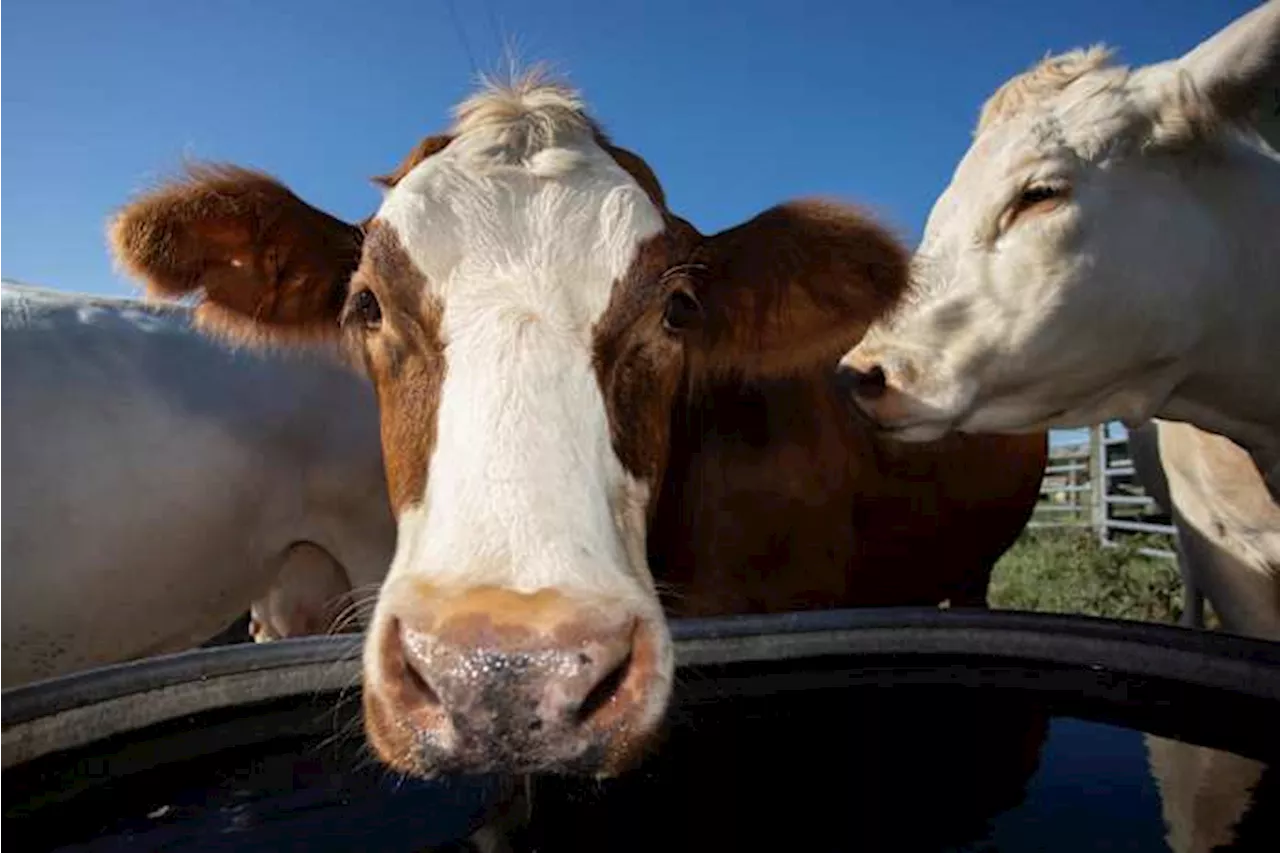 Moo-ve over methane: UF researchers test new feed to cut cow emissions from burps, fartsResearchers at the University of Florida are steak-ing their reputations on a solution to cows contributing to greenhouse gases: A way to make their burps and farts cause less damage to the climate.
Read more »
 Trash talk: As plastic use soars, researchers examine biodegradable solutionsResearchers document a multi-faceted global snapshot of the environmental aspects and trends surrounding single-use plastics in a review article. The researchers state that the largest area of application for biodegradable plastic materials is the packaging segment, which accounts for about half of single-use plastic production.
Read more »
 America’s Science Agency Says It Will Cut Funding to Researchers Who Protest IsraelIf you like your job as a medical researcher, better not have any mean thoughts about what's happening in Gaza.
Read more »
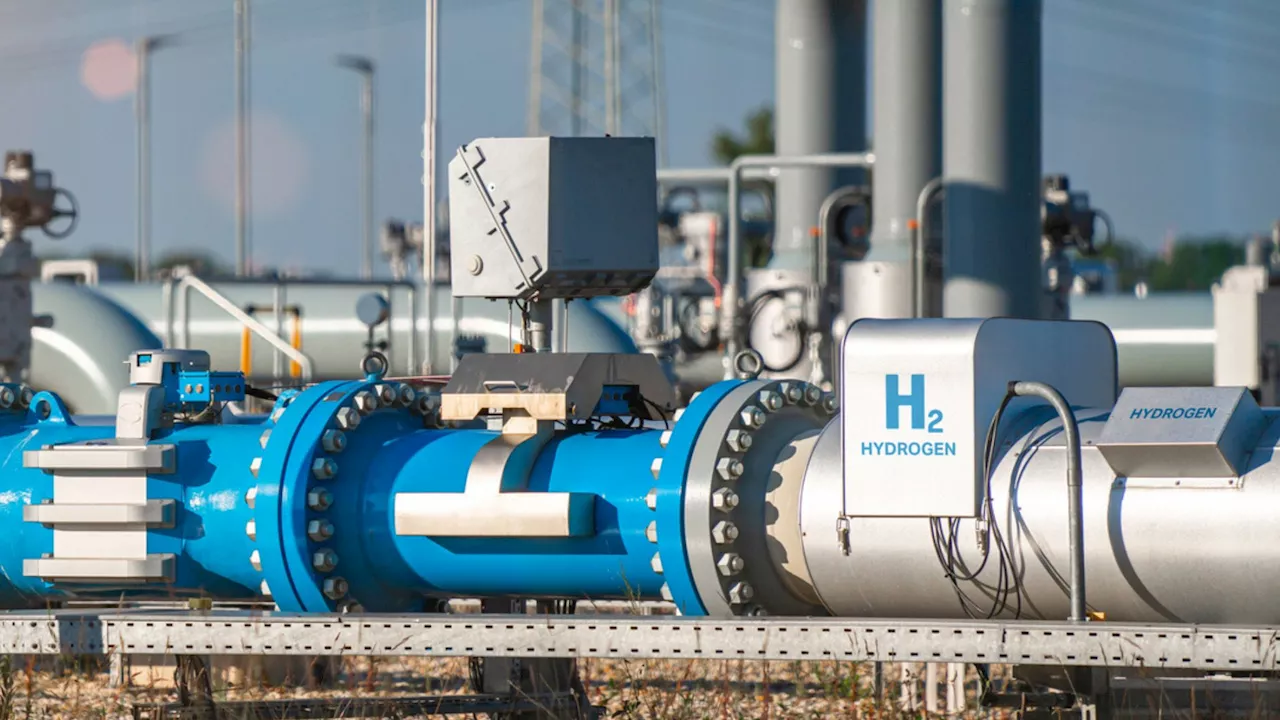 Researchers use sunlight to produce four times more hydrogen from sugarcane wasteThe research outlines a new photoelectrochemical system using furfural, a valuable chemical from sugarcane waste.
Read more »
 Researchers use machine learning to engineer 'bespoke enzymes' for gene editingGenome editing has advanced at a rapid pace with promising results for treating genetic conditions -- but there is always room for improvement. A new paper showcases the power of scalable protein engineering combined with machine learning to boost progress in the field of gene and cell therapy.
Read more »