
Planktonic foraminifera are tiny marine organisms, which are essential to the ocean's carbon cycle. A recent study reveals that these populations are shrinking at an alarming rate due to ocean warming and acidification.
Planktonic foraminifera are tiny marine organisms, which are essential to the ocean's carbon cycle. A recent study reveals that these populations are shrinking at an alarming rate due to ocean warming and acidification.
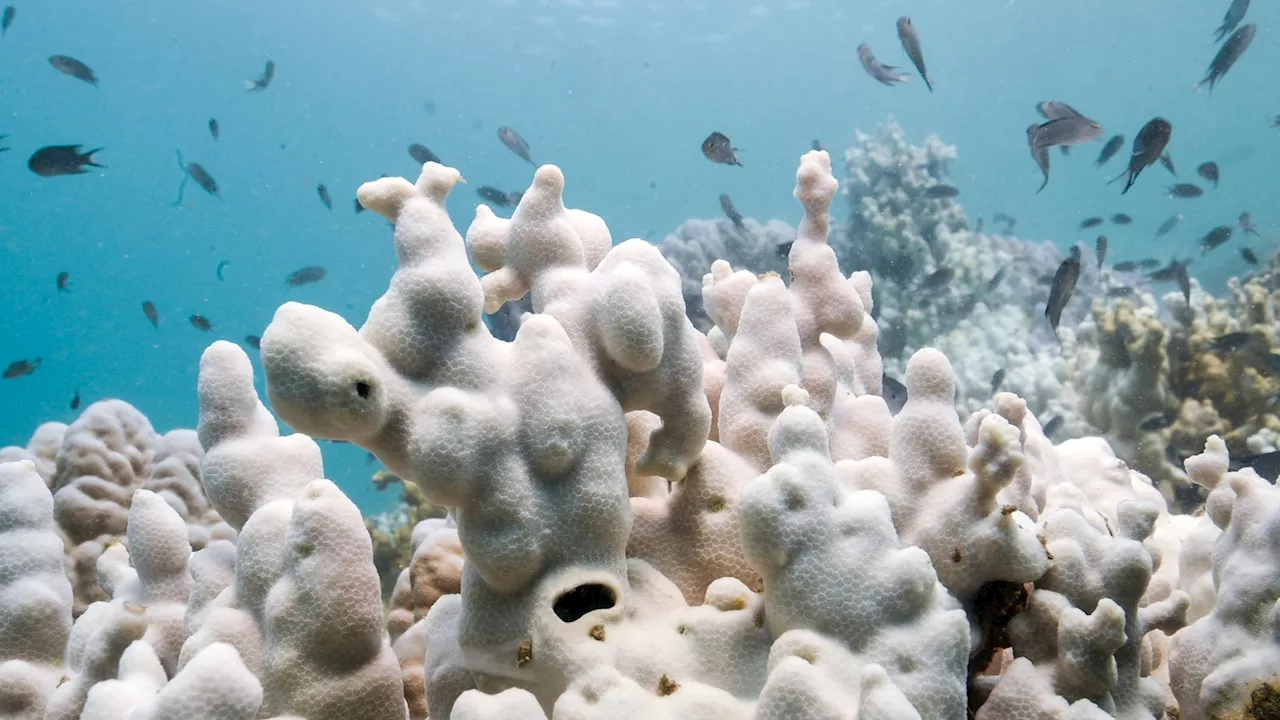
Elevated CO2 levels and thus acidifying waters are making it harder for these single-cell organisms to form their shells, putting their survival at risk. Some foraminifera have begun migrating to cooler waters in an attempt to adapt, but environmental changes are occurring faster than they can keep up with. Planktonic foraminifera are tiny marine organisms, which are essential to the ocean's carbon cycle. A recent study conducted by the CEREGE research center in Aix-en-Provence, Aix-Marseille University, the Center for the Synthesis and Analysis of Biodiversity in Montpellier, and the Max Planck Institute for Chemistry in Mainz, reveals that these populations are shrinking at an alarming rate due to ocean warming and acidification. Elevated COlevels and thus acidifying waters are making it harder for these single-cell organisms to form their shells, putting their survival at risk. Some foraminifera have begun migrating to cooler waters in an attempt to adapt, but environmental changes are occurring faster than they can keep up with., many planktonic foraminifera species may face unprecedented environmental conditions by the end of this century, potentially surpassing their survival thresholds. Planktonic foraminifera are single-celled organisms living in seawater, many of which carry a calcium carbonate shell. In tropical regions, the changing environmental conditions could trigger further extinctions, impacting marine ecosystems and the ocean's carbon storage capacity. An international team involving scientists from France, Germany, the Netherlands, Japan, and Spain analyzed nearly 200,000 datasets since 1910 to examine their response of planktic foraminifers to climate change. The research shows that many species are migrating poleward towards cooler waters, at rates up to 10 kilometers per year. The data also reveal that some species have migrated deeper into the ocean to escape the rising surface temperatures. Despite these shifts, foraminifera populations have declined by 25 % over the past 80 years. Tropical species experienced the biggest losses because the intense warming in these regions disrupts their reproductive cycles. The rising CO) from which foraminifera build their shells. Since the empty shells of deceased plankton sink to the seafloor, less carbon is stored when shell production decreases. Sonia Chaabane, the study's lead author and researcher at CEREGE and the Max Planck Institute for Chemistry, emphasized the implications of the findings:"Our data show that planktonic foraminifera, which play a crucial role in the ocean's carbon cycle, are struggling to survive in a rapidly changing climate. These organisms are like sentinels, warning us of the drastic effects that warming and acidification have on marine ecosystems." Complex interactions between climate and ecosystems are likely to be better understood as a whole through bioindicators like foraminifera rather than through individual measurements."In view of advancing climate change, researchers are faced with the question of adaptation strategies individual species of planktonic foraminifera will develop in the near future" says Ralf Schiebel from the Max Planck Institute for Chemistry. This research was funded by the French Foundation for Biodiversity Research within the Centre for the Synthesis and Analysis of Biodiversity and was co-funded by the Max Planck Institute for Chemistry in Mainz, Germany, the INSU LEFE program and the Initiative d'Excellence d'Aix-Marseille Université -- A*MIDEX.Sonia Chaabane, Thibault de Garidel-Thoron, Julie Meilland, Olivier Sulpis, Thomas B. Chalk, Geert-Jan A. Brummer, P. Graham Mortyn, Xavier Giraud, Hélène Howa, Nicolas Casajus, Azumi Kuroyanagi, Gregory Beaugrand, Ralf Schiebel.A species of single-celled organisms called foraminifera is increasing in warm, alkaline waters of the eastern Mediterranean, building beaches with their calcium carbonate skeletons, ... An international team of researchers has found acidity levels increasing three to four times faster than ocean waters elsewhere and a strong correlation between the accelerated rate of melting ice in ... Diatoms are the most important producers of plant biomass in the ocean and help to transport carbon dioxide from the atmosphere into the deep ocean and thus regulate our climate. Because ... A new study shows that the ocean acidification predicted under continuing high CO2 emissions may make cooler, temperate waters less ...Bird Brain from the Age of Dinosaurs Reveals Roots of Avian Intelligence
Marine Biology Ecology Research New Species Global Warming Environmental Awareness Ecology Oceanography
United States Latest News, United States Headlines
Similar News:You can also read news stories similar to this one that we have collected from other news sources.
 Vote Climate U.S. PAC Announces Release of National Climate Change Voter's GuideKaryn Strickler is a political scientist, grassroots organizer and writer. She is the founder and president of Vote Climate U.S. PAC, working to elect candidates to get off fossil fuels and put a price on carbon. Karyn is the former producer and host of Climate Challenge on MMCTV. You can contact her at climatechallengetvgmail.com.
Read more »
 Climate Scientists and Environmental Groups Alarmed Over New UN Climate ReportFearless Independent Journalism
Read more »
 Climate groups working to mobilize early voters and track new climate voters in battlefield statesSome groups are hoping they can persuade enough of climate-focused voters to go the polls to make a difference around the margins in battleground states in the 2024 election.
Read more »
 Climate scientist identifying water requirements for climate mitigation through ecosystem restorationWorldwide, deforestation and farming practices are responsible for the degradation of vital ecosystems. While there is a significant amount of interest in climate mitigation by restoring those degraded lands with forests and other ecosystems, it is unclear how feasible that would be and the resulting benefits.
Read more »
 Climate and environment updates: UN issues vital warning on avoiding climate disasterIt's not too late to mitigate global warming.
Read more »
 Reconstructing ancient climate provides clues to climate changeResearch helps reconstruct an ancient climate and challenges the timing of the Andes Mountains uplift.
Read more »