
As Executive Vice President in SINTEF, Norway’s largest research institute, I oversee world-leading research into technology-based solutions that will mitigate the worst impacts of climate change.
The climate crisis is no longer a future concern; it is a present-day emergency. Multiple reports from leading global bodies such as the IPCC, the World Meteorological Organization, the Copernicus Observatory, NOAA and others consistently warn that we must use every tool at our disposal to combat it.
The IEA and IRENA are among those suggesting solutions using the technologies we have and must develop by providing roadmaps to net zero by 2050, in general there is a plethora of such roadmaps and outlooks. This isn’t bad, of course, but the path forward is far more complicated than identifying solutions. It's about ensuring those solutions are genuinely effective and deployed to reduce or remove emissions. The complication lies in the fact that the available technologies are often immature and reliant on emerging markets. This creates a significant gap between the solutions we need and their real-world application. However, even if the perfect solutions are not there yet, inaction is not the answer.Kamala Harris Says She Owns A Glock On ‘60 Minutes’—And ‘Of Course’ She’s Shot ItThe European quota system, for instance, has seen prices of approximately $100, while recent studies, such as Adrien Bilal and Diego R. Känzig’sis an astounding $1,065 per ton for a one-degree increase in global temperature. So, who pays the gap of $900? We are far from paying the real cost. For the average diesel or petrol car, this equates to a social cost of approximately $9 per US gallon. While European fuel prices already include significant taxes, implementing the true social cost would more than double current prices. This would be deeply unpopular, yet it's a sobering reality: fuel taxation is the only area where we're even close to covering the full social cost of carbon emissions. Even with a wide confidence interval of $690 to 1,799 per ton, the key takeaway is that the social cost is far higher than the cost currently levied on emissions. This gap is paid by everyone, especially those who are most vulnerable and have the least resources and no government can afford to cover the difference. The results also show that climate change effects have been around for a long time, hidden in our underlying growth numbers. The authors claim that the world GDP would have been 18% larger than it is today had we not experienced one degree of global warming since 1960. The reality is that paying the full social cost of carbon seems unfeasible, but mounting evidence shows that the costs of inaction are even higher. For instance, former EU Commissioner for Science and Research and later Environment, Janez Potočnik, recently highlighted at a conference that the devastating floods in Slovenia last year cost the country an amount equivalent to 16.9% of its national yearly revenue in 2023. This is just one stark example. As we look ahead to COP29 in Baku, the question of how to finance this climate burden will take center stage. But while nations scramble to find funding mechanisms, the climate crisis is racing ahead of us.Meanwhile, we find ourselves caught up in debates over the finer details—focusing on imperfections in strategies like carbon capture and storage or hydrogen production—while the climate crisis continues on its destructive path.to be captured annually by 2030, scaling up to 450 million tons by 2050. While this is highly commendable, it’s hard to see it materializing at the current pace. If it takes another 20 years to scale up CCS, we’ll miss the targets of climate neutrality altogether. A similar story is playing out with hydrogen. Production and use have fallen short of expectations, as highlighted by the International Energy Agency in their While hydrogen is seen as critical to the energy transition, we are not reaching the necessary benchmarks. The disagreement in Europe over the use of natural gas to produce hydrogen is symptomatic of the larger issue: the solutions available are either too expensive or mired in technical and safety concerns. For instance, the use of natural gas to produce hydrogen via reforming or pyrolysis—methods that create either concentrated COfor storage or solid carbon—is under scrutiny. It should be, but why not use footprint assessment to guide the solutions rather than undermining the solutions even though some of them are transitional?of these methods. But while the debate continues, the climate crisis marches on unchecked, and with an extremely high price to be paid.In its progress report on COP28 targets, the IEA starkly reminds us of our commitments. Despite pledges to triple investments in renewable energy by 2030 and double energy efficiency, the world is far from on track. While emissions growth has slowed compared to 2022, we’re still increasing emissions when we should be seeing reductions similar to those that occurred during the COVID-19 pandemic. Take, for example, advancements in electric vehicles . While one in five cars sold is now electric—a major improvement from just a few years ago—this success isn’t enough on its own.in the global EV market, while in the U.S., EVs remain more of a lifestyle or political choice than a mobility necessity. The other extreme is in Norway, where the latest new car sales figures show a 96.4% EV share. Battery technology is improving, and photovoltaic systems are becoming more widespread and at prices nobody would have believed just ten years ago. But even these gains are insufficient when juxtaposed against other critical areas like CCS and hydrogen technology. Energy efficiency, too, remains elusive. Even though there is acceleration in solar and wind power, it barely covers the growth in energy use per annum.We cannot afford to let short-term issues obscure the bigger picture. We are already seeing the impacts of climate change, from rising sea levels to food shortages and uninhabitable land.COP29 kicks off in November. All eyes will be on this global gathering to see if bold decisions are finally taken. Perfect solutions aren't necessary to take immediate, meaningful action that incorporates the real cost of climate change and nature loss.Our community is about connecting people through open and thoughtful conversations. We want our readers to share their views and exchange ideas and facts in a safe space.Insults, profanity, incoherent, obscene or inflammatory language or threats of any kindContinuous attempts to re-post comments that have been previously moderated/rejectedAttempts or tactics that put the site security at riskProtect your community.
Climate Solutions Social Cost Of Carbon Carbon Cost Climate Financing
United States Latest News, United States Headlines
Similar News:You can also read news stories similar to this one that we have collected from other news sources.
 To fix climate anxiety (and also climate change), we first have to fix individualismWhat, exactly, is climate anxiety? And how should we cope? Environmental reporter Rosanna Xia explores the many dimensions to our existential dread.
Read more »
 Kamala Harris' Promises 'Bold Action' on Climate After Home Targeted by ProtestersThe protesters outside Harris' Brentwood residence brought a burnt couch and ash from nearby wildfires to symbolize the devastation caused by climate change.
Read more »
 Climate Change: Americans Express Concern, Support for ActionA recent survey by the Yale Program on Climate Change Communication reveals that a majority of Americans are worried about climate change and support government action to address it. Despite this widespread concern, climate change remains a politically divisive issue.
Read more »
 Corporate Greenstalling—a Threat to Advancing Climate ActionDuring Climate Week NYC, it's time for organizations to have the confidence to take action and get ahead of the hurdles that will accompany those that sit on the sidelines.
Read more »
 Is The USA Becoming A Free Rider On Other Countries’ Climate Action?The USA is likely to return to being the highest greenhouse gas emitting nation globally in the 2030s as the rest of the world decarbonizes and it doesn't.
Read more »
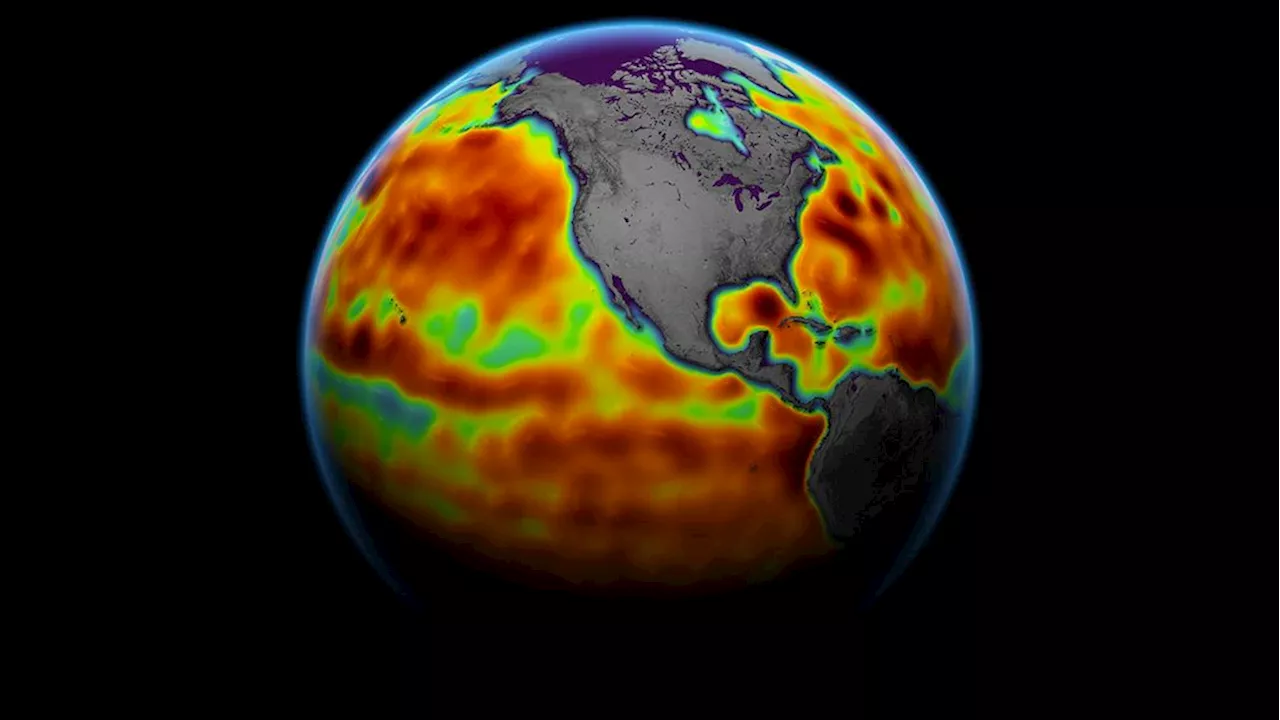 How satellite data has proven climate change is a climate crisisMonisha Ravisetti is Space.com's Astronomy Editor. She covers black holes, star explosions, gravitational waves, exoplanet discoveries and other enigmas hidden across the fabric of space and time. Previously, she was a science writer at CNET, and before that, reported for The Academic Times.
Read more »