
The actress and Director Todd Field discuss their new movie, a trenchant study of a fall from grace, set in the real-life world of classical music.
and all the usual suspects. It’s important in so much as if this were a baseball movie you’d be talking about Hank Aaron and Whitey Ford and Roger Maris. That’s the world that she comes from. It’s not like there’s going to be a test for anybody that’s outside of this milieu. It’s more important that you understand that she’s in it, and that it’s real and immediate and there are some kind of true foundational underpinnings.
But music is often the starting point for me in unlocking the atmosphere in which a character lives, or the spirit of a character. So when you look at the structure of Mahler’s Fifth, there seemed contained within it Lydia Tár’s arc — all of these unspoken conundrums about love and life that she was experiencing and battling against.
There’s so much around that piece of music, as Lydia unpacks at the beginning, having to do with when [Mahler] wrote it,, how it changed over the years. Mahler was an obsessive revisionist. So much so that there are still arguments about what is the definitive interpretation of the Mahler Five. Of course, it depends on your point of view. Lydia’s point of view would be the beginning. Another academic’s point of view, it could be the end or the middle.
What I really found fascinating — and I’m still kind of living with what it means for me personally — is that when you surmount what is seen as a pinnacle in one’s career, you know you’re at the top and the only way to continue is to run downhill. When you get to that pinnacle, you want to hold on so tightly to it, and that is incredibly human. If you look at Georgia O’Keeffe’s work, you think she’s painting mountains and in fact she’s only painting anthills.
United States Latest News, United States Headlines
Similar News:You can also read news stories similar to this one that we have collected from other news sources.
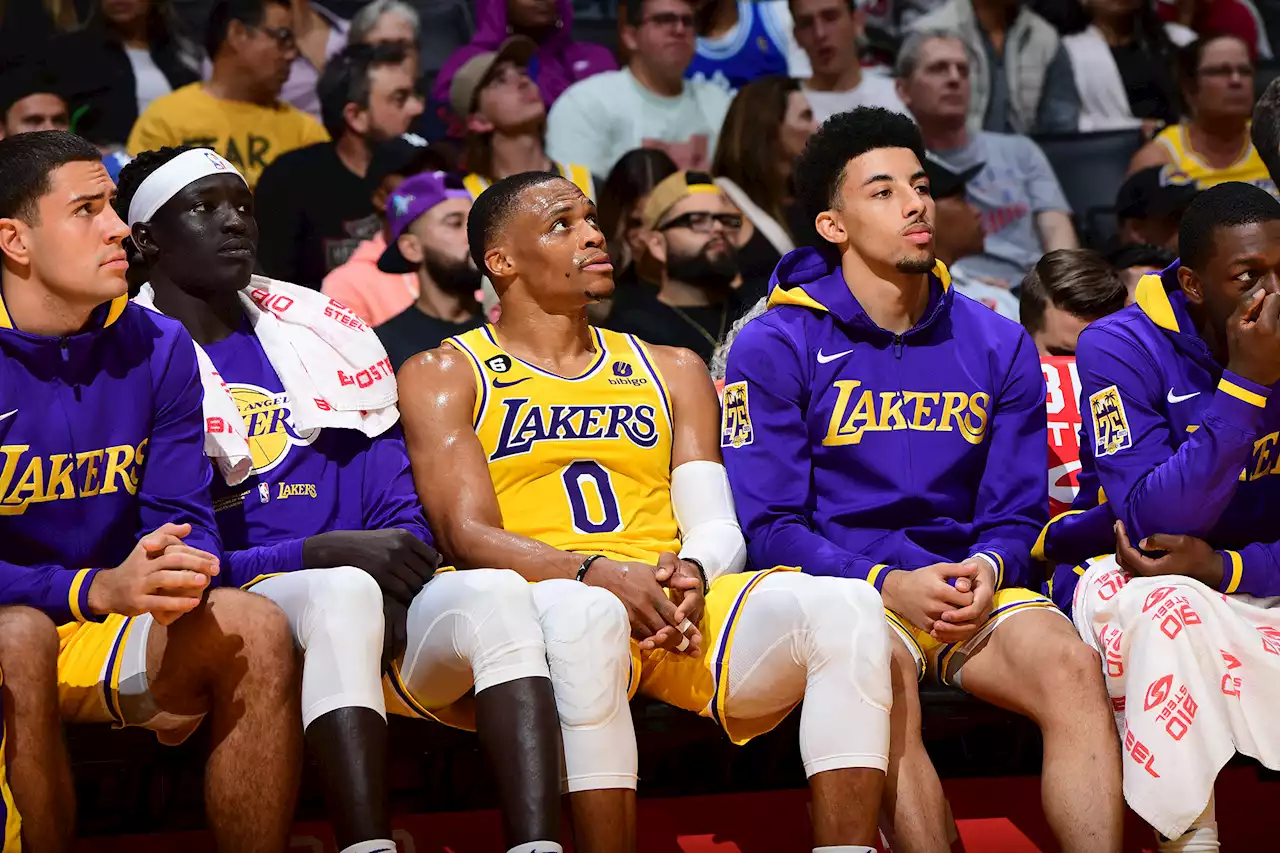 Russell Westbrook’s days as a starter for Lakers look like they’re overIt appears Russell Westbrook’s days as the Lakers’ starting point guard are numbered.
Read more »
 Eat. Watch. Do. — Finding McDonald’s Halloween pails and National Scenic TrailsIn the mood to try something new this weekend? We have a review for a Thai comfort food restaurant in Forest Park, plus reviews for movies “Tár,” in theaters this weekend, and “Luckiest Girl Alive,” streaming on Netflix now.
Read more »
 What took the Philly orchestra so long to play anything by Coleridge-Taylor Perkinson?William Eddins and Hilary Hahn at Verizon hall. A perfect accompaniment if you're watching 'Tár' this weekend.
Read more »
 NFL surprises: Rocky Russell Wilson, great Geno Smith, perfect Jalen Hurts ...NFL seasons are often surprising, but who would have thought Russell Wilson would start so slowly in Denver and Geno Smith would carry Seattle?
Read more »