
A lab develops brain wave decoder that may help in spinal cord injury rehabilitation.
When a person sustains an injury to the spinal cord, the normal communication between the brain and the spinal circuits below the injury are interrupted, resulting in paralysis. Because the brain is functioning normally, as is the spinal cord below the injury, researchers have been working to re-establish the communication to allow for rehabilitation and potentially restore movement.
Ismael Seáñez, assistant professor of biomedical engineering in the McKelvey School of Engineering at Washington University in St. Louis and of neurosurgery at WashU Medicine, and members of his lab, including Carolyn Atkinson, a doctoral student, have developed a type of decoder to restore that communication. Through experiments in their lab with 17 human subjects without a spinal cord injury, they were able to cue movement in the lower leg with transcutaneous spinal cord stimulation, or noninvasive, external electrical pulses.The team used a special cap fitted with noninvasive electrodes that measure brain activity through electroencephalography . While wearing the cap, seated volunteers were asked to extend their leg at the knee, then to only think about extending their leg -- while keeping it still -- so researchers could record the brain waves in both exercises. The team provided the neural activity to the decoder, or algorithm, so it could learn how the brain waves act in both circumstances. They found that the actual movement and imagined movement used similar neural strategies. "After we give the decoder this data, it learns to predict based on neural activity whenever there is movement or no movement," Seáñez said."We show that we can predict whenever someone is thinking about moving their leg, even if their leg does not actually move." The team used controls to ensure that the volunteers were truly imagining movement and not actually moving. "Whenever people move, this can introduce signal noise, and we want to make sure that the signal noise is not what we're learning to predict," Seáñez said."It's movement intention or brain activity that we want to predict, so we have people imagine that they're extending their leg and use the same algorithm that has been trained on people moving to predict whether they were imagining or not.""One, that it's more likely that we're decoding movement intention and not an artifact, or noise, and second, whenever we employ this on people with spinal cord injury who will not have that ability to actually move their legs for us to label the data, we could use their imagination of moving a leg to train our decoder." Seáñez said the proof-of-concept study is a first step toward developing a noninvasive brain-spine interface that uses real-time predictions to deliver transcutaneous spinal cord stimulation to reinforce voluntary movement in a single joint in rehabilitation in patients with a spinal cord injury. Going forward, the team plans to test a generalized decoder trained on data from all participants that could determine whether a universal decoder could perform as well as a personalized one and simplify its use in clinical settings. Funding for this research was provided by the McDonnell Center for Systems Neuroscience at Washington University in St. Louis; the National Institutes of Health ; the Department of Biomedical Engineering in McKelvey Engineering at WashU; and the Department of Neurosurgery at WashU Medicine.Carolyn Atkinson, Lorenzo Lombardi, Meredith Lang, Rodolfo Keesey, Rachel Hawthorn, Zachary Seitz, Eric C. Leuthardt, Peter Brunner, Ismael Seáñez.Scientists have developed an approach that combines rehabilitation robotics with spinal cord stimulation to restore movement in people with spinal cord injuries. The technology enhances ... Researchers have discovered the neural circuitry in the spinal cord that allows brain-independent motor learning. The study found two critical groups of spinal cord neurons, one necessary for new ... Unique new material has shown significant promise in the treatment of spinal cord injury. The new hybrid biomaterials, in the form of nanoparticles and building on existing practice in the tissue ... Scientists have shown an existing drug may reduce damage after spinal cord injury, by blocking the inflammatory response in the spinal ...Man's Best Friend May Be Nature's Worst Enemy, Study on Pet Dogs Suggests
Restless Leg Syndrome Bone And Spine Nervous System Brain-Computer Interfaces Neuroscience Intelligence Brain Injury
United States Latest News, United States Headlines
Similar News:You can also read news stories similar to this one that we have collected from other news sources.
 This Anti-Inflammatory Spice May Be The Key To Better Brain HealthYou can sprinkle it on your food or take as a supplement.
Read more »
Ninja Triples Down on Call of Duty Black Ops 6 Hate, Calling out Cheaters and 'BrainNinja has long had strong feelings about Call of Duty, and new statements reveal exactly what Fortnite's most famous influencer thinks of the franchise.
Read more »
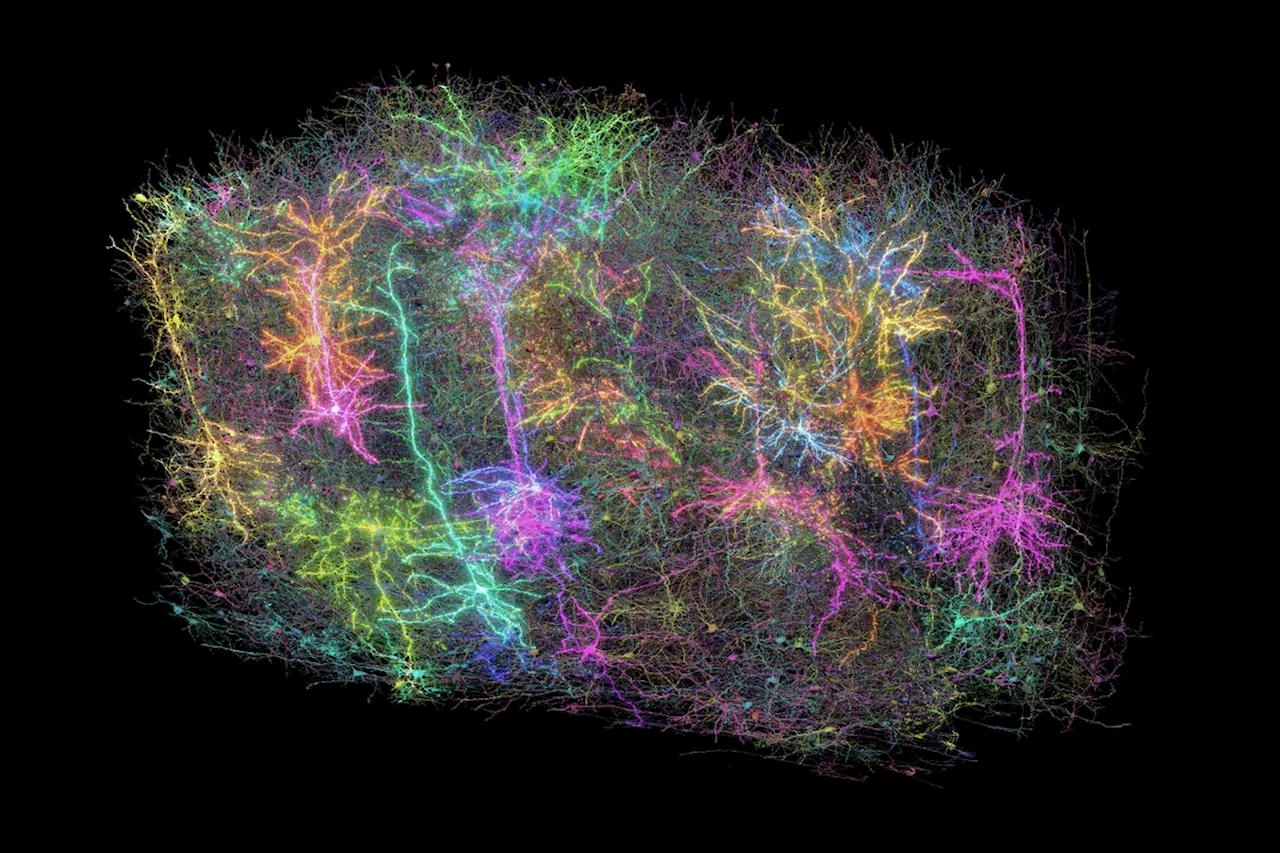 Biggest Brain Map Ever Shows Mouse Neurons in Stunning DetailNeuroscientists have created the largest and most detailed map of a mammal’s brain in a landmark achievement
Read more »
 New research explores the roots of creativity in the brain.Researchers use neuroimaging techniques to map creativity, not simply to specific regions, but to a "creativity circuit" in the brain.
Read more »
 Hot Flashes, Mood Swings—More Menopause Symptoms May Be Worse for Brain HealthIn a new study, having more menopause symptoms was linked to worse cognitive and behavioral impairments—two markers of dementia. Here's how you can manage your menopause symptoms and protect your brain as you age.
Read more »
 Secretary Brain Worm: RFK Jr. Tells Trump We’ll Know the ‘Cause’ of Autism by FallTrump said autism was caused by 'a shot' or something 'artificial' that people are consuming.
Read more »